On This Page
Description
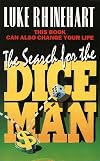
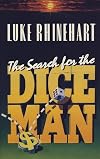
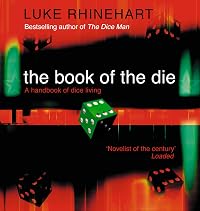
Larry Rhinehart is the son of the renegade psychiatrist Luke Rhinehart, who introduced the world to dice-living and dice therapy, where decisions are made not by the self but by the roll of a die. Since his father deserted him when he was still a child, Larry has bitterly rejected everything his father stood for. He has embraced order and control. Now a wealthy Wall Street analyst, he is about to marry the boss's daughter, and become a good deal wealthier. Then Homeland Security shows up in show more Larry's office searching for his father, who is suspected of being behind acts of cyber warfare against government, banking and Wall Street interests. Larry's carefully organized world begins to crumble. Forced to try find his father before the government can, his search is made in the company of Kim, a sexy admirer of Luke's. His quest takes him to Lukedom, a Dice Commune where everyone changes roles every day-to Larry's own dicing, which leads to love, a broken engagement, rigging the stock market-and total chaos. By the time Larry finally confronts his father he has been profoundly and hilariously changed and his previously successful, conservative life has been turned on its head. Larry's search is by turns funny, moving, and erotic. Right down to the final roll of the die. show lessTags
Recommendations












Member Reviews
I wanted to criticise this book. The story arc was obvious within the first few pages and I expected at that point to dislike the sidestepping of the moral problems surrounding the original Dice Man. Even though that still happened, the book was fun, engaging, so well written that I could turn off the more critical of my faculties and just enjoy a nice adventure.
Having enjoyed the premise of Dice Man, this sequel picks up some 20 odd years later with the original protagonist's son as the hero. Larry Rhineheart might be a profit seeking banker archetype but he delivers a narrative that keeps up a great pace and could be read with or without prior knowledge of Dice Man.
There are some negatives that might irk others more - Larry's original show more position as sceptic of diceliving and having been personally impacted by the lack of responsibility that the 60s hippy community fostered is never really followed through. To a great extent, Larry's role is to question the dicelife in a way that ultimately expects the reader to support Rhineheart's concept. The moral issues that are raised early are worn away by the repeated successes that the dice bring and this allows the author to sidestep the key problems.
Rhineheart also rages against the excesses of the commercialised world. At the time I am reviewing this book, these excesses have been brought much more sharply into relief. This is a little hard to swallow given that the diceman concept is itself intensely ego-driven. The repeated discussion of relinquishing the ego, the allusions to eastern mysticism and the hippy belief system show that the author has failed to recognise the core weakness of focussing on the self. Rules exist to constrain people's actions in a way intended to limit the harm inflicted on others. Rhineheart does not understand this fundamental of social interaction.
The author also continues to struggle with female characters. They were not a strong point in Dice Man and are equally weak here. Still, from a clearly male perspective it is obvious from the outset that Kim is the woman a man wants and not Honoria.
Despite all that, I still give this a strong thumbs up. I was entertained throughout and could gloss over the flaws. The author knows how to write engaging excess and definitely appeals to the self-indulgant side of a reader. Larry Rhineheart's character might not always make complete sense but he is endearing to the point that I did genuinely want him to win.
After I had gotten into the swing of the book, even the archetypal characters began to be fun. The dice world might be too black and white but a lot of those involved have a great time. That enjoyment is infectious and it is uplifting. I don't agree with the philosophy but I enjoyed it all tremendously. show less
Having enjoyed the premise of Dice Man, this sequel picks up some 20 odd years later with the original protagonist's son as the hero. Larry Rhineheart might be a profit seeking banker archetype but he delivers a narrative that keeps up a great pace and could be read with or without prior knowledge of Dice Man.
There are some negatives that might irk others more - Larry's original show more position as sceptic of diceliving and having been personally impacted by the lack of responsibility that the 60s hippy community fostered is never really followed through. To a great extent, Larry's role is to question the dicelife in a way that ultimately expects the reader to support Rhineheart's concept. The moral issues that are raised early are worn away by the repeated successes that the dice bring and this allows the author to sidestep the key problems.
Rhineheart also rages against the excesses of the commercialised world. At the time I am reviewing this book, these excesses have been brought much more sharply into relief. This is a little hard to swallow given that the diceman concept is itself intensely ego-driven. The repeated discussion of relinquishing the ego, the allusions to eastern mysticism and the hippy belief system show that the author has failed to recognise the core weakness of focussing on the self. Rules exist to constrain people's actions in a way intended to limit the harm inflicted on others. Rhineheart does not understand this fundamental of social interaction.
The author also continues to struggle with female characters. They were not a strong point in Dice Man and are equally weak here. Still, from a clearly male perspective it is obvious from the outset that Kim is the woman a man wants and not Honoria.
Despite all that, I still give this a strong thumbs up. I was entertained throughout and could gloss over the flaws. The author knows how to write engaging excess and definitely appeals to the self-indulgant side of a reader. Larry Rhineheart's character might not always make complete sense but he is endearing to the point that I did genuinely want him to win.
After I had gotten into the swing of the book, even the archetypal characters began to be fun. The dice world might be too black and white but a lot of those involved have a great time. That enjoyment is infectious and it is uplifting. I don't agree with the philosophy but I enjoyed it all tremendously. show less
Um. Yeah not bad. I loved the first book and I think it opens the mind to some important questions - also good to reflect on our own motivations for doing things. This book focused more on the concept of giving up decisions to chance. It's set about 20 years on from the first and follows Luke's son Larry - who has rejected everything his father developed in dice therapy but strangely gets drawn in to dice life in the search for his father. It goes much more into the idea that our "self" is determined by the roles we fulfil and that these are a construct of society. By letting chance decide the roles we play, we destroy the self and discover freedom and happiness. That's the theory anyway. Not sure how much is meant to be a serious show more examination of the nature of self and how much is a wry, tongue in cheek look at psychotherapeutic quackery. A good and interesting read though and also worth thinking about if your getting a bit bored of yourself and feel like taking a chance on something (although maybe not on the anarchic scale of the story). Interesting that religious parallels are drawn in the book as it brought to mind that God-awful Surrender book that I half read and reviewed earlier. This was thankfully ironic as opposed to Surrender's earnest devotion to giving up one's will to the way of God! Same concept in a way though. show less
The sequel to the cult novel The Dice Man sadly is but a pale imitation of the original, which to be frank, wasn't all that great in the first place.
Twenty years after Luke took up the dice and disappeared, his son goes on a search for him and becomes involved in using a throw of the dice to determine his future. Ho hum.
Twenty years after Luke took up the dice and disappeared, his son goes on a search for him and becomes involved in using a throw of the dice to determine his future. Ho hum.
Having loved The Dice Man, I was deeply disappointed by this substandard offering from Rhineheart. If you loved the first book, I suggest you avoid this one: it has no real twists, surprises, humour or commentary on the nature of the self which is not executed in a far superior manner there.
Ratings
Members
- Recently Added By
Author Information

23 Works 3,207 Members
Luke Rhinehart is the international bestselling author of five novels: He is also the author of seven screenplays, several based on his own novels
Series

Common Knowledge
- Original publication date
- 1993
Classifications
Statistics
- Members
- 231
- Popularity
- 141,591
- Reviews
- 4
- Rating
- (2.87)
- Languages
- Danish, English, German, Turkish
- Media
- Paper, Ebook
- ISBNs
- 12
- ASINs
- 3