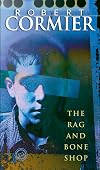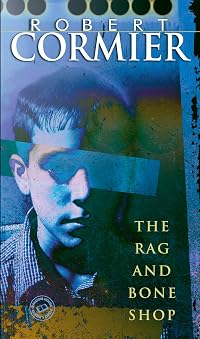
The Rag and Bone Shop
by Robert Cormier
On This Page
Description
Trent, an ace interrogator from Vermont, works to procure a confession from an introverted twelve-year-old accused of murdering his seven-year-old friend in Monument, Massachusetts.Tags
Recommendations


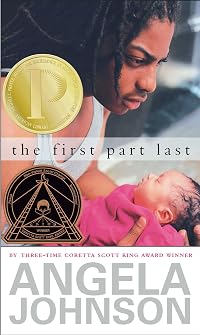
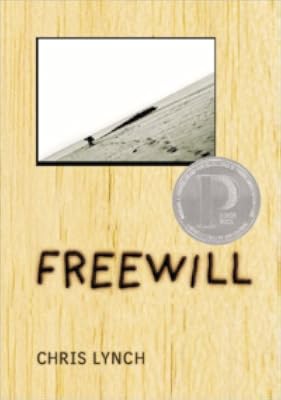

Member Recommendations
by meggyweg
Member Reviews
This was a bittersweet read for me, as it was Cormier's last book, published posthumously. I can only wonder if it might have been different if he had lived to see it reach the editor's desk. Nevertheless it is classic Cormier: spare prose, good pace and an unflinching look at facts as they really are. The ending explodes like a nuclear warhead.
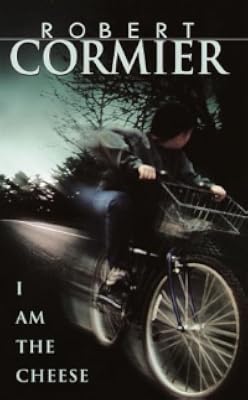
A bit of trivia: when Cormier originally conceived the story, the character Trent was actually Brint from I am the Cheese. And for all we know, he could still be. There are certainly parallels.
A bit of trivia: when Cormier originally conceived the story, the character Trent was actually Brint from I am the Cheese. And for all we know, he could still be. There are certainly parallels.
Normally I don't like Robert Cormier's writing.
Normally I don't like mysteries.
This book blows both those assumptions out of the water for me. First, this is only sort of a mystery--we, as readers, know that Jason is innocent, and that Trent is a slimy weasel who won't be swayed by the truth when he wants a confession. The mystery is, in part, finding out exactly what did happen the day 7-year-old Alicia was killed.
Second, The writing here is looser and warmer than I'm used to seeing from Cormier; ironic considering how cold and calculating the interrogator is. The style works, though, and propels readers along, leaving us every bit as stunned and confused and uncertain as Jason himself is.
I'll probably continue my slow wade through show more Cormier's extensive body of work, because I do find his ideas fascinating, and his books really do stick in my head. show less
Normally I don't like mysteries.
This book blows both those assumptions out of the water for me. First, this is only sort of a mystery--we, as readers, know that Jason is innocent, and that Trent is a slimy weasel who won't be swayed by the truth when he wants a confession. The mystery is, in part, finding out exactly what did happen the day 7-year-old Alicia was killed.
Second, The writing here is looser and warmer than I'm used to seeing from Cormier; ironic considering how cold and calculating the interrogator is. The style works, though, and propels readers along, leaving us every bit as stunned and confused and uncertain as Jason himself is.
I'll probably continue my slow wade through show more Cormier's extensive body of work, because I do find his ideas fascinating, and his books really do stick in my head. show less
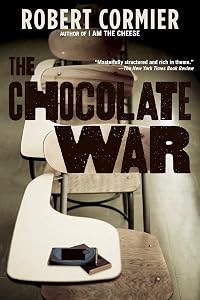
In their best moments—when the words are firing on all cylinders—Robert Cormier’s stories are like ice picks to the brain. In novels like The Chocolate War and I Am the Cheese, Cormier creates worlds just slightly off-kilter to ours—as if we’re reading something which is upside down and reflected in a mirror—then, after a couple hundred pages, he suddenly slams the ice pick into the skull. Skin, bone, brain, perception—all shatter with a single, revelatory paragraph.
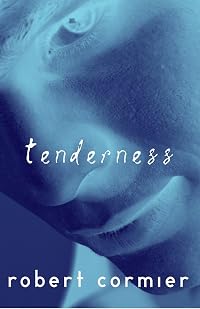
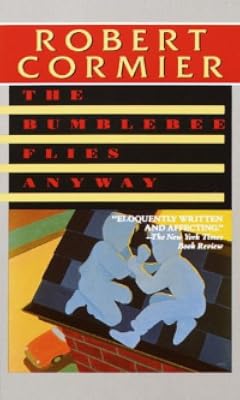
You’ll usually find Cormier’s books in the young adult section of your local library, though—like fellow YA writers Lois Duncan, Judy Blume and Gary Paulsen—he really belongs to that netherworld of readers straddling both sides of the puberty fence. show more Adults will find plenty to engage them in Cormier’s characters, and tweenagers will think themselves daring to be reading books which feature a promiscuous young girl’s fixation with a serial killer (Tenderness) or the terminally ill teenage inmates of an experimental medical institution (The Bumblebee Flies Anyway). Cormier dares to tell teenagers that the world is a dangerous, sometimes unhappy place. You won’t find too many lip-glossed, blow-dried, poster-pretty TV teens in his pages. For this unflinching adherence to the Way Things Are, Cormier often found his books banned by local school boards.
When I was in junior high, the school library was considering adding The Chocolate War to its shelves, but it had “heard thingsâÂ? about itâÂÂrumors that it contained scenes of youth rebellion, anti-adult sentiment and (gasp!) actual four-letter words. They asked my mother, who worked in the schoolâÂÂs administration office, to ask me to read it and render my opinion. I guess none of the adults ever took it upon themselves to read The Chocolate War. Pity. It was one of those books which raises your teenage neck hairs in an electric tingle. The kids in that Catholic prep school who refuse to sell chocolate bars for the annual fund-raiser are the kind of kids anti-establishment youths like me could relate to. I loved the book and was frankly surprised at the level of adult writing in a âÂÂyoung adultâÂ? novel. Here, I thought, was an author who trusted young readers to grasp mature themes and did it without a whiff of condescension. My mother was frankly surprised that IâÂÂd liked it, too. I think she and the library board had hoped IâÂÂd want to join them in a community book burning. Instead, The Chocolate War was added to the school library and soon there were dozens of kids walking around my school with ice picks sticking out of their heads.
CormierâÂÂs other teen classic I Am the Cheese was an even more skillful piece of brain-stabbing literature. It, along with the decidedly adult novels of early-career Stephen King, formed an important part of my growth as a reader and writer. I felt like I owed Robert Cormier a debt of gratitude for setting me on a dark and slippery course before IâÂÂd even graduated high school. He, in his way, helped prepare me (and, undoubtedly thousands of other kids) for the grim reality of adulthood.
And so, it was with a measure of sadness that I opened up CormierâÂÂs latest novel, The Rag and Bone Shop, and saw that it would be his last. The author died in November 2000âÂÂsomehow, IâÂÂd missed the news. Cormier was 75 when the grim reaper showed up with his scythe.
The Rag and Bone Shop (the titleâÂÂs taken from a Yeats poem) is a nice way to close out a career. ItâÂÂs a slim bookâÂÂmore novella than novelâÂÂbut it packs plenty of trademark Cormier punches.
âÂÂI take real people and put them in extraordinary situations,âÂ? Cormier once said in an interview with School Library Journal. âÂÂIâÂÂm very much interested in intimidation. And the way people manipulate other people and the obvious abuse of authority.âÂ?
Nowhere is that more evident than in The Rag and Bone Shop, the bulk of which centers around an interrogation in a police station. Jason Dorrant, enjoying his summer between the seventh and eighth grades, is accused of a horrible crime: the murder of a seven-year-old girl in his neighborhood. A professional interrogator named Trent, with the reputation for getting blood out of a stone, is called in to shine the light in JasonâÂÂs eyes and pummel him with questions (though, actually, TrentâÂÂs methods are more along the lines of withholding water from the parched boy). There are also political forces at work in the background, putting pressure on Trent to extract a bloody confession from the stony Jason.
At only 154 pages, The Rag and Bone Shop moves quickly, never meandering from its ever-tightening course toward denouement. Along the way, there are several typical Cormier moments where he juxtaposes the sunny with the dark. Here, for instance, is the jarring transition from one chapter (where Jason is happily contemplating his summer) to the next:
The day loomed ahead, free, no classes, no demands, not even any household chores that he knew about, and he lay there feasting on the thought of the long summer days ahead.
[chapter break]
The body of seven-year-old Alicia Bartlett was found between the trunks of two overlapping maple trees in dense woods only five hundred yards from her home..
ItâÂÂs amazing what nightmares Cormier can create with just two sentences. He himself summed it up best in an interview published on Amazon.com shortly before his death: âÂÂI like to leave the reader with a sense that there are things still going on, that they [characters] donâÂÂt walk off into the sunset. Or even if they walk off into the sunset, thereâÂÂs probably a cliff waiting right around the corner.âÂ?
Just as Trent coils around Jason, Cormier twists the rubber tourniquet around the reader. ItâÂÂs a shorter, less fully-developed story than something like The Chocolate War, but The Rag and Bone Shop is relentlessly suspensefulâÂÂright down to the very last sentence which stabs the reader with a jolt.
As always, CormierâÂÂs strength lies in creating protagonists teenagers can relate toâÂÂcharacters who arenâÂÂt sugar-coated or fluffed with Hollywood meringue. Jason is the kind of outsider who I, for one, could see every time I look in the mirror:
Not that they [other kids at school] were cruel or mean or made him the object of pranks or tortured him or anything like that. Mostly, they ignored him. He was rarely asked to join in their games or activities. He usually sat alone in the cafeteria and felt alone even when others were at the table. The other students seldom talked to him or asked him his opinion about anything. When they did encounter him in situations where he couldnâÂÂt be avoided, they addressed him in an absentminded way, didnâÂÂt seem interested in what he had to say, quickly turned their attention elsewhere.
Even at 75, Cormier was still connecting with readers six decades his junior. This identification with teen angst, more than anything, is what made him such a popular author with âÂÂyoung adultsâÂ? (and a few of us old adults, too). He is, after all, the same author who once put his own home phone number in one of his books (I Am the Cheese) and graciously accepted calls from curious readers over the years.
And so, a belated goodbye, Mr. Cormier and fare thee well on the journey through the darkness of death. YouâÂÂll be missed by generations of readers. show less
You’ll usually find Cormier’s books in the young adult section of your local library, though—like fellow YA writers Lois Duncan, Judy Blume and Gary Paulsen—he really belongs to that netherworld of readers straddling both sides of the puberty fence. show more Adults will find plenty to engage them in Cormier’s characters, and tweenagers will think themselves daring to be reading books which feature a promiscuous young girl’s fixation with a serial killer (Tenderness) or the terminally ill teenage inmates of an experimental medical institution (The Bumblebee Flies Anyway). Cormier dares to tell teenagers that the world is a dangerous, sometimes unhappy place. You won’t find too many lip-glossed, blow-dried, poster-pretty TV teens in his pages. For this unflinching adherence to the Way Things Are, Cormier often found his books banned by local school boards.
When I was in junior high, the school library was considering adding The Chocolate War to its shelves, but it had “heard thingsâÂ? about itâÂÂrumors that it contained scenes of youth rebellion, anti-adult sentiment and (gasp!) actual four-letter words. They asked my mother, who worked in the schoolâÂÂs administration office, to ask me to read it and render my opinion. I guess none of the adults ever took it upon themselves to read The Chocolate War. Pity. It was one of those books which raises your teenage neck hairs in an electric tingle. The kids in that Catholic prep school who refuse to sell chocolate bars for the annual fund-raiser are the kind of kids anti-establishment youths like me could relate to. I loved the book and was frankly surprised at the level of adult writing in a âÂÂyoung adultâÂ? novel. Here, I thought, was an author who trusted young readers to grasp mature themes and did it without a whiff of condescension. My mother was frankly surprised that IâÂÂd liked it, too. I think she and the library board had hoped IâÂÂd want to join them in a community book burning. Instead, The Chocolate War was added to the school library and soon there were dozens of kids walking around my school with ice picks sticking out of their heads.
CormierâÂÂs other teen classic I Am the Cheese was an even more skillful piece of brain-stabbing literature. It, along with the decidedly adult novels of early-career Stephen King, formed an important part of my growth as a reader and writer. I felt like I owed Robert Cormier a debt of gratitude for setting me on a dark and slippery course before IâÂÂd even graduated high school. He, in his way, helped prepare me (and, undoubtedly thousands of other kids) for the grim reality of adulthood.
And so, it was with a measure of sadness that I opened up CormierâÂÂs latest novel, The Rag and Bone Shop, and saw that it would be his last. The author died in November 2000âÂÂsomehow, IâÂÂd missed the news. Cormier was 75 when the grim reaper showed up with his scythe.
The Rag and Bone Shop (the titleâÂÂs taken from a Yeats poem) is a nice way to close out a career. ItâÂÂs a slim bookâÂÂmore novella than novelâÂÂbut it packs plenty of trademark Cormier punches.
âÂÂI take real people and put them in extraordinary situations,âÂ? Cormier once said in an interview with School Library Journal. âÂÂIâÂÂm very much interested in intimidation. And the way people manipulate other people and the obvious abuse of authority.âÂ?
Nowhere is that more evident than in The Rag and Bone Shop, the bulk of which centers around an interrogation in a police station. Jason Dorrant, enjoying his summer between the seventh and eighth grades, is accused of a horrible crime: the murder of a seven-year-old girl in his neighborhood. A professional interrogator named Trent, with the reputation for getting blood out of a stone, is called in to shine the light in JasonâÂÂs eyes and pummel him with questions (though, actually, TrentâÂÂs methods are more along the lines of withholding water from the parched boy). There are also political forces at work in the background, putting pressure on Trent to extract a bloody confession from the stony Jason.
At only 154 pages, The Rag and Bone Shop moves quickly, never meandering from its ever-tightening course toward denouement. Along the way, there are several typical Cormier moments where he juxtaposes the sunny with the dark. Here, for instance, is the jarring transition from one chapter (where Jason is happily contemplating his summer) to the next:
The day loomed ahead, free, no classes, no demands, not even any household chores that he knew about, and he lay there feasting on the thought of the long summer days ahead.
[chapter break]
The body of seven-year-old Alicia Bartlett was found between the trunks of two overlapping maple trees in dense woods only five hundred yards from her home..
ItâÂÂs amazing what nightmares Cormier can create with just two sentences. He himself summed it up best in an interview published on Amazon.com shortly before his death: âÂÂI like to leave the reader with a sense that there are things still going on, that they [characters] donâÂÂt walk off into the sunset. Or even if they walk off into the sunset, thereâÂÂs probably a cliff waiting right around the corner.âÂ?
Just as Trent coils around Jason, Cormier twists the rubber tourniquet around the reader. ItâÂÂs a shorter, less fully-developed story than something like The Chocolate War, but The Rag and Bone Shop is relentlessly suspensefulâÂÂright down to the very last sentence which stabs the reader with a jolt.
As always, CormierâÂÂs strength lies in creating protagonists teenagers can relate toâÂÂcharacters who arenâÂÂt sugar-coated or fluffed with Hollywood meringue. Jason is the kind of outsider who I, for one, could see every time I look in the mirror:
Not that they [other kids at school] were cruel or mean or made him the object of pranks or tortured him or anything like that. Mostly, they ignored him. He was rarely asked to join in their games or activities. He usually sat alone in the cafeteria and felt alone even when others were at the table. The other students seldom talked to him or asked him his opinion about anything. When they did encounter him in situations where he couldnâÂÂt be avoided, they addressed him in an absentminded way, didnâÂÂt seem interested in what he had to say, quickly turned their attention elsewhere.
Even at 75, Cormier was still connecting with readers six decades his junior. This identification with teen angst, more than anything, is what made him such a popular author with âÂÂyoung adultsâÂ? (and a few of us old adults, too). He is, after all, the same author who once put his own home phone number in one of his books (I Am the Cheese) and graciously accepted calls from curious readers over the years.
And so, a belated goodbye, Mr. Cormier and fare thee well on the journey through the darkness of death. YouâÂÂll be missed by generations of readers. show less
The Rag and Bone Shop is a truly disturbing story that is not really a young adult book at all, even though it is labeled as one. In the story, Alicia Bartlett, a precocious seven year old, is murdered. The police find no physical evidence and have no suspects, but political pressure is placed on the local police to make an arrest. Bowing to that pressure and his own insecurities, the local chief of police decides Jason Dorrant, a local teen and the last person visiting Alicia's house, must be the killer. He calls in a famous interrogator, also dealing with his own insecurities to break Jason and make him confess.
The ending of this book is truly horrific, making, Jason, an average young teen, a villain when the adults are the true show more villains in the story. I did not enjoy this book at all and would never want young people to read it and question their own sanity. show less
The ending of this book is truly horrific, making, Jason, an average young teen, a villain when the adults are the true show more villains in the story. I did not enjoy this book at all and would never want young people to read it and question their own sanity. show less
If I had three thumbs, I'd give this book two thumbs up and one thumb down. On the plus side, I found the essence of the story to be very interesting: a small town is up in arms over the murder of a 7-year-old little girl. 12-year-old Jason, a friend and neighbor of the victim, seems to be the last person to see her alive, and thus becomes the police's #1 suspect. They call on crack interrogator Trent, who is as self-hating as he is ambitious, to extract a confession from (the innocent) Jason -- which he ultimately succeeds in doing, even knowing that the boy is innocent. The novel's greatest asset is all the myriad discussions and research that could develop from analyzing the many themes and situations brought up in the story show more (psychological manipulation that can distort reality; justification to make something "right"; the dark side of human potential; etc.)
Also on the plus side, the characters are very streamlined -- though not drawn out in extreme detail, we have just enough information about the two main characters (Jason & Trent) to make them believable and understand something about their inner workings. There are no stereotypes to be found here. And the ending has a twist that is truly chilling.
On the minus side, for such a bare-bones, starkly written story, I found the pacing remarkably slow, and some passages to be unnecessarily repetetive. But mainly what stood out for me were the "holes" in the story: Jason is a smart enough kid, and had watched & read enough crime stories in movies, on TV and novels he'd read, that he should be more savvy about his rights and about his own precarious position in this interrogation. He realizes way too late that he is not there, as he was told, to help with the investigation, but instead as the prime suspect. He should also be demanding a lawyer once he understands his position -- or at the very least should ask to call his parents! (The parents, by the way, are severely underwritten, are almost non-existent.) None of these options seem to even cross his mind. (For that matter, is it even legal to interrogate a minor as a suspect without informing the parent that he IS a suspect?)
Finally, a man as ambitious and successful as Trent couldn't be so short-sighted as to see his job as completed with extraction of a confession -- especially when he knows the boy is innocent! He would have to think of the fallout and the impact it would have on his career, if and when the true culprit was found, especially in a case involving a minor. That part was not very believable to me.
Despite its flaws (perhaps inevitable, as the author died before finalizing this, his last manuscript), this book has much to recommend it in and of itself, but most especially as a jump-off point for many interesting discussions in the classroom, and beyond. show less
Also on the plus side, the characters are very streamlined -- though not drawn out in extreme detail, we have just enough information about the two main characters (Jason & Trent) to make them believable and understand something about their inner workings. There are no stereotypes to be found here. And the ending has a twist that is truly chilling.
On the minus side, for such a bare-bones, starkly written story, I found the pacing remarkably slow, and some passages to be unnecessarily repetetive. But mainly what stood out for me were the "holes" in the story: Jason is a smart enough kid, and had watched & read enough crime stories in movies, on TV and novels he'd read, that he should be more savvy about his rights and about his own precarious position in this interrogation. He realizes way too late that he is not there, as he was told, to help with the investigation, but instead as the prime suspect. He should also be demanding a lawyer once he understands his position -- or at the very least should ask to call his parents! (The parents, by the way, are severely underwritten, are almost non-existent.) None of these options seem to even cross his mind. (For that matter, is it even legal to interrogate a minor as a suspect without informing the parent that he IS a suspect?)
Finally, a man as ambitious and successful as Trent couldn't be so short-sighted as to see his job as completed with extraction of a confession -- especially when he knows the boy is innocent! He would have to think of the fallout and the impact it would have on his career, if and when the true culprit was found, especially in a case involving a minor. That part was not very believable to me.
Despite its flaws (perhaps inevitable, as the author died before finalizing this, his last manuscript), this book has much to recommend it in and of itself, but most especially as a jump-off point for many interesting discussions in the classroom, and beyond. show less
This was a very different kind of abuse story. Another disturbing Cormier novel, but this one a quick read. I always wonder, at the end, why I did that to myself. Why am I so drawn to these, knowing before I even begin that I'm going to be disturbed and depressed as a result? I'll never look at the issue of interrogation and "confession" the same way again. Worth reading.
Massachusetts police call in a Vermont interrogation specialist to see if he can get a confession out of a 12-year-old boy they suspect of killing a 7-year-old girl. Things get pretty intense when the door closes and the questioning begins. Awful dark for a book that seems targeted to a younger audience, but it does seem like something my daughter would have enjoyed when she was in middle school.
Members
- Recently Added By
Author Information

30+ Works 14,262 Members
Robert Cormier began writing novels for adults, but established his reputation as an author of books for young adults, earning critical acclaim with three books, each of which were named New York Times Outstanding Book of the Year: The Chocolate War (1974), I Am the Cheese (1977), and After the First Dark (1979). Cormier was born on January 17, show more 1925, in Leominster, Mass., where his eighth-grade teacher first discovered his ability to write. Cormier worked as a commercial writer at WTAG-Radio in Worcester, Mass. He also worked as a newspaper reporter and columnist at the Worcester Telegram and Gazette and at the Fitchburg Sentinel. Cormier received the Best Human Interest Story of the Year Award from the Associated Press of New England in 1959 and 1973. He also earned the Best Newspaper Column Award from K.R. Thomson Newspapers, Inc., in 1974. Cormier, who is sometimes inspired by news stories or family events, is known for having serious themes in his work, such as manipulation, abuse of authority, and the ordinariness of evil. These themes are also evident in many of his more than 15 books. (Bowker Author Biography) show less
Awards and Honors
Awards
Distinctions
Common Knowledge
- Canonical title
- The Rag and Bone Shop
- Original publication date
- 2001-10
- People/Characters
- Jason Dorrant; Detective Trent; Alicia Bartlett; Carl Seaton; Emma Dorrant; Mrs. Dorrant (mother of Emma and Jason Dorrant) (show all 23); Mr. Dorrant (father of Emma and Jason Dorrant); Brad Bartlett; Norman Bartlett (father of Brad and Alicia Bartlett); Laura Bartlett (mother of Brad and Alicia Bartlett); George Brayton (police detective); Harold Gibbons (senator); Alvin Dark (district attorney); Bobo Kelton; Rebecca Tolland; Adolph Califer; Henry Kendall (police officer); Jack O'Shea; Tim Connors; Danny Edison; Jimmy Orlando; Sarah Downes; Lottie Trent
- Important places
- Monument, Massachusetts, USA; Highgate, Vermont; Rutland, Vermont, USA
- First words
- "Feeling better?" "I guess so. My headache's gone. Is there a connection?" "Maybe. They say confession's good for the soul. But I don't know if it eliminates headaches."
- Last words
- (Click to show. Warning: May contain spoilers.)Then he went into the kitchen and took the butcher knife out of the drawer.
- Original language
- English
Classifications
- Genres
- Fiction and Literature, Teen, Young Adult
- DDC/MDS
- 813.54 — Literature & rhetoric American literature in English American fiction in English 1900-1999 1945-1999
- LCC
- PZ7 .C81634 .R — Language and Literature Fiction and juvenile belles lettres Fiction and juvenile belles lettres Juvenile belles lettres
- BISAC
Statistics
- Members
- 632
- Popularity
- 46,037
- Reviews
- 28
- Rating
- (3.83)
- Languages
- English, French, German, Swedish
- Media
- Paper, Audiobook, Ebook
- ISBNs
- 26
- ASINs
- 5