On This Page
Description
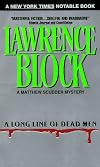
An ancient brotherhood meets annually in the back room of a swank Manhattan restaurant, a fraternity created in secret to celebrate life by celebrating its dead. Matthew Scudder, ex-cop and ex-boozer, has been asked to investigate a baffling thirty-year run of suicides and suspiciously random accidents that has thinned the ranks of this select group of gentlemen. He finds too many secrets, too many places for a maddeningly patient serial killer to hide.Tags
Recommendations





Member Reviews
Number 12 in a series and you would think Block might be running out of ideas. But no--he's an idea genius. The latest mystery surrounds a secret club of 31 men which has been meeting annually for decades. When the club is down to one surviving man, he recruits a group of 30 to carry on the tradition. Why? No one knows. To be a spot to share secrets. To make a connection with history. To acknowledge the passage of time (Or, as Elaine points out, to be masculine). Unfortunately, members have been dying at a rate much faster than an actuarial table would predict. One of the survivors comes to Scudder, looking for some help.
The mystery is interesting enough, although once again, the killer was relatively easy to figure out before the end. show more Since I'm not the kind of reader that usually knows, it means Block was more than a little obvious. Nonetheless, it was a good story, propelled by a number of character development issues and enjoyable dialogue. One of the things I love about the Scudder books is how issues and historical context is woven into the story. There's a nice little bit about the sudden predominance of trees in the city, when Scudder can remember the days where one would have to go to Central Park to see the trees. Sure, you lose a few to pollution and trucks, he acknowledges. But they are tough, and some survive. Anyone whose walked the streets in Manhattan has seen those stragglers trying to grow. "Some of us see the glass half full. I see it three-fourths empty, and some days it's all I can do to keep my hands off it."
Oh, the dialogue was a pleasure this time, especially the sections with Durkin. He and Scudder spend a few minutes getting a little philosophical about lying in service of the higher good.
Then there's Durkin without cigarettes:
"You want to get even with somebody, either you whip out a gun and make a little noise or you tear into him with a baseball bat, break his bones, and beat his fu*king brains out. Something wrong?'
'Remind me never to get you mad at me.'
'Why, did I sound like I was really getting into it there?' He grinned. 'I'm ten days off cigarettes.'"
In fact, Durkin is really on a roll:
"'Twelve years between Uhl and Watson,' he said, 'you're talking about a killer who likes to take his time. The other twenty-six guys, time he gets around to them they'll be too old to care. You know what he's like, this guy? He's prostate cancer. By the time he kills you you're already dead of something else.'"
Of course, TJ has his own take on the club, reflecting the perspective of an urban street-wise young man of color:
"'Thirty-two years,' he said. 'You couldn't start a club like that on the Deuce. Never mind no thirty-two years. 'Fore you knew it, you wouldn't have nobody left to have a meeting with. The ones that wasn't dead themselves, they most likely be locked up for killin' the other ones... Group of dudes I knew four, five years ago, half of 'em's dead. Didn't take no thirty-two years, neither. Dyin' must be easy, when I think of all the dudes caught on real quick how to do it.'
While he is working the cold cases of club members, Scudder is pondering a number life choices. Should he go private? He's continuing to take a few cases for the agency, including an unfortunate one involving Velcro. Elaine has some words of advice: "'I don't think you want it,' she said. 'I think you feel you ought to want it, but you don't, and that's what upsets you. But it's your call.'" Pleasantly intricate dialogue for a mystery.
A number of secondary characters continue to act as sounding boards for Scudder. As usual, their characterization shines, from Martin, the despondent head of the (in)security firm, to the defense lawyer Hard-Way Ray. (If there's one person I'd love to have a glass of whiskey with as he tells stories about Ireland, it would be Mick).
He's also stillseeing Lisa in this book, and it takes on even stronger creep overtones as he muses on her incestuous history. Knowing that Scudder knows it and still continues to see her is extremely uncomfortable to read, like he is accepting the role of the father. Ignoring the fact that he is cheating on Elaine (almost impossible to do), the fact that he continues to have sex with Lisa despite knowing that he's duplicating a harmful pattern really lowers him in my eyes, pushing him into anti-hero territory.
An emotionally satisfying ending, though a bit preposterous. Felt more like a push to continue locating Scudder into morally-bankrupt hero territory then an honest mystery solution.I just have doubts that eight average Americans would go for it. Granted, the lawyer has the inside view on the system and knows all the tricks to get someone off, as we've learned earlier. However, I think the members would have second and third thoughts, and possibly reconsider. If nothing else, it would forever change the tone of the meeting and the relationship between them.
Overall, three and a half stars--good and leaning to the up side.
What are you waiting for? Go get
[b:The Sins of the Fathers|39507|The Sins of the Fathers (Matthew Scudder, #1)|Lawrence Block|http://photo.goodreads.com/books/1348208837s/39507.jpg|1593410] and get started. show less
The mystery is interesting enough, although once again, the killer was relatively easy to figure out before the end. show more Since I'm not the kind of reader that usually knows, it means Block was more than a little obvious. Nonetheless, it was a good story, propelled by a number of character development issues and enjoyable dialogue. One of the things I love about the Scudder books is how issues and historical context is woven into the story. There's a nice little bit about the sudden predominance of trees in the city, when Scudder can remember the days where one would have to go to Central Park to see the trees. Sure, you lose a few to pollution and trucks, he acknowledges. But they are tough, and some survive. Anyone whose walked the streets in Manhattan has seen those stragglers trying to grow. "Some of us see the glass half full. I see it three-fourths empty, and some days it's all I can do to keep my hands off it."
Oh, the dialogue was a pleasure this time, especially the sections with Durkin. He and Scudder spend a few minutes getting a little philosophical about lying in service of the higher good.
Then there's Durkin without cigarettes:
"You want to get even with somebody, either you whip out a gun and make a little noise or you tear into him with a baseball bat, break his bones, and beat his fu*king brains out. Something wrong?'
'Remind me never to get you mad at me.'
'Why, did I sound like I was really getting into it there?' He grinned. 'I'm ten days off cigarettes.'"
In fact, Durkin is really on a roll:
"'Twelve years between Uhl and Watson,' he said, 'you're talking about a killer who likes to take his time. The other twenty-six guys, time he gets around to them they'll be too old to care. You know what he's like, this guy? He's prostate cancer. By the time he kills you you're already dead of something else.'"
Of course, TJ has his own take on the club, reflecting the perspective of an urban street-wise young man of color:
"'Thirty-two years,' he said. 'You couldn't start a club like that on the Deuce. Never mind no thirty-two years. 'Fore you knew it, you wouldn't have nobody left to have a meeting with. The ones that wasn't dead themselves, they most likely be locked up for killin' the other ones... Group of dudes I knew four, five years ago, half of 'em's dead. Didn't take no thirty-two years, neither. Dyin' must be easy, when I think of all the dudes caught on real quick how to do it.'
While he is working the cold cases of club members, Scudder is pondering a number life choices. Should he go private? He's continuing to take a few cases for the agency, including an unfortunate one involving Velcro. Elaine has some words of advice: "'I don't think you want it,' she said. 'I think you feel you ought to want it, but you don't, and that's what upsets you. But it's your call.'" Pleasantly intricate dialogue for a mystery.
A number of secondary characters continue to act as sounding boards for Scudder. As usual, their characterization shines, from Martin, the despondent head of the (in)security firm, to the defense lawyer Hard-Way Ray. (If there's one person I'd love to have a glass of whiskey with as he tells stories about Ireland, it would be Mick).
He's also still
An emotionally satisfying ending, though a bit preposterous. Felt more like a push to continue locating Scudder into morally-bankrupt hero territory then an honest mystery solution.
Overall, three and a half stars--good and leaning to the up side.
What are you waiting for? Go get
[b:The Sins of the Fathers|39507|The Sins of the Fathers (Matthew Scudder, #1)|Lawrence Block|http://photo.goodreads.com/books/1348208837s/39507.jpg|1593410] and get started. show less
Matt Scudder is a divorced former detective and recovering alcoholic trying to make a living as an unlicensed private investigator in New York City. He's hired to find out why members of a secret club are dying at an accelerated rate. This could be a typical mystery, but it's not. The writing is intelligent and crisp, the plot is inventive, and the characters are richly drawn.
Like most literature disguised as genre fiction it touches on the important subjects from time to time, like this conversation between Scudder and his mistress, after she asks him if he prays:
"Once in a while. Not very often, though."
"How do you do it?"
"Mostly I ask for strength."
"Strength?"
"To do something," I said, "or to get through something. That kind of show more strength."
"And do you get it?"
"Yes," I said. "I generally do."
Like real people, most of the characters are damaged in one way or another, and most of them find a way to cope. Some, like Scudder, find a way to cope with the methods they've used to cope. Along the way, Scudder finds out he's a better investigator than he thinks. show less
Like most literature disguised as genre fiction it touches on the important subjects from time to time, like this conversation between Scudder and his mistress, after she asks him if he prays:
"Once in a while. Not very often, though."
"How do you do it?"
"Mostly I ask for strength."
"Strength?"
"To do something," I said, "or to get through something. That kind of show more strength."
"And do you get it?"
"Yes," I said. "I generally do."
Like real people, most of the characters are damaged in one way or another, and most of them find a way to cope. Some, like Scudder, find a way to cope with the methods they've used to cope. Along the way, Scudder finds out he's a better investigator than he thinks. show less
I liked this book a lot. It wasn't as dark as the last Block/Scudder novel I read, "Hope to Die."
I have read other books featuring Scudder and have liked them all. This one was good because of the relationships between Scudder and his girlfriend Elaine and the other people that populate Scudder's life including ex-cops, bar owners/gangsters and other women. The story is about a private group of men that meet once a year. One of the members believe they are dying at a faster rate than what is possible. Scudder investigates. I should have figured it out sooner, but the ride was great.
I have read other books featuring Scudder and have liked them all. This one was good because of the relationships between Scudder and his girlfriend Elaine and the other people that populate Scudder's life including ex-cops, bar owners/gangsters and other women. The story is about a private group of men that meet once a year. One of the members believe they are dying at a faster rate than what is possible. Scudder investigates. I should have figured it out sooner, but the ride was great.
More than thirty years ago in New York -- in May 1961, to be exact -- an old man brings together thirty young men to form a club, the only purpose of which is to meet once a year for dinner and to note which of their number have passed away since the last meeting. When the next-to-last member dies, years from now, the last survivor has the duty of selecting thirty young men and beginning the next round. A form of this club has actually existed since the days of Babalyon. The members of the club's current incarnation are in their 50s now, and they're all reasonably successful, but there are only fourteen of them left -- a startlingly high rate of attrition, and they're beginning to become aware that they're beating the actuarial odds, show more but it seems that someone is reducing the membership. Matthew Scudder is hired to find out if this is just an unusal occurance or if someone is actually killing them.
I thought the idea of this ancient club and the fact that it actually seemed to work, was such an unusual plot. I wish Block had focused more on this line and less on so much else in Matthew Scudder's life and other unrelated cases. I really wanted to know more about this club of 31.
I gave it 3 stars. I have read most of the series and this was not one of the best but it was still a good book. show less
I thought the idea of this ancient club and the fact that it actually seemed to work, was such an unusual plot. I wish Block had focused more on this line and less on so much else in Matthew Scudder's life and other unrelated cases. I really wanted to know more about this club of 31.
I gave it 3 stars. I have read most of the series and this was not one of the best but it was still a good book. show less
This is the twelfth of Lawrence Block’s Matthew Scudder novels, and while I enjoyed all of the previous ones, I found this one somewhat disappointing.
I have remarked before on how in longer-running series there seems to occur a shift in emphasis away from what the individual installments are ostensibly about and towards the continuing private lives of the protagonists and their friends. The Matthew Scudder series has been following that pattern, and not necessarily ot it’s detriment; A Long Line of Dead Men, howvever, goes farther with this than any of the previous novels in the series, and not just in the space it dedicates to Matthew Scudder, his almost-wife Elaine and various other associates he has accrued during the course of show more the preceeding novels.
Pretty much everything of any interest and importance that happens in this novel takes place in Scudder’s private sphere; and while there is a mystery plot, it feels tacked-on, shoddy and like something from a lame TV show rather than being part of the solid and realistic crime series this always used to be. Someone even comments inside the novel on how hair-raisingly improbable and melodramatic events are, and seeing how the general tone of the series does not exactly lend itself to metafictional frolics, this is a bad sign indeed. Even Scudder does not seem able to muster much enthusiasm for the case and appears much more interested in when he’ll be able to spend his next night with Mick Ballou than in solving the murders.
A Long Line of Dead Men is not a bad novel – Lawrence Block is much too adept a writer for that – but I do not think it lives up to the previous Matthew Scudder novels; while still quite enjoyable it is the weakest volume in the series so far. show less
I have remarked before on how in longer-running series there seems to occur a shift in emphasis away from what the individual installments are ostensibly about and towards the continuing private lives of the protagonists and their friends. The Matthew Scudder series has been following that pattern, and not necessarily ot it’s detriment; A Long Line of Dead Men, howvever, goes farther with this than any of the previous novels in the series, and not just in the space it dedicates to Matthew Scudder, his almost-wife Elaine and various other associates he has accrued during the course of show more the preceeding novels.
Pretty much everything of any interest and importance that happens in this novel takes place in Scudder’s private sphere; and while there is a mystery plot, it feels tacked-on, shoddy and like something from a lame TV show rather than being part of the solid and realistic crime series this always used to be. Someone even comments inside the novel on how hair-raisingly improbable and melodramatic events are, and seeing how the general tone of the series does not exactly lend itself to metafictional frolics, this is a bad sign indeed. Even Scudder does not seem able to muster much enthusiasm for the case and appears much more interested in when he’ll be able to spend his next night with Mick Ballou than in solving the murders.
A Long Line of Dead Men is not a bad novel – Lawrence Block is much too adept a writer for that – but I do not think it lives up to the previous Matthew Scudder novels; while still quite enjoyable it is the weakest volume in the series so far. show less
"A Long Line of Dead Men" is the 12th Matthew Scudder novel, a most unusual detective series. If you have been reading this series, you, of course, know that Scudder left the police force after a shooting that ended with an innocent child getting killed, that Scudder descended into drink and despair, leaving his job and family behind, but holding court at Armstrong's bar, doing favors such as detective work for friends and friends of friends. After descending into despair and blackouts, he found salvation of a sort attending meetings in church basements, sometimes more than one meeting a day, but taking one day at a time, staying sober. At this point in the series, Scudder is living with and engaged to Elaine, a former high priced call show more girl who had met and exchanged favors with when he was on the force and she needed a friend on the force. He has left his rundown hotel for an apartment with Elaine. He still lacks a PI license and does favors for friends.
This mystery is a little different from the ordinary. There is secret group of 31 men who meet once a year and, when they meet, they read the names of the departed, and then eat and talk and meet again the next year. Only problem: they have been dying at an actuarially extraordinary rate. It is not clear if there is a murderer stalking them, but the numbers of murders and suicides and accidents even in a statistically small group are quite high and suspiciously high at that. Scudder doesn't even know if there is a murderer out there or what the motive is or how anyone found out about the group, if indeed there is a stalker. There is not much to go on and little in the way of clues, since the killings go back many years and there is no pattern among them. Scudder doggedly pokes around as he usually does until he finds something. It is a well-written, engrossing mystery and well worth reading. For those of us who have been following the world of Scudder, this book also develops further the personalities of Scudder, Elaine, and TJ and Scudder's gritty world in the streets of the five boroughs. show less
This mystery is a little different from the ordinary. There is secret group of 31 men who meet once a year and, when they meet, they read the names of the departed, and then eat and talk and meet again the next year. Only problem: they have been dying at an actuarially extraordinary rate. It is not clear if there is a murderer stalking them, but the numbers of murders and suicides and accidents even in a statistically small group are quite high and suspiciously high at that. Scudder doesn't even know if there is a murderer out there or what the motive is or how anyone found out about the group, if indeed there is a stalker. There is not much to go on and little in the way of clues, since the killings go back many years and there is no pattern among them. Scudder doggedly pokes around as he usually does until he finds something. It is a well-written, engrossing mystery and well worth reading. For those of us who have been following the world of Scudder, this book also develops further the personalities of Scudder, Elaine, and TJ and Scudder's gritty world in the streets of the five boroughs. show less
Weird idea for a story. Weird idea for a villain. But I guess when you live in New York, just about anything will happen if you give it enough time. Scudder is far enough advanced in AA that he, sort of, sponsors another alcoholic through the program, which makes for some interesting discussion. The group of men meeting once a year is an intriguing idea that I'd be curious to know if it has any basis in reality, although the idea that the last survivor convenes a new group seems pretty precarious and not something that would last through more than one or two cycles.
When it turns out that the group doesn't want to take the story to the police, an alternative must be found, and I thought that part was neatly put together. There was a show more certain amount of ambiguity in it, with some moral issues that leave you thinking. I've really enjoyed every Matthew Scudder mystery I've read. show less
When it turns out that the group doesn't want to take the story to the police, an alternative must be found, and I thought that part was neatly put together. There was a show more certain amount of ambiguity in it, with some moral issues that leave you thinking. I've really enjoyed every Matthew Scudder mystery I've read. show less
Members
- Recently Added By
Lists

#MysteryBingo2025Silver(Original)
13 works; 1 member
#MysteryBingo2025Silver(Revised)
13 works; 1 member
Author Information

492+ Works 38,055 Members
Lawrence Block is the author of the popular series' featuring Bernie Rhodenbarr, Matthew Scudder, and Chip Harrison. Over 2 million copies of Lawrence Block's books are in print. He has published articles and short fiction in American Heritage, Redbook, Playboy, GQ, and The New York Times, and has published several collections of short fiction in show more book form, most recently Collected Mystery Stories. Block is a Grand Master of Mystery Writers of America. He has won the Edgar and Shamus awards four times, the Japanese Maltese Falcon award twice, as well as the Nero Wolfe award. In France, he was proclaimed a Grand Maitre du Roman Noir and has been awarded the Societe 813 trophy twice. Block was presented with the key to the city of Muncie, Indiana, and is a past president of the Private Eye Writers of America and the Mystery Writers of America. (Bowker Author Biography) Lawrence Block is the author of the popular series featuring Bernie Rhodenbarr, Matthew Scudder, and Chip Harrison. Over 2 million copies of Lawrence Block's books are in print. Lawrence Block has won the Edgar Award three times, the Shamus Award four times, the Maltese Falcon Award twice, and was named Grandmaster by the Mystery Writers of America. (Publisher Provided) show less
Some Editions
Awards and Honors
Awards
Series

Common Knowledge
- Canonical title
- A Long Line of Dead Men
- Original title
- A Long Line of Dead Men
- Original publication date
- 1994
- People/Characters
- Matthew Scudder
- Important places
- New York, New York, USA
- Dedication
- This is for Jerrold Mundis.
It's also for Phil Brotherman, Jerry Carp, Jerry Carrel, Joel
Daniels, Eddie Fischman, Paul Gandel, Steve Greenberg
Mel Hurwitz, Symmie Jacobson, Artie Judelsohn, Don
Kohnstamm, Bru... (show all)ce Kramer, Dave Krantz, Lew Lansky,
Dick Lederman, Dave Leff, and Dave Stiller, and in
memory of Rett Goldberg and Mike Woldman. - First words
- It must have been around nine o'clock when the old man stood up and tapped his spoon against the bowl of his water glass.
- Last words
- (Click to show. Warning: May contain spoilers.)"So do I," I said. "The last time I took a guy to a meeting, it didin't work out too well."
Classifications
Statistics
- Members
- 723
- Popularity
- 39,021
- Reviews
- 13
- Rating
- (3.90)
- Languages
- 10 — Chinese, Danish, Dutch, English, Finnish, French, German, Italian, Portuguese, Turkish
- Media
- Paper, Audiobook, Ebook
- ISBNs
- 31
- ASINs
- 12