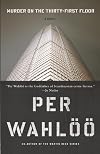
Murder on the Thirty-First Floor
by Per Wahlöö
On This Page
Description
'The godfather of Scandinavian crime fiction' Jo Nesbo In an unnamed country, in an unnamed year sometime in the future, Chief Inspector Jensen of the Sixteenth Division is called in after the publishers controlling the entire country's newspapers and magazines receive a threat to blow up their building, in retaliation for a murder they are accused of committing. The building is evacuated, but the bomb fails to explode and Jensen is given seven days in which to track down the letter writer. show more Jensen has never had a case he could not solve before, but as his investigation into the identity of the letter writer begins it soon becomes clear that the directors of the publishers have their own secrets, not least the identity of the 'Special Department' on the thirty first floor; the only department not permitted to be evacuated after the bomb threat. Author of the Martin Beck series. show lessTags
Recommendations
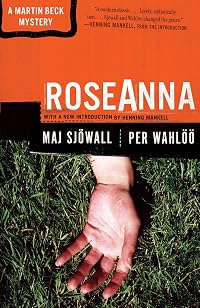





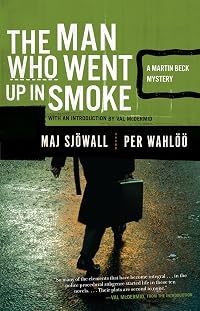


















Member Reviews
Un'atmosfera che sembra presa di peso da 1984 permea questo romanzo ambientato in una non meglio identificata e assolutamente distopica nazione nordica, dove, con metodi degni di Huxley, la popolazione è stata ridotta a uno stato di bovina acquiescenza, in nome di una non meglio identificata "concordia sociale".
Una lettera anonima mette in moto delle indagini, il cui esito non riuscirà a scuotere il commissario che le porta avanti, vera rotella non pensante dello status quo, nonostante mostri un minimo grado di ostinazione.
Aggiacciante e gelido.
Una lettera anonima mette in moto delle indagini, il cui esito non riuscirà a scuotere il commissario che le porta avanti, vera rotella non pensante dello status quo, nonostante mostri un minimo grado di ostinazione.
Aggiacciante e gelido.
With sirens screaming, a police team race through the city streets towards The Skyscraper. On the eighteenth floor Inspector Jensen is shown into the presence of The Company’s director, "The Publisher". The Company has received an anonymous bomb threat. The bomb is set to detonate at 1400 hours which is in half an hour's time. Jensen instructs The Publisher to evacuate the building. The Publisher however insists that production cannot be halted and evacuation is impossible. Eventually he agrees - with the exception of evacuating the Special Department on the thirty-first floor; the lift doesn't go to that floor and there would no be time to evacuate it. With The Skyscraper cleared, 1400 hours comes and goes without the threatened show more explosion. Back at police headquarters, Jensen is reminded that this is an unprecedented crime and whilst there has been no bomb, the threat must still be investigated - with utmost discretion and with all interviews handled by Jensen himself. Above all Jensen must not interfere with the course of The Company's work. He has seven days to find the writer of the anonymous letter...
Per Wahloo and his partner Mai Sjowall's jointly written "Martin Beck" series of the 1960s are thought of as Scandinavian crime classics. MURDER ON THE 31ST FLOOR, along with THE STEEL SPRING, are Per Wahloo solo works. Both books have a sci-fi slant, set in an undesignated future society, and both feature Inspector Jensen as investigator.
Originally published in translation in the UK in 1966, this novel's fictional future might send a shudder of recognition through the reader of the 2010s in the light of recent media/conglomerate scandals and a growing awareness of corporate power. Inspector Jensen struggles through his seven day deadline to find the would-be bomber. We follow his trail into the corrupt and closed-circuit world of The Company and the society it feeds. And this is a society shaped by The Accord, an agreement between all political and trade union organisations and The Company, a huge corporate which controls all newspaper and magazine publishing and their subsidiary industries including distribution, paper manufacture, even furniture production. The Company's iconography is everywhere - promoting conformity and “dignity”. Culture is fed to individuals through the Company's magazines and newspapers, alongside the processed meals available from public vending machines (the food industry is also an arm of the Company). Society's crime rate has fallen dramatically but so has the birth rate. Alcoholism and suicide rates have also risen. There are grimly prophetic touches such as the suburban mass-housing which are neatly dubbed “self-clearance areas” by the Ministry of Social Affairs. These are arranged around a bus station, parade of shops and piazza - as the bus route is axed, the shops close and are boarded up and the piazza becomes a graveyard of junked cars, occupants gradually leave until the development's now decrepit flats are left with about twenty percent occupancy.
This is an Orwellian tale in the scale of its imagination. But don't make the mistake of identifying Jensen as a liberal sceptic. Jensen's responses to rule-breaking and informality are a sharp reprimand for the perpetrator, he has a job to do and he will do it. A jewel of objective writing, this is a cool, beautifully-paced mystery containing a chilling vision of a corporate-owned dystopia. show less
Per Wahloo and his partner Mai Sjowall's jointly written "Martin Beck" series of the 1960s are thought of as Scandinavian crime classics. MURDER ON THE 31ST FLOOR, along with THE STEEL SPRING, are Per Wahloo solo works. Both books have a sci-fi slant, set in an undesignated future society, and both feature Inspector Jensen as investigator.
Originally published in translation in the UK in 1966, this novel's fictional future might send a shudder of recognition through the reader of the 2010s in the light of recent media/conglomerate scandals and a growing awareness of corporate power. Inspector Jensen struggles through his seven day deadline to find the would-be bomber. We follow his trail into the corrupt and closed-circuit world of The Company and the society it feeds. And this is a society shaped by The Accord, an agreement between all political and trade union organisations and The Company, a huge corporate which controls all newspaper and magazine publishing and their subsidiary industries including distribution, paper manufacture, even furniture production. The Company's iconography is everywhere - promoting conformity and “dignity”. Culture is fed to individuals through the Company's magazines and newspapers, alongside the processed meals available from public vending machines (the food industry is also an arm of the Company). Society's crime rate has fallen dramatically but so has the birth rate. Alcoholism and suicide rates have also risen. There are grimly prophetic touches such as the suburban mass-housing which are neatly dubbed “self-clearance areas” by the Ministry of Social Affairs. These are arranged around a bus station, parade of shops and piazza - as the bus route is axed, the shops close and are boarded up and the piazza becomes a graveyard of junked cars, occupants gradually leave until the development's now decrepit flats are left with about twenty percent occupancy.
This is an Orwellian tale in the scale of its imagination. But don't make the mistake of identifying Jensen as a liberal sceptic. Jensen's responses to rule-breaking and informality are a sharp reprimand for the perpetrator, he has a job to do and he will do it. A jewel of objective writing, this is a cool, beautifully-paced mystery containing a chilling vision of a corporate-owned dystopia. show less
mi sbilancio in numero di stellette forse sull'onda dell'entusiasmo da fine lettura. Ma il libro è davvero notevole.
E' un giallo "futurista" scritto nel 1964. Non tutte le previsioni sono azzeccate ma è abbastanza impressionante la corrispondenza tra le situazioni descritte dall'autore e molti aspetti della nostra realtà contemporanea.
Un orwell minore ma non troppo.
Il poliziotto imperscrutabile e ulceroso che registra per noi un collasso sociale senza speranza mi ricorda un vecchio racconto a fumetti di Altan ambientato proprio in Svezia. Qualcuno sa dirmi il titolo?
PS. il "cellulare", termine usato più volte nel corso del racconto, non è il telefonino, ma il furgone della polizia. All'inizio ero caduta nell'inganno ma la data del show more libro mi lasciava perplessa.
Cito questa sciocchezza perchè il racconto parla anche di questo: di come si perdano le idee personali anche grazie alla perdita di padronanza del linguaggio con cui esprimerle (esempio della locomotiva) show less
E' un giallo "futurista" scritto nel 1964. Non tutte le previsioni sono azzeccate ma è abbastanza impressionante la corrispondenza tra le situazioni descritte dall'autore e molti aspetti della nostra realtà contemporanea.
Un orwell minore ma non troppo.
Il poliziotto imperscrutabile e ulceroso che registra per noi un collasso sociale senza speranza mi ricorda un vecchio racconto a fumetti di Altan ambientato proprio in Svezia. Qualcuno sa dirmi il titolo?
PS. il "cellulare", termine usato più volte nel corso del racconto, non è il telefonino, ma il furgone della polizia. All'inizio ero caduta nell'inganno ma la data del show more libro mi lasciava perplessa.
Cito questa sciocchezza perchè il racconto parla anche di questo: di come si perdano le idee personali anche grazie alla perdita di padronanza del linguaggio con cui esprimerle (esempio della locomotiva) show less
An odd Alphaville-inspired sci-fi dystopian tale masquerading as a detective novel. The crime is a bomb-threat sent to a newspaper conglomerate, the murder--as we find out--is one of ideas and freedom of speech. Wahloo's writing style is plain and objective, with hints of Kobo Abe-like surrealism. Not much 'detecting' goes down in the very short novel, just a process of elimination, with each suspect telling more and more of the story. However, it is a bit prescient for 1966, looking towards the media conglomerates like NewsCorp. Worth a look--I got thru it in a few sittings.
Strangely compelling. A stark writing style that nevertheless kept me enthralled and engaged right down to the last page. Reminded me a little of the likes of Graham Greene or Franz Kafka - the grey and wretched selling and society, and the police officer plagued by bad digestion and ill patience. Recommended.
Marxist SF: "The Murder on the 31st Floor” by Per Wahlöö
Published for the first time in 1964 (2011 edition read).
NB: First read in German a long time ago. This is my first reading in English.
“The Murder on the 31st Floor” starts as a spiritual murder of cultural criticism, the freedom of expression and then in the physical liquidation of the last social critics.
“The Murder on the 31st Floor” is a novel in several ways that breaks with Wahlöös earlier novels, which mostly take place in foreign dictatorships, mainly Spain and Latin America. But all his novels, from the beginning, with the football novel "Sky Goat" (1959), are power studies of various types.
You can read the rest of this review on my blog.
Published for the first time in 1964 (2011 edition read).
NB: First read in German a long time ago. This is my first reading in English.
“The Murder on the 31st Floor” starts as a spiritual murder of cultural criticism, the freedom of expression and then in the physical liquidation of the last social critics.
“The Murder on the 31st Floor” is a novel in several ways that breaks with Wahlöös earlier novels, which mostly take place in foreign dictatorships, mainly Spain and Latin America. But all his novels, from the beginning, with the football novel "Sky Goat" (1959), are power studies of various types.
You can read the rest of this review on my blog.
Here is a police novel set in a near-future world where the police/welfare state is fully established.
A powerful combine, called The Concern, has bought up all the magazines and newspapers in this unnamed northern country. The people are fed a constant diet of bland, meaningless nonsense. Anything that could cause people to be concerned or upset is removed. Whether it is a children's comic book or a women's magazine, there are lots of bright colors everywhere. Sometimes, the same pictures of children or puppies are used in different publications. Everything is edited and printed in the same thirty-floor skyscraper.
The building receives an anonymous, mailed bomb threat, and those in charge don't know what to do. After worrying that the show more disruption will be too costly, the decision is made to stage a fire drill, and the building is evacuated. When no explosion happens, Inspector Jensen of the Sixteenth Division is given the task of finding out who sent the bomb threat. His boss, the Chief of Police, intentionally does not want to know what's going on. Jensen has one week in which to crack the case, and he cannot let anyone in the skyscraper know what he is doing. That might cause them to become nervous or fearful, something which is practically a criminal offense. His investigation leads to the nearly-mythical thirty-first floor of the building, which few have seen, home to the Special Department.
I can only give this a rating of Pretty Good. It has some really good utopian ideas in it, but I guess Swedish police novels (where this was first published) are a lot different than American police novels. It reads like a cross between 1984 and an episode of the police show Dragnet; Inspector Jensen is a person of very few words. show less
A powerful combine, called The Concern, has bought up all the magazines and newspapers in this unnamed northern country. The people are fed a constant diet of bland, meaningless nonsense. Anything that could cause people to be concerned or upset is removed. Whether it is a children's comic book or a women's magazine, there are lots of bright colors everywhere. Sometimes, the same pictures of children or puppies are used in different publications. Everything is edited and printed in the same thirty-floor skyscraper.
The building receives an anonymous, mailed bomb threat, and those in charge don't know what to do. After worrying that the show more disruption will be too costly, the decision is made to stage a fire drill, and the building is evacuated. When no explosion happens, Inspector Jensen of the Sixteenth Division is given the task of finding out who sent the bomb threat. His boss, the Chief of Police, intentionally does not want to know what's going on. Jensen has one week in which to crack the case, and he cannot let anyone in the skyscraper know what he is doing. That might cause them to become nervous or fearful, something which is practically a criminal offense. His investigation leads to the nearly-mythical thirty-first floor of the building, which few have seen, home to the Special Department.
I can only give this a rating of Pretty Good. It has some really good utopian ideas in it, but I guess Swedish police novels (where this was first published) are a lot different than American police novels. It reads like a cross between 1984 and an episode of the police show Dragnet; Inspector Jensen is a person of very few words. show less
Members
- Recently Added By
Lists

Nordic Crime Fiction
66 works; 10 members
Scandinavian Crime Fiction
224 works; 37 members

Books mentioned in Julian Symons’ Bloody Murder
438 works; 6 members
Author Information

49+ Works 15,330 Members
Writer and journalist Per Wahlöö was born in Sweden on August 5, 1926. He graduated from the University of Lund in 1946 and found work covering criminal and social issues for numerous newspapers and magazines. He also wrote a number of television and radio plays and was managing editor for several magazines. His first book, Himmelsgeten, was show more published in 1956 and numerous novels followed. He also wrote all ten novels in the Martin Beck Police Mystery series with his wife Maj Sjöwall. In 1971, The Laughing Policeman (a translation of Den Skrattande Polisen) won an Edgar Award for Best Novel. He died from cancer on June 22, 1975. (Bowker Author Biography) show less
Some Editions
Series
Belongs to Publisher Series
Work Relationships
Common Knowledge
- Canonical title
- Murder on the Thirty-First Floor
- Original title
- Mord på 31: a våningen
- Alternate titles
- The Thirty-First Floor (orig. English title) (orig. English title)
- Original publication date
- 1964; 1966 (English translation) (English translation)
- People/Characters
- Ispettore Jensen
- Related movies
- Kamikaze 1989 (1982)
- Dedication
- To Maj
- First words
- The alarm was given at exactly 1:02 p.m.
The alarm was raised at exactly 13.02. [2012 English translation] - Last words
- (Click to show. Warning: May contain spoilers.)He sat quite still and wondered whether the explosion would be audible as far away as this.
(Click to show. Warning: May contain spoilers.)He sat utterly still and wondered if he would hear the bang from there. [2012 English translation]
Classifications
- Genres
- Fiction and Literature, Mystery, Science Fiction
- DDC/MDS
- 839.7 — Literature & rhetoric German & related literatures Other Germanic literatures Swedish literature
- LCC
- PT9876.33 .A35 .M613 — Language and Literature German, Dutch and Scandinavian literatures Swedish literature Individual authors or works 1961-2000
- BISAC
Statistics
- Members
- 317
- Popularity
- 100,650
- Reviews
- 11
- Rating
- (3.50)
- Languages
- 12 — Danish, Dutch, English, Estonian, French, German, Italian, Polish, Portuguese, Russian, Spanish, Swedish
- Media
- Paper, Ebook
- ISBNs
- 29
- ASINs
- 13