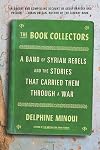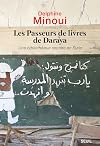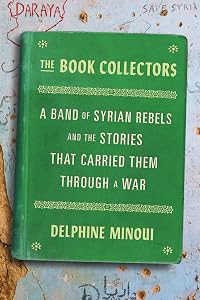
The Book Collectors: A Band of Syrian Rebels and the Stories That Carried Them Through a War
by Delphine Minoui
On This Page
Description
"An urgent and compelling account of great bravery and passion." ?Susan OrleanAward-winning journalist Delphine Minoui recounts the true story of a band of young rebels, a besieged Syrian town, and an underground library built from the rubble of war
Reading is an act of resistance.
Daraya is a town outside Damascus, the very spot where the Syrian Civil War began. Long a site of peaceful resistance to the Assad regimes, Daraya fell under siege in 2012. For four years, no one entered or left, show more and aid was blocked. Every single day, bombs fell on this place?a place of homes and families, schools and children, now emptied and broken into bits.
And then a group searching for survivors stumbled upon a cache of books in the rubble. In a week, they had six thousand volumes; in a month, fifteen thousand. A sanctuary was born: a library where people could escape the blockade, a paper fortress to protect their humanity.
The library offered a marvelous range of books?from Arabic poetry to American self-help, Shakespearean plays to stories of war in other times and places. The visitors shared photos and tales of their lives before the war, planned how to build a democracy, and tended the roots of their community despite shell-shocked soil.
In the midst of the siege, the journalist Delphine Minoui tracked down one of the library’s founders, twenty-three-year-old Ahmad. Over text messages, WhatsApp, and Facebook, Minoui came to know the young men who gathered in the library, exchanged ideas, learned English, and imagined how to shape the future, even as bombs kept falling from above. By telling their stories, Minoui makes a far-off, complicated war immediate and reveals these young men to be everyday heroes as inspiring as the books they read. The Book Collectors is a testament to their bravery and a celebration of the power of words. show less
Tags
Recommendations



























Member Reviews
It was a caption under the photograph of two young Syrian men browsing the shelves of a library that piqued the interest of Delphine Minoui, an award winning French journalist - ‘The Secret Library of Daraya’.
Curious as to how a library could operate in a place like Daraya, but unable to travel to Syria due to the region’s instability, Delphine reached out and made contact with one of the young men in the photo via Skype. Twenty three year old Ahmed was born in Daraya, and remained even after his family fled, determined to document the devastation and support the rebels. One afternoon he was called to help a group carrying books from a deserted, bombed out home, an idea that first struck him as absurd in the middle of a war zone. show more Yet from the moment he picked up his first book he was struck by what it represented - freedom. As the collection of scavenged tomes grew, a room was found for them in a basement, and the Secret Library of Daraya was born.
Daraya is a suburb on the outskirts of Damascus. Declared a hotbed of terrorists by Syria’s ruler Bashar al-Assad for daring to peacefully protest his dictatorship, it was placed under siege and ringed with with his forces in 2011. I have to admit to having very little understanding of the conflict in Syria, so I appreciated that Minoui explains the events that led to Daraya’s position and the steady escalation that saw the suburb attacked with missiles, bombs, and even chemical weapons, including sarin and Napalm.
Delphine has written The Book Collectors of Daraya by speaking with Ahmed, and his friends through an unreliable internet connection via Skype and WhatsApp. Initially her focus is on the library; how it came to be, which books are popular, and what it means to the residents of Daraya. It’s a delight to hear how the library and its books provides a refuge and haven from the devastation on their doorstep, how it provides a respite of normalcy, and brings people together. Non-readers become readers, free to choose something other than propaganda, soldiers take books with them to the frontline to read, trade, and discuss, in between wielding their Kalashnikovs.
Unsurprisingly the miracle of the library does take somewhat of a backseat as Delphine learns of the daily hardships and horrors faced by the suburb’s residents. It’s a harrowing tale of danger, deprivation, and starvation as the siege drags on for more than five years. Not content to reduce Daraya to rubble, the Syrian dictator stops any attempts to provide food or essentials, determined to quash the rebels.
There is a little repetition in the narrative of The Book Collectors of Daraya, but I found it well written and readable. Minoui adds a personal perspective, sharing her experience of terror attacks in her home of Istanbul, and in Paris, and freely admits her bias. I think she treats those she speaks with sensitively, and it’s clear she believes that it’s important their story is told. I particularly appreciated the inclusion of photographs that show the library, the men whom Delphine introduces us to, and the streets of Daraya.
The Book Collectors of Daraya is as much about the Syrian civil war, and particularly the experience of the young men who established the library, as it is the library itself. Simultaneously heartbreaking and uplifting, this book speaks of grief, and courage, of resilience, of humanity, and the power of books. show less
Curious as to how a library could operate in a place like Daraya, but unable to travel to Syria due to the region’s instability, Delphine reached out and made contact with one of the young men in the photo via Skype. Twenty three year old Ahmed was born in Daraya, and remained even after his family fled, determined to document the devastation and support the rebels. One afternoon he was called to help a group carrying books from a deserted, bombed out home, an idea that first struck him as absurd in the middle of a war zone. show more Yet from the moment he picked up his first book he was struck by what it represented - freedom. As the collection of scavenged tomes grew, a room was found for them in a basement, and the Secret Library of Daraya was born.
Daraya is a suburb on the outskirts of Damascus. Declared a hotbed of terrorists by Syria’s ruler Bashar al-Assad for daring to peacefully protest his dictatorship, it was placed under siege and ringed with with his forces in 2011. I have to admit to having very little understanding of the conflict in Syria, so I appreciated that Minoui explains the events that led to Daraya’s position and the steady escalation that saw the suburb attacked with missiles, bombs, and even chemical weapons, including sarin and Napalm.
Delphine has written The Book Collectors of Daraya by speaking with Ahmed, and his friends through an unreliable internet connection via Skype and WhatsApp. Initially her focus is on the library; how it came to be, which books are popular, and what it means to the residents of Daraya. It’s a delight to hear how the library and its books provides a refuge and haven from the devastation on their doorstep, how it provides a respite of normalcy, and brings people together. Non-readers become readers, free to choose something other than propaganda, soldiers take books with them to the frontline to read, trade, and discuss, in between wielding their Kalashnikovs.
Unsurprisingly the miracle of the library does take somewhat of a backseat as Delphine learns of the daily hardships and horrors faced by the suburb’s residents. It’s a harrowing tale of danger, deprivation, and starvation as the siege drags on for more than five years. Not content to reduce Daraya to rubble, the Syrian dictator stops any attempts to provide food or essentials, determined to quash the rebels.
There is a little repetition in the narrative of The Book Collectors of Daraya, but I found it well written and readable. Minoui adds a personal perspective, sharing her experience of terror attacks in her home of Istanbul, and in Paris, and freely admits her bias. I think she treats those she speaks with sensitively, and it’s clear she believes that it’s important their story is told. I particularly appreciated the inclusion of photographs that show the library, the men whom Delphine introduces us to, and the streets of Daraya.
The Book Collectors of Daraya is as much about the Syrian civil war, and particularly the experience of the young men who established the library, as it is the library itself. Simultaneously heartbreaking and uplifting, this book speaks of grief, and courage, of resilience, of humanity, and the power of books. show less
In 2012 the Syrian city of Daraya, a suburb of Damascus and a base for rebels opposed to the dictatorial rule of President Assad, became the target of a military assault that would last four years, isolating Daraya's 8,000 residents from even the most basic requirements of life, such as water, food and medicine. Despite death and destruction all around them, a handful of idealistic young men meticulously assembled an underground library from scavenged books they unearthed from all over the ruins of their city, and through literature they kept hope alive.
I'm a sucker for inspirational books about books, libraries and survival, so this seemed right up my alley. It also conveniently satisfied the category "a book about books" for Read show more Harder 2024. These brave citizens created something beautiful and inspiring for their community out of overwhelming, devastating tragedy and loss. Though the narrative felt a little choppy with often extremely short chapters, and rapid pivots, it was overall a quick, engaging read. I'm somewhat ashamed to realize that Syria rarely, if ever, appears in my newsfeed, and I've spent most of the last decade oblivious to its citizens' suffering. Kudos also to Minoui for her dedication to bringing their story, photos and videos to the awareness of the rest of the world. show less
I'm a sucker for inspirational books about books, libraries and survival, so this seemed right up my alley. It also conveniently satisfied the category "a book about books" for Read show more Harder 2024. These brave citizens created something beautiful and inspiring for their community out of overwhelming, devastating tragedy and loss. Though the narrative felt a little choppy with often extremely short chapters, and rapid pivots, it was overall a quick, engaging read. I'm somewhat ashamed to realize that Syria rarely, if ever, appears in my newsfeed, and I've spent most of the last decade oblivious to its citizens' suffering. Kudos also to Minoui for her dedication to bringing their story, photos and videos to the awareness of the rest of the world. show less
What an incredible story about the value and power of reading and books, even in the face of a brutal war and a lack of most necessities to embolden, encourage, educate, and to provide an escape. The book tells the story of the town of Darayya besieged by Assad's forces in the Syrian Civil War, and about a small band of rebels who make it their calling to create a library out of the ashes of war. The way Minoui is able to develop a relationship with these war-time librarians over broken, pixelated internet connections and amidst a hail of barrel bombs from one of the most vicious dictators of recent times is a testament to the human will and to the desire for human connection and learning regardless of the situation. I was moved by the show more noble efforts of Ahmad, Omar, and the rest of the group to be able to curate from the ruins of their city a vibrant and life-giving establishment in a city where most everything was falling apart. Definitely recommend! show less
One day in late 2015 Delphine Minoui stumbled upon a picture on a Facebook page maintained by “Humans of Syria” that would ultimately change her life. It was a picture of two young men in what appeared to be a windowless library of some sort. One of the men was leaning over an open book, and the other was browsing one of the library’s crammed shelves. The photo was captioned simply, “The Secret Library of Daraya.” The French-Iranian author/reporter was well aware that Daraya was a Damascus suburb that had been under siege by Bashar al-Assad’s army since 2012. She knew that the city was completely surrounded, and that thousands of people were trapped there as everything was slowly being destroyed around them.
And yet these show more two men were making use of a “secret” library somewhere in the city. How could that even be possible? She had to know their story, and after several calls on WhatsApp and Skype, she finally found the man who could answer all of her questions, photographer and library co-founder, Ahmad Muaddamani.
The library, as it turns out, was filled by books that Ahmad and others found in the rubble of Daraya’s bombed out buildings. Their underground library relatively quickly became home to some 6,000 volumes, and would eventually grow to 15,000, each of them lovingly marked inside with the original owner’s name. That would be amazing enough, considering that all of this happened during the time an army was trying very hard to wipe out the city and every one of its inhabitants.
But what is even more amazing is how the salvaged books helped make life bearable for so many of Daraya’s people. For some the books were an escape, a window into the outside world; for others they were a source of inspiration, a glimmer of hope that a better life for them was still possible; and for others, the books offered a whiff of the freedom that Bashar al-Assad was trying to steal from them. They could read and study whatever they wanted to, and the dictator could do nothing to stop them.
______________________________________________________________________
“The conflict causing bloodshed in Syria has paradoxically brought them closer to books. Reading is the new foundation for the bubble of freedom they’ve constructed. They read to explore a concealed past, to learn, to evade insanity. Books are their best way to escape the war, if only temporarily. A melody of words against the dirge of bombs. Reading – a humble gesture that binds them to the mad hope of a return to peace.”
______________________________________________________________________
Bottom Line: The Book Collectors is a reminder of just how powerful the written word can be, and why dictators around the world consider the “wrong” books to be such a threat to their hold on power. They are right about that. Without Daraya’s secret library for inspiration and comfort, it is unlikely that the city’s fighters and civilians could have resisted their powerful enemy as long as they did. Inspirational as The Book Collectors is, its overall style is more reminiscent of a long newspaper article than a standalone nonfiction book. Considering that Minoui is a reporter and Middle East correspondent for France’s Le Figaro, this is understandable, if a bit regrettable.
Uncorrected Digital Galley Provided by Publisher for Review Purposes show less
And yet these show more two men were making use of a “secret” library somewhere in the city. How could that even be possible? She had to know their story, and after several calls on WhatsApp and Skype, she finally found the man who could answer all of her questions, photographer and library co-founder, Ahmad Muaddamani.
The library, as it turns out, was filled by books that Ahmad and others found in the rubble of Daraya’s bombed out buildings. Their underground library relatively quickly became home to some 6,000 volumes, and would eventually grow to 15,000, each of them lovingly marked inside with the original owner’s name. That would be amazing enough, considering that all of this happened during the time an army was trying very hard to wipe out the city and every one of its inhabitants.
But what is even more amazing is how the salvaged books helped make life bearable for so many of Daraya’s people. For some the books were an escape, a window into the outside world; for others they were a source of inspiration, a glimmer of hope that a better life for them was still possible; and for others, the books offered a whiff of the freedom that Bashar al-Assad was trying to steal from them. They could read and study whatever they wanted to, and the dictator could do nothing to stop them.
______________________________________________________________________
“The conflict causing bloodshed in Syria has paradoxically brought them closer to books. Reading is the new foundation for the bubble of freedom they’ve constructed. They read to explore a concealed past, to learn, to evade insanity. Books are their best way to escape the war, if only temporarily. A melody of words against the dirge of bombs. Reading – a humble gesture that binds them to the mad hope of a return to peace.”
______________________________________________________________________
Bottom Line: The Book Collectors is a reminder of just how powerful the written word can be, and why dictators around the world consider the “wrong” books to be such a threat to their hold on power. They are right about that. Without Daraya’s secret library for inspiration and comfort, it is unlikely that the city’s fighters and civilians could have resisted their powerful enemy as long as they did. Inspirational as The Book Collectors is, its overall style is more reminiscent of a long newspaper article than a standalone nonfiction book. Considering that Minoui is a reporter and Middle East correspondent for France’s Le Figaro, this is understandable, if a bit regrettable.
Uncorrected Digital Galley Provided by Publisher for Review Purposes show less
The title and blurb about this book are a bit misleading. The story has a weak connection to books or to the secret library. It mostly focuses on the conflict in Syria and the experience of the people living there. I think everyone who feels nervous or resentful about their country taking in refugees should read this. The conflict was absolutely horrible, violent and terrifying and it would be a nightmare to live through. As much as I appreciated this information, I didn't think it was a big success as a book. For me it would have worked better as a long essay. The human interest story with the library disappointed me.
The Book Collectors
Written by Delphine Minoui, translated by Lara Verngnaud
Published by Farrar, Straus and Giroux
Life under a lockdown is never easy. To avoid going into depression, I've been reading a lot of books to show me that my life is still decent. This includes reading uplifting books or books that depict others' much-worse reality.
The Book Collectors is in the second category. I opted for this ARC because of the title, the author and the subject.
Written by Award-winning journalist Delphine Minoui, The Book Collectors recounts the true story from war-ravaged Syria. A group of young rebels, who haven't left their locked-down town of Daraya in 3-4 years, face unimaginable hardships on a daily basis: lack of food, no access to show more education or health facilities, poor net connectivity. (Imagine living your life in this lockdown without the WiFi!) The only thing almost guaranteed is hunger, a regular shower of bombs and sometimes even poison gas.
To create a haven of some positivity in such dire circumstances, the rebels create a library in a basement using books found in the rubble of war. As Minoui says, "The soups made of leaves to stave off starvation. The voracious reading to nourish the mind. The library is their hidden fortress against the bombs. Books are their weapons of mass instruction."
Forty or so volunteers— activists, students, rebels— wait for the planes to go silent so they can salvage the books from "abandoned houses, destroyed offices and disintegrating mosques". They collect the books, repair the damages with glue, and ensure that every book is numbered and carries its owner’s name, in case of their return.
Minoui found a photo of this volunteer library on the Humans of Syria page and that simple discovery led to this amazing story being shared with the world. Her interactions with these men were primarily over WhatsApp. The book talks not just of the library but also of the heartaches and the sufferings of the young men running it.
Minoui, being a journalist, has a great control over her writing. To take the little scraps of info she received on WhatsApp, intersperse it with her personal thoughts and create a 200 page book isn't no mean task. Minoui handles it in an adept manner. The narrative gets a little pedantic at times, but then again, the topic is such. The straightforward reporting helps cover the anguish of the rebels even better.
I just wish there were some photographs of the library and these brave men. The text is impactful but the photos could have packed an extra wallop to the book. Of course, the actual book might include these missing elements.
Let's whisper a prayer for Syria. The citizens there have suffered enough. Also, let's be thankful for life's saving graces. There's a lot to learn from others' sufferings rather than only wallowing in our own. And let's take a look at some lines from the book. The first five quotes show how reading helps provide an escape from reality and the second five show what life under a seige is truly like.
1. "Reading as refuge. A page opening to the world when every door is locked."
2. "Words can’t heal physical wounds, but they have the power to soothe mental ones."
3. "Reading helps me think positively, chase away negative ideas. And that’s what we need most right now."
4. "From the ruins, a fortress of paper would arise."
5. "Novels have an advantage over nonfiction: they venture onto the paths of imagination, bypassing the highway of reality."
6. "We’ve learned to live with the idea that death is at the street corner..."
7. "Behind the courage of men can be found the suffering of women."
8. "The children born under the siege don’t even know what an apple looks like."
9. "Hunger is a weapon of war. A particularly effective weapon. It can’t be seen. But it slowly eats away at bodies. A destructive strategy perfectly calculated to control men through their stomachs."
10. "To tell ourselves that others, before us, lived through the same thing. In another country. Another context. But thanks to their accounts, I feel less vulnerable. I find an inner strength that pushes me forward..."
My rating: 4.5/5
*******************************
ARC courtesy #NetGalley.
Book expected publication date: 20th October 2020
********************************************
Join me on the Facebook group, "Readers Forever!", for more reviews and other book-related discussions and fun. show less
Written by Delphine Minoui, translated by Lara Verngnaud
Published by Farrar, Straus and Giroux
Life under a lockdown is never easy. To avoid going into depression, I've been reading a lot of books to show me that my life is still decent. This includes reading uplifting books or books that depict others' much-worse reality.
The Book Collectors is in the second category. I opted for this ARC because of the title, the author and the subject.
Written by Award-winning journalist Delphine Minoui, The Book Collectors recounts the true story from war-ravaged Syria. A group of young rebels, who haven't left their locked-down town of Daraya in 3-4 years, face unimaginable hardships on a daily basis: lack of food, no access to show more education or health facilities, poor net connectivity. (Imagine living your life in this lockdown without the WiFi!) The only thing almost guaranteed is hunger, a regular shower of bombs and sometimes even poison gas.
To create a haven of some positivity in such dire circumstances, the rebels create a library in a basement using books found in the rubble of war. As Minoui says, "The soups made of leaves to stave off starvation. The voracious reading to nourish the mind. The library is their hidden fortress against the bombs. Books are their weapons of mass instruction."
Forty or so volunteers— activists, students, rebels— wait for the planes to go silent so they can salvage the books from "abandoned houses, destroyed offices and disintegrating mosques". They collect the books, repair the damages with glue, and ensure that every book is numbered and carries its owner’s name, in case of their return.
Minoui found a photo of this volunteer library on the Humans of Syria page and that simple discovery led to this amazing story being shared with the world. Her interactions with these men were primarily over WhatsApp. The book talks not just of the library but also of the heartaches and the sufferings of the young men running it.
Minoui, being a journalist, has a great control over her writing. To take the little scraps of info she received on WhatsApp, intersperse it with her personal thoughts and create a 200 page book isn't no mean task. Minoui handles it in an adept manner. The narrative gets a little pedantic at times, but then again, the topic is such. The straightforward reporting helps cover the anguish of the rebels even better.
I just wish there were some photographs of the library and these brave men. The text is impactful but the photos could have packed an extra wallop to the book. Of course, the actual book might include these missing elements.
Let's whisper a prayer for Syria. The citizens there have suffered enough. Also, let's be thankful for life's saving graces. There's a lot to learn from others' sufferings rather than only wallowing in our own. And let's take a look at some lines from the book. The first five quotes show how reading helps provide an escape from reality and the second five show what life under a seige is truly like.
1. "Reading as refuge. A page opening to the world when every door is locked."
2. "Words can’t heal physical wounds, but they have the power to soothe mental ones."
3. "Reading helps me think positively, chase away negative ideas. And that’s what we need most right now."
4. "From the ruins, a fortress of paper would arise."
5. "Novels have an advantage over nonfiction: they venture onto the paths of imagination, bypassing the highway of reality."
6. "We’ve learned to live with the idea that death is at the street corner..."
7. "Behind the courage of men can be found the suffering of women."
8. "The children born under the siege don’t even know what an apple looks like."
9. "Hunger is a weapon of war. A particularly effective weapon. It can’t be seen. But it slowly eats away at bodies. A destructive strategy perfectly calculated to control men through their stomachs."
10. "To tell ourselves that others, before us, lived through the same thing. In another country. Another context. But thanks to their accounts, I feel less vulnerable. I find an inner strength that pushes me forward..."
My rating: 4.5/5
*******************************
ARC courtesy #NetGalley.
Book expected publication date: 20th October 2020
********************************************
Join me on the Facebook group, "Readers Forever!", for more reviews and other book-related discussions and fun. show less
I was about half-way through this bio-memoir, The Book Collectors of Daraya when I came across a very interesting article by Katharine Murphy at The Guardian. It's called When Donald Trump is peddling outrageous lies, where is the line between reporting and enabling? and (while I urge you to read the article yourself), the crux of the piece is the issue of of reporting about something that is morally wrong, untrue and/or misleading, which by so doing gives that event or opinion publicity and possible influence, which may lead to confusion, violence, civil unrest or other harm.
French journalist Delphine Minoui wrestled with this problem during the writing of this book. As Middle-East correspondent for Le Figaro, she had come across an show more arresting photo with the caption 'the secret library of Daraya' at the Humans of Syria Facebook page and decided to follow it up. Through the miracle of WhatsApp and Skype she was able to make contact with an amazing group of young rebels who had created a secret library in the basement of an abandoned building during the siege of Daraya. They salvaged the books from buildings damaged during the bombardment and set up the library as a refuge from the horror of war and as a place of learning for people denied education because of the siege.
It's clear where Minoui's sympathies lie. Most Western nations oppose the Assad regime and were/are supporters of the movement for democratic change — Minoui calls the conflict for what it is: a proxy war between Iraq and Saudi Arabia; between the US and Russia, plus also Qatar and Turkey. But Minoui is not naïve and she's not on the ground to see for herself. The story comes filtered through her phone app and she sees only the footage and images they enable her to see. She can interview only the people they select and all of that is through an interpreter anyway.
For her there is the question of possible connections with Islamic State in the battle against Assad, and whether she is giving them an opportunity for a propaganda coup. She interrogates the young men — and herself — about the question of links with jihadis, and I think it's important that this is included in the book. Minoui asks specifically: Does the suburb of Daraya harbour, yes or no, Islamist terrorists, even if they're a tiny minority.
The answer is that yes, there were some who infiltrated the Daraya protest group in the early days before the emergence of the Islamic State. But it didn't take long for their extreme views to clash with the rebels, and they gave them short thrift.
To read the rest of my review please visit https://anzlitlovers.com/2020/11/09/the-book-collectors-of-daraya-by-delphine-mi... show less
French journalist Delphine Minoui wrestled with this problem during the writing of this book. As Middle-East correspondent for Le Figaro, she had come across an show more arresting photo with the caption 'the secret library of Daraya' at the Humans of Syria Facebook page and decided to follow it up. Through the miracle of WhatsApp and Skype she was able to make contact with an amazing group of young rebels who had created a secret library in the basement of an abandoned building during the siege of Daraya. They salvaged the books from buildings damaged during the bombardment and set up the library as a refuge from the horror of war and as a place of learning for people denied education because of the siege.
It's clear where Minoui's sympathies lie. Most Western nations oppose the Assad regime and were/are supporters of the movement for democratic change — Minoui calls the conflict for what it is: a proxy war between Iraq and Saudi Arabia; between the US and Russia, plus also Qatar and Turkey. But Minoui is not naïve and she's not on the ground to see for herself. The story comes filtered through her phone app and she sees only the footage and images they enable her to see. She can interview only the people they select and all of that is through an interpreter anyway.
For her there is the question of possible connections with Islamic State in the battle against Assad, and whether she is giving them an opportunity for a propaganda coup. She interrogates the young men — and herself — about the question of links with jihadis, and I think it's important that this is included in the book. Minoui asks specifically: Does the suburb of Daraya harbour, yes or no, Islamist terrorists, even if they're a tiny minority.
The answer is that yes, there were some who infiltrated the Daraya protest group in the early days before the emergence of the Islamic State. But it didn't take long for their extreme views to clash with the rebels, and they gave them short thrift.
To read the rest of my review please visit https://anzlitlovers.com/2020/11/09/the-book-collectors-of-daraya-by-delphine-mi... show less
Members
- Recently Added By
Published Reviews
ThingScore 100
Muaddamani was 19 in 2011 and refused to join his family who had escaped to a neighboring town. In late 2013, his friends discovered books in a destroyed house. They soon realized there were more books buried in the city's wreckage. They found the basement of an abandoned building near the front line to house the books. In short order, they had 15,000 volumes.
Online, Minoui comes to know show more Daraya's residents. She meets library director Abu el-Ezz in a make-shift clinic where he's suffering the effects of a barrel bomb.
Through her fuzzy computer screen, she meets library patrons who describe love poems by Nizar Qabbani, their newfound passion for Shakespeare and Molière, and novels from Marcel Proust to J.M. Coetzee...Minoui comes to understand that the library transports these young Syrian rebels elsewhere... show less
Online, Minoui comes to know show more Daraya's residents. She meets library director Abu el-Ezz in a make-shift clinic where he's suffering the effects of a barrel bomb.
Through her fuzzy computer screen, she meets library patrons who describe love poems by Nizar Qabbani, their newfound passion for Shakespeare and Molière, and novels from Marcel Proust to J.M. Coetzee...Minoui comes to understand that the library transports these young Syrian rebels elsewhere... show less
added by Pat_D
Lists

Middle Eastern Literature & Non-Fiction
99 works; 3 members
Author Information

8 Works 1,678 Members
Some Editions
Awards and Honors
Awards
Distinctions
Notable Lists
Common Knowledge
- Canonical title*
- Les passeurs de livres de Daraya. Une bibliothèque secrète en Syrie
- Original title
- Les Passeurs de livres de Daraya. Une bibliothèque clandestine en Syrie; Les Passeurs de livres de Daraya: Une bibliothèque secrète en Syrie
- Alternate titles*
- Les passeurs de livres de Daraya. Une bibliothèque clandestine en Syrie
- Original publication date
- 2017-09-19
- People/Characters
- Ahmad Muaddamani; Omar Abu Anas; Shadi Matar; Jihad Dalein; Abu Malek al-Shami; Abu el-Ezz (show all 8); Muhammad Shihadeh; Delphine Minoui
- Important places
- Darayya, Syria; Istanbul, Turkey
- Important events
- Syrian Civil War
- Epigraph
- There is no jail that can imprison the free word, nor is there a siege tight enough to prevent the spread of information.
—MAZEN DARWISH, Syrian human rights activist, in a speech given on April 23, 2016, following his r... (show all)elease from jail in 2015 - First words
- It's a remarkable image. (prologue)
- Last words
- (Click to show. Warning: May contain spoilers.)Ahmad's final memory of Daraya's incredible, unexpected library sanctuary.
- Blurbers
- Orlean, Susan; Djavadi, Négar; Pearl, Nancy; Rahimi, Atiq
- Original language
- French
*Some information comes from Common Knowledge in other languages. Click "Edit" for more information.
Classifications
- Genres
- Nonfiction, General Nonfiction, History, Biography & Memoir
- DDC/MDS
- 956.9104 — History & geography History of Asia Middle East Asia: Turkey, Iraq, Syria, Lebanon, Israel, Jordan The Levant Syria 1920–
- LCC
- DS99 .D3325 .M5613 — History of Europe, Asia, Africa and Oceania Asia History of Asia Syria Provinces, regions, cities, etc.
- BISAC
Statistics
- Members
- 257
- Popularity
- 126,392
- Reviews
- 12
- Rating
- (3.91)
- Languages
- 6 — Chinese, English, French, German, Italian, Portuguese
- Media
- Paper, Audiobook, Ebook
- ISBNs
- 22
- ASINs
- 5