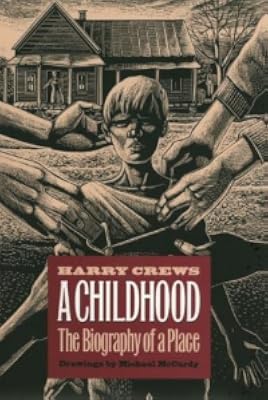
A Childhood: The Biography of a Place
by Harry Crews
On This Page
Description
"This memoir by Harry Crews captures the first six years of his life among impoverished tenant farmer families in rural southern Georgia. Crews shares details of farm life, his father's death, his friendship with the son of a Black hired hand; his bout with polio; his mother and stepfather's failing marriage; his near-fatal scalding at a hog-killing; and a five-month sojourn in Jacksonville, Florida. As an introduction to Crews's fiction, this portrait of the people, locales, circumstances, show more and Bacon County lore that shaped him, offers a foundation of the writer's outlook, the refuge he found in his storytelling imagination, and his affection for the outsider, the outcast, and those considered freakish"-- show lessTags
Recommendations














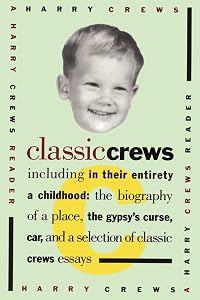



Member Recommendations
Member Reviews
Harry Crews always does a number on me, and especially so with this autobiographical account of his childhood. I grew up in the South when it still resembled the South of Crews' time. The folks and places he describes with his unique, vivid style are my people and my home. Somehow Southerners seem to love harder and deeper, and Crews captures this so well in this book, it often made me read sections over again, moving me to tears, sometimes from happiness, sometimes from pain. This is a magnificent piece of art.
''Nothing is allowed to die in a society of storytelling people. It is all – the good and the bad- carted up and brought along from one generation to the next. And everything that is brought along is colored and shaped by those who bring it.’’
Anyone who has read his fiction will know that Harry Crews has a way with words.
A Childhood: The Biography of a Place is his memoir, set during the Great Depression in Bacon County, South Georgia. The son of a sharecropper, his upbringing was very rural and very poor. It’s a hard, rough life full of blood feuds, illegal stills and a host of crazy characters. Most of the people are completely unhinged, which probably helped them survive. It’s a humdinger of a book.
''Since where we lived show more and how we lived was almost hermetically sealed from everything and everybody else, fabrication became a way of life. Making up stories, it seem to me now was not only a way for us to understand it the way we lived but also a defence against it’’
Crews survived infantile paralysis and a near fatal scalding at hog killing time. It’s a wonder he made it to adulthood. There’s trauma and sorrow everywhere, but Crews writes with a great deal sympathy for those around him. And humour. It’s a fascinating account of a time and a place that no longer exists.
That it’s been reissued as a Penguin Classic speaks for itself. The New Yorker says: ''the memoir is flawless, one of the finest ever written by an American.’’
I can’t argue with that.
. show less
Anyone who has read his fiction will know that Harry Crews has a way with words.
A Childhood: The Biography of a Place is his memoir, set during the Great Depression in Bacon County, South Georgia. The son of a sharecropper, his upbringing was very rural and very poor. It’s a hard, rough life full of blood feuds, illegal stills and a host of crazy characters. Most of the people are completely unhinged, which probably helped them survive. It’s a humdinger of a book.
''Since where we lived show more and how we lived was almost hermetically sealed from everything and everybody else, fabrication became a way of life. Making up stories, it seem to me now was not only a way for us to understand it the way we lived but also a defence against it’’
Crews survived infantile paralysis and a near fatal scalding at hog killing time. It’s a wonder he made it to adulthood. There’s trauma and sorrow everywhere, but Crews writes with a great deal sympathy for those around him. And humour. It’s a fascinating account of a time and a place that no longer exists.
That it’s been reissued as a Penguin Classic speaks for itself. The New Yorker says: ''the memoir is flawless, one of the finest ever written by an American.’’
I can’t argue with that.
. show less
I'm not sure I'm a good enough writer to properly articulate how good this book is. The author, writing of his own life as young child in the Great Depression and early war years in the Deep South, matched and at times transcended some of the finest of American literature. While the time span is much later, I found this book very reminiscent in its presentation to the fictional Twain book, The Adventures of Huckleberry Finn. The intimate reflections of the main character, awash with both the simplicities and complexities of the world around him, is very similar. There are elements of one of my very favorite books, As I Lay Dying, but the humor is not offered so readily. At the same time, there is a reservoir of pain and suffering show more depicted that is not offered up for sympathy, but as mere facts of a very real existence. Ultimately, this book felt like a thank-you to his childhood family and friends for helping him survive -- just barely -- a very tough life. Highly recommended. show less
Love and hatred roll together in a marriage when there are few scraps of comfort to be shared. Dogs assume human characteristics and even mules rule. This is a depiction of a precarious, hard scrabble life with a “gothic southern” intensity. The author’s friendship with his black neighbour and the sharecropper’s son stands to breakup up my Northerner stereotyping of racist redneck farmers. Crews was lucky to survive his childhood, that’s clear.
Beautifully written, and raw, account of the author's first six years growing up in abject, underline abject, poverty in rural Georgia during the Depression. This book is full of riveting stories, as were the lives of the people, Harry Crews' people, that it tells. But I think what I will take away from this book is a conviction that poverty is evil, and a new knowledge of what it does to the people living in it.
In this 1978 memoir, Harry Crews recreates his childhood in southern Georgia during America’s 1930s Depression. As he points out, this was a part of the country where depression was already a fact of life long before the entire country’s economy took such a major downturn. This memoir recreates the first ten years of his life. During this period, Crews suffered a bout of polio, and he was later seriously burned after being unintentionally flung into a vat of boiling water while taking part in the processing of slaughtered hogs.
The book provides an insight into the author’s writings as an adult. He creates a vivid picture of a world in which surviving from one season to the next required back-breaking labor plus the additional show more ingredient of good luck to pay the bills and keep meager meals on the table. He highlights the importance of one’s relatives lending their support, as well as the help of the community to ensure survival when a failed harvest presented the possibility of starvation.
While Crews’ personal story will surely keep the reader riveted, it is the description of the other people he encountered during his childhood that make this memoir so special. The book is populated with a cast of characters lost to time. They might not today be considered politically correct, but their strong personalities delight nonetheless. This memoir is a recreation of the author’s growing awareness of self, crafted by poverty’s harsh lessons and the importance of community to aid in his family’s survival. Even if times were tough, Crews lovingly recreates his childhood despite a Depression that challenged daily existence. show less
The book provides an insight into the author’s writings as an adult. He creates a vivid picture of a world in which surviving from one season to the next required back-breaking labor plus the additional show more ingredient of good luck to pay the bills and keep meager meals on the table. He highlights the importance of one’s relatives lending their support, as well as the help of the community to ensure survival when a failed harvest presented the possibility of starvation.
While Crews’ personal story will surely keep the reader riveted, it is the description of the other people he encountered during his childhood that make this memoir so special. The book is populated with a cast of characters lost to time. They might not today be considered politically correct, but their strong personalities delight nonetheless. This memoir is a recreation of the author’s growing awareness of self, crafted by poverty’s harsh lessons and the importance of community to aid in his family’s survival. Even if times were tough, Crews lovingly recreates his childhood despite a Depression that challenged daily existence. show less
Part 1 of this memoir details incidents from the life of Harry’s father in Florida and Bacon County, Georgia, where Harry was born. This is a story of hardship and an early death, told in a plain, dry style.
Part 2 provides scenes from Harry’s young life, again told in a simple, but powerfully direct, style. For example, there is a story of how Harry’s dog, Sam, helps to tire and subdue a frightened cow, so that medicine can be applied to hopefully save the cow - a simple story, but real in showing how life was lived. The dog wasn’t a pet, but a working animal.
Then there are stories that point towards Harry’s future as a writer, such as making up stories to connect pictures in a Sears Roebuck mail order catalogue.
A short memoir show more of a very hard early life, childhood as the book only takes Harry to when he’s about six or seven, which is authentic and genuine, even as it is made clear that this was a not unusual experience of early twentieth century America.
But whatever I am has its source back there in Bacon County, from which I left when I was seventeen years old to join the Marine Corps, and to which I never returned to live. I have always known, though, that part of me never left, could never leave, the place where I was born and, further, that what has been most significant in my life had all taken place by the time I was six years old. show less
Part 2 provides scenes from Harry’s young life, again told in a simple, but powerfully direct, style. For example, there is a story of how Harry’s dog, Sam, helps to tire and subdue a frightened cow, so that medicine can be applied to hopefully save the cow - a simple story, but real in showing how life was lived. The dog wasn’t a pet, but a working animal.
Then there are stories that point towards Harry’s future as a writer, such as making up stories to connect pictures in a Sears Roebuck mail order catalogue.
A short memoir show more of a very hard early life, childhood as the book only takes Harry to when he’s about six or seven, which is authentic and genuine, even as it is made clear that this was a not unusual experience of early twentieth century America.
But whatever I am has its source back there in Bacon County, from which I left when I was seventeen years old to join the Marine Corps, and to which I never returned to live. I have always known, though, that part of me never left, could never leave, the place where I was born and, further, that what has been most significant in my life had all taken place by the time I was six years old. show less
Members
- Recently Added By
Lists

Memoirs - Mary Karr
14 works; 1 member

Michael Dirda's Desert Island Books
62 works; 5 members

Books Read in 2023
5,638 works; 147 members
Author Information

29+ Works 3,627 Members
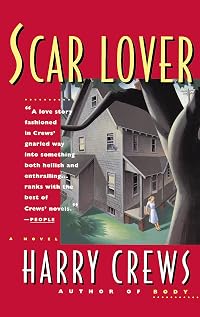
Harry Crews was born in Alma, Georgia on June 7, 1935. He served three years in the Marines then entered the University of Florida on the G.I. Bill. He received a bachelor's degree in literature in 1960, followed by a master's in education. He taught at Broward Community College and wrote copy for Nelson Boswell's radio show Challenge the show more Response. His first novel, The Gospel Singer, was published in 1968. His other works include Karate Is a Thing of the Spirit, Car, The Hawk Is Dying, The Gypsy's Curse, A Feast of Snakes, The Knockout Artist, Scar Lover, and Celebration. He also wrote a memoir entitled A Childhood: The Biography of a Place. He died from complications of neuropathy on March 28, 2012 at the age of 76. (Bowker Author Biography) show less
Awards and Honors
Distinctions
The Guardian Book of the Day (2023-01-16)
Work Relationships
Is abridged in
Common Knowledge
- Canonical title
- A Childhood: The Biography of a Place
- Original publication date
- 1978
- Epigraph
- Survival is triumph enough. - David Shelley, in conversation
- Dedication
- This book was written for my boy, Byron Jason Crews
- First words
- My first memory is of a time ten years before I was born, and the memory takes place where I have never been and involves my daddy whom I never knew.
Classifications
Statistics
- Members
- 393
- Popularity
- 79,569
- Reviews
- 10
- Rating
- (4.37)
- Languages
- English, French, Italian
- Media
- Paper, Audiobook, Ebook
- ISBNs
- 13
- ASINs
- 3