On This Page
Description
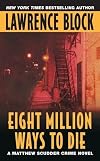
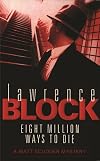
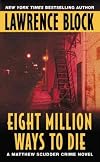
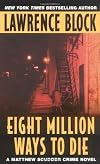
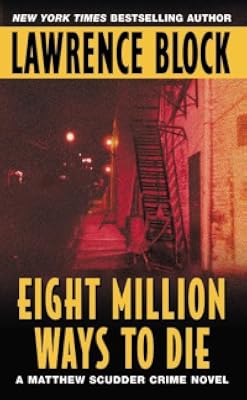
Battling the bottle one day at a time, ex-cop, sometime PI Matthew Scudder finds that next to staying sober, staying alive seems easy. But in the mean streets of New York City it never is. Not for the prostitute who wanted out and got her beautiful self slashed to ribbons. Not for a pimp named Chance who is betting his life that the broken-down detective can find her murderer. And not for Matthew Scudder-just trying to stay alive in a city that knows nothing better than how to die.Tags
Recommendations






Member Recommendations
Member Reviews
A book about the mystery of a dead hooker becomes a book about Matt Scudder taking one day at a time, trying to save himself from alcohol. The prose was dry and matter-of-fact; the words of a police report detailing his movements and contacts. And yet the way they were arranged, their anti-drama sensibility, packed an emotional punch. Definitely my favorite Scudder so far.
The synopsis: Scudder gets a visit from a beautiful dairy-maid hooker who wants his help leaving her john. A little unusual to modern sensibilities perhaps, but Scudder explains that police and prostitutes frequently have 'special' relationships, the police acting a little like lobbyists working on behalf of their clients at the big house. He agrees, mostly because show more he's in need of money. After searching a number of likely pimp-hangouts, a contact arranges meeting with Chance, her pimp, at a boxing match. It gives Scudder a chance to impress Chance with his eye and ability to spot a deal. Meeting over, he returns to the girl and tells her she's free (these are usually 'girls' in Scudder's world). To no one's surprise, she turns up dead shortly after their last meeting. Chance tracks Scudder down and convinces him to take the case, for reasons that are partially unclear to both of them, but have a lot to do with staying dry for Scudder. Back from a short bender and even shorter hospital stay, he's trying hard to stay busy and AA doesn't seem to be enough.
Character development shines in this book, and even the stereotypical hookers in Chance's stable have their own unique spin on their activities. The poet was a standout, but what really impressed me was how Block was able to make Scudder's struggle with alcohol consistently moving. I don't think I ever felt pity or impatience with his struggle; rather it was compassion for his courage, even when he wasn't able to quite articulate what and why he was doing. A scene in Harlem with a hopped-up mugger packs a wallop. In a book with an alcoholic main character, it's a writing cinch to go for the emotional crisis around a bottle, but instead Block springs it when Scudder is dry, cornered in an alley.
Small touches of humor mitigate the bleak, and the potential depressingness of the struggle with alcohol. For instance, Scudder pays his source Danny Boy to point out Chance at the boxing ring: "If it's any consolation, I'd want at least a hundred dollars to attend a hockey game." Ah, Danny Boy.
I enjoyed the writing even more this book. There's the occasional sentence or three when Block is able to so perfectly capture an image, I feel like I'm in the scene: "When I woke up the sun was shining. By the time I showered and shaved and hit the street it was gone, tucked away behind a bank of clouds. It came and went all day, as if whoever was in charge didn't want to commit himself."
The depth of humanity shown in the dry description of Scudder's meetings is consistently moving, whether it is the inanities relayed and Scudder's internal commentary, or the larger issues people are able to touch on. The way he conveys struggle in these tiny testaments without becoming maudlin or self-pitying is impressive.
Words of wisdom from Mary's qualifying: "You know, it was a revelation to me to learn that I don't have to be comfortable. Nowhere is it written that I must be comfortable. I always thought if I felt nervous or anxious or unhappy I had to do something about it. But I learned that's not true. Bad feelings won't kill me. Alcohol will kill me, but my feelings won't."
Interspersed though the book is the larger theme of the brutality and callusness of the big city. Somewhat unfortunately, he finds a kindred spirit in the cop Durkin, and their trading tales was just about enough to drive me to drink as well. Eight million stories in the big city, all right--and eight million ways to die. It says something for the quality of the writing that despite these weighty issues that the books itself is not depressing to read. Had you told me I'd me moved and impressed about a ex-drunk investigating some dead hookers, I would have raised a skeptical eyebrow. Glad I was wrong.
The weak spot was perhaps the ending. I didn't feel like Scudder had enough steps to make the final intuitive conclusion, and victim's actions become even more unclear. Nonetheless, a great journey getting there.
Cross posted at http://clsiewert.wordpress.com/2013/04/13/eight-million-ways-to-die-by-lawrence-... show less
The synopsis: Scudder gets a visit from a beautiful dairy-maid hooker who wants his help leaving her john. A little unusual to modern sensibilities perhaps, but Scudder explains that police and prostitutes frequently have 'special' relationships, the police acting a little like lobbyists working on behalf of their clients at the big house. He agrees, mostly because show more he's in need of money. After searching a number of likely pimp-hangouts, a contact arranges meeting with Chance, her pimp, at a boxing match. It gives Scudder a chance to impress Chance with his eye and ability to spot a deal. Meeting over, he returns to the girl and tells her she's free (these are usually 'girls' in Scudder's world). To no one's surprise, she turns up dead shortly after their last meeting. Chance tracks Scudder down and convinces him to take the case, for reasons that are partially unclear to both of them, but have a lot to do with staying dry for Scudder. Back from a short bender and even shorter hospital stay, he's trying hard to stay busy and AA doesn't seem to be enough.
Character development shines in this book, and even the stereotypical hookers in Chance's stable have their own unique spin on their activities. The poet was a standout, but what really impressed me was how Block was able to make Scudder's struggle with alcohol consistently moving. I don't think I ever felt pity or impatience with his struggle; rather it was compassion for his courage, even when he wasn't able to quite articulate what and why he was doing. A scene in Harlem with a hopped-up mugger packs a wallop. In a book with an alcoholic main character, it's a writing cinch to go for the emotional crisis around a bottle, but instead Block springs it when Scudder is dry, cornered in an alley.
Small touches of humor mitigate the bleak, and the potential depressingness of the struggle with alcohol. For instance, Scudder pays his source Danny Boy to point out Chance at the boxing ring: "If it's any consolation, I'd want at least a hundred dollars to attend a hockey game." Ah, Danny Boy.
I enjoyed the writing even more this book. There's the occasional sentence or three when Block is able to so perfectly capture an image, I feel like I'm in the scene: "When I woke up the sun was shining. By the time I showered and shaved and hit the street it was gone, tucked away behind a bank of clouds. It came and went all day, as if whoever was in charge didn't want to commit himself."
The depth of humanity shown in the dry description of Scudder's meetings is consistently moving, whether it is the inanities relayed and Scudder's internal commentary, or the larger issues people are able to touch on. The way he conveys struggle in these tiny testaments without becoming maudlin or self-pitying is impressive.
Words of wisdom from Mary's qualifying: "You know, it was a revelation to me to learn that I don't have to be comfortable. Nowhere is it written that I must be comfortable. I always thought if I felt nervous or anxious or unhappy I had to do something about it. But I learned that's not true. Bad feelings won't kill me. Alcohol will kill me, but my feelings won't."
Interspersed though the book is the larger theme of the brutality and callusness of the big city. Somewhat unfortunately, he finds a kindred spirit in the cop Durkin, and their trading tales was just about enough to drive me to drink as well. Eight million stories in the big city, all right--and eight million ways to die. It says something for the quality of the writing that despite these weighty issues that the books itself is not depressing to read. Had you told me I'd me moved and impressed about a ex-drunk investigating some dead hookers, I would have raised a skeptical eyebrow. Glad I was wrong.
The weak spot was perhaps the ending. I didn't feel like Scudder had enough steps to make the final intuitive conclusion, and victim's actions become even more unclear. Nonetheless, a great journey getting there.
Cross posted at http://clsiewert.wordpress.com/2013/04/13/eight-million-ways-to-die-by-lawrence-... show less
Since I discovered Lawrence Block a few years ago I’ve read a lot of his novels and was a bit surprised to find I haven’t reviewed one yet. Eight Million Ways to Die is the fifth in the Matt Scudder series. It’s one of my favourites and the audiobook is narrated by the man himself!
I must admit I approached it with some trepidation. Which of us hasn’t sat through a live author reading on a hard seat with a fixed grin, as they mumble and shuffle their papers, longing for it to end so we can get to the bar? Often authors aren’t great performers and can’t project the music that’s in their head. In this case, though, Block did something more. His prose is very distinctive and he captured the rhythm and the downbeat mood just as show more I heard it in my head.
Scudder is a rootless former cop turned unlicensed investigator, living in a cheap motel. A prostitute called Kim wants to leave her pimp but is afraid to tell him, so she enlists Scudder’s help. The first thing Scudder has to do is find the enigmatic man, who is known only as Chance and appears to have no regular routine or social circle. When Kim is murdered, Scudder feels that he failed her and is determined to find her killer.
While the Scudder novels are firmly rooted in New York, many have a timeless quality to them. Often the only thing that reminds me they are not contemporary is the technology (in the early books Scudder spends a lot of time feeding dimes into payphones). Eight Million Ways to Die was first published in 1982 and it vividly portrays that period in New York’s history, when crime was out of hand, the news was full of senseless killings, and danger felt both ubiquitous and unavoidable.
Against this backdrop, Scudder is trying to fashion a new life for himself, one where he knows what is right and manages to do it. Drink and bars have always been a big part of Scudder’s story, but this is the first book in the series where he acknowledges his alcoholism.
At the centre of the crime and chaos of the city, the case and his attendance at AA give him a kind of structure and safety. The stories from the newspapers and from the people he questions in his investigation are interspersed with the stories from the people at AA meetings, though Scudder is not yet ready to share his own.
For me this is one of the most atmospheric Scudder novels and hearing it read by the author makes it even more special. It resonates today. The cacophony of headlines threatening to overwhelm Scudder are like the continual intrusive beeps and tweets of social media.
Scudder tells a man at AA that he is struggling to cope with all the bad news in the papers. The man suggests he just stops reading them.
*
This review first appeared on my blog katevane.com/blog show less
I must admit I approached it with some trepidation. Which of us hasn’t sat through a live author reading on a hard seat with a fixed grin, as they mumble and shuffle their papers, longing for it to end so we can get to the bar? Often authors aren’t great performers and can’t project the music that’s in their head. In this case, though, Block did something more. His prose is very distinctive and he captured the rhythm and the downbeat mood just as show more I heard it in my head.
Scudder is a rootless former cop turned unlicensed investigator, living in a cheap motel. A prostitute called Kim wants to leave her pimp but is afraid to tell him, so she enlists Scudder’s help. The first thing Scudder has to do is find the enigmatic man, who is known only as Chance and appears to have no regular routine or social circle. When Kim is murdered, Scudder feels that he failed her and is determined to find her killer.
While the Scudder novels are firmly rooted in New York, many have a timeless quality to them. Often the only thing that reminds me they are not contemporary is the technology (in the early books Scudder spends a lot of time feeding dimes into payphones). Eight Million Ways to Die was first published in 1982 and it vividly portrays that period in New York’s history, when crime was out of hand, the news was full of senseless killings, and danger felt both ubiquitous and unavoidable.
Against this backdrop, Scudder is trying to fashion a new life for himself, one where he knows what is right and manages to do it. Drink and bars have always been a big part of Scudder’s story, but this is the first book in the series where he acknowledges his alcoholism.
At the centre of the crime and chaos of the city, the case and his attendance at AA give him a kind of structure and safety. The stories from the newspapers and from the people he questions in his investigation are interspersed with the stories from the people at AA meetings, though Scudder is not yet ready to share his own.
For me this is one of the most atmospheric Scudder novels and hearing it read by the author makes it even more special. It resonates today. The cacophony of headlines threatening to overwhelm Scudder are like the continual intrusive beeps and tweets of social media.
Scudder tells a man at AA that he is struggling to cope with all the bad news in the papers. The man suggests he just stops reading them.
*
This review first appeared on my blog katevane.com/blog show less
“Eight Million Ways To Die” is the fifth out of seventeen novels in Block’s Matthew Scudder series, which features one of the most unusual private eyes in detective fiction. Forget the porkpie hat, the tiny office, the breathless blonde secretary, and the guns blazing, action featured on every page kind of detective. That’s not Scudder’s world. Scudder was a former NYPD Officer, who after a shooting went bad, real bad, reconsidered what he was doing in this world, gave up his career, his family, his life and discovered the bottle. He now lives in a hotel in Hell’s Kitchen, treks from AA meeting to AA meeting, although passing whenever its his turn to share, and frequently stops in churches to light a candle and tithe. show more Sometimes he’s lucky to count eight days in a row sober. Sometimes he’s not. He still frequents the bars, but tries to get by on pieces of pie and coffee. He earns a living by doing favors since he is not a licensed private op. It is a dark, gloomy world Scudder lives in and he is climbing the walls of his tiny hotel room, trying not to focus on that next drink.
A friend of a friend needs a favor. Kim, a call girl, wants out of the life, where a man known only as “Chance” has set her up in an apartment and she gives him most of her earnings. There are five other girls he has on his leash, all similarly set up. Kim doesn’t quite explain why she wants out, but she is nervous about confronting Chance and wants Scudder to intercede. The only thing is Chance has no known address, no phone that he can be reached at, only an answering service and, if he doesn’t return your call, that’s your problem. Scudder intercedes and spends an evening at the fights and getting to know Chance, who represents that its not a problem. Kim can walk. She is easily replaceable. Plenty of other farm girls from Wisconsin. Not much work for a thousand dollar fee plus the bonus Kim confers upon Scudder, but the job is done or so he thinks until Kim ends up hacked to pieces in a hotel room the next night. Scudder gives Chance’s information to the police detective and tries to absolve his guilt for trusting this pimp, for allowing Kim to come to harm. It then gets really interesting when Chance offers to hire Scudder to find the real killer.
Scudder piece by piece works to put together little clues like a relentless bulldog that just won’t let go. On the way, he has moral quandaries about who to trust and what his real motives are. Is he being used by Chance to set up some kind of third-party culpability to mask what really happened or is there some psycho out there? It is not all black and white in Scudder’s world. There’s a lot of angst, a lot of grey areas, a lot of guilt.
Reading this after reading Block’s early works, it is easy to see how he has matured as a writer. It is dark, foreboding tale, but it is not a classic hardboiled detective story. It is some different kind of animal. But, even without gobs of action, the book is terrific, the pacing perfectly cadenced, and the conversations and actions feel authentic. show less
A friend of a friend needs a favor. Kim, a call girl, wants out of the life, where a man known only as “Chance” has set her up in an apartment and she gives him most of her earnings. There are five other girls he has on his leash, all similarly set up. Kim doesn’t quite explain why she wants out, but she is nervous about confronting Chance and wants Scudder to intercede. The only thing is Chance has no known address, no phone that he can be reached at, only an answering service and, if he doesn’t return your call, that’s your problem. Scudder intercedes and spends an evening at the fights and getting to know Chance, who represents that its not a problem. Kim can walk. She is easily replaceable. Plenty of other farm girls from Wisconsin. Not much work for a thousand dollar fee plus the bonus Kim confers upon Scudder, but the job is done or so he thinks until Kim ends up hacked to pieces in a hotel room the next night. Scudder gives Chance’s information to the police detective and tries to absolve his guilt for trusting this pimp, for allowing Kim to come to harm. It then gets really interesting when Chance offers to hire Scudder to find the real killer.
Scudder piece by piece works to put together little clues like a relentless bulldog that just won’t let go. On the way, he has moral quandaries about who to trust and what his real motives are. Is he being used by Chance to set up some kind of third-party culpability to mask what really happened or is there some psycho out there? It is not all black and white in Scudder’s world. There’s a lot of angst, a lot of grey areas, a lot of guilt.
Reading this after reading Block’s early works, it is easy to see how he has matured as a writer. It is dark, foreboding tale, but it is not a classic hardboiled detective story. It is some different kind of animal. But, even without gobs of action, the book is terrific, the pacing perfectly cadenced, and the conversations and actions feel authentic. show less
“Eight million stories,” he said. “You know what you got in this city, this fucked-up toilet of a naked city? You know what you got? You got eight million ways to die.”
Poor Matthew Scudder. He “…was being offered the opportunity to serve as intermediary between a blonde whore and a black pimp.”
Chapter 8 perfectly describes how an alcoholic rationalizes their drinking and the ‘control’ they have over their disease. Till the blackout.
Coffee, bars, AA meetings, read the newspaper. Repeat. And lots of walking between. Repeat. Make phone calls, receive phone calls, call the answering service. Repeat.
It felt more like a tour of NYC than an investigation. Lots of the things I just wrote and very little actual investigation. I show more am a member of AA, and I started getting annoyed at the number of meetings Mr. Block included in this story! show less
Poor Matthew Scudder. He “…was being offered the opportunity to serve as intermediary between a blonde whore and a black pimp.”
Chapter 8 perfectly describes how an alcoholic rationalizes their drinking and the ‘control’ they have over their disease. Till the blackout.
Coffee, bars, AA meetings, read the newspaper. Repeat. And lots of walking between. Repeat. Make phone calls, receive phone calls, call the answering service. Repeat.
It felt more like a tour of NYC than an investigation. Lots of the things I just wrote and very little actual investigation. I show more am a member of AA, and I started getting annoyed at the number of meetings Mr. Block included in this story! show less
This might be my favorite of the Scudder series. A typical one starts strong, with a re-introduction to the characters, careful observations of New York, and solid, human dialog. But then most of the stories fall a little flat halfway through, overcome by the bland, formulaic mystery plot. This stays strong throughout. The characters start strong, and continue developing all the way through, with Scudder struggling in particular with his alcoholism, but learning how to handle it. The plot also stays compelling, with a good mix of detective work (interview after interview) and action. (The mystery's resolution is telegraphed far in advance, but I didn't mind.)
Wow. Just wow. I can easily say this is the first "great" Scudder book. I knew I made a mistake rating the first 4 novels at 5 stars each. It's not that they're bad books, they're just not in the same league as [b:Eight Million Ways to Die|76758|Eight Million Ways to Die (Matthew Scudder, #5)|Lawrence Block|http://photo.goodreads.com/books/1289521310s/76758.jpg|2905875].
In the 5th installment of the series, Block takes Scudder and the City of New York all the way down to rock bottom. Whether he's exposing the reader to gang violence and random murders or he's having Scudder drink himself half to death; not a lot of hope escapes these pages.
It's been suggested in the past that Block has had his fair share of problems with alcohol. While show more he refuses to admit it or even talk about it, you have to think at the very least, he had some personal exposure to the addiction. The subject matter is written with a sense of intensity that is often hard to ignore.
Scudder advances so much as a character in this outing that he's quickly solidifying himself as one of my favorite detectives. His violent outburst against a common street thug is just so bad-ass that I actually found myself yelling "OH!" at the encounter's conclusion. The man can be rather ruthless when threatened but carries a sense of calm when surrounded by others. However, under all that, he comes across as terribly vulnerable this time around. He's just an all around great read and I can't wait to get deeper into the series. show less
In the 5th installment of the series, Block takes Scudder and the City of New York all the way down to rock bottom. Whether he's exposing the reader to gang violence and random murders or he's having Scudder drink himself half to death; not a lot of hope escapes these pages.
It's been suggested in the past that Block has had his fair share of problems with alcohol. While show more he refuses to admit it or even talk about it, you have to think at the very least, he had some personal exposure to the addiction. The subject matter is written with a sense of intensity that is often hard to ignore.
Scudder advances so much as a character in this outing that he's quickly solidifying himself as one of my favorite detectives. His violent outburst against a common street thug is just so bad-ass that I actually found myself yelling "OH!" at the encounter's conclusion. The man can be rather ruthless when threatened but carries a sense of calm when surrounded by others. However, under all that, he comes across as terribly vulnerable this time around. He's just an all around great read and I can't wait to get deeper into the series. show less
The actual murder mystery takes second place to Scudder's struggle with the bottle in 8 Million Ways to Die. When I realized that I was 60 pages in and the murder hadn't been committed yet I knew I was going to like this book. I look forward to reading the earlier books in the series to get more of Matthew Scudder's back story, but I enjoyed the way Lawrence Block lets us truly get inside his character's head, and live his problems along with him. If you like your mysteries with lots of characterization and good dialogue, then the Matthew Scudder series is for you. It's not lighthearted by any means, but it's a poetic darkness.
Members
- Recently Added By
Lists

Page Turners
185 works; 11 members

#MysteryBingo2023Silver(Original)
36 works; 1 member
#MysteryBingo2023Silver(Revised)
36 works; 1 member
#JustTheFacts2023Silver
60 works; 1 member

Tozai Mystery Best 100 | The Top 100 Mystery Novels
111 works; 3 members
Author Information

495+ Works 38,186 Members
Lawrence Block is the author of the popular series' featuring Bernie Rhodenbarr, Matthew Scudder, and Chip Harrison. Over 2 million copies of Lawrence Block's books are in print. He has published articles and short fiction in American Heritage, Redbook, Playboy, GQ, and The New York Times, and has published several collections of short fiction in show more book form, most recently Collected Mystery Stories. Block is a Grand Master of Mystery Writers of America. He has won the Edgar and Shamus awards four times, the Japanese Maltese Falcon award twice, as well as the Nero Wolfe award. In France, he was proclaimed a Grand Maitre du Roman Noir and has been awarded the Societe 813 trophy twice. Block was presented with the key to the city of Muncie, Indiana, and is a past president of the Private Eye Writers of America and the Mystery Writers of America. (Bowker Author Biography) Lawrence Block is the author of the popular series featuring Bernie Rhodenbarr, Matthew Scudder, and Chip Harrison. Over 2 million copies of Lawrence Block's books are in print. Lawrence Block has won the Edgar Award three times, the Shamus Award four times, the Maltese Falcon Award twice, and was named Grandmaster by the Mystery Writers of America. (Publisher Provided) show less
Awards and Honors
Awards
Series

Belongs to Publisher Series
Etiqueta Negra (17)
Work Relationships
Is contained in
Has the adaptation
Common Knowledge
- Canonical title
- Eight Million Ways to Die
- Original title
- Eight Million Ways to Die
- Original publication date
- 1982
- People/Characters
- Matthew Scudder; Kim Dakkinen; Chance; Detective Joe Durkin; Jan; Elaine Mardell
- Important places
- New York, New York, USA
- Related movies
- 8 Million Ways to Die (1986 | IMDb)
- Epigraph
- The death of a beautiful woman is, unquestionably, the most poetical topic in the world. -- Edgar Allan Poe
- Dedication
- In memory of
Billy Dugan Cliff
Boston John Bambi
Mark the Dwarf
and
Red-Haired Maggie - First words
- I saw her entrance.
- Last words
- (Click to show. Warning: May contain spoilers.)I started to cry.
- Blurbers
- King, Stephen; Kellerman, Jonathan
- Original language*
- English
- Disambiguation notice
- Do not combine with the graphic novel adapted by John K. Snyder, III
*Some information comes from Common Knowledge in other languages. Click "Edit" for more information.
Classifications
Statistics
- Members
- 870
- Popularity
- 31,386
- Reviews
- 28
- Rating
- (3.98)
- Languages
- 8 — Chinese, English, French, German, Hungarian, Italian, Spanish, Turkish
- Media
- Paper, Audiobook, Ebook
- ISBNs
- 42
- UPCs
- 1
- ASINs
- 9