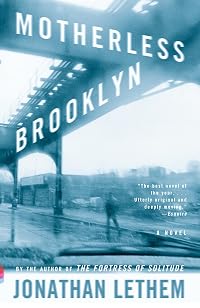
Motherless Brooklyn
by Jonathan Lethem
On This Page
Description
NOW A MAJOR MOTION PICTURE FROM WARNER BROS. STARRING BRUCE WILLIS, EDWARD NORTON, AND WILLEM DAFOEFrom America's most inventive novelist, Jonathan Lethem, comes this compelling and compulsive riff on the classic detective novel.
Lionel Essrog is Brooklyn's very own Human Freakshow, an orphan whose Tourettic impulses drive him to bark, count, and rip apart language in startling and original ways. Together with three veterans of the St. Vincent's Home for Boys, he works for small-time show more mobster Frank Minna's limo service cum detective agency. Life without Frank, the charismatic King of Brooklyn, would be unimaginable. When Frank is fatally stabbed, Lionel's world is suddenly turned upside-down, and this outcast who has trouble even conversing attempts to untangle the threads of the case, while trying to keep the words straight in his head. A compulsively involving a and totally captivating homage to the classic detective tale.
. show less
Tags
Recommendations


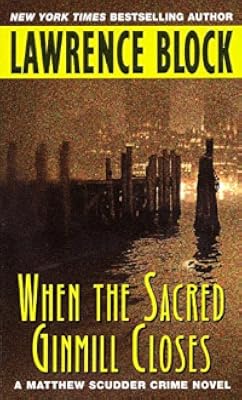
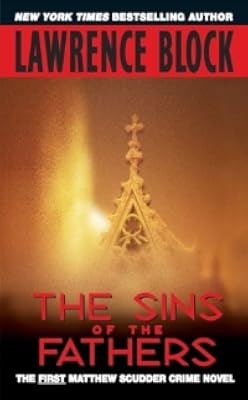
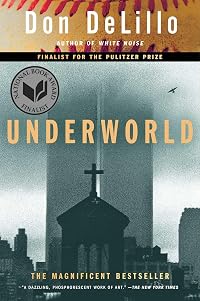
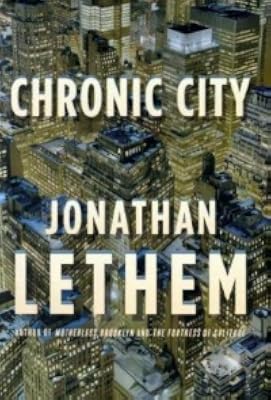




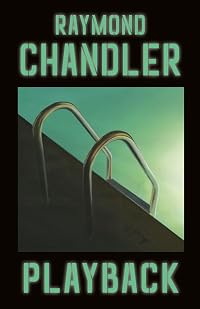
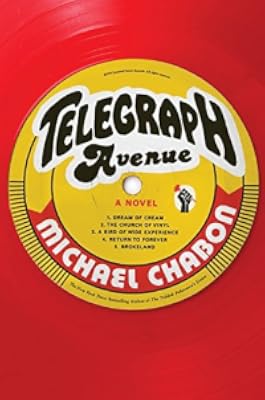
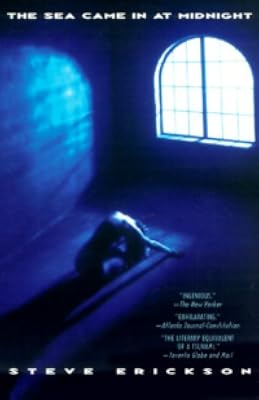

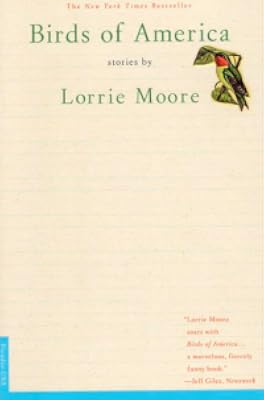
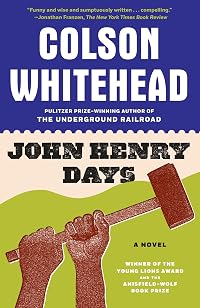
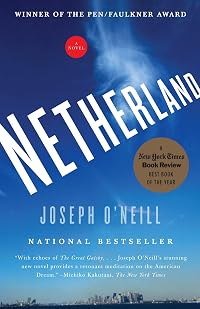
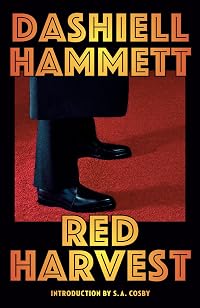

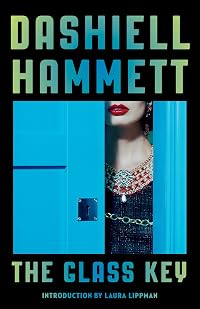
Member Recommendations
Bookmarque Murder & deceit in the underworld...no one has tourette's but it's a great read.
20
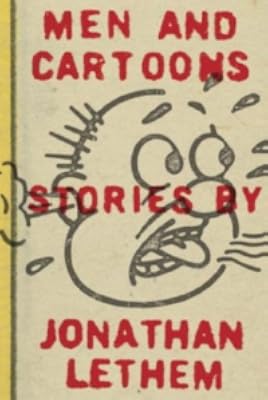
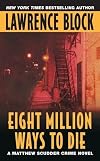
Smiler69 A great collection of short stories by the same author.
20
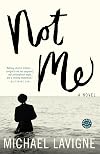
ehines Not me is a different kind of novel than Motherless Brooklyn, but with a very similar spirit. The subject matter is more serious, but the protagonist is a comedian, with an attitude quite similar, to my mind, to the narrator of Motherless Brooklyn.
10
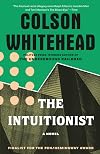
CGlanovsky Creative spins on the genre of detective fiction with intricate webs of corrupt people and organizations with obscure motivations
01
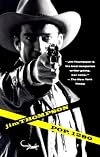
by Darco

Member Reviews
Some books are more about voice than plot. That is the case with Motherless Brooklyn. And for that reason, I feel fortunate to have listened to the audiobook version, which was phenomenally narrated by Geoffrey Cantor with an amazing variety of voices that made each character distinct--but most of all made the Tourette's Syndrome-inflicted narrator a unique, believable voice at the center of a complex web of loyalties and betrayals involving a small time Brooklyn hood, his brother, his wife, some doormen, an all-night Korean convenience store, a Zendo, a huge assassin, Japanese businessmen/monks--well, you get the idea. As in the other book I read by Lethem, he is never short of ideas or imagination. The noir-ish aspects are a bit too show more self-conscious, as if he doesn't want them to escape the notice of a reader not familiar with the genre. And the story goes on a bit too long, but thanks to the superb narration, it was a rewarding listen. show less
It's like a classic detective story, except our hero, Lionel, spends most of his time clueless and almost entirely out of his element. Oh, and he has Tourette's Syndrome. One interesting side effect of having Tourette's is that oddly enough, it can make you invisible. People will notice your outbursts, sure, but they'd rather not deal with them and one who has been dismissed as crazy can see and hear a lot.
Lionel's dogged insistence on solving the crime makes you root for him, even as you worry that he's just not equipped to succeed. The main weakness in the book for me was the ending, which sort of wrapped everything up in one twisty-turny chapter. But I guess that's how it is sometimes in life, anyway - you don't quite get what 's show more been going on around you until you do, and it can happen all in a flood of information. I really enjoyed the writing and would read more Lethem in the future. show less
Lionel's dogged insistence on solving the crime makes you root for him, even as you worry that he's just not equipped to succeed. The main weakness in the book for me was the ending, which sort of wrapped everything up in one twisty-turny chapter. But I guess that's how it is sometimes in life, anyway - you don't quite get what 's show more been going on around you until you do, and it can happen all in a flood of information. I really enjoyed the writing and would read more Lethem in the future. show less
This was published in the UK by Faber, so you know we’re dealing with a Proper Writer here, and the book was a critical and popular hit well beyond the crime genre when it came out, apparently. You can see why. It’s really very well-written. The central character, a low-grade hood with Tourette’s, sounds dreadful but in fact is great, and allows the author to have all sorts of fun messing around with language. There’s a twisty plot, conspiracies, mystery, some good jokes, a hint of post-modern genre fluidity. Enough to hook anyone. Certainly plenty for anyone to enjoy here, and probably a book that stands re-reading.
There’s a couple of minor things that smell off, though. Whether they’re actually off depends on what you show more think the limits of pastiche are. The book follows Lionel, our Tourettic hero, as he tries to find out who killed his boss and mentor Frank Minna. Lionel and his three fellow “Minna Men” were scooped up by Frank from an orphans’ home and set to work on his slightly shady endeavours in the more unrefined areas of New York (which are now, 25 years later, thoroughly gentrified). Lionel sees Frank as a beloved father figure, and so the investigation into his death is personal and reflective as well as objective and prospective.
So we have two things going on here. One: a crime plot, in a neo-noir style, with all the tropes and moves one would expect from that. There are shadowy stakeouts, a femme fatale or sorts, crime bosses and hired goons, cigarettes glowing in the dark… you get the idea. Two: a New York novel, a paean to how things were and are there and a lament for how they will be, a Brooklyn bildungsroman.
OK, now, the first of these things is I think clearly done in the vein of pastiche. There’s obvious absurdity in having your detective full of tics, and we surely aren’t meant to take all the twists of the crime stuff seriously, so silly are some of them. This probably means we can let Lethem off with the various stock characters and stereotypes that populate the plot, though he does sail close to the wind of offence once it becomes clear that the really top mobsters are a bunch of Japanese gangsters who’ve cornered the urchin egg trade. After all, pastiches trade in stock, don’t they?
So I’m fine with the crime bit, but you might find it a bit too knowing. What about the second thing, the New York novel? Well, I think this is meant to be straight: I don’t think it’s meant as pastiche. But a lot of it sounds like a parody of someone rhapsodising the beloved rough city of their youth, dwelling fondly in the remaining grime of its present, and sadly anticipating the smooth clean thing it’ll become. This is at its worst in the 50-page backstory bit that arrives after a pretty engaging 40-page opening and completely kills the momentum as we hear all about the Home for Boys and the basketball courts and how old Brooklyn was a place where things were understood between people and blah blah blah. I just feel I’ve read far too many people who really love New York bang on about how great New York is, and more especially how great it was, and they all do it in the same kind of way, and, yeah. I think Lethem is doing this.
The only thing is, perhaps he’s not? Perhaps these bits are pastiche too? They could be, they’re so on the nose of what you’d expect. If they are, it’s subtle, and you have to wonder when a pastiche is so close that becomes the real thing. Maybe you have to wonder that with the crime bit too? I think I’ve confused myself now. show less
There’s a couple of minor things that smell off, though. Whether they’re actually off depends on what you show more think the limits of pastiche are. The book follows Lionel, our Tourettic hero, as he tries to find out who killed his boss and mentor Frank Minna. Lionel and his three fellow “Minna Men” were scooped up by Frank from an orphans’ home and set to work on his slightly shady endeavours in the more unrefined areas of New York (which are now, 25 years later, thoroughly gentrified). Lionel sees Frank as a beloved father figure, and so the investigation into his death is personal and reflective as well as objective and prospective.
So we have two things going on here. One: a crime plot, in a neo-noir style, with all the tropes and moves one would expect from that. There are shadowy stakeouts, a femme fatale or sorts, crime bosses and hired goons, cigarettes glowing in the dark… you get the idea. Two: a New York novel, a paean to how things were and are there and a lament for how they will be, a Brooklyn bildungsroman.
OK, now, the first of these things is I think clearly done in the vein of pastiche. There’s obvious absurdity in having your detective full of tics, and we surely aren’t meant to take all the twists of the crime stuff seriously, so silly are some of them. This probably means we can let Lethem off with the various stock characters and stereotypes that populate the plot, though he does sail close to the wind of offence once it becomes clear that the really top mobsters are a bunch of Japanese gangsters who’ve cornered the urchin egg trade. After all, pastiches trade in stock, don’t they?
So I’m fine with the crime bit, but you might find it a bit too knowing. What about the second thing, the New York novel? Well, I think this is meant to be straight: I don’t think it’s meant as pastiche. But a lot of it sounds like a parody of someone rhapsodising the beloved rough city of their youth, dwelling fondly in the remaining grime of its present, and sadly anticipating the smooth clean thing it’ll become. This is at its worst in the 50-page backstory bit that arrives after a pretty engaging 40-page opening and completely kills the momentum as we hear all about the Home for Boys and the basketball courts and how old Brooklyn was a place where things were understood between people and blah blah blah. I just feel I’ve read far too many people who really love New York bang on about how great New York is, and more especially how great it was, and they all do it in the same kind of way, and, yeah. I think Lethem is doing this.
The only thing is, perhaps he’s not? Perhaps these bits are pastiche too? They could be, they’re so on the nose of what you’d expect. If they are, it’s subtle, and you have to wonder when a pastiche is so close that becomes the real thing. Maybe you have to wonder that with the crime bit too? I think I’ve confused myself now. show less
Lionel Essrog has not been able to catch a break his entire life. Orphaned at an early age. Lionel suffers from Tourette’s syndrome, which causes him to tic and bark out nonsensical obscenities at the most inopportune times. As the narrator of Motherless Brooklyn, Jonathan Lethem’s engaging take on the hard-boiled detective genre, Lionel is part of a small band of orphans taken under the wing of Frank Minna, a two-bit hoodlum who runs a decidedly downscale car service/detective agency in downtown Brooklyn. When Frank is murdered, Essrog (aka The Human Freakshow) has to step up his game, from a hapless flunky to a full-fledged investigator, in order to unravel the mystery surrounding Minna’s death. The only thing is that no one has show more actually asked him to get involved in the case—nobody really takes him that seriously—and the pressure from the self-imposed assignment causes his ticcing tendencies to spin out of control.
This was a highly satisfying novel to read. The basic plot, which involves a complex set of deceptions, double-crossings, and intrigues set in and around a Manhattan-based Zen Buddhist temple, is interesting enough, if somewhat convoluted. Where Motherless Brooklyn really shines, though, is as a character study of someone afflicted with an illness that most of us know very little about. In Lionel, the Tourettic anti-hero, the author has created one of the most compelling protagonists that I have come across in recent fiction. Lethem does a marvelous job of getting the reader inside Essrog’s head to understand the thought processes behind the behaviors. The clipped, playful dialogue throughout the book is spot on and a very effective way to tell the story. Much of the book is also simply hilarious, with a number of laugh-out-loud scenes scattered amongst some otherwise grim events. This was my first exposure to the author’s work, but it definitely will not be my last. show less
This was a highly satisfying novel to read. The basic plot, which involves a complex set of deceptions, double-crossings, and intrigues set in and around a Manhattan-based Zen Buddhist temple, is interesting enough, if somewhat convoluted. Where Motherless Brooklyn really shines, though, is as a character study of someone afflicted with an illness that most of us know very little about. In Lionel, the Tourettic anti-hero, the author has created one of the most compelling protagonists that I have come across in recent fiction. Lethem does a marvelous job of getting the reader inside Essrog’s head to understand the thought processes behind the behaviors. The clipped, playful dialogue throughout the book is spot on and a very effective way to tell the story. Much of the book is also simply hilarious, with a number of laugh-out-loud scenes scattered amongst some otherwise grim events. This was my first exposure to the author’s work, but it definitely will not be my last. show less
Noir with a case of Tourette’s is the shape of Motherless Brooklyn in this novel that blends elements of detective fiction with deep character exploration and social commentary. It’s clever and compelling. The Tourette’s isn’t a gimmick, rather the central aspect of Lionel’s character and the lens in which he views the world. Lethem portrays Lionel’s struggles, highlighting his intelligence, determination and wit while exploring themes of identity, belonging and the search for meaning in a chaotic world. Motherless Brooklyn will linger in your mind long after you turn the last page.
A Private Detective with Tourette's, what could possibly go wrong?
When Lionel is a young orphan he is rescued from his hiding place in the library of the St. Vincent's Home for Boys in Brooklyn by Frank Minna. Frank takes Lionel and three other boys and through employing them on a variety of 'very odd' jobs he turns them into Minna's men; private detectives working out of a limo business.
Minna accepts Lionel's outbursts and tics as just Lionel being Lionel. Despite referring to him a 'Freakshow' Frank does try to help Lionel.
"With the help of Minna’s book I contextualized my symptoms as Tourette’s, then discovered how little context that was. My constellation of behaviors was “unique as a snowflake,” oh, joy, and evolving, like show more some micro-scoped crystal in slow motion, to reveal new facets, and to spread from its place at my private core to cover my surface, my public front. The freak show was now the whole show, and my earlier, ticless self impossible anymore to recall clearly"
When Frank is murdered after a stake out goes wrong, Lionel sets out to find the killer. Lionel now has to be a real detective as he tries to avoid the unknown killer, Minna's questionable 'Clients' and the homicide detective in charge of the case.
"'She’s going to a precipice, pleasurepolice, philanthropriest
'Shut up, Lionel.'
The detective looked at me like I was crazy.
My life story to this point:
The teacher looked at me like I was crazy.
The social-services worker looked at me like I was crazy.
The boy looked at me like I was crazy and then hit me.
The girl looked at me like I was crazy.
The woman looked at me like I was crazy.
The black homicide detective looked at me like I was crazy. "
Letham manages to create in Lionel a believable character who coping strategies and issues with his Tourette's constantly threaten to derail his investigation and indeed his life. The dialogue is shorty and snappy, much like the 50's pulp fiction crime genre. However it is his clever bouts of introspection that make this much more than a simple who done-it detective story.
" There are days when I get up in the morning and stagger into the bathroom and begin running water and then I look up and I don’t even recognize my own toothbrush in the mirror. I mean, the object looks strange, oddly particular in its design, strange tapered handle and slotted, miter-cut bristles, and I wonder if I’ve ever looked at it closely before or whether someone snuck in overnight and substituted this new toothbrush for my old one. I have this relationship to objects in general—they will sometimes become uncontrollably new and vivid to me, and I don’t know whether this is a symptom of Tourette’s or not. I’ve never seen it described in the literature. Here’s the strangeness of having a Tourette’s brain, then: no control in my personal experiment of self. What might be only strangeness must always be auditioned for relegation to the domain of symptom, just as symptoms always push into other domains, demanding the chance to audition for their moment of acuity or relevance, their brief shot—coulda been a contender!—at centrality. Personalityness. There’s a lot of traffic in my head, and it’s two-way." show less
When Lionel is a young orphan he is rescued from his hiding place in the library of the St. Vincent's Home for Boys in Brooklyn by Frank Minna. Frank takes Lionel and three other boys and through employing them on a variety of 'very odd' jobs he turns them into Minna's men; private detectives working out of a limo business.
Minna accepts Lionel's outbursts and tics as just Lionel being Lionel. Despite referring to him a 'Freakshow' Frank does try to help Lionel.
"With the help of Minna’s book I contextualized my symptoms as Tourette’s, then discovered how little context that was. My constellation of behaviors was “unique as a snowflake,” oh, joy, and evolving, like show more some micro-scoped crystal in slow motion, to reveal new facets, and to spread from its place at my private core to cover my surface, my public front. The freak show was now the whole show, and my earlier, ticless self impossible anymore to recall clearly"
When Frank is murdered after a stake out goes wrong, Lionel sets out to find the killer. Lionel now has to be a real detective as he tries to avoid the unknown killer, Minna's questionable 'Clients' and the homicide detective in charge of the case.
"'She’s going to a precipice, pleasurepolice, philanthropriest
'Shut up, Lionel.'
The detective looked at me like I was crazy.
My life story to this point:
The teacher looked at me like I was crazy.
The social-services worker looked at me like I was crazy.
The boy looked at me like I was crazy and then hit me.
The girl looked at me like I was crazy.
The woman looked at me like I was crazy.
The black homicide detective looked at me like I was crazy. "
Letham manages to create in Lionel a believable character who coping strategies and issues with his Tourette's constantly threaten to derail his investigation and indeed his life. The dialogue is shorty and snappy, much like the 50's pulp fiction crime genre. However it is his clever bouts of introspection that make this much more than a simple who done-it detective story.
" There are days when I get up in the morning and stagger into the bathroom and begin running water and then I look up and I don’t even recognize my own toothbrush in the mirror. I mean, the object looks strange, oddly particular in its design, strange tapered handle and slotted, miter-cut bristles, and I wonder if I’ve ever looked at it closely before or whether someone snuck in overnight and substituted this new toothbrush for my old one. I have this relationship to objects in general—they will sometimes become uncontrollably new and vivid to me, and I don’t know whether this is a symptom of Tourette’s or not. I’ve never seen it described in the literature. Here’s the strangeness of having a Tourette’s brain, then: no control in my personal experiment of self. What might be only strangeness must always be auditioned for relegation to the domain of symptom, just as symptoms always push into other domains, demanding the chance to audition for their moment of acuity or relevance, their brief shot—coulda been a contender!—at centrality. Personalityness. There’s a lot of traffic in my head, and it’s two-way." show less
What is it about Brooklyn? [b:A Tree Grows in Brooklyn|14891|A Tree Grows in Brooklyn|Betty Smith|https://images.gr-assets.com/books/1327883484s/14891.jpg|833257]. Joe Pitt in [b:Half the Blood of Brooklyn|1061262|Half the Blood of Brooklyn (Joe Pitt, #3)|Charlie Huston|https://images.gr-assets.com/books/1389245065s/1061262.jpg|2564066]. [b:Last Exit to Brooklyn|50275|Last Exit to Brooklyn|Hubert Selby Jr.|https://images.gr-assets.com/books/1362815242s/50275.jpg|543352]. Not to mention a hundred different movies. Something there must spark the imagination, get at the essence of life.
Motherless Brooklyn is one of the most solidly crafted books I've read this year. Since it's the end of February that may not sound like much, so I'll throw show more in December and November of 2017 as well. Really, it was just so pleasant to trust in Lethem, with page after page doing fascinating things. I was distrustful at first, I admit; the protagonist has a serious case of Tourette's Syndrome whiched seemed like an Authorial Big Idea that could go awfully wrong. But it doesn't. It's handled with aplomb, with sensitivity, with humor; with an even hand that gives expression to the experience.
"My mouth won’t quit, though mostly I whisper or subvocalize like I’m reading aloud, my Adam’s apple bobbing, jaw muscle beating like a miniature heart under my cheek, the noise suppressed, the words escaping silently, mere ghosts of themselves, husks empty of breath and tone."
But a man with Tourette's is not really what this is about, not really. This is a homicide, a mystery which our protagonist, Lionel, feels compelled to solve. Since his teens, Lionel has worked as a small-time muscle for mentor and eventual friend Frank Minna. Lionel and Gerald are supposed to be back-up support for Frank at a meeting. Things go terribly wrong, and the relationships within Minna's Men become fragile and uncertain.
"Together [the streets] made a crisscrossed game board of Frank Minna’s alliances and enmities, and me and Gil Coney and the other Agency Men were the markers—like Monopoly pieces, I sometimes thought, tin automobiles or terriers (not top hats, surely)—to be moved around that game board. Here on the Upper East Side we were off our customary map, Automobile and Terrier in Candyland—or maybe in the study with Colonel Mustard."
Lionel is a likable hero, Tourette's and all, driven to explain and organize around him. He's an observant and humorous narrator, and if he is occasionally led around by his id, he's aware enough to understand it. Communication is, of course, a challenge for Lionel. I was afraid it would always be played for laughs, or worse yet, for pity, but Lethem has a nice balance between the internal thoughts and the external expression that allows for the occasional laughs with him instead of at him.
"My jaw worked, chewing the words back down, keeping silent. Gilbert’s hands gripped the wheel, mine drummed quietly in my lap, tiny hummingbird motions. This is what passed for cool around here."
I went in expecting a mystery, and Lethem delivers, certainly. But wrapped up in the mystery is a solid, thoughtful portrayal of man who was given the closest thing to family and companionship he ever knew by a low-level mobster. The mobster, in turn, gets much of his own portrayal, at least from Lionel's viewpoint. It ends up being a bit of a bromance, or a non-jerk example of the 'dick-fic' genre (see The Mystic Arts of Erasing All Signs of Death). At one point, I realized with some surprised that I was reading a solid literary-fiction kind of book, with beautiful writing and human drama, wrapped up in a mystery.
"The ashtray on the counter was full of cigarette butts that had been in Minna’s fingers, the telephone log full of his handwriting from earlier in the day. The sandwich on top of the fridge wore his bite marks. We were all four of us an arrangement around a missing centerpiece, as incoherent as a verbless sentence."
Unlike mystery-thrillers, it isn't a particularly teeth-clenching, anxiety-producing kind of book (except, perhaps, on behalf of Lionel) that requires one to stay up late to read 'one more page.' Yet there's something quite solid about it, curious, moving, wry and intriguing that let me immerse myself whenever I picked it up. I feel like there's also solid re-read potential here. In fact, I think I will. Might even be worth adding to my own library. Reminds me of Sara Gran's [b:Claire DeWitt and the City of the Dead|9231999|Claire DeWitt and the City of the Dead|Sara Gran|https://images.gr-assets.com/books/1312909281s/9231999.jpg|14112168], and that's high praise indeed. I'll have to check out [b:The Fortress of Solitude|9799|The Fortress of Solitude|Jonathan Lethem|https://images.gr-assets.com/books/1418677318s/9799.jpg|1971520], also by Letham, when I can handle some straight-up lit-fic.
Four and a half--EatmeBailey--tics, rounding up show less
Motherless Brooklyn is one of the most solidly crafted books I've read this year. Since it's the end of February that may not sound like much, so I'll throw show more in December and November of 2017 as well. Really, it was just so pleasant to trust in Lethem, with page after page doing fascinating things. I was distrustful at first, I admit; the protagonist has a serious case of Tourette's Syndrome whiched seemed like an Authorial Big Idea that could go awfully wrong. But it doesn't. It's handled with aplomb, with sensitivity, with humor; with an even hand that gives expression to the experience.
"My mouth won’t quit, though mostly I whisper or subvocalize like I’m reading aloud, my Adam’s apple bobbing, jaw muscle beating like a miniature heart under my cheek, the noise suppressed, the words escaping silently, mere ghosts of themselves, husks empty of breath and tone."
But a man with Tourette's is not really what this is about, not really. This is a homicide, a mystery which our protagonist, Lionel, feels compelled to solve. Since his teens, Lionel has worked as a small-time muscle for mentor and eventual friend Frank Minna. Lionel and Gerald are supposed to be back-up support for Frank at a meeting. Things go terribly wrong, and the relationships within Minna's Men become fragile and uncertain.
"Together [the streets] made a crisscrossed game board of Frank Minna’s alliances and enmities, and me and Gil Coney and the other Agency Men were the markers—like Monopoly pieces, I sometimes thought, tin automobiles or terriers (not top hats, surely)—to be moved around that game board. Here on the Upper East Side we were off our customary map, Automobile and Terrier in Candyland—or maybe in the study with Colonel Mustard."
Lionel is a likable hero, Tourette's and all, driven to explain and organize around him. He's an observant and humorous narrator, and if he is occasionally led around by his id, he's aware enough to understand it. Communication is, of course, a challenge for Lionel. I was afraid it would always be played for laughs, or worse yet, for pity, but Lethem has a nice balance between the internal thoughts and the external expression that allows for the occasional laughs with him instead of at him.
"My jaw worked, chewing the words back down, keeping silent. Gilbert’s hands gripped the wheel, mine drummed quietly in my lap, tiny hummingbird motions. This is what passed for cool around here."
I went in expecting a mystery, and Lethem delivers, certainly. But wrapped up in the mystery is a solid, thoughtful portrayal of man who was given the closest thing to family and companionship he ever knew by a low-level mobster. The mobster, in turn, gets much of his own portrayal, at least from Lionel's viewpoint. It ends up being a bit of a bromance, or a non-jerk example of the 'dick-fic' genre (see The Mystic Arts of Erasing All Signs of Death). At one point, I realized with some surprised that I was reading a solid literary-fiction kind of book, with beautiful writing and human drama, wrapped up in a mystery.
"The ashtray on the counter was full of cigarette butts that had been in Minna’s fingers, the telephone log full of his handwriting from earlier in the day. The sandwich on top of the fridge wore his bite marks. We were all four of us an arrangement around a missing centerpiece, as incoherent as a verbless sentence."
Unlike mystery-thrillers, it isn't a particularly teeth-clenching, anxiety-producing kind of book (except, perhaps, on behalf of Lionel) that requires one to stay up late to read 'one more page.' Yet there's something quite solid about it, curious, moving, wry and intriguing that let me immerse myself whenever I picked it up. I feel like there's also solid re-read potential here. In fact, I think I will. Might even be worth adding to my own library. Reminds me of Sara Gran's [b:Claire DeWitt and the City of the Dead|9231999|Claire DeWitt and the City of the Dead|Sara Gran|https://images.gr-assets.com/books/1312909281s/9231999.jpg|14112168], and that's high praise indeed. I'll have to check out [b:The Fortress of Solitude|9799|The Fortress of Solitude|Jonathan Lethem|https://images.gr-assets.com/books/1418677318s/9799.jpg|1971520], also by Letham, when I can handle some straight-up lit-fic.
Four and a half--EatmeBailey--tics, rounding up show less
Members
- Recently Added By
Lists

The Guardian's 1000 Novels Everyone Must Read
1,005 works; 552 members

Recommend the 20 best books you've read in the last five years
2,168 works; 608 members

Noirvember: The Best Noir
113 works; 56 members

100 Mysteries and Thrillers to Read in a Lifetime
99 works; 22 members

Top Five Books of 2020
982 works; 348 members

Books Set in New York City
127 works; 22 members

Best Noir Fiction
160 works; 14 members

Top Five Books of 2022
736 works; 272 members

Books Set in New York State
65 works; 11 members

Book Riot's 100 must-read works of Jewish Fiction
100 works; 8 members

A Novel Cure
742 works; 23 members

Page Turners
185 works; 11 members

Books Read in 2014
2,344 works; 89 members

Books Read in 2020
4,379 works; 123 members

Books Read in 2004
212 works; 7 members

Titoli bestiali
67 works; 1 member

Novels featuring Orphans
76 works; 10 members

The Hermenautic Bookshelf
111 works; 6 members

Books With Family Relationships in the Title
44 works; 4 members

Books With Place Names in the Title
315 works; 12 members

Books Read in 2021
5,361 works; 113 members

BIRDS IN FICTION & NON-FICTION
17 works; 1 member
Best Private Eye stories
28 works; 8 members
Best Audiobooks
240 works; 114 members
Author Information

100+ Works 24,714 Members
Jonathan Lethem was born in Brooklyn, New York on February 19, 1964. His first novel, Gun, with Occasional Music was published in 1994. His other works include As She Climbed across the Table (1997), Amnesia Moon (1995), The Fortress of Solitude (2003), You Don't Love Me Yet (2007), Chronic City (2009), and Dissident Gardens (2013). He won the show more National Book Critics Circle Award for Motherless Brooklyn (1999). He also writes short stories, comics and essays. His work has appeared in The New Yorker, Harper's, Rolling Stone, Esquire, The New York Times, The Paris Review, McSweeney's and other periodicals and anthologies. (Bowker Author Biography) show less
Some Editions
Awards and Honors
Awards
Distinctions
Series
Belongs to Publisher Series
Work Relationships
Is contained in
Has as a teacher's guide
Common Knowledge
- Canonical title*
- Сиротский Бруклин
- Original title
- Motherless Brooklyn
- Alternate titles*
- Сиротский Бруклин
- Original publication date
- 1999-09-14
- People/Characters
- Lionel Essrog; Frank Minna; Gerard Minna; Julia Minna; Tony Vermonte
- Important places
- Brooklyn, New York, New York, USA; Maine, USA
- Related movies
- Motherless Brooklyn (2019 | IMDb)
- Dedication
- For my Father
- First words
- Context is everything. Dress me up and see. I'm a carnival barker, an auctioneer, a downtown performance artist, a speaker in tongues, a senator drunk on fillbuster. I've got Tourette's. My mouth won't quit, though mostly I w... (show all)hisper or subvocalize like I'm reading aloud, my Adam's apple bobbing, jaw muscle beating like a miniature heart under my cheek, the noise suppressed, the words escaping silently, mere ghosts of themselves, husks empty of breath and tone.
- Quotations*
- Ik ben een schreeuwende carnavalsvierder, een veilingmeester, een straatartiest, een mystiek brabbelaar, een senator die brooddronken is van zijn eigen lange redevoeringen.
- Last words*
- (Click to show. Warning: May contain spoilers.)Vertel je verhaal onder het lopen.
- Original language*
- Engels
*Some information comes from Common Knowledge in other languages. Click "Edit" for more information.
Classifications
Statistics
- Members
- 5,292
- Popularity
- 2,583
- Reviews
- 114
- Rating
- (3.96)
- Languages
- 19 — Chinese, Czech, Danish, Dutch, English, Finnish, French, German, Greek, Hebrew, Hungarian, Icelandic, Italian, Norwegian (Bokmål), Portuguese, Russian, Spanish, Swedish, Turkish
- Media
- Paper, Audiobook, Ebook
- ISBNs
- 59
- ASINs
- 15