Picture of author.

Jonathan Lethem

Author of Motherless Brooklyn

100+ Works 24,597 Members 636 Reviews 99 Favorited

About the Author

Jonathan Lethem was born in Brooklyn, New York on February 19, 1964. His first novel, Gun, with Occasional Music was published in 1994. His other works include As She Climbed across the Table (1997), Amnesia Moon (1995), The Fortress of Solitude (2003), You Don't Love Me Yet (2007), Chronic City show more (2009), and Dissident Gardens (2013). He won the National Book Critics Circle Award for Motherless Brooklyn (1999). He also writes short stories, comics and essays. His work has appeared in The New Yorker, Harper's, Rolling Stone, Esquire, The New York Times, The Paris Review, McSweeney's and other periodicals and anthologies. (Bowker Author Biography) show less

Series

Works by Jonathan Lethem

Motherless Brooklyn (1999) 5,273 copies, 113 reviews
The Fortress of Solitude (2003) 4,240 copies, 70 reviews
Gun, with Occasional Music (1994) 2,492 copies, 68 reviews
Chronic City (2009) 1,551 copies, 59 reviews
As She Climbed Across the Table (1997) 1,337 copies, 30 reviews
Amnesia Moon (1995) 1,089 copies, 27 reviews
You Don't Love Me Yet: A Novel (2007) 945 copies, 33 reviews
Men and Cartoons: Stories (2004) 938 copies, 23 reviews
Girl in Landscape (1998) 924 copies, 32 reviews
Dissident Gardens (2013) 668 copies, 29 reviews
The Wall of the Sky, the Wall of the Eye (1996) 646 copies, 12 reviews
The Disappointment Artist: Essays (2005) 561 copies, 13 reviews
The Feral Detective (2018) 473 copies, 27 reviews
The Arrest (2020) 417 copies, 17 reviews
The Ecstasy of Influence: Nonfictions, Etc. (2011) 374 copies, 12 reviews
A Gambler's Anatomy (2016) 341 copies, 19 reviews
This Shape We're In (2001) 329 copies, 3 reviews
Kafka Americana: Fiction (1999) 205 copies, 5 reviews
Talking Heads' Fear of Music (33 1/3) (2012) 192 copies, 3 reviews
Lucky Alan and Other Stories (2015) 171 copies, 5 reviews
Brooklyn Crime Novel (2023) 160 copies, 4 reviews
Omega: The Unknown (2008) 155 copies, 4 reviews
The Best American Comics 2015 (2015) — Editor — 103 copies, 1 review
They Live (Deep Focus) (2010) 95 copies, 6 reviews
How We Got Insipid (2006) 73 copies, 1 review
Philip Roth at 80: A Celebration (2014) — Contributor — 65 copies, 1 review
The Best American Mystery Stories : 2019 (2019) — Editor — 60 copies, 3 reviews
The Blot (2016) 23 copies, 1 review
Crazy friend. Io e Philip K. Dick (2011) 9 copies, 2 reviews
Vanilla Dunk 7 copies
The Happy Man 6 copies
Lostronaut 5 copies, 1 review
The Empty Room 3 copies
Lucky Alan [short story] (2016) 3 copies
The Porn Critic 2 copies
Pending Vegan 2 copies
The Glasses 2 copies
Vivian Relf 2 copies
Patchwork Planet (2006) — Author — 2 copies
Fantastic Four 2 copies
Mood Bender [short story] 2 copies, 1 review
The Afterlife 1 copy, 1 review
The Gray Goose 1 copy, 1 review

Associated Works

We Have Always Lived in the Castle (1962) — Introduction, some editions — 10,256 copies, 503 reviews
The Man Who Was Thursday (1908) — Introduction, some editions — 7,880 copies, 192 reviews
Miss Lonelyhearts & The Day of the Locust (1933) — Introduction, some editions — 2,438 copies, 41 reviews
Wastelands: Stories of the Apocalypse (2008) — Contributor — 1,694 copies, 56 reviews
Four Novels of the 1960s (2007) — Editor — 1,218 copies, 21 reviews
Selected Stories of Philip K. Dick (2002) — Introduction, some editions — 964 copies, 12 reviews
The Book of Other People (2008) — Contributor — 801 copies, 16 reviews
McSweeney's Enchanted Chamber of Astonishing Stories (2004) — Contributor — 705 copies, 11 reviews
Fierce Attachments: A Memoir (2005) — some editions — 660 copies, 15 reviews
The Best American Short Stories 2008 (2008) — Contributor — 628 copies, 10 reviews
The Exegesis of Philip K. Dick (1974) — Editor — 620 copies, 10 reviews
Five Novels of the 1960s and 70s (2008) — Editor — 615 copies, 7 reviews
VALIS and Later Novels (2009) — Editor — 480 copies, 3 reviews
The Year's Best Science Fiction: Tenth Annual Collection (1993) — Contributor — 475 copies, 5 reviews
The Year's Best Science Fiction: Fourteenth Annual Collection (1997) — Contributor — 447 copies, 2 reviews
Rewired: The Post-Cyberpunk Anthology (2007) — Contributor — 426 copies, 8 reviews
The Year's Best Science Fiction: Eighth Annual Collection (1991) — Contributor — 414 copies, 6 reviews
Unpacking My Library: Writers and Their Books (2011) — Contributor — 403 copies, 15 reviews
The Best American Essays 2005 (2005) — Contributor — 359 copies, 3 reviews
Mortification: Writers' Stories of Their Public Shame (2003) — Contributor — 337 copies, 4 reviews
Store of the Worlds: The Stories of Robert Sheckley (2012) — Editor — 333 copies, 13 reviews
Feeling Very Strange: The Slipstream Anthology (2006) — Contributor — 331 copies, 15 reviews
Half-Minute Horrors (2009) — Contributor — 315 copies, 21 reviews
The Best American Essays 2008 (2008) — Contributor — 308 copies, 4 reviews
A Meaningful Life (1971) — Introduction, some editions — 299 copies, 11 reviews
McSweeney's 12: Unpublished, Unknown, and/or Unbelievable (2003) — Contributor — 290 copies, 4 reviews
Fight of the Century: Writers Reflect on 100 Years of Landmark ACLU Cases (2020) — Contributor — 259 copies, 5 reviews
On the Yard (1967) — Introduction, some editions — 258 copies, 2 reviews
Object Lessons: The Paris Review Presents the Art of the Short Story (2012) — Introduction — 253 copies, 9 reviews
It Happened in Boston? (1968) — Introduction, some editions — 239 copies, 12 reviews
The Best American Comics 2010 (2010) — Contributor — 231 copies, 9 reviews
The Secret History of Fantasy (2010) — Contributor — 228 copies, 7 reviews
The Secret History of Science Fiction (2009) — Contributor — 214 copies, 6 reviews
Granta 86: Film (2004) — Contributor — 212 copies
Conjunctions: 39, The New Wave Fabulists (2002) — Contributor — 206 copies, 2 reviews
This Is My Best: Great Writers Share Their Favorite Work (2004) — Contributor — 175 copies, 3 reviews
Lit Riffs (2004) — Contributor — 173 copies, 1 review
McSweeney's 04: Trying, Trying, Trying, Trying, Trying (2010) — Contributor — 170 copies, 3 reviews
The Best of McSweeney's {complete} (2013) — Contributor — 159 copies, 1 review
Starlight 2 (1998) — Contributor — 145 copies, 3 reviews
Four Letter Word: New Love Letters (2007) — Contributor — 138 copies, 2 reviews
Burned Children of America (2001) — Contributor — 130 copies, 2 reviews
The Mammoth Book of Extreme Fantasy (2008) — Contributor — 120 copies, 2 reviews
Invaders: 22 Tales from the Outer Limits of Literature (2016) — Contributor — 119 copies, 5 reviews
McSweeney's 34 (2010) — Contributor — 118 copies, 2 reviews
Give Our Regards to the Atomsmashers! Writers on Comics (2004) — Contributor — 109 copies, 1 review
The Best of Crank! (1998) — Author — 105 copies, 2 reviews
McSweeney's 03: Windfall Republic (2002) — Contributor — 100 copies, 1 review
Read Hard: Five Years of Great Writing from the Believer (2009) — Contributor — 87 copies, 2 reviews
Fridays at Enrico's (2012) 84 copies, 2 reviews
Nebula Awards Showcase 2000 (2000) — Contributor — 83 copies
Do Androids Dream of Electric Sheep Omnibus (2015) — Contributor, some editions — 81 copies, 1 review
Brooklyn Noir 2: The Classics (2005) — Contributor — 79 copies, 2 reviews
Lethal Kisses: 18 Tales of Sex, Horror, and Revenge (1996) — Contributor, some editions — 78 copies, 5 reviews
McSweeney's 02: Blues/Jazz Odyssey (1999) — Contributor — 77 copies, 2 reviews
Full Spectrum 5 (1995) — Contributor — 76 copies, 1 review
McSweeney's 42: Multiples (2013) — Translator/Contributor — 70 copies, 2 reviews
The Late American Novel: Writers on the Future of Books (2011) — Contributor — 70 copies, 2 reviews
Intersections: The Sycamore Hill Anthology (1996) — Contributor — 68 copies, 2 reviews
Three novels (1961) — Introduction, some editions — 65 copies, 1 review
Brooklyn Was Mine (2008) — Contributor — 65 copies, 2 reviews
McSweeney's 50 (2017) — Contributor — 64 copies, 3 reviews
Supermen!: The First Wave Of Comic Book Heroes 1936-1941 (2009) — Introduction — 64 copies, 1 review
Significant Objects: 100 Extraordinary Stories about Ordinary Things (2012) — Contributor — 63 copies, 1 review
Asimov's Science Fiction Magazine: 30th Anniversary Anthology (2007) — Contributor — 61 copies, 1 review
Beyond Suspicion (2006) — Foreword, some editions — 60 copies, 5 reviews
In Dreams (1992) — Contributor — 57 copies
McSweeney's 44 (2013) — Contributor — 57 copies, 3 reviews
Big Bang (2019) — Introduction, some editions — 52 copies, 6 reviews
Bestial Noise: The Tin House Fiction Reader (2003) — Contributor — 50 copies
Dangerous Games (2007) — Contributor — 47 copies
Universe 2 (1992) — Contributor — 46 copies
Crucified Dreams (2011) — Contributor — 43 copies, 1 review
Isaac Asimov's Cyberdreams (1994) — Contributor — 40 copies
Isaac Asimov's Father's Day (2001) — Contributor — 40 copies, 2 reviews
Unusual Suspects: A New Anthology of Crime Stories from Black Lizard (1996) — Contributor — 39 copies, 1 review
Future Sports (2002) — Contributor — 38 copies, 1 review
Sense of Wonder: A Century of Science Fiction (2011) — Contributor — 37 copies, 1 review
Kafkaesque: Stories Inspired by Franz Kafka (2011) — Contributor — 34 copies
Super Stories of Heroes & Villains (2013) — Contributor — 28 copies, 1 review
Fetish: An Anthology (1998) — Contributor — 27 copies, 1 review
Simulations: 15 Tales of Virtual Reality (1993) — Contributor — 26 copies
The Savage Humanists (2008) — Contributor — 23 copies, 2 reviews
The Complete Short Stories (2021) — Introduction, some editions — 18 copies
Asimov's Science Fiction: Vol. 17, No. 14 [December 1993] (1993) — Contributor — 16 copies
Gigantic Worlds (2015) — Contributor — 13 copies, 1 review
Asimov's Science Fiction: Vol. 33, No. 6 [June 2009] (2009) — Contributor — 12 copies, 1 review
Selected Short Stories (Folio Society) (2021) — Introduction — 11 copies
Andy Warhol at Christie's: Paintings and Works on Paper (2012) — Contributor — 7 copies
Black Clock 21 (2016) — Contributor — 4 copies
Fantasy Magazine, Issue 54 (September 2011) (2011) — Contributor — 3 copies
Crank! Science Fiction and Fantasy: Issue #6 (1996) — Contributor — 3 copies
The Wood Duck [short story] — Narrator, some editions — 3 copies, 1 review
Supernovæ (1993) — Contributor — 2 copies
Millemondi Inverno 1996 — Contributor — 2 copies
The New Yorker Science Fiction Issue 2012, June 4 & 11 (2012) — Contributor — 2 copies
Black Clock 1 (2004) — Contributor — 2 copies

Tagged

American (199) American fiction (95) American literature (241) Brooklyn (248) contemporary fiction (108) crime (173) detective (176) essays (207) fantasy (125) fiction (3,106) First Edition (191) Jonathan Lethem (107) literary fiction (103) literature (193) music (187) mystery (456) New York (278) New York City (124) noir (158) non-fiction (156) novel (479) read (316) science fiction (910) sf (173) short stories (349) signed (193) to-read (1,481) Tourette's Syndrome (178) unread (161) USA (131)

Common Knowledge

Canonical name
Lethem, Jonathan
Legal name
Lethem, Jonathan Allen
Birthdate
1964-02-19
Gender
male
Education
Bennington College (BA|1986)
High School of Music and Art, New York
Occupations
bookstore clerk
professor
novelist
essayist
short story writer
Organizations
Pomona College
Awards and honors
MacArthur Fellowship (2005)
Relationships
Jackson, Shelley (wife|divorced)
Lethem, Mara Faye (sister)
Short biography
Author pronounced his surname "LEE-thum" on the audio book edition of You Don't Love Me Yet
Nationality
USA
Birthplace
Brooklyn, New York, New York, USA
Places of residence
Claremont, California, USA
Berwick, Maine, USA
Brooklyn, New York, New York, USA
Berkeley, California, USA
Associated Place (for map)
USA

Members

Reviews

705 reviews
I went through an [a:Agatha Christie|123715|Agatha Christie|https://images.gr-assets.com/authors/1589991473p2/123715.jpg] phase at the age of 13, but since then haven't been a great fan of murder mysteries. While reading [b:The Arrest|51179946|The Arrest|Jonathan Lethem|https://i.gr-assets.com/images/S/compressed.photo.goodreads.com/books/1582747341l/51179946._SY75_.jpg|73949073], a reason why they are so popular suddenly occurred to me: the narrative has a known purpose. From the start of show more the book, the reader is aware that there will be a murder, it will be mysterious, and the mystery will be solved. My limited interest in murders means this purpose doesn't necessarily appeal to me, but the presence of a narrative purpose of some kind does. Halfway through [b:The Arrest|51179946|The Arrest|Jonathan Lethem|https://i.gr-assets.com/images/S/compressed.photo.goodreads.com/books/1582747341l/51179946._SY75_.jpg|73949073], I was asking myself, "What is the purpose of this? What is it trying to do?"

I can only speculate in answer these questions, of course. The back cover blurb begins with, 'The Arrest isn't post-apocalypse'. Upon first glance this is obviously untrue and on second glance disingenuous, as the setting is just that. A mysterious disaster has stopped technology working and industrial civilisation has collapsed. The protagonist, who is rather ironically referred to as Journeyman, lives on a bucolic commune somewhere on the American coast (Maine is not a place I can locate on a map). The stability of this community is slightly unsettled by the arrival of Journeyman's former friend/housemate/collaborator/boss Todbaum in a nuclear-powered tank. I say slightly because Todbaum, formerly a feared Hollywood producer, does nothing but recount anecdotes over hoarded coffee. Journeyman and his sister both have past history with Todbaum, which is never fully elucidated. Instead, Journeyman and Todbaum reflect and hold forth upon post-apocalyptic fiction.

It seems highly likely that Lethem's intent is to use this setting for analysis and critique of post-apocalyptic media. To my mind, though, he has nothing interesting or new to say about it. Quite possibly I think so because I've read a lot of dystopian, apocalyptic, and post-apocalyptic novels and formed my own theories about them. Lethem's characters only seem to make very obvious points, such as:

"What's so great about this shit?" Journeyman parroted.
"It's always better, not worse."
"What do you mean?"
"You people are supposed to, you know, write it to keep it from happening, right? Cautionary tales?" In Todbaum's mind Journeyman might be answerable for all writers, his tribe. "But they just can't help it, they like it there. They love it there."
"Where?"
"Where? The fucked-up allegorical hellscape or dire prison block for the human soul they're working through, the particulars don't matter. They want to live there, you can feel it. [...] The world's reduced and cleansed, the ambiguity scrubbed out."
"Because - it's easier?"
"Sure. Post-apocalyptic comfort food."


First of all, I don't think it's helpful to collapse dystopian, apocalyptic, and post-apocalyptic fiction into a single thing. Obviously there's an overlap, but in my experience there are perceptible differences between the three. Dystopias are stable worlds with exaggerated bleak elements, set up in a manner that reflects upon specific anxieties of the time they were written. They are more likely to read as fables or cautionary tales. Apocalyptic novels depict collapse and instability, generally reflecting upon human reactions to loss and extreme danger. They are more likely to read as thrillers, although they can also be cautionary (especially if written during the Cold War). Post-apocalyptic novels tend to comment both on what has been lost and what has been saved from what came before; their plots tend to include more stability than apocalyptic novels but less than dystopias. They are more likely to read as survivalist fantasies, while also including thriller and/or cautionary tale elements. There is frequently a textual or subtextual appeal to prelapsarian ideals, simplicity, living in a small homogenous group, and escape from modernity's speed and information overload. Xenophobic and racist subtext can often be discerned, while an anti-industrial and/or anti-capitalist message is even more common. A classic example is [b:After London: or, Wild England|2220037|After London or, Wild England|Richard Jefferies|https://i.gr-assets.com/images/S/compressed.photo.goodreads.com/books/1348221574l/2220037._SY75_.jpg|905982] from 1885, which depicts neo-feudal rural communities while cities are empty toxic wastelands.

It's obvious that post-apocalyptic novels deal with anxieties and fantasies of the time when they were written, perhaps more so than other types of fiction. Unlike fantasy as a genre, they depict potential futures of our own world which, crucially, involve the survival of a small number of people. Apocalyptic novels like Mary Shelley's [b:The Last Man|966835|The Last Man|Mary Wollstonecraft Shelley|https://i.gr-assets.com/images/S/compressed.photo.goodreads.com/books/1392984325l/966835._SY75_.jpg|835097] and Nevil Shute's truly devastating [b:On the Beach|38180|On the Beach|Nevil Shute|https://i.gr-assets.com/images/S/compressed.photo.goodreads.com/books/1327943327l/38180._SY75_.jpg|963772] confront the possibility of humanity's complete extinction. Post-apocalyptic novels, as the name implies, allow the reader the beguiling possibility of their own survival, without needing to worry about the millions or billions of faceless others who didn't make it. Thus they can sometimes appeal to that Western type of climate change denial: 'other people far away may suffer, but I'll be OK'. At their best, though, such novels ask important questions about who and what can persist after the structures of life collapse. As befits our dominant ideology, late 20th and 21st century post-apocalyptic fiction tends to lean heavily into self-sufficiency and individualism. Ironically, this implies denial (or fantasy of escape from) the global interconnection of neoliberal economic and political structures that Western quality of life depends upon. Lazier post-apocalyptic visions ignore how much worse life would get without basic medicine like antibiotics, for instance. Better examples do not: Mike Carey's [b:The Book of Koli|51285749|The Book of Koli (Rampart Trilogy #1)|M.R. Carey|https://i.gr-assets.com/images/S/compressed.photo.goodreads.com/books/1570049059l/51285749._SX50_.jpg|72759249] and sequels examine the medical and psychological implications of isolation in small communities very thoughtfully.

My point is that there is a great deal more going on in the post-apocalyptic subgenre than [b:The Arrest|51179946|The Arrest|Jonathan Lethem|https://i.gr-assets.com/images/S/compressed.photo.goodreads.com/books/1582747341l/51179946._SY75_.jpg|73949073] mentions. Considering it just as a novel, the plot is best described as minimalist, there is no real tension, and the characters are not very interesting. Evoking a cosy rural commune after civilisation has collapsed does not, in itself, do anything to interrogate post-apocalyptic fiction. Journeyman and Todbaum's conversations give the sub-genre only superficial consideration. One of their discussions cites the ubiquitous Dunbar's number of 150, which I'm tired of hearing about as if it is a powerful argument against civilisation. Humans have lived in groups of more than 150 for at least 7,000 years (cf [b:Mesopotamia: The Invention of the City|757503|Mesopotamia The Invention of the City |Gwendolyn Leick|https://i.gr-assets.com/images/S/compressed.photo.goodreads.com/books/1309203274l/757503._SY75_.jpg|743616]) and coped somehow. I would argue that my personal Dunbar number is closer to 50. That doesn't mean I don't want to ever have contact with more than 50 people in my life, just that I can only keep up with any semblance of acquaintance with that many at a time. More extroverted people probably have a much higher tolerance. In any case, I don't think appeals to Dunbar's number tell us much about the exhausting nature of online and offline social interaction in the 21st century, nor the incredibly complex interdependencies that underpin our infrastructure, economies, culture, etc. Post-apocalyptic worlds tend to have a quietness about them, not merely due to fewer people but to much less information. Any historical fiction, novel written before the internet, or contemporary novel that ignores constant smart phone use has a similar quietness that seems quasi-fantastical in comparison to the cacophony of actual life.

In short, I find Lethem's critique, if that's what this is, simplistic and prefer post-apocalyptic novels that deploy or interrogate these tropes much more effectively. I was hoping for more and better from what could be one of the first pandemic-era post-apocalyptic novels. I think COVID-19 has definitely shown us that global disaster doesn't make life simpler, just makes it worse. I am hoping that the pandemic will therefore be fodder for more interesting and thoughtful post-apocalyptic fiction.
show less
Was für eine kuriose Geschichte, in der so ziemlich alle gängigen Genres durcheinander gewürfelt sind: Krimi, Dystopie, Liebesgeschichte, Abenteuerroman - für alle ist etwas dabei ;-)
Nach Trumps Wahlsieg kündigt Phoebe Siegler voller Entsetzen ihren gut bezahlten Medienjob in New York und macht sich für ihre Freundin auf die Suche nach deren verschwundener Teenagertochter. Am Rand der kalifornischen Wüste trifft sie den 'wilden' Detektiv, der sie unterstützt und in den sich Phoebe show more verliebt. Ihre Nachforschungen führen die Beiden auf einen geheimnisvollen Berg, auf dem mysteriöse Dinge geschehen; in einen Schwemmkessel, wo die Ärmsten der Armen hausen; in die Wüste, wo der Stamm der Kaninchen in Einklang mit der Natur lebt und die Bären sich in anarcho-machohafter Weise düsteren Dystopiephantasien hingeben.
Das klingt chaotisch und etwas wirr? Das ist es auch, wozu der Erzählstil der leicht neurotischen New Yorkerin Phoebe das Seine dazu beiträgt. Sie springt nicht nur zwischen den Zeiten (wobei sich das in Maßen hält), sondern entwickelt auch gelegentlich Gedankengänge, die nicht immer leicht nachzuvollziehen sind. Ihren Zorn über die Wahl Trumps lässt sie immer wieder freien Lauf, während ihr Umfeld häufig keine Ahnung hat, wovon sie redet (und ich manchmal auch nicht ;-)). Zudem gibt es vergleichsweise viele Verweise auf zumeist US-Amerikanische ZeitgenossInnen, die unsereins (ok, mir) nicht immer geläufig waren. Vermutlich verliert das Buch so an manchem Witz, aber ich habe mich trotzdem hin und wieder gut amüsiert: "'Was ist ein Downer?' - 'Ein kranker Bär.' - 'Und was macht ihr mit dem?' - 'Wir pflegen ihn natürlich gesund. Wenns ihm dann besser geht, können wir ihn umbringen.'"
Es passiert eine Menge in dieser Geschichte; es gibt Tote, geheimnisvolle Asiaten, ein König soll gekrönt werden - aber nichts wird wirklich aufgeklärt. Ob es da einen Teil 2 geben wird? Oder entspricht es einfach dem Durcheinander, das in diesem Buch Programm ist?
Erwähnenswert ist in jedem Fall die außergewöhnliche Sprache des Autors, die für den Übersetzer vermutlich Schwerstarbeit bedeutete (meine Hochachtung!): "... die Bäume wurden seltener, das Wüstengestrüpp tüpfelte den staubigen, geschundenen Boden mit der Kraftlosigkeit von Achselhöhlengrün oder Teenagerschamhaaren."
Fünfzig Seiten hat es ca. gebraucht und dann hatte mich das Buch in seinem Bann ;-) Etwas weniger Chaos wäre vielleicht nicht schlecht gewesen, aber nichtsdestotrotz hat es mich gut unterhalten.
show less
Some books are more about voice than plot. That is the case with Motherless Brooklyn. And for that reason, I feel fortunate to have listened to the audiobook version, which was phenomenally narrated by Geoffrey Cantor with an amazing variety of voices that made each character distinct--but most of all made the Tourette's Syndrome-inflicted narrator a unique, believable voice at the center of a complex web of loyalties and betrayals involving a small time Brooklyn hood, his brother, his wife, show more some doormen, an all-night Korean convenience store, a Zendo, a huge assassin, Japanese businessmen/monks--well, you get the idea. As in the other book I read by Lethem, he is never short of ideas or imagination. The noir-ish aspects are a bit too self-conscious, as if he doesn't want them to escape the notice of a reader not familiar with the genre. And the story goes on a bit too long, but thanks to the superb narration, it was a rewarding listen. show less
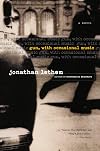
Gun, with Occasional Music is the perfect off-balance title for this novel. Its tightrope walk of the really weird and the really normal was a lot of fun. Predictable in the extreme though and that’s why the ½ point deduction. The adherence to the noir detective novel was textbook. The opening scene featured a shabby PI in his shabby office. A little aside involving the phone and calling his own number to make sure it still worked was right out of the Chandler/Spillane handbook. In a way show more it was fun to see how many of the clichés he could hit and he pretty much hit all of them. The temping dames. The double-crosses. The menacing cops. The beatings. All there and in perfect order.

The elements of the dystopian future were quite unsettling. I wondered how society or commerce could function at all with people loading up on state-sanctioned Forgettal and Acceptal (laced with appropriate amounts of Addictal). At first, people had to employ notepads to keep track of vital details like their names and addresses. How the hell could they remember their jobs? Jokes of one surgeon asking another if he remembered where the appendix is went through my head like lightning. Crazy. When the PI wakes from his 6-year freezing sentence, the blend has switched to pure Forgettal with an Addictal boost.

All of this to keep the Karma quotient high and functioning. Mandated good acts force everyone to keep their karma card with them at all times. Irritated Inquisitors (now that name dredges up some interesting ideas and a bit of Monty Python) can deduct karma points at will and without valid reason. Get too low and you can be hauled away for freezing or electronics-induced slavery in one of the many flesh emporiums that are always hungry for new bodies.

News is no longer delivered with any rational sense. Your first dose is a musical rendition of the news. Philip Glass channeling Walter Cronkite I guess. Exactly what you were supposed to glean from this is anyone’s guess. If you really needed more, you could listen to the talking heads spout nonsense. All I could think of was that beer commercial with the news crew who just wants to break for a cold one. The anchor looks into the camera and says something like “Europe” , “The Economy” and “The President”, the weather girl says “Sunny!” and the sports guy says “16 to 10”, “76 to 64” and “tied” and then they scatter. That must be what the spoken news is like because ideas are verboten and printing is outlawed. In the end, even questions and speech are karma reducing offenses that no one indulges in anymore. What a world for a PI to have to live in. Luckily he has his Forgettal.
show less
½

Lists

to get (1)
. (1)

Awards

You May Also Like

Associated Authors

Farel Dalrymple Illustrator, Contributor
Bill Kartalopoulos Series editor
Alain Finkielkraut Contributor
Edna O'Brien Contributor
Hermione Lee Contributor
Otto Penzler Series editor
Philip K. Dick Contributor
Robert Sheckley Contributor
Karen Joy Fowler Contributor
Steve Erickson Contributor
Shirley Jackson Contributor
Julio Cortázar Contributor
L. J. Davis Contributor
Russell Hoban Contributor
Haruki Murakami Contributor
Thomas Palmer Contributor
Martin Amis Contributor
Vladimir Nabokov Contributor
Jorge Luis Borges Contributor
Valentine Worth Contributor
Oliver Sacks Contributor
Flann O'Brien Contributor
Walker Percy Contributor
Donald Barthelme Contributor
Cornell Woolrich Contributor
Edmund White Contributor
Dennis Potter Contributor
Geoffrey O'Brien Contributor
Lawrence Shainberg Contributor
Christopher Priest Contributor
Brian Fawcett Contributor
David Grand Contributor
Anna Kavan Contributor
Thomas M. Disch Contributor
Kelly Link Contributor
Raymond Pettibon Cover artist, Contributor
Gary Panter Illustrator
Jesse Jacobs Contributor
Mat Brinkman Contributor
Julia Gfrörer Contributor
Jim Woodring Contributor
Peter Bagge Contributor
Roz Chast Contributor
kevin hooyman Contributor
Noel Freibert Contributor
Eleanor Davis Contributor
Josh Bayer Contributor
Anya Davidson Contributor
Rosaire Appel Contributor
Andy Burkholder Contributor
Alabaster Contributor
Jules Feiffer Contributor
Cole Closser Contributor
Adam Buttrick Contributor
Gina Wynbrandt Contributor
Joe Sacco Contributor
Erik Nebel Contributor
Ron Regé Jr. Contributor
Blaise Larmee Contributor
Ed Piskor Contributor
Matthew Thurber Contributor
David Sandlin Contributor
Megan Kelso Contributor
Anders Nilsen Contributor
Henriette Valium Contributor
R. Sikoryak Contributor
Gabrielle Bell Contributor
Ben Duncan Contributor
Anya Ulinich Contributor
Diane Obomsawin Contributor
A. Degen Contributor
Robert Hinderliter Contributor
Mark Mayer Contributor
Rebecca McKanna Contributor
Ron Rash Contributor
Brian Panowich Contributor
Suzanne Proulx Contributor
Sharon Hunt Contributor
Tonya D. Price Contributor
Amanda Rea Contributor
Ted White Contributor
Harley Jane Kozak Contributor
Duane Swierczynski Contributor
Preston Lang Contributor
Jared Lipof Contributor
Arthur Klepchukov Contributor
Robb T. White Contributor
Reed Johnson Contributor
Joyce Carol Oates Contributor
Jennifer McMahon Contributor
John Gall Cover designer
Steve Buscemi Narrator
Amy C. King Cover designer
Martina Testa Translator
Rodrigo Corral Cover designer
Michael Koelsch Cover artist
Gary Isaacs Cover artist
Ville Keynäs Translator
Joan Wong Cover designer
Mark Deakins Narrator
Miriam Rosenbloom Cover designer
Scott Peterman Cover photo
Gray318 Cover designer
Shelley Jackson Cover artist
Grant Faint Cover artist
Ben Wiseman Cover designer
M. Testa Translator
Cardon Webb Cover designer

Statistics

Works
100
Also by
108
Members
24,597
Popularity
#852
Rating
3.8
Reviews
636
ISBNs
416
Languages
20
Favorited
99

Charts & Graphs