On This Page
Description
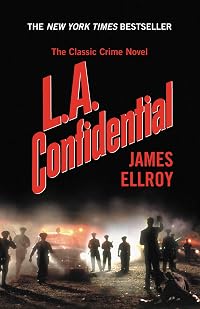
Fiction. Mystery. HTML:Christmas 1951, Los Angeles: a city where the police are as corrupt as the criminals.Six prisoners are beaten senseless in their cells by cops crazed on alcohol. For the three L. A. P. D. detectives involved, it will expose the guilty secrets on which they have built their corrupt and violent careers.
Tags
Recommendations




Member Reviews
LA Confidential was Ellroy going into overdrive. Stylistically clipped, allergic to the definite article, psychologically compressed to the point of claustrophobia and psychosis, it has a massively complex plot that's tightly controlled under all the fireworks, but those fireworks to spray the story wide and loud. Ugly violence, characters that are near-universally loathesome (softened considerably in the iconic adaptaion) with the exceptions being largely compromised and/or weak and ineffectual. The Bloody Christmas beatings and the Nite Owl Massacre unleash consequences and investigations that tear at the underbelly of LA like the wolverines in The Big Nowhere. Jack, Ed and Bud are an unholy unheroic trinity enmeshed in violence, show more corruption and cowardice, united, eventually, only by a destire to solve the case, whatever the cost. Toxic masculinity rules - literally, it's everywhere and it's in charge - occasionally they feel bad about something horrific they've done, and while the book doesn't exonerate, it sure as hell isn't interested in the victims. Buzz Meeks checks out early, probably for the best. Still compelling and propulsive, though.
Merged review:
LA Confidential was Ellroy going into overdrive. Stylistically clipped, allergic to the definite article, psychologically compressed to the point of claustrophobia and psychosis, it has a massively complex plot that's tightly controlled under all the fireworks, but those fireworks to spray the story wide and loud. Ugly violence, characters that are near-universally loathesome (softened considerably in the iconic adaptaion) with the exceptions being largely compromised and/or weak and ineffectual. The Bloody Christmas beatings and the Nite Owl Massacre unleash consequences and investigations that tear at the underbelly of LA like the wolverines in The Big Nowhere. Jack, Ed and Bud are an unholy unheroic trinity enmeshed in violence, corruption and cowardice, united, eventually, only by a destire to solve the case, whatever the cost. Toxic masculinity rules - literally, it's everywhere and it's in charge - occasionally they feel bad about something horrific they've done, and while the book doesn't exonerate, it sure as hell isn't interested in the victims. Buzz Meeks checks out early, probably for the best. Still compelling and propulsive, though. show less
Merged review:
LA Confidential was Ellroy going into overdrive. Stylistically clipped, allergic to the definite article, psychologically compressed to the point of claustrophobia and psychosis, it has a massively complex plot that's tightly controlled under all the fireworks, but those fireworks to spray the story wide and loud. Ugly violence, characters that are near-universally loathesome (softened considerably in the iconic adaptaion) with the exceptions being largely compromised and/or weak and ineffectual. The Bloody Christmas beatings and the Nite Owl Massacre unleash consequences and investigations that tear at the underbelly of LA like the wolverines in The Big Nowhere. Jack, Ed and Bud are an unholy unheroic trinity enmeshed in violence, corruption and cowardice, united, eventually, only by a destire to solve the case, whatever the cost. Toxic masculinity rules - literally, it's everywhere and it's in charge - occasionally they feel bad about something horrific they've done, and while the book doesn't exonerate, it sure as hell isn't interested in the victims. Buzz Meeks checks out early, probably for the best. Still compelling and propulsive, though. show less
Well that is an insane ride with three rogue cops on the thin line between justice and oblivion. Bud White is a thug, a bloody handed brute with a weakness for battered women. Jack Vincennes is a narcotics detective with Hollywood connections who feeds tips to scandal sheets. And Ed Exley is the straight-laced scion of a prominent police family, aiming to surpass his legendary father. Over eight years in the 1950s, the three of them come to the edge of the destroying each other, and then uncover a truly horrific conspiracy that stretches across Los Angeles.
The initiating incident is the historic Bloody Christmas scandal, where drunken LAPD officers beat a group of prisoners on the rumor that one of them had severely wounded an arresting show more officer. Exley informs on the other officers. Bud White is demoted, his partner jailed, and Vincennes loses his treasured Narcotics assignment and is assigned to Vice.
A few years later, the second incident is the Nite Owl murders: six people shotgunned to pieces in a late night cafe, including a former cop and small-time pimp. LAPD makes three African Americans for the crime, and their alibi is that while all this was happening they were brutally gangraping a Mexican girl. Exley closes the case, shooting all three suspects after they escape from jail.
Meanwhile Vincennes is investigating and getting nowhere on a book of unusual pornography, both high class and incredibly perverse, with one orgy framed as a bloodbath. Vincennes' muck-racking contact at the scandal magazine Hush Hush is murdered, literally severed limb from limb. An strange and high-class pimp, Pierce Patchett is involved. His main racket is a stable of prostitutes who have been surgically altered to look like movie stars, but he's too well insulated to be touched.
And then everything swirls together in a vortex involving old secrets, new ambition, organized crime, politics, family, women, violence, dope, revenge... everything! The plot is complex, but where this book hits best is in the dialogue, the crackling slang of cops and criminals and tough, brutal men, making a tough brutal world.
This is an ugly book, but also a gorgeous one. show less
The initiating incident is the historic Bloody Christmas scandal, where drunken LAPD officers beat a group of prisoners on the rumor that one of them had severely wounded an arresting show more officer. Exley informs on the other officers. Bud White is demoted, his partner jailed, and Vincennes loses his treasured Narcotics assignment and is assigned to Vice.
A few years later, the second incident is the Nite Owl murders: six people shotgunned to pieces in a late night cafe, including a former cop and small-time pimp. LAPD makes three African Americans for the crime, and their alibi is that while all this was happening they were brutally gangraping a Mexican girl. Exley closes the case, shooting all three suspects after they escape from jail.
Meanwhile Vincennes is investigating and getting nowhere on a book of unusual pornography, both high class and incredibly perverse, with one orgy framed as a bloodbath. Vincennes' muck-racking contact at the scandal magazine Hush Hush is murdered, literally severed limb from limb. An strange and high-class pimp, Pierce Patchett is involved. His main racket is a stable of prostitutes who have been surgically altered to look like movie stars, but he's too well insulated to be touched.
And then everything swirls together in a vortex involving old secrets, new ambition, organized crime, politics, family, women, violence, dope, revenge... everything! The plot is complex, but where this book hits best is in the dialogue, the crackling slang of cops and criminals and tough, brutal men, making a tough brutal world.
This is an ugly book, but also a gorgeous one. show less
I buoni semplicemente non ci sono in questa Los Angeles degli anni '50 dove i personaggi sono tutti veri, e se non sono veri la patina di romanzesco che li ricopre è così sottile che è facilissimo riconoscerli. Il sangue scorre a fiumi, la violenza anche, così come le perversioni, l'alcool, le droghe. Eppure in questo cumulo di macerie riesce a fiorire debolmente anche una storia d'amore, che ha per protagonisti una ex prostituta e un ex poliziotto corrotto e violento, che saranno le uniche anime salve alla fine del libro. Un Ellroy d'annata, ma magico.
This is the first I have read of Ellroy. This is one intense book -- definitely not from the languid, brooding side of noir. It's complex, brutal at times, and takes on the deep development of numerous characters, any one of which could have furnished the perspective for a very good book.
The story happens mainly inside the LA police force. The principal events are two crimes that happen within hours of one another -- a depraved rape of a young woman and a nothing-held-back bloody slaughter of six people in a late night diner. The crimes aren't just police mysteries to be solved. They splatter their way into a very involved context of personal ambitions on the parts of the three main characters -- Exley, Vincennes, and Bud White, the show more state of organized crime in Los Angeles at the time, and a kind of pervasive underside to ordinary life that is made up of drugs, scandals, extreme sexual tastes, and psychological disturbances.
Ellroy presents the narrative from the perspectives of those three main characters, all members of the LA police, in various roles over the course of the book. We see everything that happens through the filters of their ambitions, fears, psychological hangups, weaknesses, and, now and then, through their better natures. It's a Hobbesian world -- a war of all against all, where alliances happen only when the trajectories of agendas and egos happen to coincide.
One touch that I found especially poignant was Ellroy's interspersing newspaper accounts of events into the narrative. The newspaper accounts show us what we ordinarily see -- police investigations pursuing the truth, progressing along the paths laid out by legal process. But the narrative behind them is so much more complex and dark -- that world of ambitions and fears in which the rules and procedures are just weapons and props to be used to best advantage.
As an aside, I found the female characters in the story interesting by way of contrast. The two that stand out are the rape victim, Inez Soto, and Lynne Bracken, the high class prostitute who is involved in many sides of the story. The male characters seem constantly on the edge of depravity -- if not giving in to violent or perverse temptations, they are weighing the price they are willing to sell their souls for in return for personal ambitions. The female characters, although deeply involved in the violence and sordid happenings, don't seem quite so twisted by it all. You can even find dignity in their characters (something that comes out, I thought, more fully, in the portrayal of Bracken in the movie version of the book).
Exley, Vincennes, and White are not one-dimensional "bad guys" either. But justice and truth are the results of negotiation, within their own psychological worlds as well as in the combative, political world in which they live.
It's a good story, more than just a crime drama -- an intense, dark picture of human ambition working behind the scenes of stories of apparent heroism and character. Be prepared -- it's pretty hard core. show less
The story happens mainly inside the LA police force. The principal events are two crimes that happen within hours of one another -- a depraved rape of a young woman and a nothing-held-back bloody slaughter of six people in a late night diner. The crimes aren't just police mysteries to be solved. They splatter their way into a very involved context of personal ambitions on the parts of the three main characters -- Exley, Vincennes, and Bud White, the show more state of organized crime in Los Angeles at the time, and a kind of pervasive underside to ordinary life that is made up of drugs, scandals, extreme sexual tastes, and psychological disturbances.
Ellroy presents the narrative from the perspectives of those three main characters, all members of the LA police, in various roles over the course of the book. We see everything that happens through the filters of their ambitions, fears, psychological hangups, weaknesses, and, now and then, through their better natures. It's a Hobbesian world -- a war of all against all, where alliances happen only when the trajectories of agendas and egos happen to coincide.
One touch that I found especially poignant was Ellroy's interspersing newspaper accounts of events into the narrative. The newspaper accounts show us what we ordinarily see -- police investigations pursuing the truth, progressing along the paths laid out by legal process. But the narrative behind them is so much more complex and dark -- that world of ambitions and fears in which the rules and procedures are just weapons and props to be used to best advantage.
As an aside, I found the female characters in the story interesting by way of contrast. The two that stand out are the rape victim, Inez Soto, and Lynne Bracken, the high class prostitute who is involved in many sides of the story. The male characters seem constantly on the edge of depravity -- if not giving in to violent or perverse temptations, they are weighing the price they are willing to sell their souls for in return for personal ambitions. The female characters, although deeply involved in the violence and sordid happenings, don't seem quite so twisted by it all. You can even find dignity in their characters (something that comes out, I thought, more fully, in the portrayal of Bracken in the movie version of the book).
Exley, Vincennes, and White are not one-dimensional "bad guys" either. But justice and truth are the results of negotiation, within their own psychological worlds as well as in the combative, political world in which they live.
It's a good story, more than just a crime drama -- an intense, dark picture of human ambition working behind the scenes of stories of apparent heroism and character. Be prepared -- it's pretty hard core. show less
The third book in the L.A. Quartet, L.A. Confidential, has been hailed by critics as one of seminal works of neo-noir. Published in 1990, it was Ellroy’s coming out party as a force to be reckoned with in the genre and the dawn of a new generation in crime fiction. Why? Because it’s that freaking good. It’s also because, at the time it was published, no one had ever written a book quite like it. The style is dense and clipped with abbreviated sentences trimmed down to only the essential elements, and the language is short and sweet, often culled from police, criminal, and 1950s pop vernacular. What results is a reading experience that feels a lot like picking through shattered glass. It’s a slow and painstaking process, trying show more to absorb every bit of meaning while not cutting yourself on the jagged edges.
His “kick you in the nards” style came into being when writing the novel White Jazz. The first manuscript he turned into his editor was a whopping 900 pages, and they asked him to trim it down to 350. He refused to remove scenes or subplots and instead trimmed it by distilling the words into their barest form (and simultaneously gave the finger to all those grammar Nazis that run high-school English classes). What resulted became Ellroy’s signature style. Here’s an example from the text:
“Dusk, Chermoya Avenue: Hollywood, a block off Franklin. 5261: a Tudor four-flat, two pads upstairs, two down. The lights—probably too late to glom “Chester” the day man. Jack rang the B buzzer—no response. An ear to the door, a listen—no sounds, period. In with the key.”
See what I mean about “dense”? A 400 page book written by Ellroy contains as much story as a 1000 page book from any other writer. There’s so much narrative in there, it’s hard to keep it all straight. L. A. Confidential was my fifth Ellroy book (prior to that it was Brown’s Requiem, The Black Dahlia, Destination: Morgue!, and Blood’s a Rover, if anyone out there is keeping score), and I have to say, I’m glad I didn’t try to tackle it right out the gate. It’s not an easy read, and anyone thinking of reading it would benefit from a little warming up before inviting Ellroy to pound their brains raw.
There are three narrative streams in the book, each one following a different character in the Los Angeles police department. First is Ed Exley, a young war hero, college boy, and coward hell bent on moving up the ranks of the LAPD and living up to his daddy’s as a police officer. Then there’s Wendel “Bud” White, a dumb bruiser with a penchant for “excessive force,” especially when exercised against wife beaters and child abusers. And finally there’s “Trashcan” Jack Vincennes. He works as an official advisor on the fictional TV series Badge of Honor (a.k.a. Dragnet, if anyone out there remembers that bit of La-La-Wood gold) and rousts celebrity drug users for the scandal rag, Hush-Hush. In other words, he’s totally bent. All are deeply flawed characters, but in different ways. The novel takes place over several years, with excerpts from local newspapers and police reports filling in the blanks between the passage of years.
All three characters are in some way involved with several key events in the story. It starts off with “Bloody Christmas,” a vicious beating perpetrated by dozens of officers upon four young Hispanics. The three officers’ actions during and subsequent to this event form the framework for their relationships (or lack thereof) with one another, and set in motion many of the other events in novel. A couple years later, six people are shot-gunned into oblivion in an all-night diner called the Nite Owl. All the men three all have a hand in the arrest and slaying of three negro youths accused of the crime, the cover-up of which becomes vital to unraveling the central mystery. But in addition to that, there are a ton of other subplots that weave their way into the narrative—a decades old serial murder, gruesome porn magazines, hookers cut to look like movie stars, stolen heroin, murdered prostitutes, the Badge of Honor TV show, a millionaire chemist, the Hush-Hush gossip rag, police corruption, organized crime, and gangland murder. I could go on, but there isn’t any point, really. Explaining the plot in detail won’t help you understand it any better. If anything, it’ll just make you even more confused. Suffice to say that there’s a lot of shit. But that was probably the thing that amazed me the most about this novel—that Ellroy could spin a story with so many subplots and characters and thematic elements and still be able to tie them all together at the end. That alone takes a special kind of brilliance.
Another spot of brilliance (hell, what am I talking about? The whole damn thing is brilliant) is Ellroy’s re-imagined version of L.A. Underneath the veneer of glitz and wealth and suburban bliss lies a malignant and festering sore. What makes it different than the real L.A., you ask? It’s because Ellroy takes all that corruption and depravity and kicks it up to eleven. A musician doesn’t just get high on dope. He gets high on dope and screws dogs and rapes underage hookers. A man isn’t just a wife-beater. He beats his wife to death while his young son watches and then leaves the kid to die chained up in the kitchen. A serial killer doesn’t just target young kids. He targets young kids, chops up their bodies, and sews them together to make a Frankenstein Pinocchio. The violence, perversion, and decay of Ellroy’s L.A. is a caricature of the real thing, amped up on steroids and blasted in your face out of a fire hose. He wants you to be shocked. He wants you to be disgusted. We’ve been desensitized by sensational media and gruesome crimes, and exaggerating the moral decrepitude is Ellroy’s way of grabbing you by the shoulders and shaking you awake. Because of that, L. A. Confidential isn’t going to appeal to everyone.
But it’s not all death and depravity. There’s a note of redemption, too, the idea that bad men can overcome their flaws and administer absolute justice—no matter how ugly the outcome might be. The coward can be brave, the bent can be straight, the thuggish can be heroic—but only through commonality and dependence upon their fellow man. Throughout the book, each of the characters attempts to solve the same problem by attacking it by themselves from different angles. Proving true the old adage that “the whole is greater than the sum of its parts,” they’re only able to surpass their own flaws and administer justice by working together and forgetting past wrongs. There’s a larger message in there about the human condition, but instead of waxing sappy (or sappier than I have already), I’m going to let you figure it out on your own.
Like I said before, L. A. Confidential isn’t an easy read. The writing style takes some getting used to, and the subject matter is uncomfortable at times. But at the same time, I can’t encourage you enough to pick it up and give it a try. Even if you don’t usually like crime or mystery fiction, I have a feeling you’ll enjoy it. So long as you’re not easily offended, of course. Or a child--definitely not a book to let your kids get ahold of. Anyway, the point is that it’s not just a good mystery. It’s good literature.
And if you’ve seen the movie and you’re worried the book will be a bore because you know everything that’s going to happen, then don’t. The second half of the book is totally different from movie. I mean, it’d have to be. If they put everything in the movie the way it was in the book, that sucker would be twelve hours long.
http://readabookonce.blogspot.co.uk/2012/05/review-l-confidential-by-james-ellro... show less
His “kick you in the nards” style came into being when writing the novel White Jazz. The first manuscript he turned into his editor was a whopping 900 pages, and they asked him to trim it down to 350. He refused to remove scenes or subplots and instead trimmed it by distilling the words into their barest form (and simultaneously gave the finger to all those grammar Nazis that run high-school English classes). What resulted became Ellroy’s signature style. Here’s an example from the text:
“Dusk, Chermoya Avenue: Hollywood, a block off Franklin. 5261: a Tudor four-flat, two pads upstairs, two down. The lights—probably too late to glom “Chester” the day man. Jack rang the B buzzer—no response. An ear to the door, a listen—no sounds, period. In with the key.”
See what I mean about “dense”? A 400 page book written by Ellroy contains as much story as a 1000 page book from any other writer. There’s so much narrative in there, it’s hard to keep it all straight. L. A. Confidential was my fifth Ellroy book (prior to that it was Brown’s Requiem, The Black Dahlia, Destination: Morgue!, and Blood’s a Rover, if anyone out there is keeping score), and I have to say, I’m glad I didn’t try to tackle it right out the gate. It’s not an easy read, and anyone thinking of reading it would benefit from a little warming up before inviting Ellroy to pound their brains raw.
There are three narrative streams in the book, each one following a different character in the Los Angeles police department. First is Ed Exley, a young war hero, college boy, and coward hell bent on moving up the ranks of the LAPD and living up to his daddy’s as a police officer. Then there’s Wendel “Bud” White, a dumb bruiser with a penchant for “excessive force,” especially when exercised against wife beaters and child abusers. And finally there’s “Trashcan” Jack Vincennes. He works as an official advisor on the fictional TV series Badge of Honor (a.k.a. Dragnet, if anyone out there remembers that bit of La-La-Wood gold) and rousts celebrity drug users for the scandal rag, Hush-Hush. In other words, he’s totally bent. All are deeply flawed characters, but in different ways. The novel takes place over several years, with excerpts from local newspapers and police reports filling in the blanks between the passage of years.
All three characters are in some way involved with several key events in the story. It starts off with “Bloody Christmas,” a vicious beating perpetrated by dozens of officers upon four young Hispanics. The three officers’ actions during and subsequent to this event form the framework for their relationships (or lack thereof) with one another, and set in motion many of the other events in novel. A couple years later, six people are shot-gunned into oblivion in an all-night diner called the Nite Owl. All the men three all have a hand in the arrest and slaying of three negro youths accused of the crime, the cover-up of which becomes vital to unraveling the central mystery. But in addition to that, there are a ton of other subplots that weave their way into the narrative—a decades old serial murder, gruesome porn magazines, hookers cut to look like movie stars, stolen heroin, murdered prostitutes, the Badge of Honor TV show, a millionaire chemist, the Hush-Hush gossip rag, police corruption, organized crime, and gangland murder. I could go on, but there isn’t any point, really. Explaining the plot in detail won’t help you understand it any better. If anything, it’ll just make you even more confused. Suffice to say that there’s a lot of shit. But that was probably the thing that amazed me the most about this novel—that Ellroy could spin a story with so many subplots and characters and thematic elements and still be able to tie them all together at the end. That alone takes a special kind of brilliance.
Another spot of brilliance (hell, what am I talking about? The whole damn thing is brilliant) is Ellroy’s re-imagined version of L.A. Underneath the veneer of glitz and wealth and suburban bliss lies a malignant and festering sore. What makes it different than the real L.A., you ask? It’s because Ellroy takes all that corruption and depravity and kicks it up to eleven. A musician doesn’t just get high on dope. He gets high on dope and screws dogs and rapes underage hookers. A man isn’t just a wife-beater. He beats his wife to death while his young son watches and then leaves the kid to die chained up in the kitchen. A serial killer doesn’t just target young kids. He targets young kids, chops up their bodies, and sews them together to make a Frankenstein Pinocchio. The violence, perversion, and decay of Ellroy’s L.A. is a caricature of the real thing, amped up on steroids and blasted in your face out of a fire hose. He wants you to be shocked. He wants you to be disgusted. We’ve been desensitized by sensational media and gruesome crimes, and exaggerating the moral decrepitude is Ellroy’s way of grabbing you by the shoulders and shaking you awake. Because of that, L. A. Confidential isn’t going to appeal to everyone.
But it’s not all death and depravity. There’s a note of redemption, too, the idea that bad men can overcome their flaws and administer absolute justice—no matter how ugly the outcome might be. The coward can be brave, the bent can be straight, the thuggish can be heroic—but only through commonality and dependence upon their fellow man. Throughout the book, each of the characters attempts to solve the same problem by attacking it by themselves from different angles. Proving true the old adage that “the whole is greater than the sum of its parts,” they’re only able to surpass their own flaws and administer justice by working together and forgetting past wrongs. There’s a larger message in there about the human condition, but instead of waxing sappy (or sappier than I have already), I’m going to let you figure it out on your own.
Like I said before, L. A. Confidential isn’t an easy read. The writing style takes some getting used to, and the subject matter is uncomfortable at times. But at the same time, I can’t encourage you enough to pick it up and give it a try. Even if you don’t usually like crime or mystery fiction, I have a feeling you’ll enjoy it. So long as you’re not easily offended, of course. Or a child--definitely not a book to let your kids get ahold of. Anyway, the point is that it’s not just a good mystery. It’s good literature.
And if you’ve seen the movie and you’re worried the book will be a bore because you know everything that’s going to happen, then don’t. The second half of the book is totally different from movie. I mean, it’d have to be. If they put everything in the movie the way it was in the book, that sucker would be twelve hours long.
http://readabookonce.blogspot.co.uk/2012/05/review-l-confidential-by-james-ellro... show less
I had seen the superb movie many times (it's in my top five) before reading this book, and wondered how the two would compare. Ellroy's novel is also superb, and in some ways the movie reads directly from it (much of the dialogue is lifted verbatim) but there are huge differences.
Fit into a couple hours and what feels like a year's worth of time, the movie is much more concise. The book is far more sprawling, taking place over almost a decade, connecting to both the prequel ([b:The Big Nowhere|36058|The Big Nowhere (L.A. Quartet, #2)|James Ellroy|https://d.gr-assets.com/books/1348561244s/36058.jpg|972626], outstanding) and sequel ([b:White Jazz|101000|White Jazz (L.A. Quartet, #4)|James show more Ellroy|https://d.gr-assets.com/books/1328662450s/101000.jpg|1122011], which is up next). The screenwriters did a fine job capturing the essence of the book while truncating the plot.
The book is far more involved, with more seamy threads, the plot much more byzantine. I was having a tough time figuring out how the evil scheme tied together, but Ellroy does a surprisingly good job of tying it together in a short time at the end, so read closely and stick with it. The details and threads are there to allow an observant reader to tie it together.
The book's larger scope lets the three main characters get more face time and more depth. Not to slight Guy Pearce's fine performance, but Ed Exley is a whole new level of fascinating here. Jack Vincennes isn't the super-slick hepcat that Kevin Spacey memorably embodied. Bud White is far less restrained than Russell Crowe made him. The actors who played smaller roles in the movie (James Cromwell, Danny Devito, and David Straithairn) were dead on.
Ellroy's prose is a thing of beauty, with its raw expose of violence and corruption and 50s slang. While the movie was chock-full of badness, it didn't come close to the book. For those unfamiliar with the author: putting it mildly, he doesn't have a good opinion of human nature. No nice guys (or gals) here at all: everyone is broken and disturbed to some extent.
If you like down and dirty crime fiction or film noir at all, this is the book for you. The movie, too. show less
Fit into a couple hours and what feels like a year's worth of time, the movie is much more concise. The book is far more sprawling, taking place over almost a decade, connecting to both the prequel ([b:The Big Nowhere|36058|The Big Nowhere (L.A. Quartet, #2)|James Ellroy|https://d.gr-assets.com/books/1348561244s/36058.jpg|972626], outstanding) and sequel ([b:White Jazz|101000|White Jazz (L.A. Quartet, #4)|James show more Ellroy|https://d.gr-assets.com/books/1328662450s/101000.jpg|1122011], which is up next). The screenwriters did a fine job capturing the essence of the book while truncating the plot.
The book is far more involved, with more seamy threads, the plot much more byzantine. I was having a tough time figuring out how the evil scheme tied together, but Ellroy does a surprisingly good job of tying it together in a short time at the end, so read closely and stick with it. The details and threads are there to allow an observant reader to tie it together.
The book's larger scope lets the three main characters get more face time and more depth. Not to slight Guy Pearce's fine performance, but Ed Exley is a whole new level of fascinating here. Jack Vincennes isn't the super-slick hepcat that Kevin Spacey memorably embodied. Bud White is far less restrained than Russell Crowe made him. The actors who played smaller roles in the movie (James Cromwell, Danny Devito, and David Straithairn) were dead on.
Ellroy's prose is a thing of beauty, with its raw expose of violence and corruption and 50s slang. While the movie was chock-full of badness, it didn't come close to the book. For those unfamiliar with the author: putting it mildly, he doesn't have a good opinion of human nature. No nice guys (or gals) here at all: everyone is broken and disturbed to some extent.
If you like down and dirty crime fiction or film noir at all, this is the book for you. The movie, too. show less
Los Ángeles, años cincuenta, una época fascinante llena de matices. Pornografía. Corrupción policial. Intrigas en el hampa. Un atroz asesinato colectivo se convierte en eje central de la vida de las víctimas y los verdugos. Tres policías tambaleándose en arenas movedizas: Ed Exley, sediento de gloria, capaz de violar cualquier ley con tal de eclipsar a su padre, ex policía y gran magnate. Bud White, una bomba de relojería con placa de agente, ansioso de vengar la brutal muerte de su madre. / Ellroy's ninth novel, set in 1950s Los Angeles, kicks off with a shoot-out between a rogue ex-cop and a band of gangsters fronted by a crooked police lieutenant. Close on the heels of this scene comes a jarring Christmas Day precinct house show more riot, in which drunk and rampaging cops viciously beat up a group of jailed Mexican hoodlums. But, as readers will quickly learn, these sudden sprees of violence, laced with evidence of police corruption, are only teasers for the grisly events and pathos that follow this intricate police procedural. Picking up where The Black Dahlia and The Big Nowhere left off, the book tracks the intertwining paths of the three flawed and ambitious cops who emerge from the ""Bloody Christmas"" affair. Dope peddling, prostitution, and other risky business are revealed as the tightly wound plot untangles. Ellroy's disdain for Hollywood tinsel is evident at every turn; even the most noble of the characters here are relentlessly sleazy. But their grueling, sometimes maniacal schemes make a compelling read for the stout of heart. show less
Members
- Recently Added By
Lists

The Guardian's 1000 Novels Everyone Must Read
1,005 works; 551 members

Read the book and saw the movie
1,170 works; 195 members

Noirvember: The Best Noir
113 works; 56 members

1001 Books You Must Read Before You Die
1,448 works; 1,133 members

Best Noir Fiction
160 works; 14 members

100 Mysteries and Thrillers to Read in a Lifetime
99 works; 22 members

Best Historical Fiction
620 works; 261 members

Historical Fiction
889 works; 89 members

The Guardian's 100 greatest novels of all time
100 works; 16 members

Novels with a city or town in the title
61 works; 1 member

The 100 Best Crime Novels and Thrillers since 1945
100 works; 6 members

Watched the Movie, Probably Won't Read the Book
185 works; 34 members

Books Read in 2019
4,052 works; 108 members

Books With Place Names in the Title
257 works; 11 members

American Lit for Eng 11 Research Project
368 works; 6 members
The American Experience
173 works; 18 members

Top Five Books of 2014
1,064 works; 397 members
My list of 100 books to read next
100 works; 4 members

1990s
309 works; 17 members

The "A" List
67 works; 8 members
Author Information

James Ellroy was born in Los Angeles in 1948. His L. A. Quartet novels - "The Black Dahlia", "The Big Nowhere", "L. A. Confidential", & "White Jazz" - were international best-sellers. His novel "American Tabloid" was Time magazine's Novel of the Year for 1995; his memoir, "My Dark Places", was a "Time" Best Book of the Year & a "New Yorker Times" show more Notable Book for 1996. He lives in Kansas City. (Publisher Provided) James Ellroy was born in Los Angeles, California on March 4, 1948. His parents were divorced and he moved in with his father after his mother was murdered in 1958. The story of his mother's unsolved murder would become the basis for his 1996 nonfiction work entitled My Dark Places. He attended Fairfax High School, where he sent Nazi pamphlets to girls he liked and criticized JFK, while advocating the reinstatement of slavery. He was eventually expelled for preaching Nazism in his English class. He joined the army after his expulsion from school, but after realizing that he did not belong there, he faked a stutter and convinced the army psychologist that he was not mentally fit for combat. After three months, he received a dishonorable discharge and returned home. His father died soon thereafter. He was thrown in juvenile hall for stealing a steak from the local market. When he got out, his father's friend became his guardian, but by the age of eighteen, he was back on the streets. He was sleeping outside, stealing, drinking and experimenting with drugs. It wasn't long before he was thrown in jail for breaking into a vacant apartment. When he got out of jail, he started a job at an adult book store, his addictions growing progressively larger. He was misusing the drug Benzedrex, a sinus inhalent which nearly drove him to Schizophrenia and his drinking was ruining his health. He contracted pneumonia twice as well as a condition called post-alchohol brain syndrome. Fearing for his sanity, he joined AA, became sober and found a job as a golf caddy. At the age of 30, he wrote his first novel entitled Brown's Requiem, which was published in 1981. His other works include Clandestine, Blood on the Moon, Because the Night, Suicide Hill, Killer on the Road, and The Cold Six Thousand. His works The Black Dahlia and L. A. Confidential were adapted into feature films. Ellroy's title, Perfidia, made the New York Times bestseller list in 2014. 030i show less
Some Editions
Awards and Honors
Awards
Notable Lists
Series

Belongs to Publisher Series
Work Relationships
Is contained in
Has the adaptation
Is abridged in
Common Knowledge
- Canonical title
- L. A. Confidential
- Original title
- L. A. Confidential
- Alternate titles*
- Stadt der Teufel
- Original publication date
- 1990
- People/Characters
- Jack Vincennes; Bud White; Dudley Smith; Edmund Exley; Buzz Meeks; Dwight Gilette (show all 9); Ellis Loew; William Parker; Bob Gallaudet
- Important places
- Hollywood, Los Angeles, California, USA; Los Angeles, California, USA; California, USA
- Important events
- 1950s
- Related movies
- L.A. Confidential (1997 | IMDb); L.A. Confidential (2003 | IMDb)
- Epigraph
- A glory that costs everything and means nothing --
Steve Erickson - Dedication
- Mary Doherty Ellroy
- First words
- An abandoned auto court in the San Berdoo foothills; Buzz Meeks checked in with ninety-four thousand dollars, eighteen pounds of high-grade heroin, a 10-gauge pump, a .38 special, a .45 automatic and a switchblade he bought o... (show all)ff a pachuco at the border -- right before he spotted the car parked across the line: Mickey Cohen goons in an LAPD unmarked, Tijuana cops standing by to bootjack a piece of his goodies, dump his body in the San Ysidro River.
- Quotations*
- Roem die alles kost en niets betekent. (Steve Erickson)
- Last words
- (Click to show. Warning: May contain spoilers.)Alone with his dead.
- Original language
- English
*Some information comes from Common Knowledge in other languages. Click "Edit" for more information.
Classifications
Statistics
- Members
- 3,714
- Popularity
- 4,339
- Reviews
- 42
- Rating
- (4.08)
- Languages
- 16 — Czech, Danish, Dutch, English, Finnish, French, German, Hungarian, Italian, Japanese, Korean, Norwegian, Polish, Portuguese, Spanish, Swedish
- Media
- Paper, Audiobook, Ebook
- ISBNs
- 97
- ASINs
- 26