On the Trinity. Books 8-15
by Augustine
On This Page
Description
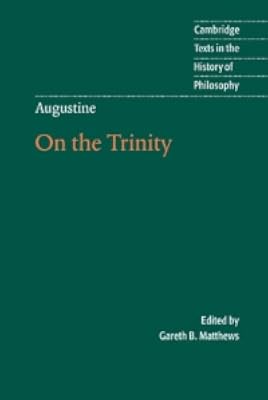
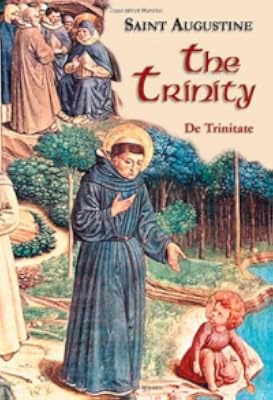
An appropriate motto for Augustine's great work On the Trinity is 'faith in search of understanding'. In this treatise Augustine offers a part-theological, part-philosophical account of how God might be understood in analogy to the human mind. On the Trinity can be fairly described as the first modern philosophy of mind: it is the first work in philosophy to recognize the 'problem of other minds', and the first to offer the 'argument from analogy' as a response to that problem. Other show more subjects that it discusses include the nature of the mind and the nature of the body, the doctrine of 'illumination', and thinking as inner speech. This volume presents the philosophical section of the work, and in a historical and philosophical introduction Gareth Matthews places Augustine's arguments in context and assesses their influence on later thinkers. show lessTags
Recommendations






Members
- Recently Added By
Author Information

1,931+ Works 57,885 Members
Saint Augustine was born to a Catholic mother and a pagan father on November 13, 354, at Thagaste, near Algiers. He studied Latin literature and later taught rhetoric in Rome and Milan. He originally joined the Manicheans, a religious sect, but grew unhappy with some of their philosophies. After his conversion to Christianity and his baptism in show more 387, Augustine developed his own approach to philosophy and theology, accommodating a variety of methods and different perspectives. He believed that the grace of Christ was indispensable to human freedom, and he framed the concepts of original sin and just war. His thoughts greatly influenced the medieval worldview. One of Augustine's major goals was a single, unified church. He was ordained a priest in 391 and appointed Bishop of Hippo, in Roman Africa, in 396. Augustine was one of the most prolific Latin authors in terms of surviving works, and the list of his works consists of more than one hundred separate titles. His writings and arguments with other sects include the Donatists and the Pelagians. On the Trinity, The City of God, and On Nature and Grace are some of his important writings. Confessions, which is considered his masterpiece, is an autobiographical work that recounts his restless youth and details the spiritual experiences that led him to Christianity. Many of Augustine's ideas, such as those concerning sin and predestination, became integral to the doctrines of the Roman Catholic Church. In the Catholic Church he is a saint and pre-eminent Doctor of the Church, and the patron of the Augustinians. He is the patron saint of brewers, printers, and theologians. Augustine died on August 28, 430. (Bowker Author Biography) show less
Series
Belongs to Publisher Series
Common Knowledge
- Canonical title
- On the Trinity. Books 8-15
Classifications
Statistics
- Members
- 60
- Popularity
- 515,817
- Languages
- English
- Media
- Paper, Ebook
- ISBNs
- 4