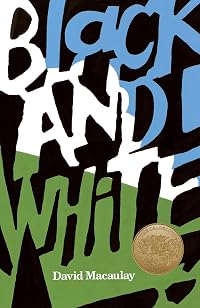
Black and White
by David Macaulay
On This Page
Description
Four brief "stories" about parents, trains, and cows, or is it really all one story? The author recommends careful inspection of words and pictures to both minimize and enhance confusion.Tags
Recommendations
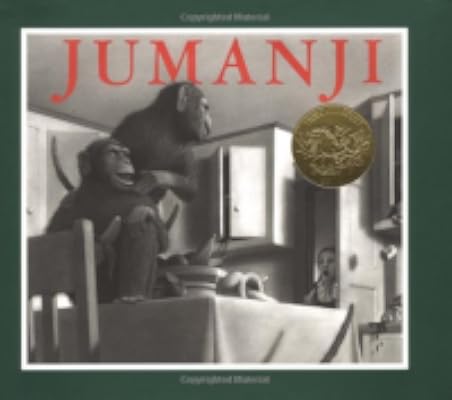
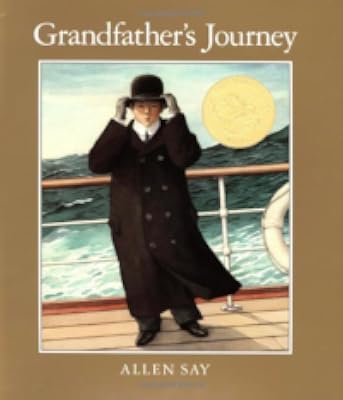
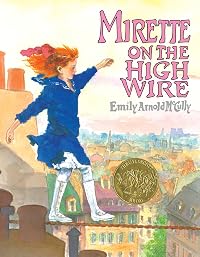
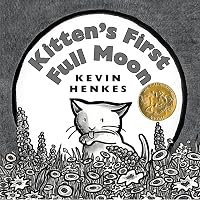
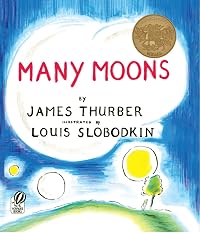
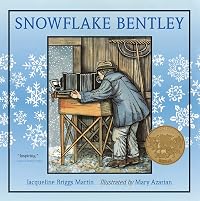
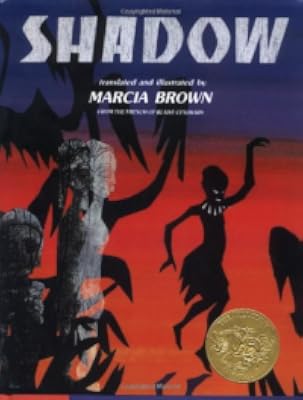

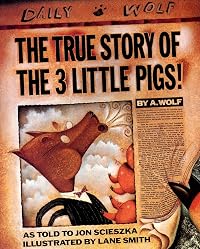
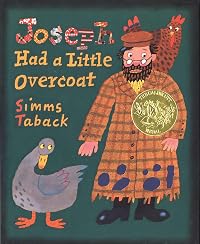
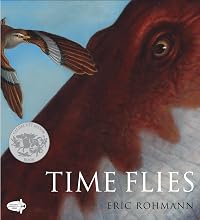
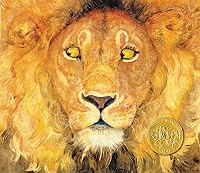

Member Recommendations
by cmbohn
Member Reviews
Four separate stories - or are they? - unfold on the pages of author/illustrator David Macaulay's Caldecott Medal-winning picture-book, Black and White. Each tale - a boy traveling cross-country on the train, looking forward to being reunited with his parents; a girl who usually finds her parents predictable, until they come home one day clothed in newspapers, singing songs; a group of commuters waiting for a delayed train; a herd of Holstein cows on the loose, either being stolen by some robbers, or not - takes up one quarter of every two-page spread. Whether read in isolation from one another, or all together (I tried both approaches, myself), it soon becomes clear that they are interrelated in complex ways, and that matters are not, show more whatever the title might say, black and white...
Although I notice that online reviews of this one are fairly divided, I myself found Black and White to be an immensely engaging, entertaining, and thought-provoking picture-book. It definitely requires a little more work, on the part of the reader, and isn't the sort of book that you can rush through, but the more time you spend with it, the more you are rewarded. The stories here are amusing, both in their own right - I particularly enjoyed the girl's ruminations on her parents - and in conjunction with one another, and they invite the reader to get involved in the storytelling itself, in piecing together the ways that each discrete strand is part of the whole. The artwork, as one would expect from a Caldecott Medal-winning title, is amazing, with each of the four tales being illustrated in a different style. Recommended to anyone looking for picture-books with a more complex narrative, as well as to David Macaulay fans. show less
Although I notice that online reviews of this one are fairly divided, I myself found Black and White to be an immensely engaging, entertaining, and thought-provoking picture-book. It definitely requires a little more work, on the part of the reader, and isn't the sort of book that you can rush through, but the more time you spend with it, the more you are rewarded. The stories here are amusing, both in their own right - I particularly enjoyed the girl's ruminations on her parents - and in conjunction with one another, and they invite the reader to get involved in the storytelling itself, in piecing together the ways that each discrete strand is part of the whole. The artwork, as one would expect from a Caldecott Medal-winning title, is amazing, with each of the four tales being illustrated in a different style. Recommended to anyone looking for picture-books with a more complex narrative, as well as to David Macaulay fans. show less
David Macaulay's Black and White is a reading experience like no other! As I open the book, I notice the warning posted on the book jacket. It states, "This book appear to contain a number of stories that do not necessarily occur at the same time. But it may contain only one story. Careful inspection of both words and pictures is recommended." Flipping to the first page, I come across four different titles. As I continue to read, it seems that the four stories continue in the same designated area, on each page. Rather than reading each story separately, I try to take in the entire piece at once. I notice, however, that my attention is focused on two of the four stories. One, in particular, I struggle to follow. In reading further, I show more start to notice how aspects of one story are showing up in other stories. Little by little, boundaries are being crossed. The stories have merged.
Macaulay creates such an interesting reading experience through the stories he tells as well as through the art he creates. As the stories begin to overlap, Macaulay's illustrations do the same. For example, the snow falling in Seeing Things becomes the ripped up bills in Problem Parents. Similar to a Choose You Own Adventure Book, a reader could re-read this story a number of times and have a completely different experience. It is no surprise that Macaulay earned the 1991 Caldecott for this original piece of art.
I think this book would appeal to students of all ages because the reading experience is quite remarkable. However, I am willing to bet that school-age children will be more comfortable with this format than the teachers who might choose to include this book in their classroom library, as the choices the reader makes are similar to the way one reads on-line. Because our students are digital natives, this reading experience might make them feel right at home. Regardless, this is a book that will engage readers, as it is so different than what we normally experience while reading a picture book.
Though I do think this book is a great choice to have in a classroom library, I am not sure that it should be read to an entire class, as it requires individual readers to make choices about their reading experience. In addition to using it in the K-12 classroom, I hope to use Black and White with pre-service teachers. I think that having teachers experience this book is a great way to encourage discussion of how the tools we use affect the ways that we read. show less
Macaulay creates such an interesting reading experience through the stories he tells as well as through the art he creates. As the stories begin to overlap, Macaulay's illustrations do the same. For example, the snow falling in Seeing Things becomes the ripped up bills in Problem Parents. Similar to a Choose You Own Adventure Book, a reader could re-read this story a number of times and have a completely different experience. It is no surprise that Macaulay earned the 1991 Caldecott for this original piece of art.
I think this book would appeal to students of all ages because the reading experience is quite remarkable. However, I am willing to bet that school-age children will be more comfortable with this format than the teachers who might choose to include this book in their classroom library, as the choices the reader makes are similar to the way one reads on-line. Because our students are digital natives, this reading experience might make them feel right at home. Regardless, this is a book that will engage readers, as it is so different than what we normally experience while reading a picture book.
Though I do think this book is a great choice to have in a classroom library, I am not sure that it should be read to an entire class, as it requires individual readers to make choices about their reading experience. In addition to using it in the K-12 classroom, I hope to use Black and White with pre-service teachers. I think that having teachers experience this book is a great way to encourage discussion of how the tools we use affect the ways that we read. show less
By far the most interesting and complex children's picture I have ever and will ever read (fingers crossed). I've read this five times. One read through for each square and then once more all together. I think I may have loved this as a child but as an adult I'm a tad bit frustrated with to sequencing but it is very inventive and unique. The author/illustrator suggests that you pay careful attention to both the text and the images and the warning is greatly needed and appreciated. I'd recommend this for any child who thinks out of the box but this unique storytelling is sure to be loved by any kid.
Is it a book or a puzzle? Whatever it is, David McCaulay's "Black and White" is anything but. The plot doesn't seem to be the point, but rather the point is to figure out how the plot is derived. Some kids will be frustrated because of the lack of low-hanging fruit. Others will enjoy the challenge. A literary Rubik's cube that needs to be fiddled with over time to be fully appreciated.
Just sifting through the pages of David Macaulay's Black and White makes it initially seem like a simplistic picture book, until one really begins to read it. The question is how exactly does one read a book that seems to have four separate stories, maybe even four separate books each complete with its own title page. The first time around I read it as I would any other book, but it didn't take long before I realized this was quite different. The four separate stories ironically become one as you realize they are all tied together by careful examination of the pictures. I do not think there is any right or wrong to this book. It is definitely challenging but makes for a great discussion in groups for middle to high school kids.
This fascinating and challenging book reads like a puzzle! The joy in the book is making one's own connections and essentially, creating and/or choosing the story that the reader desires.
Black and White is like a higher level Where's Waldo story. It is a book of patterns repeated, blended, and altered. Color schemes range from black and white, pastel and grey shades, to distinct and vibrant colors. Color and shape patterns suggest different themes for readers to puzzle over.
One theme is a jailbreak, which involves a pattern of black and white stripes. Prison bars, the boy's shirt, spilled milk, the escape rope, the criminal's shirt, and lines of newsprint create a pattern that is repeated, blended, and altered in dreamlike fashion. An obvious question is, why would the author would connect these things?
Another theme is escaped Holstein cows. Here, the author creates a black and white non-geometric pattern, which is show more repeated in the robber's mask, the dog's face, and shredded newspaper. The pink color from the Holsteins' udders is repeated in the cow's tongue, the robber's face, and the color of the train station. These patterns are fun to find and puzzle over.
A large portion of story falls in the "grey area," with a theme of muted colors and grey tones. In the grey area are mixed patterns, multiple meanings, clouds, camouflage, disguises, and sleepiness. Parents lack faces. Shredded newspaper becomes a blanket of snow that buries the train station. Sharp distinctions are covered over.
Oddly, parents emerge from behind their newspapers and awaken only after the facts are shredded. What is the author trying to say about the way parents relate to their children? What values does the author suggest are really important?
Read as a narrative, the story can be confusing, but looked at like a Where's Waldo book, distinct patterns emerge. What is wrong with adults? What's really happening? What's really important? These are higher level questions that children deserve to be exposed to. I enjoyed the open-ended nature of the story. show less
One theme is a jailbreak, which involves a pattern of black and white stripes. Prison bars, the boy's shirt, spilled milk, the escape rope, the criminal's shirt, and lines of newsprint create a pattern that is repeated, blended, and altered in dreamlike fashion. An obvious question is, why would the author would connect these things?
Another theme is escaped Holstein cows. Here, the author creates a black and white non-geometric pattern, which is show more repeated in the robber's mask, the dog's face, and shredded newspaper. The pink color from the Holsteins' udders is repeated in the cow's tongue, the robber's face, and the color of the train station. These patterns are fun to find and puzzle over.
A large portion of story falls in the "grey area," with a theme of muted colors and grey tones. In the grey area are mixed patterns, multiple meanings, clouds, camouflage, disguises, and sleepiness. Parents lack faces. Shredded newspaper becomes a blanket of snow that buries the train station. Sharp distinctions are covered over.
Oddly, parents emerge from behind their newspapers and awaken only after the facts are shredded. What is the author trying to say about the way parents relate to their children? What values does the author suggest are really important?
Read as a narrative, the story can be confusing, but looked at like a Where's Waldo book, distinct patterns emerge. What is wrong with adults? What's really happening? What's really important? These are higher level questions that children deserve to be exposed to. I enjoyed the open-ended nature of the story. show less
Members
- Recently Added By
Lists

Caldecott Medal Books
91 works; 15 members

Baby's First Postmodernism
52 works; 8 members

75 Books for Literacy Block: Fall 2016
75 works; 2 members

Connected Stories
6 works; 3 members

Books Read in 2023
5,638 works; 147 members

Books Read in 2016
4,666 works; 199 members
Author Information

74+ Works 30,429 Members
David Macaulay was born on December 2, 1946 in Lancashire, England, but moved to Bloomfield, New Jersey when he was 11. He received a bachelor's degree in architecture from the Rhode Island School of Design (RISD). Before becoming an author and illustrator, he worked as an interior designer, a junior high school teacher, and instructor of interior show more design at RISD from 1969 to 1973. His first book, Cathedral: The Story of Its Construction, was published in 1973. His other books include City, Castle, Pyramid, Mill, Underground, Mosque, The Way Things Work, Rome Antics, Shortcut,and How Machines Work. He has received numerous awards including a Caldecott Honor Medal in 1991 for Black and White and the Washington Children's Book Guild Award for a Body of Non-Fiction Work in 1977. He won the Royal Society young people¿s book prize for the best science books for children for his book How Machines Work. (Bowker Author Biography) show less
Awards and Honors
Work Relationships
Is contained in
Common Knowledge
- Original publication date
- 1990
- Dedication
- To Charlotte Valerie
- First words
- It is the boy's first trip alone.
- Last words
- (Click to show. Warning: May contain spoilers.)But the best thing about Holstein cows is that no matter how far they go, they always come back -- when they want to be milked.
Classifications
Statistics
- Members
- 1,246
- Popularity
- 19,781
- Reviews
- 99
- Rating
- (3.76)
- Languages
- English, French, Korean, Spanish
- Media
- Paper, Ebook
- ISBNs
- 17
- UPCs
- 2
- ASINs
- 7