On This Page
Description
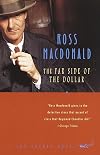
Has Tom Hillman run away from his exclusive reform school, or has he been kidnapped? Are his wealthy parents protecting him or their own guilty secrets? And why does every clue lead Lew Archer to an abandoned Hollywood hotel, where starlets and sailors once rubbed shoulders with tycoons and hustlers? The once-popular palace is now boarded up, but for Archer, it may hold the key to a missing teenager and a hot murder.Archer knows that a handful of dreamers and losers came together in the show more Barcelona twenty years ago, but some questions still remain unanswered: What kind of deal went down there? And why were a mixed up rich kid and a beautiful blonde the first to pay the price? show lessTags
Recommendations

















Member Reviews
This was the first Gold Dagger winner from anywhere but the UK, which struck me as so odd that I wrote to ask the CWA whether there was a nationality restriction prior to 1965. To my great delight, they actually wrote back. They said no.
A further oddity: I think this was the first winner to feature a well-established lead character (the previous winner introduced a character who went on to become established). The book is MacDonald's 12th of 18 featuring Lew Archer. I've read a couple of the others. In the early books, Archer is a fairly derivative Marlowe-style LA private eye in the Marlowe style. By this one, he has his own character and MacDonald his own style, out of Chandler's shadow.
Both character and style are, in a sense, show more minimal. Where Chandler's Marlowe is (for example) somewhat unsubtly erudite, Archer leaves the poetry stuff to other characters (mind you, MacDonald had a PhD in literature gained under the supervision of WH Auden, no less).. Where Chandler through Marlowe is given to some extravagant metaphorical flourishes, MacDonald through Archer employs only the most plain similes. There is a clear lineage, but also clear differentiation.
That said, this book offers a fairly Chandleresque proposition. A missing scion of a well-to-do family, a PI on the hunt, both scion and family gradually revealed to be harbouring secrets that can't go unrevealed if the case is to be solved. There is seedy LA underworld, there is a dame of sorts, there is a faint Hollywood connection—all the scenic elements you'd hope for.
The plot unravelled against that scenic backdrop is sufficiently gripping that you can overlook the fact that the middle third is essentially a sort of picaresque quest as Archer methodically follows lead A to find clue B from which to deduce fact C which provides lead D ... and so on. After all that, the parts are in place, and are gradually pulled together in a satisfyingly tight configuration, with just one piece held back to provide some last-page closure.
There is, arguably, more psychological depth and insight here than in Chandler; this is often said to be a way in which MacDonald managed to exceed as well as succeed his model. Mind, I do think that MacDonald's wife, Margaret Millar, is greater still at precisely showing human minds in all their particular peculiarities. MacDonald, incidentally, agreed that Millar was the better writer, and accordingly ceded to her the use of their real married name.
I am, frankly, a sucker for this kind of mid-century American detective fiction. It's not at all cosy—that's part of why I like it—but it feels somehow like sinking into something supremely comfortable, at least when it's done well. Perhaps it's partly the fact that, compared with the UK stuff I've read recently in this series, it's pleasingly, smoothly even in mood. There's none of the jarring shifts between whimsy and brutality you get in Keating, or Davidson, or the like. Humour is confined to occasional sardonic commentary, and otherwise you feel that Archer and his ilk will forever be cruising in unseasonal drizzle round the unglamorous fringes of glamourtown. I could happily drive around with them for eternity, too. show less
A further oddity: I think this was the first winner to feature a well-established lead character (the previous winner introduced a character who went on to become established). The book is MacDonald's 12th of 18 featuring Lew Archer. I've read a couple of the others. In the early books, Archer is a fairly derivative Marlowe-style LA private eye in the Marlowe style. By this one, he has his own character and MacDonald his own style, out of Chandler's shadow.
Both character and style are, in a sense, show more minimal. Where Chandler's Marlowe is (for example) somewhat unsubtly erudite, Archer leaves the poetry stuff to other characters (mind you, MacDonald had a PhD in literature gained under the supervision of WH Auden, no less).. Where Chandler through Marlowe is given to some extravagant metaphorical flourishes, MacDonald through Archer employs only the most plain similes. There is a clear lineage, but also clear differentiation.
That said, this book offers a fairly Chandleresque proposition. A missing scion of a well-to-do family, a PI on the hunt, both scion and family gradually revealed to be harbouring secrets that can't go unrevealed if the case is to be solved. There is seedy LA underworld, there is a dame of sorts, there is a faint Hollywood connection—all the scenic elements you'd hope for.
The plot unravelled against that scenic backdrop is sufficiently gripping that you can overlook the fact that the middle third is essentially a sort of picaresque quest as Archer methodically follows lead A to find clue B from which to deduce fact C which provides lead D ... and so on. After all that, the parts are in place, and are gradually pulled together in a satisfyingly tight configuration, with just one piece held back to provide some last-page closure.
There is, arguably, more psychological depth and insight here than in Chandler; this is often said to be a way in which MacDonald managed to exceed as well as succeed his model. Mind, I do think that MacDonald's wife, Margaret Millar, is greater still at precisely showing human minds in all their particular peculiarities. MacDonald, incidentally, agreed that Millar was the better writer, and accordingly ceded to her the use of their real married name.
I am, frankly, a sucker for this kind of mid-century American detective fiction. It's not at all cosy—that's part of why I like it—but it feels somehow like sinking into something supremely comfortable, at least when it's done well. Perhaps it's partly the fact that, compared with the UK stuff I've read recently in this series, it's pleasingly, smoothly even in mood. There's none of the jarring shifts between whimsy and brutality you get in Keating, or Davidson, or the like. Humour is confined to occasional sardonic commentary, and otherwise you feel that Archer and his ilk will forever be cruising in unseasonal drizzle round the unglamorous fringes of glamourtown. I could happily drive around with them for eternity, too. show less
What happened to Ross Macdonald after The Galton Case? The Wicherly Woman took a long time to wake up, and the next three ending with The Far Side of the Dollar are written in an anhedonic fog. Gone are the glimpses of humor, playfulness, and wit that used to have me grinning at least once every few dozen pages. Fortunately, the intricate plots and surprising solutions remain, but I miss the Archer — and the Macdonald — who seemed to be enjoying at least some aspects of his life.
According to Wikipedia, "Archer is sometimes depressed, often world-weary. An almost Greek sense of tragedy pervades the novels as the sins of omission and crimes of sometimes-wealthy parents are frequently visited upon their children, young adults whom show more Archer tries desperately to save from disaster." Certainly, young people who are more decent than their parents feature prominently in this book and the last. This concern for the young, and the care with which Macdonald portrays young people when so many contemporaries could only think of them in terms of teen stereotypes, is genuinely touching. If only it weren't buried in a pervasive dark mood. show less
According to Wikipedia, "Archer is sometimes depressed, often world-weary. An almost Greek sense of tragedy pervades the novels as the sins of omission and crimes of sometimes-wealthy parents are frequently visited upon their children, young adults whom show more Archer tries desperately to save from disaster." Certainly, young people who are more decent than their parents feature prominently in this book and the last. This concern for the young, and the care with which Macdonald portrays young people when so many contemporaries could only think of them in terms of teen stereotypes, is genuinely touching. If only it weren't buried in a pervasive dark mood. show less
WARNING: This review contains spoilers.
****
Sadly, it's all too common for the boys at Laguna Perdida School to attempt to run away. As a school for juvenile delinquents, it has more than its fair share of hard cases. But this boy, Tom Hillman, is different, because he may have been kidnapped. His father therefore calls in Lew Archer to help find him.
I really enjoyed this one. Archer is a mild-mannered detective tentatively approaching middle age, and he's been around enough to know when to stay cool in a situation (for the most part). He does his job and provides reassurance without providing false hope, and he treats the friends of the missing boy like miniature adults instead of children; they are teenagers, after all.
As for the show more solution, I did manage to predict a key element of it, but that turned out to be a fluke and I did not guess the actual murderer. What I did love, although "love" is probably the wrong sentiment, was the ending.The murderer is revealed to be Tom's mother, Elaine, and when she is revealed she wants to kill herself to avoid facing justice. Archer thwarts her plans to overdose on sleeping pills and to shoot herself, so in desperation she stabs herself with her knitting needles and later dies of her injuries. As a knitter myself, I couldn't help but wonder:
- what was she knitting, and did she take the needles out of the project or just stab herself with a sweater or whatever hanging off them? Was she in the middle of a row?
- were they straight needles or circulars? Straight needles are longer and would be easier to stab oneself with. Circulars don't have much of an actual needle to them (they have cables of varying lengths, which makes them useful for knitting either circular garments or flat items with lots of stitches, such as blankets), so she would have needed to aim more carefully, or just strangle herself with the cable, which would have been really inefficient.
- what size needles were they? If they were of a size appropriate to double knitting or worsted weight yarn (US 6 to 8), they wouldn't have been very sharp and it would have taken a lot of effort to stab. If she were knitting socks, though, the sock needles would have been very sharp and much more effective. (I'm always pricking my fingers on sock needles.)
I do realize this is a very nutty perspective, and possibly not one that Ross Macdonald intended, but it contributed greatly to my final enjoyment of the book.
I definitely recommend the book as a whole to anyone who's interested in the series. show less
****
Sadly, it's all too common for the boys at Laguna Perdida School to attempt to run away. As a school for juvenile delinquents, it has more than its fair share of hard cases. But this boy, Tom Hillman, is different, because he may have been kidnapped. His father therefore calls in Lew Archer to help find him.
I really enjoyed this one. Archer is a mild-mannered detective tentatively approaching middle age, and he's been around enough to know when to stay cool in a situation (for the most part). He does his job and provides reassurance without providing false hope, and he treats the friends of the missing boy like miniature adults instead of children; they are teenagers, after all.
As for the show more solution, I did manage to predict a key element of it, but that turned out to be a fluke and I did not guess the actual murderer. What I did love, although "love" is probably the wrong sentiment, was the ending.
- what was she knitting, and did she take the needles out of the project or just stab herself with a sweater or whatever hanging off them? Was she in the middle of a row?
- were they straight needles or circulars? Straight needles are longer and would be easier to stab oneself with. Circulars don't have much of an actual needle to them (they have cables of varying lengths, which makes them useful for knitting either circular garments or flat items with lots of stitches, such as blankets), so she would have needed to aim more carefully, or just strangle herself with the cable, which would have been really inefficient.
- what size needles were they? If they were of a size appropriate to double knitting or worsted weight yarn (US 6 to 8), they wouldn't have been very sharp and it would have taken a lot of effort to stab. If she were knitting socks, though, the sock needles would have been very sharp and much more effective. (I'm always pricking my fingers on sock needles.)
I do realize this is a very nutty perspective, and possibly not one that Ross Macdonald intended, but it contributed greatly to my final enjoyment of the book.
I definitely recommend the book as a whole to anyone who's interested in the series. show less
It seems that nearly every Ross Macdonald novel involves old family secrets rearing their ugly heads. But then Mozart pretty much used only 7 different notes per octave, so it's the execution that matters, not the tools. And this story of private investigator Lew Archer trying to unravel the apparent kidnapping of a teenaged boy is, as is almost always the case with Macdonald, finely executed.
“Life hangs together in one piece. Everything is connected with everything else. The problem is to find the connections.”
Archer is hired to find a seventeen year old boy who has run away from boarding school, a school for juvenile delinquents. Or, was the boy kidnapped? Lew sets out to find out which, and to find the young man. And figure out all of the connections, both past and present.
It's a good story, with twists and turns and it even has Archer in love, which isn't the norm. It also has a plot device that I believe the author used before - a camera stolen from the Navy. I found that to be weird, and interesting! Interesting too, the last line of the book: "By the middle of the following day she had succeeded in dying." Not the show more type of success most of us wish to achieve, I'd say.
“Maybe they had learned something, or were learning. People sometimes do.” Sometimes... show less
Archer is hired to find a seventeen year old boy who has run away from boarding school, a school for juvenile delinquents. Or, was the boy kidnapped? Lew sets out to find out which, and to find the young man. And figure out all of the connections, both past and present.
It's a good story, with twists and turns and it even has Archer in love, which isn't the norm. It also has a plot device that I believe the author used before - a camera stolen from the Navy. I found that to be weird, and interesting! Interesting too, the last line of the book: "By the middle of the following day she had succeeded in dying." Not the show more type of success most of us wish to achieve, I'd say.
“Maybe they had learned something, or were learning. People sometimes do.” Sometimes... show less
Lew Archer is called by the owner of a reform school for boys after young Tom Hillman, who had been there only a few days, escapes. Archer sets out to find him, and it turns into a tangled plot involving the kid's parents, a former starlet, and some crew members of Hillman's father's WWII ship. The plotting is involved, the characters are well-drawn, and the writing is often really great. Macdonald is a master of these family mysteries, and this is one of his best. I enjoyed it quite a bit.
But here's a weird thing: as I went to enter this book into Goodreads this morning, I found that I had read it before, in 2007. I didn't write anything about the book then, and now and as I was reading the book, I have no memory of reading it before. show more Very odd, given that I liked the book very much this time, and last time I also gave it 4 stars. That says more about me than it does about the book, I believe. I haven't found a way in Goodreads to indicate that this is a different reading than it was before, so I deleted the old review, and remain haunted by my poor memory. show less
But here's a weird thing: as I went to enter this book into Goodreads this morning, I found that I had read it before, in 2007. I didn't write anything about the book then, and now and as I was reading the book, I have no memory of reading it before. show more Very odd, given that I liked the book very much this time, and last time I also gave it 4 stars. That says more about me than it does about the book, I believe. I haven't found a way in Goodreads to indicate that this is a different reading than it was before, so I deleted the old review, and remain haunted by my poor memory. show less
This is a very dark tale that spends more time than usual taking the reader on a tour of the nasty side of life. It is also on of Macdonald's best books.
The story begins when Archer is hired to find the son of a rich family who cut his way through a wire window in a high class mental hospital. The parents have received a ransom call and the boy's mother goes from scared to hysterical while the father drinks. The nicest character in the book is the boy's girlfriend who lives next door and talks to Archer in a childhood tree house. Anything after the ransom call would be a spoiler.
The plot is wound real tight going back twenty years. There is an ex-boxer who is now just a thug and his used to be beautiful almost wife.
Violence and murder show more puts Archer in jail. He just keeps asking questions learning everybody's dirty little secrets and there are plenty to go around. The characters were all well done with not a stereotype in the bunch. Even Archer's old girl friend has skeletons in her closet.
The ending is a confrontation with a venal evil that gives the book one last surprise. There are a lot of surprises in the book and the tone goes from dark to darker. Macdonald takes Hammett and Chandler to another level in an excellent book. show less
The story begins when Archer is hired to find the son of a rich family who cut his way through a wire window in a high class mental hospital. The parents have received a ransom call and the boy's mother goes from scared to hysterical while the father drinks. The nicest character in the book is the boy's girlfriend who lives next door and talks to Archer in a childhood tree house. Anything after the ransom call would be a spoiler.
The plot is wound real tight going back twenty years. There is an ex-boxer who is now just a thug and his used to be beautiful almost wife.
Violence and murder show more puts Archer in jail. He just keeps asking questions learning everybody's dirty little secrets and there are plenty to go around. The characters were all well done with not a stereotype in the bunch. Even Archer's old girl friend has skeletons in her closet.
The ending is a confrontation with a venal evil that gives the book one last surprise. There are a lot of surprises in the book and the tone goes from dark to darker. Macdonald takes Hammett and Chandler to another level in an excellent book. show less
Members
- Recently Added By
Lists

Best Noir Fiction
160 works; 14 members

Anthony Boucher's Best Crime Fiction of the Year
115 works; 5 members

Crime Writers' Association Daggers
76 works; 4 members

#MysteryBingo2022Silver(Revised)
36 works; 1 member

Books mentioned in Julian Symons’ Bloody Murder
438 works; 6 members
#MysteryBingo2022Silver(Original)
36 works; 1 member
#JustTheFacts2022Silver
48 works; 1 member

Books Read in 2021
5,361 works; 113 members

Leídos en 2024 por primera vez: Magistrales (R. D.)
22 works; 1 member
Author Information

103+ Works 14,274 Members
Some Editions
Awards and Honors
Awards
Distinctions
Notable Lists
Series

Belongs to Publisher Series
Work Relationships
Common Knowledge
- Canonical title
- The Far Side of the Dollar
- Original title
- The Far Side of the Dollar
- Original publication date
- 1965
- People/Characters
- Lew Archer; Arnie Walters; Tom Hillman; Dr. Sponti; Mr. Patch; Mrs. Mallow (show all 11); Frederick Tyndal; Ralph Hillman; Elanie Hillman; Stella Carlson; Rhea Carlson
- Important places
- Laguna Perdida School, San Diego County, California, USA; Barcelona Hotel, Hollywood, California, USA
- Dedication
- To Alfred
- First words
- It was August, and it shouldn't have been raining.
- Quotations
- "Are you a policeman, or what?"
"I used to be a policeman. Now I'm a what." - Last words
- (Click to show. Warning: May contain spoilers.)By the middle of the following day she had succeeded in dying.
- Original language*
- Inglés
*Some information comes from Common Knowledge in other languages. Click "Edit" for more information.
Classifications
Statistics
- Members
- 570
- Popularity
- 51,387
- Reviews
- 17
- Rating
- (4.02)
- Languages
- 11 — Danish, English, Finnish, French, German, Italian, Norwegian (Bokmål), Norwegian, Portuguese, Spanish, Swedish
- Media
- Paper, Audiobook, Ebook
- ISBNs
- 33
- ASINs
- 24