On This Page
Description
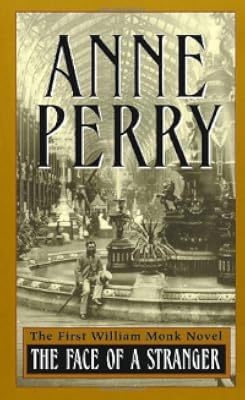
In this exhilarating series debut, police detective William Monk must solve the mystery of his own past. His name, they tell him, is William Monk, and he is a London police detective. But the accident that felled him has left him with only half a life; his memory and his entire past have vanished. As he tries to hide the truth, Monk returns to work and is assigned to investigate the brutal murder of a Crimean War hero and man about town. Which makes Monk's efforts doubly difficult, since show more he's forgotten his professional skills along with everything else. "Richly textured with the sights and sounds of London and its countryside . . . Solidly absorbing and Perry's best to date."--Kirkus Reviews show lessTags
Recommendations










Member Reviews
A great series debut. I've always liked the thoughtful and hard-hitting aspects of the Monk mysteries from Perry as opposed to the lighter Pitts. The mystery is well written and affecting, with the consequences and emotional damage of the crimes clearly spelled out. Monk's a great character, asking hard questions about his past as a man he discovers was capable, clever, and something of an abrasive, cold jerk, his present as he struggles to find his feet again, and his future as the man he realizes that he hopes to become. Hester is an excellent heroine and a great companion/foil to Monk, with courage and adventures of her own. Their romance starts here on a sharp note, and the concluding lines to their mutually acid-tongued first show more meeting are still among some of my favorite lines in fiction. show less
This was a Victorian Era whodunnit. The book began well as Detective Monk wakes up in the hospital with amnesia. He can’t remember who he is or how he got there. He learns that he is a police detective and soon returns to work. His colleagues have no idea that he still suffers from amnesia. He is investigating the death of a Crimean war hero who was beat to death in his home. Then the mystery really bogs down for me. The end is just a let-down! I won’t be continuing with this series. 354 pages
A man wakes in hospital with no memory. He is told that he is a detective and must solve the murder of one of the gentry.
And so William Monk sets out, not only trying to solve a case in class-ridden Victorian England, but to discover what sort of a man he himself is, while trying to keep his secret hidden from others for fear of losing his livelihood.
Great idea for a novel, giving us at least 3 mysteries for the price of one. And allowing Perry to reveal through Monk’s fresh eyes, the constraints of a society following the Crimean war. Class & sexism & the difficulties of a police-force, considered tradesmen, trying to open the doors to reveal the secrets of their ‘betters’.
An entertaining read with memorable characters & show more interesting period detail. show less
And so William Monk sets out, not only trying to solve a case in class-ridden Victorian England, but to discover what sort of a man he himself is, while trying to keep his secret hidden from others for fear of losing his livelihood.
Great idea for a novel, giving us at least 3 mysteries for the price of one. And allowing Perry to reveal through Monk’s fresh eyes, the constraints of a society following the Crimean war. Class & sexism & the difficulties of a police-force, considered tradesmen, trying to open the doors to reveal the secrets of their ‘betters’.
An entertaining read with memorable characters & show more interesting period detail. show less
There is a reason why Anne Perry is so widely read. She is able to with only a few words convey the atmosphere and predicament of the character. She quickly establishes that Monk, the main character, is in a serious predicament when he wakes with out his memory in a Victorian hospital. He struggles through out the novel to solve the murder of a prominent London citizen, while piecing together his own past.
Not only do you feel the deep distress Monk does, she also develops her secondary characters fully in their own right. Her female characters in particular have strong dialogue of their own. My favourite quote being,
" I like clever men." Her eyes raked him up and down. " It seems we are both to be disappointed."
The only problem I had show more with the book was repetition. Several times Monk's inner monologue is filled with repetitions about his memory loss. These can cover pages with the same thoughts being echoed over and over again. Yes, it is important to demonstrate the characters distress, but is it really necessary to reiterate it in full every chapter.
The atmosphere, strong characters, both male and female, and the pithy dialogue I will be continuing to read more of her back catalogue. show less
Not only do you feel the deep distress Monk does, she also develops her secondary characters fully in their own right. Her female characters in particular have strong dialogue of their own. My favourite quote being,
" I like clever men." Her eyes raked him up and down. " It seems we are both to be disappointed."
The only problem I had show more with the book was repetition. Several times Monk's inner monologue is filled with repetitions about his memory loss. These can cover pages with the same thoughts being echoed over and over again. Yes, it is important to demonstrate the characters distress, but is it really necessary to reiterate it in full every chapter.
The atmosphere, strong characters, both male and female, and the pithy dialogue I will be continuing to read more of her back catalogue. show less
This was one of my mother's favorite series. I had never read any of it..don't know why I hadn't...but while going through some of her books to keep and to donate...I found that she had 20 of the 24 books in this series. So instead of finishing this task I sat down to read. I became captivated with the character of William Monk who William Monk looks in the mirror, and doesn't know the man looking back at him. A horrible injury has erased his memory of most things but he does remember that he is a London police detective, and a not very popular one with his superior, who can't wait to show him the back side of the door. Monk's personality is questionable at best but as the layers are peeled away a smart and gifted investigator is show more revealed. Monk finds that he doesn't like some of what he learns about himself, like the fact that he has very few friends outside or inside of his work place and even fewer of his superiors who would go out of their way to aid him. The ending is emotional as this man learns that even he doesn't much care for the man in the mirror. I see why my mother loved this series. I will certainly make use of the other 19 that I now own. show less
While shopping at a used book store, I found Perry's first three Monk mysteries condensed into one book so I thought I would give it a try. I really want to like her writing but her method of story-telling falls short for me.
At the onset of Monk's investigations, Perry never has a thorough briefing with suspects. Monk never asks ALL the questions that need asking. Perry has him go back to suspects several times before many questions are covered. I guess Perry is using this technique to uncover elements slowly, but as a reader, it is unbelievable and makes it difficult to enjoy.
There are many great mystery writers that are still able to keep readers guessing even after thorough investigative techniques are employed. I will most likely show more discontinue the Monk series because of this reason.
I welcome any comments from other readers. show less
At the onset of Monk's investigations, Perry never has a thorough briefing with suspects. Monk never asks ALL the questions that need asking. Perry has him go back to suspects several times before many questions are covered. I guess Perry is using this technique to uncover elements slowly, but as a reader, it is unbelievable and makes it difficult to enjoy.
There are many great mystery writers that are still able to keep readers guessing even after thorough investigative techniques are employed. I will most likely show more discontinue the Monk series because of this reason.
I welcome any comments from other readers. show less
Themes: identity, crime, war, family, secrets, memory, class
Setting: Victorian England
Now I remember why I don't read Anne Perry anymore. I don't really like her writing. This book sounded like a change from her Thomas/Charlotte Pitt series, which I did enjoy at one time. I just got a little tired of reading about the seamy side of Victorian life, and she explored deviance in all its forms, the worst crimes she could imagine, and on and on and on. There wasn't much to smile about in her books, ever. But this is about a different character, so it was possible that it would be enjoyable.
Nope.
This is a classic example of how NOT to write a mystery, IMO. It starts with Detective William Monk awaking in a hospital to find that he is very show more weak, injured, and that he doesn't remember anything at all, even his name or how he got there. He returns home and searches for clues all over his flat to find anything that will help trigger a memory. When nothing helps, he goes to visit his sister. On his return to London, he gets sent to investigate a crime that occurred the same night he had his accident, the murder of a popular gentleman with a titled family. Someone beat Joscelin Gray to death.
So far, it could have been a good book. We've got both the mystery of Monk's past and the mystery of murder. But the writing was so darn bad that I really couldn't finish the book. I was listening to it, which means that it took stinking forever to finish, so I finally gave up and got a paper copy at the library so I could skim through to the end.
The main thing that turned me off was the way the writer stuck interior monologue in the middle of PRACTICALLY EVERY CONVERSATION! So Monk is questioning someone, and then randomly thinks, "I wonder what kind of man I was before my accident. I wonder if I liked music. Did I have a girlfriend? Did I like pie? Why can't I remember?" and on, and on, and on, while the actual conversation just sort of hangs there until Monk comes to his senses and starts paying attention again.
And the other main character, Hester Latterly, does the same thing. She'll be listening to some discussion of the Crimean war and have a flashback to her service there as a nurse and we'll get a page of her reminiscences. I know we all do that from time to time, let our minds wander now and then, but it's really super boring to listen to! Even reading it was bad enough, but at least then I could skip ahead a couple of paragraphs.
I know that this series, and her other one, have some fans, but I am not reading anymore by this author. One series is too dark, and this one is too dumb. The writing itself is not very good and the style is extremely irritating. 1 star. show less
Setting: Victorian England
Now I remember why I don't read Anne Perry anymore. I don't really like her writing. This book sounded like a change from her Thomas/Charlotte Pitt series, which I did enjoy at one time. I just got a little tired of reading about the seamy side of Victorian life, and she explored deviance in all its forms, the worst crimes she could imagine, and on and on and on. There wasn't much to smile about in her books, ever. But this is about a different character, so it was possible that it would be enjoyable.
Nope.
This is a classic example of how NOT to write a mystery, IMO. It starts with Detective William Monk awaking in a hospital to find that he is very show more weak, injured, and that he doesn't remember anything at all, even his name or how he got there. He returns home and searches for clues all over his flat to find anything that will help trigger a memory. When nothing helps, he goes to visit his sister. On his return to London, he gets sent to investigate a crime that occurred the same night he had his accident, the murder of a popular gentleman with a titled family. Someone beat Joscelin Gray to death.
So far, it could have been a good book. We've got both the mystery of Monk's past and the mystery of murder. But the writing was so darn bad that I really couldn't finish the book. I was listening to it, which means that it took stinking forever to finish, so I finally gave up and got a paper copy at the library so I could skim through to the end.
The main thing that turned me off was the way the writer stuck interior monologue in the middle of PRACTICALLY EVERY CONVERSATION! So Monk is questioning someone, and then randomly thinks, "I wonder what kind of man I was before my accident. I wonder if I liked music. Did I have a girlfriend? Did I like pie? Why can't I remember?" and on, and on, and on, while the actual conversation just sort of hangs there until Monk comes to his senses and starts paying attention again.
And the other main character, Hester Latterly, does the same thing. She'll be listening to some discussion of the Crimean war and have a flashback to her service there as a nurse and we'll get a page of her reminiscences. I know we all do that from time to time, let our minds wander now and then, but it's really super boring to listen to! Even reading it was bad enough, but at least then I could skip ahead a couple of paragraphs.
I know that this series, and her other one, have some fans, but I am not reading anymore by this author. One series is too dark, and this one is too dumb. The writing itself is not very good and the style is extremely irritating. 1 star. show less
Members
- Recently Added By
Lists

Detective Stories
343 works; 5 members

KayStJ's to-read list
1,616 works; 11 members

mom
729 works; 1 member

Next in Series
85 works; 1 member

Gaslamp Mysteries
78 works; 4 members

Books Read in 2023
5,547 works; 145 members

Books Read in 2024
4,623 works; 126 members
Author Information

199+ Works 55,120 Members
Anne Perry was born Juliet Hume on October 28, 1938 in Blackheath, London. Sent to Christchurch, New Zealand to recover from a childhood case of severe pneumonia, she became very close friends with another girl, Pauline Parker. When Perry's family abandoned her, she had only Parker to turn to, and when the Parkers planned to move from New Zealand, show more Parker asked that Perry be allowed to join them. When Parker's mother disagreed, Perry and Parker bludgeoned her to death. Perry eventually served five and a half years in an adult prison for the crime. Once she was freed, she changed her name and moved to America, where she eventually became a writer. Her first Victorian novel, The Cater Street Hangman, was published in 1979. Although the truth of her past came out when the case of Mrs. Parker's murder was made into a movie (Heavenly Creatures), Perry is still a popular author and continues to write. She has written over 50 books and short story collections including the Thomas Pitt series, the William Monk series, and the Daniel Pitt series. Her story, Heroes, won the 2001 Edgar Award for Best Short Story. Her title's Blind Justice and The Angel Court Affair made The New York Times Best Seller List. (Bowker Author Biography) show less
Some Editions
Awards and Honors
Awards
Series

Belongs to Publisher Series
Work Relationships
Is contained in
Common Knowledge
- Canonical title
- The Face of a Stranger
- Original title
- The Face of a Stranger
- Original publication date
- 1990-09
- People/Characters
- William Monk; Hester Latterly; Lady Callandra Daviot; Oliver Rathbone; John Evan; Superintendent Runcorn (show all 15); Imogen Latterly; Charles Latterly; Lady Fabia Shelburne; Beth Bannerman; Rob Bannerman; Amanda Dawlish; Josiah Wigtight; Zebedee Marner; Menard Grey
- Important places
- London, England, UK
- Important events
- Victorian Era (1837 | 1901)
- Dedication
- To Christine M. J. Lynch, in gratitude for old friendship renewed.
- First words
- He opened his eyes and saw nothing but a pale grayness above him, uniform, like a winter sky, threatening and heavy.
- Last words
- (Click to show. Warning: May contain spoilers.)His hand held Menard's arm—but gently.
- Original language*
- Anglais
*Some information comes from Common Knowledge in other languages. Click "Edit" for more information.
Classifications
Statistics
- Members
- 1,662
- Popularity
- 13,452
- Reviews
- 61
- Rating
- (3.80)
- Languages
- 7 — Dutch, English, French, German, Italian, Portuguese, Spanish
- Media
- Paper, Audiobook, Ebook
- ISBNs
- 37
- ASINs
- 15