On This Page
Description
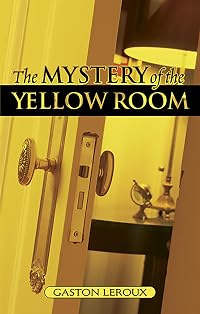
The Mystery of the Yellow Room is Gaston Leroux's masterpiece, and it turned out to be his most successful book during his lifetime. It is one of the classics of early-twentieth-century detective fiction.At the heart of the novel is this enigma: how could a murder take place inside a locked room that shows no sign of being entered? The novel is also about the rivalry between the detective Frederick Larson and a young investigative journalist, Rouletabille, to solve the case. Larson finds a show more suspect who is put on trial, only to have him cleared by Rouletabille, who reveals in the most dramatic fashion the identity of the real murderer.This atmospheric thriller is still a favorite of whodunit fans everywhere. show lessTags
Recommendations















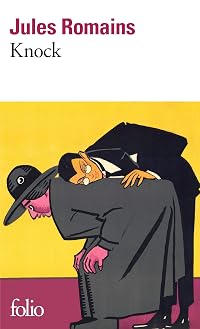

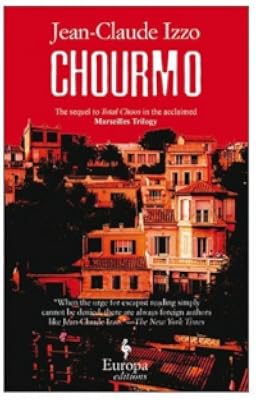
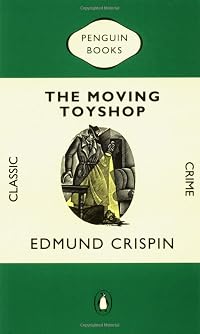
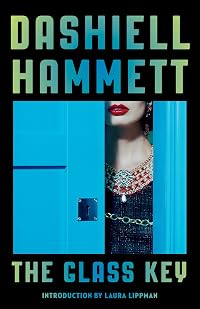

Member Recommendations
Member Reviews
Finally I brought myself to finish the lauded short novel 'The Mystery of the Yellow Room' by Gaston Leroux. It is hailed as one of the most original works of mystery fiction written and has been named as one of the pioneers of the locked room genre. We are introduced to the young journalist Joseph Rouletabille who throws himself into the investigation of a mysterious murder at Chateau du Glandier. A murder that takes place in a room that has been locked from the inside with no possible means of escape. Right away we are introduced to one of the many plot holes in the novel. There is no murder. Miss Stangerson who is the target of the attack and who is discovered with a bump on her head in the room after she screams murder, isn't show more actually killed. In fact she is assaulted no less than three times in various forms and by the end of the novel she has gone quite insane but is still alive. Not once in the novel is poor Miss Stangerson properly interviewed and asked what happened. Furthermore she seems to never actually say anything anywhere in the novel. As the most prominent piece of evidence she is blatantly ignored, something even the most mysoginistic Victorian didn't do.
The Mystery of the Yellow Room was first published as a novel in 1908, 40 years after Wilkie Collins published his mystery: The Moontone. I'm comparing Leroux's work to that of Collins because even though Collins was clearly experimenting with the genre, he had a much firmer grasp than Leroux ever did. Leroux breaks one of the most important rules in the mystery business: you have to give the reader all the information that is available to the detective before the reveal. In the case of the Yellow Room we are given everything we need to know, which is a large amount of information, after the explanation of the plot. Even though the mechanism by which the 'murder' is committed appears to be very mature and innovating, it relies on so many assumptions and improbable events that it loses much of it's entertainment value when it is finally revealed.
It took me three weeks to finish this book. Most of that was spent trying to figure out who all the characters in the novel are and where they are at various times (the novel includes maps and diagrams that don't help). For someone who wrote the very human The Phantom of the Opera, the Yellow Room one has very few real people in it. Not only does the over enthusiastic detective not feel very human, he's not even remotely likable. Unlike Sherlock Holmes who was quite the unpleasant character who fascinates readers to this day. show less
The Mystery of the Yellow Room was first published as a novel in 1908, 40 years after Wilkie Collins published his mystery: The Moontone. I'm comparing Leroux's work to that of Collins because even though Collins was clearly experimenting with the genre, he had a much firmer grasp than Leroux ever did. Leroux breaks one of the most important rules in the mystery business: you have to give the reader all the information that is available to the detective before the reveal. In the case of the Yellow Room we are given everything we need to know, which is a large amount of information, after the explanation of the plot. Even though the mechanism by which the 'murder' is committed appears to be very mature and innovating, it relies on so many assumptions and improbable events that it loses much of it's entertainment value when it is finally revealed.
It took me three weeks to finish this book. Most of that was spent trying to figure out who all the characters in the novel are and where they are at various times (the novel includes maps and diagrams that don't help). For someone who wrote the very human The Phantom of the Opera, the Yellow Room one has very few real people in it. Not only does the over enthusiastic detective not feel very human, he's not even remotely likable. Unlike Sherlock Holmes who was quite the unpleasant character who fascinates readers to this day. show less
"The presbytery has lost none of its charm; nor the garden its brightness."
These enigmatic words are just one of the many tantalizing clues scattered throughout Gaston Leroux's famous detective novel, The Mystery of the Yellow Room. Published in serial form in 1907 and in its entirety in 1908, this book has become one of the pivotal works in the genre, and is the great-grandfather (or at least the great-uncle!) of all "locked room" mysteries.
In an isolated chateau in the French countryside, the beautiful Mademoiselle Stangerson is attacked in her locked chamber. When her father and servant break into the room in response to her desperate cries for help, they find no trace of her assailant — though there is just one door, all the show more windows have grills, and there is nowhere in the small room for the would-be murderer to hide. It is a most perplexing case for the police... but not for the young reporter Joseph Rouletabille, who manages to insinuate himself into the household to unravel the baffling case.
Many of the hallmarks of the mystery genre are present in this story. The tale is narrated by Rouletabille's friend St. Clair, who is very like Holmes' Watson: slow on the uptake and providing a perfect foil to the detective's genius. He is us, of course, carried along wondering at the detective's crazy fancies which all turn out to be spot-on. Naturally! In addition to the stock character of the clueless friend, Rouletabille also has a professional rival in the famous detective Frederic Larsan, who has been called in specially for the case. Rouletabille is keen to prove his mettle to both the older, more experienced Larsan and the world at large.
Rouletabille's particular forte is not, like Holmes', a vast knowledge of the minutiae of crime-scene evidence. Rather, Rouletabille's methods are based on what he calls "pure reason," and on taking that reason "by the right end."
Leroux, who is better known for The Phantom of the Opera, certainly has a gift for creating haunting ideas. There is something so creepy about his description of the "cry of the Good Lord's Beast," and the recurring hint of the "perfume of the Lady in Black" (which is the title of the book's sequel). Leroux is not afraid to hint at supernatural occurrences, but he never overdoes it and the result is quite pleasingly atmospheric.
There are certainly several very improbable coincidences that happen along the way to make the mystery possible, but they are forgivable. This translation (which I believe is the older American one) has a few lamentable mistakes in grammar, with several dangling modifiers and awkward constructions. This translation also repeatedly calls Mlle. Stangerson's assailant "the murderer," though the term is technically incorrect according to the events of the story. I found it slightly annoying, but ignorable. I would have given this book four stars if it were not for these issues.
I listened to this on audiobook, read by Robert Whitfield, and enjoyed his reading very much. I loved his French pronunciations of the characters' names. It's interesting to think that I absorbed this story in much the same fashion as it was first published: in serial form. I listened to it for an hour a day on my commute. The technology changes but the stories don't.
I would recommend this to mystery fans, but not to those looking for a good place to start in the genre. I have a high tolerance for ramblers, and this narrative does ramble at times. But I'm looking forward to the next two books in the series; though Rouletabille lacks the straightforward charm of a Roderick Alleyn or Lord Peter Wimsey, I found his youthful exuberance and boldness amusing. And I confess, now I'm curious about the perfume of the Lady in Black! Overall, this is an enjoyable tale that keeps its secrets till the very end. show less
These enigmatic words are just one of the many tantalizing clues scattered throughout Gaston Leroux's famous detective novel, The Mystery of the Yellow Room. Published in serial form in 1907 and in its entirety in 1908, this book has become one of the pivotal works in the genre, and is the great-grandfather (or at least the great-uncle!) of all "locked room" mysteries.
In an isolated chateau in the French countryside, the beautiful Mademoiselle Stangerson is attacked in her locked chamber. When her father and servant break into the room in response to her desperate cries for help, they find no trace of her assailant — though there is just one door, all the show more windows have grills, and there is nowhere in the small room for the would-be murderer to hide. It is a most perplexing case for the police... but not for the young reporter Joseph Rouletabille, who manages to insinuate himself into the household to unravel the baffling case.
Many of the hallmarks of the mystery genre are present in this story. The tale is narrated by Rouletabille's friend St. Clair, who is very like Holmes' Watson: slow on the uptake and providing a perfect foil to the detective's genius. He is us, of course, carried along wondering at the detective's crazy fancies which all turn out to be spot-on. Naturally! In addition to the stock character of the clueless friend, Rouletabille also has a professional rival in the famous detective Frederic Larsan, who has been called in specially for the case. Rouletabille is keen to prove his mettle to both the older, more experienced Larsan and the world at large.
Rouletabille's particular forte is not, like Holmes', a vast knowledge of the minutiae of crime-scene evidence. Rather, Rouletabille's methods are based on what he calls "pure reason," and on taking that reason "by the right end."
Leroux, who is better known for The Phantom of the Opera, certainly has a gift for creating haunting ideas. There is something so creepy about his description of the "cry of the Good Lord's Beast," and the recurring hint of the "perfume of the Lady in Black" (which is the title of the book's sequel). Leroux is not afraid to hint at supernatural occurrences, but he never overdoes it and the result is quite pleasingly atmospheric.
There are certainly several very improbable coincidences that happen along the way to make the mystery possible, but they are forgivable. This translation (which I believe is the older American one) has a few lamentable mistakes in grammar, with several dangling modifiers and awkward constructions. This translation also repeatedly calls Mlle. Stangerson's assailant "the murderer," though the term is technically incorrect according to the events of the story. I found it slightly annoying, but ignorable. I would have given this book four stars if it were not for these issues.
I listened to this on audiobook, read by Robert Whitfield, and enjoyed his reading very much. I loved his French pronunciations of the characters' names. It's interesting to think that I absorbed this story in much the same fashion as it was first published: in serial form. I listened to it for an hour a day on my commute. The technology changes but the stories don't.
I would recommend this to mystery fans, but not to those looking for a good place to start in the genre. I have a high tolerance for ramblers, and this narrative does ramble at times. But I'm looking forward to the next two books in the series; though Rouletabille lacks the straightforward charm of a Roderick Alleyn or Lord Peter Wimsey, I found his youthful exuberance and boldness amusing. And I confess, now I'm curious about the perfume of the Lady in Black! Overall, this is an enjoyable tale that keeps its secrets till the very end. show less
I always find locked-room mysteries highly contrived, but since that's a given for this type of story I always expect it and never let it get in the way of my enjoyment of it. That being said, I found the solution to this one even more convoluted and outside the bounds of reality. It's as if Leroux took a bet that he couldn't devise a plot so dependent on the outlandish and make it work. Maybe all authors who write locked-room mysteries make bets like that. In any case, I had to re-read parts of the explanation because I kept mentally saying "what?". I guess if you allow for some fine acting on the part of the victim and serious observational deficiencies on the part of the rescuers it works, but jeez it's a stretch.
Part of the problem with locked room mysteries is that the narrative tends to sink into a morass of technical details provided so the reader can be absolutely sure that the room in question was, in fact, locked. In the case of the Yellow Room, a woman is attacked in her own bedroom. Her father and a loyal family servant hear a commotion and her cry for help, and attempt to break into the room. It takes a few minutes, during which they are standing at the door—the only way out of the room. They burst in, find the lady unconscious and bloody, and the room otherwise empty. Even the window is still locked and barred. There is nowhere for the perpetrator to hide, no way for him to have escaped, yet he is not in the room.
The solution to show more this mystery—who tried to kill the young woman and how he could have escaped—occupies the rest of the book, and Leroux takes great pains to explain just how impossible it was for anyone to have escaped unseen. He measures the dimensions of the bedroom, describes the construction of the door and the window, and offers the direction of the corridor and the height of the room from the ground below, going so far as to draw maps of the house’s layout for the reader’s edification. Various characters propose solutions, which the author then, in the character of Rouletabille, demolishes. One person suggests the father was in on it, another that the accomplice was the family servant. A family friend proposes that the would-be murderer hid in the mattress on the lady’s bed. (Rouletabille barely deigns to respond to this). A local magistrate suggests that the murderer slipped past the men while they were looking the other way. At one point, people start to suggest ghosts and apparitions. Rouletabille all but loses his temper:
"Novelists build mountains of stupidity out of a footprint on the sand, or from an impression of a hand on the wall. That’s the way innocent men are brought to prison. It might convince an examining magistrate or the head of a detective department, but it’s not proof. You writers forget that what the senses furnish is not proof. If I am taking cognisance of what is offered me by my senses I do so but to bring the results within the circle of my reason. That circle may be the most circumscribed, but if it is, it has this advantage—it holds nothing but the truth! Yes, I swear that I have never used the evidence of the senses but as servants to my reason. I have never permitted them to become my master. They have not made of me that monstrous thing,—worse than a blind man,—a man who sees falsely."
What is it that Sherlock Holmes used to say? When you have eliminated the impossible, whatever left, however improbable, must be the truth.
The particular triumph of The Mystery of the Yellow Room, the reason Leroux might be justified in his claim to have one-upped Mr. Arthur Conan Doyle and Mr. Edgar Allan Poe, and the reason why the book is still cited by aficionados as one of the great locked room mysteries of all time, lies in the answer to how the would-be murderer escaped that room. Poe and Doyle each wrote their own locked room stories, of course. And in each case the solution is exotic, to say the least: strange animals loose in the night, secret passageways and hidden doors.
Leroux dispenses with all such fantastic devices. The police spend a fair amount of time searching for trap doors and secret passages, but Rouletabille is confident at the outset no such thing will be found. Instead, the author relies on misdirection to trap the unwary reader, who would do well to remember Roulatabille’s somewhat heated admonishment: “You writers forget that what the senses furnish is not proof.”
All good mysteries take advantage of that disconnect between what we see and what we expect to see, and this one does so to wonderful effect. The men of the house behold a woman swooning on the floor, but no assailant in the room, and begin to think of supernatural explanations. Rouletabille sees the same picture, but deduces something far more ordinary, logical, and mundane. His reasoning is absolutely sound, but most readers will have to wait for the denouement at the end of the novel to discover it.
At which point, 99 out of a hundred readers will exclaim, “Oh!” and the novel, which up to this point has been a strange collection of testimonies and seemingly sinister coincidences, will suddenly resolve itself into a highly satisfying mystery story.
Read full profile here show less
The solution to show more this mystery—who tried to kill the young woman and how he could have escaped—occupies the rest of the book, and Leroux takes great pains to explain just how impossible it was for anyone to have escaped unseen. He measures the dimensions of the bedroom, describes the construction of the door and the window, and offers the direction of the corridor and the height of the room from the ground below, going so far as to draw maps of the house’s layout for the reader’s edification. Various characters propose solutions, which the author then, in the character of Rouletabille, demolishes. One person suggests the father was in on it, another that the accomplice was the family servant. A family friend proposes that the would-be murderer hid in the mattress on the lady’s bed. (Rouletabille barely deigns to respond to this). A local magistrate suggests that the murderer slipped past the men while they were looking the other way. At one point, people start to suggest ghosts and apparitions. Rouletabille all but loses his temper:
"Novelists build mountains of stupidity out of a footprint on the sand, or from an impression of a hand on the wall. That’s the way innocent men are brought to prison. It might convince an examining magistrate or the head of a detective department, but it’s not proof. You writers forget that what the senses furnish is not proof. If I am taking cognisance of what is offered me by my senses I do so but to bring the results within the circle of my reason. That circle may be the most circumscribed, but if it is, it has this advantage—it holds nothing but the truth! Yes, I swear that I have never used the evidence of the senses but as servants to my reason. I have never permitted them to become my master. They have not made of me that monstrous thing,—worse than a blind man,—a man who sees falsely."
What is it that Sherlock Holmes used to say? When you have eliminated the impossible, whatever left, however improbable, must be the truth.
The particular triumph of The Mystery of the Yellow Room, the reason Leroux might be justified in his claim to have one-upped Mr. Arthur Conan Doyle and Mr. Edgar Allan Poe, and the reason why the book is still cited by aficionados as one of the great locked room mysteries of all time, lies in the answer to how the would-be murderer escaped that room. Poe and Doyle each wrote their own locked room stories, of course. And in each case the solution is exotic, to say the least: strange animals loose in the night, secret passageways and hidden doors.
Leroux dispenses with all such fantastic devices. The police spend a fair amount of time searching for trap doors and secret passages, but Rouletabille is confident at the outset no such thing will be found. Instead, the author relies on misdirection to trap the unwary reader, who would do well to remember Roulatabille’s somewhat heated admonishment: “You writers forget that what the senses furnish is not proof.”
All good mysteries take advantage of that disconnect between what we see and what we expect to see, and this one does so to wonderful effect. The men of the house behold a woman swooning on the floor, but no assailant in the room, and begin to think of supernatural explanations. Rouletabille sees the same picture, but deduces something far more ordinary, logical, and mundane. His reasoning is absolutely sound, but most readers will have to wait for the denouement at the end of the novel to discover it.
At which point, 99 out of a hundred readers will exclaim, “Oh!” and the novel, which up to this point has been a strange collection of testimonies and seemingly sinister coincidences, will suddenly resolve itself into a highly satisfying mystery story.
Read full profile here show less
The Mystery of the Yellow Room by Gaston LeRoux has been called one of the foundational works of French mystery fiction. If that’s true, then French mystery fiction is founded on the shoulders of Arthur Conan Doyle, because The Mystery of the Yellow Room is almost a carbon copy of a Sherlock Holmes mystery. You could change the character names around, plop it down in jolly old England, and no one would be the wiser. Yet it’s been consistently upheld as one of the greatest locked room mysteries of all time. Me, I’m not so sure.
As you might surmise, a Locked Room Mystery is a mystery novel centering around a seemingly impossible crime that occurs within a locked room. The puzzle is paramount, so it is critical that the reader be show more privy to all of the same facts a the protagonist. That way the reader can “play along” and attempt to ferret out the murderer, too. But in The Mystery of the Yellow Room, several key details are withheld, and there are some huge leaps in inductive logic (rather than deductive logic) necessary to accurately determine the culprit. That’s another reason I say the novel is so Holmesian (it seems I’m using that phrase a lot these days). But despite all that, the novel was still enjoyable. It just wasn’t “the best.”
The Holmes stand-in for this adventure is one Joseph Rouletabille, a young French reporter and a brilliant amateur detective. But while Rouletabille is certainly the protagonist of the tale, the story is told by his friend and lawyer, Monsieur SainClair. Sounding familiar yet? Anywho, a gruesome attack has been perpetrated at the Chateau du Glandier located in the French countryside just outside Paris. There, a Miss Stangerson—daughter and scientific partner of Professor Stangerson, a world-celebrated chemist—has been brutally attacked and nearly murdered in her chambers, the “yellow room” of the novel’s title. At the time of the attack her room was locked from the inside, and her father and his assistant had to batter the door down to get inside. There they found Miss Stangerson, bloody and lying on the floor, but no assailant. There were several items also found—a bloody mutton bone, a cap, some old boots, and a bloody handprint on the wall. The police are called, at which time the media gets hold of the story, Rouletabille reads about it, and fixates upon this most-impenetrable mystery.
He and SainClair journey to the Glandier, where he manages to gain access to the crime scene and ingratiates himself upon Miss Stangerson’s fiancé, a Monsieur Robert Darzac, who reluctantly provides Rouletabille access to the family so that he can pursue his inquiries into the murder. Rouletabille behaves like a presumptuous little twat, poking into their business, brushing off anyone who questions him, and generally acting like an arrogant asshole. In short, a lot like Sherlock Holmes. He also refuses to divulge any of his theories on the matter, saying (quite lamely) that he doesn’t want to impair anyone else’s judgment by predisposing them toward one theory or another. LeRoux breaks with Holmesian tradition, however, in that he provides detailed diagrams and maps of the murder scene to give the reader a better picture of clues in the mystery. My version of the book was in audio format, so I didn’t get the opportunity to review the diagrams as I read. Not that it would have mattered, given the gaping plot holes left around to confound the reader. More on that later.
The investigation stretches on for weeks, during which Rouletabille unravels the layers of the mystery, solving some other minor quandaries on his way to solving the big quandary of who tried to kill Miss Stangerson. There are a lot of other supporting characters thrown in the mix, most of which only serve as red herrings for the protagonist to chase down. He also matches wits with the famous detective Frederick Larson, who also happens to be investigating the murder at the Glandier.
All this makes for a grand little mystery, but there were some inconsistencies in the plot and in the resolution that left me shaking my head. It’s because of these inconsistencies that I simply can’t understand why The Mystery in the Yellow Room has been called “the best of the best.” Some of the plot holes are outlined in the “Remarks on the Plot” section of the book’s Wikipedia entry, but there’s another one that really irked me. That’s because the logical handling of it would have made unraveling part of the mystery so elementary.
What I say next could be construed as a spoiler, but I honestly don’t care—mostly because anyone who really wants to read the book has probably done so already, but also because the plot has been spoiled many times before me, and my tiny entry in the blogoverse ain’t gonna make a difference anyway. At any rate, Rouletabille eventually reveals that the attack on Miss Stangerson did not happen when everyone thought it did. It actually happened several hours earlier, and what occurred at midnight was due to Miss Stangerson awakening from a nightmare and thinking the would-be murderer had returned. All well and good, except for one detail. A bloody handprint and a bloody mutton bone were found on the premises—the first having been left by the perpetrator when Miss Stangerson shot him in the hand, the second having been used by the perpetrator to club Miss Stangerson upside the head. All well and good, except for one thing. If the real attack had happened hours earlier, the blood in both cases would have already dried. It should have been obvious to the men who initially surveyed the scene that the blood had not been shed recently. Therefore they should have easily come to the conclusion that the real attack had occurred hours earlier and thus solved the “impossibility” of the locked room component of the mystery.
Add all this up, and you are left with a plot that requires a lot of suspension of disbelief in order to buy into its plausibility. For a genre that depends so heavily upon a rational mystery, this is a deal killer. Well, for me at least. There are plenty of people who thought it was perfectly brilliant—people a lot smarter than me—so what do I know?
In the end, I give it three stars. I enjoy vintage mysteries—cozy mysteries not so much as hardboiled or noir fare, but I still enjoy them. There’s something quaint and comforting about these kinds of books, and anyone who likes Sherlock Holmes (as I do) will certainly enjoy The Mystery of the Yellow Room. Therefore, I’m not at all sad that I read the book. It was worth it to read such a seminal work in the locked room genre, but as far as that “best of the best” stuff? I’m just not seeing it.
http://readabookonce.blogspot.co.uk/2012/05/review-mystery-of-yellow-room-by-gas... show less
As you might surmise, a Locked Room Mystery is a mystery novel centering around a seemingly impossible crime that occurs within a locked room. The puzzle is paramount, so it is critical that the reader be show more privy to all of the same facts a the protagonist. That way the reader can “play along” and attempt to ferret out the murderer, too. But in The Mystery of the Yellow Room, several key details are withheld, and there are some huge leaps in inductive logic (rather than deductive logic) necessary to accurately determine the culprit. That’s another reason I say the novel is so Holmesian (it seems I’m using that phrase a lot these days). But despite all that, the novel was still enjoyable. It just wasn’t “the best.”
The Holmes stand-in for this adventure is one Joseph Rouletabille, a young French reporter and a brilliant amateur detective. But while Rouletabille is certainly the protagonist of the tale, the story is told by his friend and lawyer, Monsieur SainClair. Sounding familiar yet? Anywho, a gruesome attack has been perpetrated at the Chateau du Glandier located in the French countryside just outside Paris. There, a Miss Stangerson—daughter and scientific partner of Professor Stangerson, a world-celebrated chemist—has been brutally attacked and nearly murdered in her chambers, the “yellow room” of the novel’s title. At the time of the attack her room was locked from the inside, and her father and his assistant had to batter the door down to get inside. There they found Miss Stangerson, bloody and lying on the floor, but no assailant. There were several items also found—a bloody mutton bone, a cap, some old boots, and a bloody handprint on the wall. The police are called, at which time the media gets hold of the story, Rouletabille reads about it, and fixates upon this most-impenetrable mystery.
He and SainClair journey to the Glandier, where he manages to gain access to the crime scene and ingratiates himself upon Miss Stangerson’s fiancé, a Monsieur Robert Darzac, who reluctantly provides Rouletabille access to the family so that he can pursue his inquiries into the murder. Rouletabille behaves like a presumptuous little twat, poking into their business, brushing off anyone who questions him, and generally acting like an arrogant asshole. In short, a lot like Sherlock Holmes. He also refuses to divulge any of his theories on the matter, saying (quite lamely) that he doesn’t want to impair anyone else’s judgment by predisposing them toward one theory or another. LeRoux breaks with Holmesian tradition, however, in that he provides detailed diagrams and maps of the murder scene to give the reader a better picture of clues in the mystery. My version of the book was in audio format, so I didn’t get the opportunity to review the diagrams as I read. Not that it would have mattered, given the gaping plot holes left around to confound the reader. More on that later.
The investigation stretches on for weeks, during which Rouletabille unravels the layers of the mystery, solving some other minor quandaries on his way to solving the big quandary of who tried to kill Miss Stangerson. There are a lot of other supporting characters thrown in the mix, most of which only serve as red herrings for the protagonist to chase down. He also matches wits with the famous detective Frederick Larson, who also happens to be investigating the murder at the Glandier.
All this makes for a grand little mystery, but there were some inconsistencies in the plot and in the resolution that left me shaking my head. It’s because of these inconsistencies that I simply can’t understand why The Mystery in the Yellow Room has been called “the best of the best.” Some of the plot holes are outlined in the “Remarks on the Plot” section of the book’s Wikipedia entry, but there’s another one that really irked me. That’s because the logical handling of it would have made unraveling part of the mystery so elementary.
What I say next could be construed as a spoiler, but I honestly don’t care—mostly because anyone who really wants to read the book has probably done so already, but also because the plot has been spoiled many times before me, and my tiny entry in the blogoverse ain’t gonna make a difference anyway. At any rate, Rouletabille eventually reveals that the attack on Miss Stangerson did not happen when everyone thought it did. It actually happened several hours earlier, and what occurred at midnight was due to Miss Stangerson awakening from a nightmare and thinking the would-be murderer had returned. All well and good, except for one detail. A bloody handprint and a bloody mutton bone were found on the premises—the first having been left by the perpetrator when Miss Stangerson shot him in the hand, the second having been used by the perpetrator to club Miss Stangerson upside the head. All well and good, except for one thing. If the real attack had happened hours earlier, the blood in both cases would have already dried. It should have been obvious to the men who initially surveyed the scene that the blood had not been shed recently. Therefore they should have easily come to the conclusion that the real attack had occurred hours earlier and thus solved the “impossibility” of the locked room component of the mystery.
Add all this up, and you are left with a plot that requires a lot of suspension of disbelief in order to buy into its plausibility. For a genre that depends so heavily upon a rational mystery, this is a deal killer. Well, for me at least. There are plenty of people who thought it was perfectly brilliant—people a lot smarter than me—so what do I know?
In the end, I give it three stars. I enjoy vintage mysteries—cozy mysteries not so much as hardboiled or noir fare, but I still enjoy them. There’s something quaint and comforting about these kinds of books, and anyone who likes Sherlock Holmes (as I do) will certainly enjoy The Mystery of the Yellow Room. Therefore, I’m not at all sad that I read the book. It was worth it to read such a seminal work in the locked room genre, but as far as that “best of the best” stuff? I’m just not seeing it.
http://readabookonce.blogspot.co.uk/2012/05/review-mystery-of-yellow-room-by-gas... show less
I enjoyed The Mystery of the Yellow Room very much and I can certainly see why it is considered one of the classics of the mystery genre - and especially of the locked room.
Joseph Rouletabille, the journalist from a French newspaper covering the mystery, is a very likeable and intelligent "detective." He matches his wits against one of the finest detectives from the Sûreté, Frederic Larsan.
Although this book was written over 100 years ago, I did not feel that it was dated. Of course, there were none of the modern techniques at play, but this was a book of puzzles and intellect over modern science - the classic "whodunit."
I obtained my copy from Project Gutenberg, an English translation from the original French, and although most of show more the story was translated very well, there were a few times when I was left wondering if the meaning of the original had come through correctly. Fortunately, this did not happen often and I was able to enjoy the book.
I think I will definitely read more of Leroux's mysteries. I am interested in the further adventures of Joseph Rouletabille. show less
Joseph Rouletabille, the journalist from a French newspaper covering the mystery, is a very likeable and intelligent "detective." He matches his wits against one of the finest detectives from the Sûreté, Frederic Larsan.
Although this book was written over 100 years ago, I did not feel that it was dated. Of course, there were none of the modern techniques at play, but this was a book of puzzles and intellect over modern science - the classic "whodunit."
I obtained my copy from Project Gutenberg, an English translation from the original French, and although most of show more the story was translated very well, there were a few times when I was left wondering if the meaning of the original had come through correctly. Fortunately, this did not happen often and I was able to enjoy the book.
I think I will definitely read more of Leroux's mysteries. I am interested in the further adventures of Joseph Rouletabille. show less
I have no ambition to be an author. An author is always something of a romancer, and God knows, the mystery of The Yellow Room is quite full enough of real tragic horror to require no aid from literary effects.
Gaston Leroux, The Mystery of the Yellow Room
2017 is here, and I've kicked off a new year of reading with The Mystery of the Yellow Room. This early twentieth century novel is a classic locked-room mystery by Gaston Leroux. Leroux is probably best known as the author of The Phantom of the Opera, but he also wrote several mysteries featuring the reporter Joseph Rouletabille, including The Perfume of the Lady in Black and The Secret of the Night.
As you can see in this summary from the publisher, The Mystery of the Yellow Room has show more all the typical characteristics of an early twentieth-century mystery:
A frightful act of malice committed in Paris: the dastardly attempted assassination of the daughter of a famed scientist who was working late in his laboratory with an assistant when the attack took place in the adjacent room. A locked chamber, windows barred, no one hiding inside. The poor young lady unconscious, covered with blood, violent marks on her throat and a wound at her temple. The scientist’s revolver removed from its cabinet and sealed in the room with her. The only trace of her assailant is a large, bloody handprint on the wall.
At a loss, the chief of the Sûreté telegraphs for the famous detective Frédéric Larsan to be assigned to the seemingly unsolvable case. A genre-defining novel, The Mystery of the Yellow Room follows the investigation step by step, with thorough descriptions of the crime scene to allow the reader access to the same opaque clues to the crime that the detectives have.
Like a lot of early detective fiction, this story focuses more on the puzzle than on character development or theme, but the puzzle itself was enough to keep me reading. Leroux does a fine job, too, of creating a suspenseful atmosphere, and I enjoyed the voice of the narrator, Sainclair the lawyer. One of my favorite lines of the story is when he takes a jab at his profession:
I was helping to save the life of a woman, and even a lawyer may do that conscientiously.
The Mystery of the Yellow Room was chosen as the third best locked-room mystery of all time in a poll of mystery writers and reviewers, and for good reason. It's well worth a read, especially for fans of early detective fiction and locked-room mysteries. show less
Gaston Leroux, The Mystery of the Yellow Room
2017 is here, and I've kicked off a new year of reading with The Mystery of the Yellow Room. This early twentieth century novel is a classic locked-room mystery by Gaston Leroux. Leroux is probably best known as the author of The Phantom of the Opera, but he also wrote several mysteries featuring the reporter Joseph Rouletabille, including The Perfume of the Lady in Black and The Secret of the Night.
As you can see in this summary from the publisher, The Mystery of the Yellow Room has show more all the typical characteristics of an early twentieth-century mystery:
A frightful act of malice committed in Paris: the dastardly attempted assassination of the daughter of a famed scientist who was working late in his laboratory with an assistant when the attack took place in the adjacent room. A locked chamber, windows barred, no one hiding inside. The poor young lady unconscious, covered with blood, violent marks on her throat and a wound at her temple. The scientist’s revolver removed from its cabinet and sealed in the room with her. The only trace of her assailant is a large, bloody handprint on the wall.
At a loss, the chief of the Sûreté telegraphs for the famous detective Frédéric Larsan to be assigned to the seemingly unsolvable case. A genre-defining novel, The Mystery of the Yellow Room follows the investigation step by step, with thorough descriptions of the crime scene to allow the reader access to the same opaque clues to the crime that the detectives have.
Like a lot of early detective fiction, this story focuses more on the puzzle than on character development or theme, but the puzzle itself was enough to keep me reading. Leroux does a fine job, too, of creating a suspenseful atmosphere, and I enjoyed the voice of the narrator, Sainclair the lawyer. One of my favorite lines of the story is when he takes a jab at his profession:
I was helping to save the life of a woman, and even a lawyer may do that conscientiously.
The Mystery of the Yellow Room was chosen as the third best locked-room mystery of all time in a poll of mystery writers and reviewers, and for good reason. It's well worth a read, especially for fans of early detective fiction and locked-room mysteries. show less
Members
- Recently Added By
Lists

501 Must-Read Books
529 works; 72 members

Books mentioned in Julian Symons’ Bloody Murder
438 works; 6 members

Favourite Books
1,819 works; 316 members

1001 Children's Books You Must Read Before You Grow Up
774 works; 101 members

Books Read in 2013
1,630 works; 51 members

Books Read in 2017
4,249 works; 130 members

Mysteries to Read, PD
42 works; 1 member

Recommended Mystery Books
4 works; 1 member

Haycraft Queen Cornerstones
181 works; 3 members

Tozai Mystery Best 100 | The Top 100 Mystery Novels
111 works; 3 members

Las 10 mejores novelas policiacas clásicas (cicutadry)
10 works; 1 member
A Locked Room Library
71 works; 1 member
Author Information

168+ Works 19,718 Members
Gaston Leroux is best known as the creator of the 1911 novel, The Phantom of the Opera, about a masked figure who haunts the hidden parts of the Paris Opera House. The novel appeared first in serial installments a year before publication, ultimately grew into several movie versions, and later became an Tony Award-winning Andrew Lloyd Webber show more musical. Leroux was born in Paris in 1868. The only child of financially well-off parents, he moved easily into a clerk job in a law office. While working there, he wrote essays and short stories, many of which were accepted by publishers. This fired his enthusiasm, and he became a full-time reporter/writer in 1890. Law experience covering famous cases and theater reviews fueled his writing career, but it was his news reporter job that took him around the world at the turn of the century, providing details for his novels. Leroux wrote several mystery and fantasy novels, including the well-received The Mystery of the Yellow Room (1907) and The Man Who Came Back from the Dead (1912). Leroux also helped pioneer the character of the amateur detective who solves crime, so commonly seen today in movies and television. Gaston Leroux continued to write until his death on April 16, 1927. (Bowker Author Biography) show less
Some Editions
Awards and Honors
Series

Belongs to Publisher Series
Work Relationships
Is contained in
Contains
Has the adaptation
Is abridged in
Has as a student's study guide
Common Knowledge
- Canonical title
- The Mystery of the Yellow Room
- Original title
- Le mystère de la chambre jaune
- Original publication date
- 1907
- People/Characters
- Joseph Rouletabille; Mlle Stangerson; Frederic Larsan; Professor Stangerson; "Daddy" Jacques; St. Clair
- Important places
- Château du Glandier; France
- First words
- It is not without a certain emotion that I begin to recount here the extraordinary adventures of Joseph Rouletabille.
- Last words
- (Click to show. Warning: May contain spoilers.)And he heaved a profound sigh.
- Original language
- French
- Disambiguation notice
- https://www.gutenberg.org/ebooks/1685
Classifications
Statistics
- Members
- 1,506
- Popularity
- 15,356
- Reviews
- 47
- Rating
- (3.50)
- Languages
- 16 — Catalan, Chinese, Czech, English, Finnish, French, German, Galician, Greek, Hungarian, Italian, Polish, Portuguese, Romanian, Spanish, Swedish
- Media
- Paper, Audiobook, Ebook
- ISBNs
- 193
- ASINs
- 57