
On This Page
Description
In this brilliant conclusion to his bestselling Mythos trilogy, legendary author and actor Stephen Fry retells the tale of the Trojan War.Full of tragic heroes, intoxicating love stories, and the unstoppable force of fate, there is no conflict more iconic than the Trojan War. Troy is the story of the epic battle retold by Fry with drama, humor, and vivid emotion. Achilles, Hector, Odysseus, Helen, their lovers, and their mortal enemies all burn bright in Fry's compelling prose. Illustrated show more throughout with classical art inspired by the myths, this gorgeous volume invites you to explore a captivating world with a brilliant storyteller as your guide.
• BELOVED AUTHOR: Stephen Fry is an icon whose signature wit and mellifluous style makes this retelling utterly unique. Fans will love hearing his interpretation, whether they are familiar with the original Greek myths or not.
• TIMELESS STORIES: For fans of Neil Gaiman's Norse Mythology, Madeline Miller's Circe or Song of Achilles, or Pat Barker's The Silence of the Girls, this is the perfect next great read. These ancient tales never get old.
• STUNNING SERIES CONCLUSION: Mythos and Heroes, the first two installments in the trilogy, were international bestsellers. Now fans can read the thrilling third book. show less
Tags
Recommendations


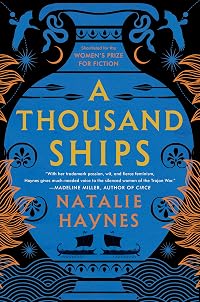
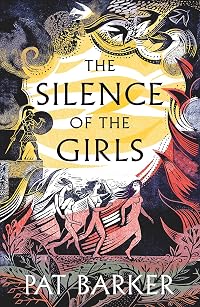

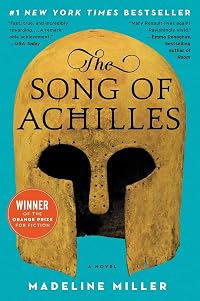





Member Reviews
Much like "Mythos" and "Heroes" before it, "Troy" sees Stephen Fry's charmingly pseudo-present narrator style retell the beloved, ancient Greek myths. I was pleasantly surprised by how much of this book is spent on events before (and indeed, even during) the Trojan War in general and the Iliad in particular. Well over a third of the pages are spent on foundation myths, stories of the ancestors of the various primary players in the Iliad, setting up curses and prophecies that play a role, and generally including a lot of smaller myths and stories that have nowhere near the fame of the war looming on the horizon. In that regard, a large portion of the book actually feels like part 2 of "Heroes", being stories of demigods and city show more foundings, wars, major betrayals and petty grievances quickly spinning out of control.
The rest of the book deals with the Trojan War itself, and this gives the book a focus that the first two volumes didn't quite manage. It is a single story this, for all its tangents, and it makes it a more coherent reading experience, which I enjoyed. The lack of a direction and cohesive structure was a slight problem for me with the end of "Mythos" (the beginning, with the creation myths, had a solid framework with a clear chronology that made the later stories' lack of the same feel jarring), and to a lesser extent also with "Heroes", and with the change from adapting a hundred tiny stories to one major one, this is avoided here.
Fry's constant concern there will be too many names -- which, by all means, there absolutely is -- does get a little bit grating (do we need the eight reminder that Aias is how he has decided to spell Ajax the Lesser?), but he so often does them with his usual charm and wit, I almost don't mind.
All in all I'm quite looking forward to seeing him give the Odyssee the same treatment (indeed, Odysseus clearly shines through as being one of his, if not the, favourite character here), and even crossing my fingers for the slight chance Aeneas might one day get the same. Even if not technically part of the _Greek_ canon, Fry spends a lot of time on him in this book, which gives me hope ... show less
The rest of the book deals with the Trojan War itself, and this gives the book a focus that the first two volumes didn't quite manage. It is a single story this, for all its tangents, and it makes it a more coherent reading experience, which I enjoyed. The lack of a direction and cohesive structure was a slight problem for me with the end of "Mythos" (the beginning, with the creation myths, had a solid framework with a clear chronology that made the later stories' lack of the same feel jarring), and to a lesser extent also with "Heroes", and with the change from adapting a hundred tiny stories to one major one, this is avoided here.
Fry's constant concern there will be too many names -- which, by all means, there absolutely is -- does get a little bit grating (do we need the eight reminder that Aias is how he has decided to spell Ajax the Lesser?), but he so often does them with his usual charm and wit, I almost don't mind.
All in all I'm quite looking forward to seeing him give the Odyssee the same treatment (indeed, Odysseus clearly shines through as being one of his, if not the, favourite character here), and even crossing my fingers for the slight chance Aeneas might one day get the same. Even if not technically part of the _Greek_ canon, Fry spends a lot of time on him in this book, which gives me hope ... show less
Once again, Stephen Fry, comedian and classics scholar, proves to be an amusing and enlightening guide through the final book of his Greek mythology trilogy (preceded by Mythos and Heroes). One might think that there's nothing left to be said about the Trojan War, but Fry's analysis of the genesis of Homer (fictional blind poet or real person?) and his recounting of the fates of Achilles, Helen, Hector, Priam, and others reveal new and fresh insights. Especially remarkable are his analysis of the character of Odysseus, here shown to be more treacherous than heroic. Maybe Fry will rework the Odyssey and we'll see if the wanderer is redeemed.
Thank you to Chronicle Books for sending me an advanced readers copy of this book in exchange for an honest review.
I don't adore "Troy" as much as "Mythos" and "Heroes," because the first and second books in the trilogy are so much funnier—the footnotes, in particular.
Fry provides some witty footnotes and asides, but in "Troy," Cassandra provides most of the chuckles. She pops up in so many unlikely places, howling her prophecies in the city, on the beach, on the roads, etc., and being ignored by everyone within earshot in fulfillment of her curse, that the reader wonders: who is tending the temple of Athena?
"Troy" is nevertheless the greatest accomplishment of the trilogy. In "Troy" Stephen Fry writes a ten-year siege and war, and show more does so with stunning aplomb. Sometimes Fry explains in the footnotes which version of the myths he has chosen, and why. He even pokes fun at the difficulty of the whole enterprise, imploring the reader not to get her Ajaxes and Antigones confused. As with the first two books, the illustrations are terrific, although I will have to wait until the finished version to read the captions; my ARC came without. The Glossary is also invaluable with all of the characters to keep straight, and Fry addresses the question at the end of how much of this is actual history.
Long expositions of sieges and wars bore me to tears, with the exception of some of those written by Bernard Cornwell. I will never make it through "Les Miserables." However, I was enthralled throughout every single paragraph of this retelling. Here is the Trojan War, with the heroes and antiheroes (some of them the same person), the interfering denizens of Mount Olympus. Fry makes sure he goes back far enough in mythology that every major player is fully understood: you know the connection between Heracles and Priam, for instance. In fleshing out these ancient characters, Fry makes it visceral, does not shy away from emotions, and spills rivers of blood. The story of the Trojan Horse alone is so well done that you can smell the sweat.
If anyone is out-writing Madeline Miller at retelling mythology right now, in a time when a lot of authors are throwing their hats into the ring, it is Fry, the undisputed master of the turn of phrase. He may be the greatest raconteur alive today, which shines through in his writing, and his contribution to mythology is sure to endure. Easily the most spectacular thing about this trilogy? Fry reads the audiobooks. show less
I don't adore "Troy" as much as "Mythos" and "Heroes," because the first and second books in the trilogy are so much funnier—the footnotes, in particular.
Fry provides some witty footnotes and asides, but in "Troy," Cassandra provides most of the chuckles. She pops up in so many unlikely places, howling her prophecies in the city, on the beach, on the roads, etc., and being ignored by everyone within earshot in fulfillment of her curse, that the reader wonders: who is tending the temple of Athena?
"Troy" is nevertheless the greatest accomplishment of the trilogy. In "Troy" Stephen Fry writes a ten-year siege and war, and show more does so with stunning aplomb. Sometimes Fry explains in the footnotes which version of the myths he has chosen, and why. He even pokes fun at the difficulty of the whole enterprise, imploring the reader not to get her Ajaxes and Antigones confused. As with the first two books, the illustrations are terrific, although I will have to wait until the finished version to read the captions; my ARC came without. The Glossary is also invaluable with all of the characters to keep straight, and Fry addresses the question at the end of how much of this is actual history.
Long expositions of sieges and wars bore me to tears, with the exception of some of those written by Bernard Cornwell. I will never make it through "Les Miserables." However, I was enthralled throughout every single paragraph of this retelling. Here is the Trojan War, with the heroes and antiheroes (some of them the same person), the interfering denizens of Mount Olympus. Fry makes sure he goes back far enough in mythology that every major player is fully understood: you know the connection between Heracles and Priam, for instance. In fleshing out these ancient characters, Fry makes it visceral, does not shy away from emotions, and spills rivers of blood. The story of the Trojan Horse alone is so well done that you can smell the sweat.
If anyone is out-writing Madeline Miller at retelling mythology right now, in a time when a lot of authors are throwing their hats into the ring, it is Fry, the undisputed master of the turn of phrase. He may be the greatest raconteur alive today, which shines through in his writing, and his contribution to mythology is sure to endure. Easily the most spectacular thing about this trilogy? Fry reads the audiobooks. show less
Stephen Fry's retellings of the Greek myths and epics resonate with the educator, parent, and hopefully, someday grandparent in me. While I thoroughly enjoyed Mythos and Heroes, Troy is my favorite in the series thus far. Fry uses Homer, Ovid, and Virgil as his sources. In addition to the Illiad, the book includes the stories of The Judgement of Paris, the Birth of Achilles, the Abduction of Helen, the Trojan Horse, and the sack of Troy.
Fry's writing is lively and witty. He captures the nuance of character and the pathos of war. I listened to him read the audio version of the text and was transported in time and place. At times, the listening experience was magical.
As I listened, I kept thinking about the text's potential for reaching show more young adults and expanding their interest in reading in general and in the classics. Unfortunately, it's been close to twenty years since I last read Homer in the original. Nevertheless, Troy has inspired me to revisit Homer. Does anyone have recommendations for new translations or oral readings of the original?? show less
Fry's writing is lively and witty. He captures the nuance of character and the pathos of war. I listened to him read the audio version of the text and was transported in time and place. At times, the listening experience was magical.
As I listened, I kept thinking about the text's potential for reaching show more young adults and expanding their interest in reading in general and in the classics. Unfortunately, it's been close to twenty years since I last read Homer in the original. Nevertheless, Troy has inspired me to revisit Homer. Does anyone have recommendations for new translations or oral readings of the original?? show less
4.5/5
“When she fell, a hole opened in the human world that may never be filled, save in memory. Poets must sing the story over and over again, passing it from generation to generation, lest in losing Troy we lose a part of ourselves.”
Stephen Fry relies upon various sources in compiling this comprehensive volume that begins with the origins and foundations of the city of Troy (mythical, historical and geographical) and proceeds to paint a picture of the immortal and mortal forces that lead to the events that ultimately result in the Trojan War.
“When the gods play so deep a part in our affairs, we should count ourselves cursed.”
Homer’s Iliad ends with Hector’s funeral, however, Stephen Fry continues the story to include the show more Trojan Horse and the defeat and sacking of Troy in the hands of the Achaeans. Though Stephen Fry does not go into much detail in the looting and plundering that followed he does leave us with this,
“No matter how much you side with the Greeks and cheer for Odysseus, Menelaus, and the rest, you cannot but be moved to deep sorrowing pity by the plight of Troy and its citizens. We know how brutal soldiers can be. Years of homesickness, hardship, and the loss of comrades while under the constant danger of life-threatening injury harden the heart and stifle the small voice of mercy. We know how the Red Army, for example, raped, looted, and murdered their way into Berlin in 1945. How cruelly British troops tortured and mutilated rebels rounded up after the Indian Mutiny. What the American army did at My Lai in Vietnam. Whatever country we are from, and however proud we may be of our national claims to tolerance, honor, and decency, we cannot dare assume that armies fighting under our flag have not been guilty of atrocities quite as obscene as those perpetrated by the ravening Greeks that night.”
Stephen Fry is a masterful storyteller, and while these stories are not new to anyone, Stephen Fry makes these stories accessible to anybody and everybody who is yet to read the classics themselves. Added to the stories are Stephen Fry’s witty take on the characters and events as well as contemporary references and trivia interspersed throughout the narrative. The featured classical artwork inspired by these stories is stunning. I also enjoyed the segment on Myth vs. Reality towards the end of the book. The discussion about the research into the historical elements of the myths and disputes revolving around the same was very well presented.
“The point really is that with myth we can sift and sort details of personality, archaeology, and origins as we would with real lives and histories, yet simultaneously accept and embrace supernatural and symbolic elements of fiction and magic.”
With so many retellings of the Greek myths available to us these days, one might think that yet another one would be redundant or repetitive. I feel that’s not the case because while the source material and the characters remain the same, it is interesting to see how the author presents, interprets and adds dimension to the characters in question. It is also interesting to see which stories or characters the author chooses to present to the audience. There are so many to choose from. Stephen Fry has done a commendable job in presenting us with his selection of the stories from the myths - the immortals, the mortals and their exploits, while adding his own brand of wit, humor and wisdom.
While Mythos remains my favorite of the three books in this series, I thoroughly enjoyed Troy, Stephen Fry’s third installment in his retelling of the Greek myths. As with the previous two books, I paired my reading with Stephen Fry’s audio narration which makes for an entertaining experience. Having listened to all the three in the series over the last month, I now have Stephen Fry’s voice lodged in my head and whenever I read (and whatever I read), I hear Stephen Fry (not that I’m complaining)!
I look forward to reading (and listening to) Stephen Fry’s Odyssey. If the last three books are anything to go by, I’m sure it will be well worth the wait! show less
“When she fell, a hole opened in the human world that may never be filled, save in memory. Poets must sing the story over and over again, passing it from generation to generation, lest in losing Troy we lose a part of ourselves.”
Stephen Fry relies upon various sources in compiling this comprehensive volume that begins with the origins and foundations of the city of Troy (mythical, historical and geographical) and proceeds to paint a picture of the immortal and mortal forces that lead to the events that ultimately result in the Trojan War.
“When the gods play so deep a part in our affairs, we should count ourselves cursed.”
Homer’s Iliad ends with Hector’s funeral, however, Stephen Fry continues the story to include the show more Trojan Horse and the defeat and sacking of Troy in the hands of the Achaeans. Though Stephen Fry does not go into much detail in the looting and plundering that followed he does leave us with this,
“No matter how much you side with the Greeks and cheer for Odysseus, Menelaus, and the rest, you cannot but be moved to deep sorrowing pity by the plight of Troy and its citizens. We know how brutal soldiers can be. Years of homesickness, hardship, and the loss of comrades while under the constant danger of life-threatening injury harden the heart and stifle the small voice of mercy. We know how the Red Army, for example, raped, looted, and murdered their way into Berlin in 1945. How cruelly British troops tortured and mutilated rebels rounded up after the Indian Mutiny. What the American army did at My Lai in Vietnam. Whatever country we are from, and however proud we may be of our national claims to tolerance, honor, and decency, we cannot dare assume that armies fighting under our flag have not been guilty of atrocities quite as obscene as those perpetrated by the ravening Greeks that night.”
Stephen Fry is a masterful storyteller, and while these stories are not new to anyone, Stephen Fry makes these stories accessible to anybody and everybody who is yet to read the classics themselves. Added to the stories are Stephen Fry’s witty take on the characters and events as well as contemporary references and trivia interspersed throughout the narrative. The featured classical artwork inspired by these stories is stunning. I also enjoyed the segment on Myth vs. Reality towards the end of the book. The discussion about the research into the historical elements of the myths and disputes revolving around the same was very well presented.
“The point really is that with myth we can sift and sort details of personality, archaeology, and origins as we would with real lives and histories, yet simultaneously accept and embrace supernatural and symbolic elements of fiction and magic.”
With so many retellings of the Greek myths available to us these days, one might think that yet another one would be redundant or repetitive. I feel that’s not the case because while the source material and the characters remain the same, it is interesting to see how the author presents, interprets and adds dimension to the characters in question. It is also interesting to see which stories or characters the author chooses to present to the audience. There are so many to choose from. Stephen Fry has done a commendable job in presenting us with his selection of the stories from the myths - the immortals, the mortals and their exploits, while adding his own brand of wit, humor and wisdom.
While Mythos remains my favorite of the three books in this series, I thoroughly enjoyed Troy, Stephen Fry’s third installment in his retelling of the Greek myths. As with the previous two books, I paired my reading with Stephen Fry’s audio narration which makes for an entertaining experience. Having listened to all the three in the series over the last month, I now have Stephen Fry’s voice lodged in my head and whenever I read (and whatever I read), I hear Stephen Fry (not that I’m complaining)!
I look forward to reading (and listening to) Stephen Fry’s Odyssey. If the last three books are anything to go by, I’m sure it will be well worth the wait! show less
A Value-Added Troy Story
A review of the Chronicle Books audiobook (June 22, 2021) narrated by the author and released simultaneously with the hardcover/eBook.
I said that I was an Iliad nut when I recently reviewed Yann Martel's Son of Nobody, but somehow I had overlooked Stephen Fry's Troy, thinking it was just another retelling. I snapped it up from an Audible Daily Deal recently and was impressed by how much additional background, context and detail Fry put into it. This was further enhanced by show more Fry's skills as a narrator in all voices with the occasional sly aside in his own inimitable style.
Almost the entire first half of the book is about all the family lineages, the taking of sides by the gods of Olympus, the family curses which are handed down through the generations on both the Greek and Trojan side, etc. The actual Iliad part of the story is covered from about the 50% to the 80% mark, so this goes way beyond just reading The Iliad.
Stephen Fry also often notes the etymology of various names and words and how they have come down to us in present day usage. Many of those were new to me as well.
Overall, this is a superb enhanced retelling of the story of Troy. I went on immediately to listen to Fry's audiobook of [book:Odyssey: The Greek Myths Reimagined|218372119] (2024) which fortunately makes for a great lead-in to Christopher Nolan's film The Odyssey (premiering July 17, 2026).
In both cases, I borrowed the hardcover editions from the library in order to transcribe some quotes to use for periodic status updates as is my usual practice.
Trivia and Link
Yes, my lede header was inspired by noting that the animated film Toy Story 5 (2026) was currently in the theatres. In fact my first idea was to just title it as Troy Story, but then I thought something extra needed to said about the bonus content. show less
A review of the Chronicle Books audiobook (June 22, 2021) narrated by the author and released simultaneously with the hardcover/eBook.
We know how wars that each side believed would soon be decided can stretch out over months and years. The Greeks and Trojans were perhaps the first to discover this unhappy truth. ... For nine years the Trojan War was more plunder than thunder.
I said that I was an Iliad nut when I recently reviewed Yann Martel's Son of Nobody, but somehow I had overlooked Stephen Fry's Troy, thinking it was just another retelling. I snapped it up from an Audible Daily Deal recently and was impressed by how much additional background, context and detail Fry put into it. This was further enhanced by show more Fry's skills as a narrator in all voices with the occasional sly aside in his own inimitable style.
Almost the entire first half of the book is about all the family lineages, the taking of sides by the gods of Olympus, the family curses which are handed down through the generations on both the Greek and Trojan side, etc. The actual Iliad part of the story is covered from about the 50% to the 80% mark, so this goes way beyond just reading The Iliad.
Stephen Fry also often notes the etymology of various names and words and how they have come down to us in present day usage. Many of those were new to me as well.
Overall, this is a superb enhanced retelling of the story of Troy. I went on immediately to listen to Fry's audiobook of [book:Odyssey: The Greek Myths Reimagined|218372119] (2024) which fortunately makes for a great lead-in to Christopher Nolan's film The Odyssey (premiering July 17, 2026).
In both cases, I borrowed the hardcover editions from the library in order to transcribe some quotes to use for periodic status updates as is my usual practice.
Trivia and Link
Yes, my lede header was inspired by noting that the animated film Toy Story 5 (2026) was currently in the theatres. In fact my first idea was to just title it as Troy Story, but then I thought something extra needed to said about the bonus content. show less
Absolutely love Fry's Greek Mythology so far, and Troy was such a detailed telling of the Battle of Troy. It covers all the details, the Gods, the Pantheon, and the heroes involved in the battle, as well as juicy titbits from Homer's Iliad.
We're following the formation, fall and then the infamous fall of Troy, i.e. how Priam became the King of Troy in the first place. We're also following the God's loyalties and why Athena and Hera were on the Acheans'/Greek side while Aphrodite and Apollo for Troy. Along with these backgrounds and overwhelming number of people, you hear dialogues, thought processes, and even Fry's humour.
The preface made me think about how mankind has remained the same, after 3000 years we're still an arrogant, show more squabbling, greedy bunch. show less
We're following the formation, fall and then the infamous fall of Troy, i.e. how Priam became the King of Troy in the first place. We're also following the God's loyalties and why Athena and Hera were on the Acheans'/Greek side while Aphrodite and Apollo for Troy. Along with these backgrounds and overwhelming number of people, you hear dialogues, thought processes, and even Fry's humour.
The preface made me think about how mankind has remained the same, after 3000 years we're still an arrogant, show more squabbling, greedy bunch. show less
Members
- Recently Added By
Lists

Books Read in 2021
5,361 works; 113 members

Top Five Books of 2022
736 works; 272 members

Books Read in 2022
5,226 works; 115 members

Current To Read
9 works; 1 member
Author Information

Stephen Fry is an award-winning comedian, actor, presenter, and director. He is also the bestselling author of four novels - The Stars' Tennis Balls, Making History, The Hippopotamus, and The Liar-as well as two previous memoirs- Moab Is My Washpot and The Fry Chronicles, the latter of which is available from The Overlook Press.
Some Editions
Series

Work Relationships
Is contained in
Common Knowledge
- Canonical title
- Troy: The Greek Myths Reimagined
- Original title
- Troy
- Original publication date
- 2020-10-29
- People/Characters
- Hercules; Peleus; Paris; Anchises; Pyrrha; Troilus (show all 17); Cressida; Aeneas; Achilles; Ajax; Agamemnon; Chryseis; Briseis; Diomedes; Hector; Patroclus; Helen of Troy
- Important places
- Ancient Greece; Greece; Troy
- Important events
- Trojan War; Classical Antiquity
- First words
- Troy.
- Last words
- (Click to show. Warning: May contain spoilers.)"I knew it was a mistake."
- Original language
- English
- Canonical DDC/MDS
- 398.20938
Classifications
- DDC/MDS
- 398.20938 — Society, government, & culture Customs, etiquette & folklore Folklore & Folktales Folk literature History, geographic treatment, biography Folklore of the ancient world Folklore of ancient Greece
- LCC
- PA6379 — Language and Literature Greek language and literature. Latin language and literature Roman literature Individual authors
- BISAC
Statistics
- Members
- 1,830
- Popularity
- 11,908
- Reviews
- 29
- Rating
- (4.24)
- Languages
- 11 — Catalan, Danish, Dutch, English, Estonian, German, Hungarian, Italian, Portuguese, Spanish, Turkish
- Media
- Paper, Audiobook, Ebook
- ISBNs
- 26
- ASINs
- 8