April Morning
by Howard Fast
On This Page
Description
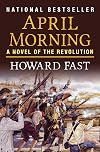
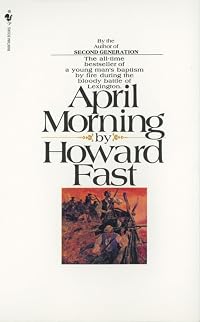
On the eve of the American Revolution, one battle changes a boy's life-and a nation's history-forever On April 18, 1775, musket shots ring out over Lexington, Massachusetts. As the sun rises over the battlefield, fifteen-year-old Adam Cooper stands among the outmatched patriots, facing a line of British troops. Determined to defend his home and prove his worth to his disapproving father, Cooper is about to embark on the most significant day of his lifetime. The Battle of Lexington and show more Concord will be the starting point of the American Revolution-and the moment that Cooper becomes a man. Sweeping in scope and masterful in execution, April Morning is a classic of American literature and an unforgettable story of one community's fateful struggle for freedom. This ebook features an illustrated biography of Howard Fast including rare photos from the author's estate. show lessTags
Recommendations




Member Reviews
First historical fiction of the year for me did not disappoint. Taking place at the Battle of Lexington during the American Revolution, this novella was gritty, dark, and unforgiving. Characters are not designed to be liked, they are designed to be real, and the writing of the people, setting, sounds, and smells of the Massachusetts countryside are amazing.
Somehow we never read this in high school, so I was interested in the Netgalley offering for the new Open Road digital edition. It seems to be a nice edition, apart from a few odd typos ('"We'd never sleep a peaceful night again – not ever again, no V"'); the cover art is stark and attractive.
April Morning is the story of about thirty-six hours in the life of fifteen-year-old Adam Cooper, a farm boy in Massachusetts living a placid life with his domineering father, Moses, and his sweet mother, sharp grandmother, and typical-pain little brother. (His grandmother was terrific.) What is not really obvious from the text until a little ways in is that this isn't just 18th century Massachusetts – it is Lexington, as in Lexington and show more Concord, and the April morning is April 18-19, 1776.
By the end of the brief novel Adam's entire life has changed, and his future as well. It's easy to slip into the old habit of thinking about the men who fought the Revolution as … only that, the plucky militia, confounding the Redcoats with guerilla tactics. It's easy to forget about the fact that the war came on them with a force and suddenness they did not expect. Many knew it might come; the leadership in particular was a well-informed group. They didn't know how and exactly when. They didn't expect to see friends and neighbors and family cut down, or to see the entire course of their lives redirected. Or terminated. The tidy, uncomplicated path Adam has always seen for his life – probably marry within the village, perhaps to Ruth, eventually inherit the farm, care for his grandmother and parents until they die, raise a family of his own, take up a position on the Committee in his father's wake – is obliterated. By the end of the brief time covered by the book, it is all still possible – but not nearly as obvious, as safe and sure, as it has been all his life. His life, his future – the world has changed.
By the end of the story I was rather fond of Adam, who is engaging despite his teenaged-boy-ness. I've come across surprisingly little fiction centered on the Revolution (there's my beloved Sherwood Ring, and I need to read Johnny Tremaine again one day), and I'm glad of a story that illuminates a corner of a period of history I know less about than I'd like to. I had, for example, no idea that that was how the whole thing started. This account certainly differs from the general impression of the Minutemen, every one loaded for bear (literally) and more than willing to defend their homes with no discussion. The Committee was so very much a committee, a panel of men of all opinions who spoke much and accomplished, apparently, little; this is not the popular image of the clear-minded forefather…
The brutality of the battle – battles – was startling, as was the frankness about the various reactions. There are no real heroes here, not as the history books would like us to see them; in fact, Adam notes himself that some of the greatest heroism shown that morning was by the British soldiers who walked into Colonial gunfire – and kept walking.
My eyebrows went up at the casual discussion of investment into slave ships, often profitable enough to be worth bucking public opinion despite an obscene percentage of ships – or was it just cargo? - lost. It's another thing I've never thought much about, the 18th century attitude toward slavery.
I was also surprised by the opinions expressed of Sam Adams and John Hancock?. Here are these (to overuse the word) heroes of the Revolution, and the denizens of Lexington are not happy about a visit from these worthies. I knew shamefully little about Sam Adams, who, it appears, was seen as an atheist (Wikipedia lists him as Congregational) and a radical (true enough). They seem to both be considered stormcrows.
I like this sort of detail – I love to see a little deeper or from a slightly different angle than usual.
The book is from Adam's first-person point of view, and the language is colloquial without, happily, being unreadably young or "farm-boy" – the local color is not blinding. For a short work, there is a lot of strong characterization here – I finished it feeling I knew several of the characters quite well, and had known them a long time, something far too many much longer books fail to achieve. The quote I added above about Adams and Hancock is a good example of the skill with which this was managed: succinct and expressive without needing the narrator stepping in to fill in the blanks. It grew on me, and continued the effect after I finished it. I've found that I knock off a star from some books in the course of working up a review. Here, if anything, I might add one. show less
April Morning is the story of about thirty-six hours in the life of fifteen-year-old Adam Cooper, a farm boy in Massachusetts living a placid life with his domineering father, Moses, and his sweet mother, sharp grandmother, and typical-pain little brother. (His grandmother was terrific.) What is not really obvious from the text until a little ways in is that this isn't just 18th century Massachusetts – it is Lexington, as in Lexington and show more Concord, and the April morning is April 18-19, 1776.
By the end of the brief novel Adam's entire life has changed, and his future as well. It's easy to slip into the old habit of thinking about the men who fought the Revolution as … only that, the plucky militia, confounding the Redcoats with guerilla tactics. It's easy to forget about the fact that the war came on them with a force and suddenness they did not expect. Many knew it might come; the leadership in particular was a well-informed group. They didn't know how and exactly when. They didn't expect to see friends and neighbors and family cut down, or to see the entire course of their lives redirected. Or terminated. The tidy, uncomplicated path Adam has always seen for his life – probably marry within the village, perhaps to Ruth, eventually inherit the farm, care for his grandmother and parents until they die, raise a family of his own, take up a position on the Committee in his father's wake – is obliterated. By the end of the brief time covered by the book, it is all still possible – but not nearly as obvious, as safe and sure, as it has been all his life. His life, his future – the world has changed.
By the end of the story I was rather fond of Adam, who is engaging despite his teenaged-boy-ness. I've come across surprisingly little fiction centered on the Revolution (there's my beloved Sherwood Ring, and I need to read Johnny Tremaine again one day), and I'm glad of a story that illuminates a corner of a period of history I know less about than I'd like to. I had, for example, no idea that that was how the whole thing started. This account certainly differs from the general impression of the Minutemen, every one loaded for bear (literally) and more than willing to defend their homes with no discussion. The Committee was so very much a committee, a panel of men of all opinions who spoke much and accomplished, apparently, little; this is not the popular image of the clear-minded forefather…
The brutality of the battle – battles – was startling, as was the frankness about the various reactions. There are no real heroes here, not as the history books would like us to see them; in fact, Adam notes himself that some of the greatest heroism shown that morning was by the British soldiers who walked into Colonial gunfire – and kept walking.
My eyebrows went up at the casual discussion of investment into slave ships, often profitable enough to be worth bucking public opinion despite an obscene percentage of ships – or was it just cargo? - lost. It's another thing I've never thought much about, the 18th century attitude toward slavery.
I was also surprised by the opinions expressed of Sam Adams and John Hancock?. Here are these (to overuse the word) heroes of the Revolution, and the denizens of Lexington are not happy about a visit from these worthies. I knew shamefully little about Sam Adams, who, it appears, was seen as an atheist (Wikipedia lists him as Congregational) and a radical (true enough). They seem to both be considered stormcrows.
"They were here tonight."
"Who?"
"Sam Adams and John Hancock."
"Oh, no," Father said. "Now what in heaven's name were they doing here?"
I like this sort of detail – I love to see a little deeper or from a slightly different angle than usual.
The book is from Adam's first-person point of view, and the language is colloquial without, happily, being unreadably young or "farm-boy" – the local color is not blinding. For a short work, there is a lot of strong characterization here – I finished it feeling I knew several of the characters quite well, and had known them a long time, something far too many much longer books fail to achieve. The quote I added above about Adams and Hancock is a good example of the skill with which this was managed: succinct and expressive without needing the narrator stepping in to fill in the blanks. It grew on me, and continued the effect after I finished it. I've found that I knock off a star from some books in the course of working up a review. Here, if anything, I might add one. show less
I first read "April Morning" by Howard Fast in high school (shortly after publication). As with other required readings, I found this re-read much more powerful than the first time. The story is set in Lexington, MA and opens the afternoon before the outbreak of war on April 19,1775, centered around a young man (15) named Adam Cooper whom we will follow throughout the conflict.
The well educated locals hope to avoid war with the British by opening a debate with the British Army, seeking fair treatment and trade rather than conflict. Instead, the British opened fire on the Committeemen and volunteers. Why on earth would educated people expect the British Empire to treat them better than any of their other colonies anywhere else in the show more world totally eludes me.
The author's writing is beautiful and powerful, a true gift to the reader. show less
The well educated locals hope to avoid war with the British by opening a debate with the British Army, seeking fair treatment and trade rather than conflict. Instead, the British opened fire on the Committeemen and volunteers. Why on earth would educated people expect the British Empire to treat them better than any of their other colonies anywhere else in the show more world totally eludes me.
The author's writing is beautiful and powerful, a true gift to the reader. show less
This story begins with a resentful young teen who has issues with his stern and strict father. I almost quit reading it because of the tone. That would have been a huge mistake. As the story went on, it covers the space of one day in history, it quickly became a wonderful story of the journey from boyhood to manhood. Since it takes place at the battles of Lexington and Concord, there is much reflecting on the reasons those men took up arms against the British and what that would mean for them. Interesting that the author does not allow one mentality to rule the day and the reasons, but touches on many individuals and why they are compelled to the battle and why they must continue it. All through the eyes of this young man whose vision show more slowly turns from within to the world and the people around him. It is a well told story. show less
In this coming of age story, fifteen year-old Adam Cooper has to grow up overnight. Adam lives in Lexington, MA and it’s April 18, 1775. It’s the eve of the Revolutionary War and the British Army is on the march to Concord to seize the munition stores of the colonists.
Having been warned of the impending arrival of the Redcoats, the town committeemen call all able-bodied men to town to make a stand. No one in Lexington believes that there will be a battle as they have 75 men, at most, vs 1,000+ Redcoats. They just want to show the British Army that they are not to be trifled with and that Lexington is their home and they will protect it. However, all those rational thoughts are thrown away, when the British open fire. From there, the show more reader follows Adam as he joins the rest of the men in harassing the British column as it marches from Concord back to Boston.
This story gives puts you in the thoughts of a young man who until this day had a quiet life where his biggest problems were trying not to disappoint his father and dealing with his annoying little brother. That all changes in an instant when the first shot rings out…
Very well-written, a quick and easy read but interesting as the reader learns of the initial hours of the Revolutionary War. I recommend this to anyone interested in the Revolutionary War or even simply as a coming of age story.
Rating: 3.75 stars show less
Having been warned of the impending arrival of the Redcoats, the town committeemen call all able-bodied men to town to make a stand. No one in Lexington believes that there will be a battle as they have 75 men, at most, vs 1,000+ Redcoats. They just want to show the British Army that they are not to be trifled with and that Lexington is their home and they will protect it. However, all those rational thoughts are thrown away, when the British open fire. From there, the show more reader follows Adam as he joins the rest of the men in harassing the British column as it marches from Concord back to Boston.
This story gives puts you in the thoughts of a young man who until this day had a quiet life where his biggest problems were trying not to disappoint his father and dealing with his annoying little brother. That all changes in an instant when the first shot rings out…
Very well-written, a quick and easy read but interesting as the reader learns of the initial hours of the Revolutionary War. I recommend this to anyone interested in the Revolutionary War or even simply as a coming of age story.
Rating: 3.75 stars show less
Well written and researched, April Morning is about the start of the revoutionary war. The story follows 15-year-old Adam Cooper who, though still months short of his 16th birthday, feels that he should be treated as a man. Adam's father has other ideas until that fateful April morning when Adam signs the muster book with the other men.
The events in this vividly described but short novel all happen either the day before or the morning after Paul Revere's famous midnight ride, and later that same day. Despite the short length of this novel, the character development is superb. While the story's main characters are fictional, the events portrayed are historically accurate without much "literary liberty" being taken with history for the show more sake of the novel.
Though I am usually not big on war stories, I must say that Howard Fast is a master story teller and that, without reservations, I enjoyed reading this novel. April Morning is easy to read and fast paced but I still only recommend it to readers of historical fiction ages 15 and up. The events depicted may be too graphic for younger readers.
This review was previously published on Dragon Views show less
The events in this vividly described but short novel all happen either the day before or the morning after Paul Revere's famous midnight ride, and later that same day. Despite the short length of this novel, the character development is superb. While the story's main characters are fictional, the events portrayed are historically accurate without much "literary liberty" being taken with history for the show more sake of the novel.
Though I am usually not big on war stories, I must say that Howard Fast is a master story teller and that, without reservations, I enjoyed reading this novel. April Morning is easy to read and fast paced but I still only recommend it to readers of historical fiction ages 15 and up. The events depicted may be too graphic for younger readers.
This review was previously published on Dragon Views show less
The setting is April 19, 1775 and the main character is a young boy, stretched under the demanding thumb of his father, one of the town selectmen. When news comes that the British are coming, the boy wants to participate, only to see his father shot. The book follows the boy as he grows up in a single day, working to defeat the British.
This is an excellent choice for a history or English class since the protagonist is a teenaged boy, and all the emotions of the day are wrapped throughout the story. The book is a little slow to start, and the vocabulary is higher level, but the story is definitely worth the effort. Teens can feel the frustration of the boy as he strives to be a man, then stumbles into terrorizing territory when the show more British begin shooting. I would recommend this for school, but for personal reading as well. Fast captured the astonishment and shock of the colonists expertly. Great reading.
Received Galley from NetGalley.com show less
This is an excellent choice for a history or English class since the protagonist is a teenaged boy, and all the emotions of the day are wrapped throughout the story. The book is a little slow to start, and the vocabulary is higher level, but the story is definitely worth the effort. Teens can feel the frustration of the boy as he strives to be a man, then stumbles into terrorizing territory when the show more British begin shooting. I would recommend this for school, but for personal reading as well. Fast captured the astonishment and shock of the colonists expertly. Great reading.
Received Galley from NetGalley.com show less
Members
- Recently Added By
Lists

Novels set over the course of a single day (or less)
72 works; 8 members
Author Information

183+ Works 8,231 Members
Howard Fast was born on November 11, 1914 in Manhattan. At the age of 17, he sold his first story to Amazing Stories magazine. The next year he sold his first novel, Two Villages, to the Dial Press for a $100 advance. During his lifetime, he wrote more than 80 books, including Conceived in Liberty, The Unvanquished, Citizen Tom Paine, Freedom show more Road, April Morning, The Immigrants, Second Generation, The Establishment, The Legacy, and Greenwich. He won the Stalin International Peace Prize in 1953. A member of the Communist party, he served three months in a federal prison in 1950 for refusing to testify about his political activity. Blacklisted as a result, he founded his own publishing house, Blue Heron Press, which released his novel Spartacus in 1951. In 1957, he wrote a book about his political experiences entitled The Naked God. He also wrote a series of detective stories under the name E. V. Cunningham. He died on March 12, 2003 at the age of 88. (Bowker Author Biography) show less
Awards and Honors
Work Relationships
Is contained in
Has the adaptation
Is abridged in
Has as a student's study guide
Common Knowledge
- Canonical title
- April Morning
- Original publication date
- 1961-04
- Important events
- American Revolution (1775 | 1783)
- Related movies
- Hallmark Hall of Fame: April Morning (1988 | IMDb)
- Dedication
- Since in one way or another a part of each of you is in this book, it is properly yours. Thereby, for Rachel, Jonathan, Barry, Judy, Norman, Jennifer, Melissa, and Timothy.
- First words
- When I turned back to the house, my father called after me and asked me did I figure that I was finished.
- Last words
- (Click to show. Warning: May contain spoilers.)Then, falling asleep, I said farewell to a childhood, a world, a secure and sun-warmed existence and past that was over and done with and gone away for all time.
Classifications
- Genres
- Fiction and Literature, Tween, General Fiction, Historical Fiction
- DDC/MDS
- 813.52 — Literature & rhetoric American literature in English American fiction in English 1900-1999 1900-1945
- LCC
- PZ3 .F265 .A — Language and Literature Fiction and juvenile belles lettres Fiction and juvenile belles lettres Fiction in English
- BISAC
Statistics
- Members
- 886
- Popularity
- 30,525
- Reviews
- 12
- Rating
- (3.71)
- Languages
- Dutch, English
- Media
- Paper, Audiobook, Ebook
- ISBNs
- 32
- UPCs
- 1
- ASINs
- 18