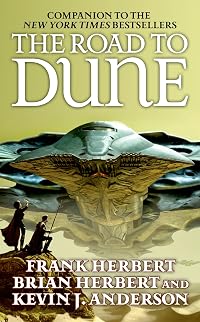
The Road to Dune
by Brian Herbert, Kevin J. Anderson, Frank Herbert
Dune (Collections and Selections — extras)
On This Page
Description
Frank Herbert's Dune is widely known as the science fiction equivalent of The Lord of the Rings, and The Road to Dune is a companion work comparable to The Silmarillion, shedding light on and following the remarkable development of the bestselling science fiction novel of all time.Herein, the world's millions of Dune fans can now read—at long last—the unpublished chapters and scenes from Dune and Dune Messiah. The Road to Dune also includes the original correspondence between Frank show more Herbert and famed editor John W. Campbell, Jr.; excerpts from Herbert's correspondence during his years-long struggle to get his innovative work published; and the article "They Stopped the Moving Sands," Herbert's original inspiration for Dune.
The Road to Dune features newly discovered papers and manuscripts of Frank Herbert, and also "Spice Planet," an original sixty-thousand-word short novel by Brian Herbert and Kevin J. Anderson, based on a detailed outline left by Frank Herbert.
The Road to Dune is a treasure trove of essays, articles, and fiction that every reader of Dune will want to add to their shelf.
. show less
Tags
Recommendations










Member Reviews
If you are a Dune nerd, you will enjoy this book.
It gives you
1) A first draft of Dune, significantly different from the final product and about 50% smaller in content and themes.
2) A set of letters between Herbert, his agent and Joseph Campbell (the science fiction giant) giving some insight into how a story that seemed to have mostly began with an ecological bent turns into this sprawling epic with political and religious and metaphysical implications.
3) A set of out-takes from the Dune and Dune Messiah books, the latter outtakes suggesting a very different path than the one we saw.
4) A set of short stories written not by Frank Herbert but his son, Brian ... these will form various bridges to the sequels and prequels that Brian Herbert show more and Kevin J. Anderson have undertaken ... and have left me wanting. I did not read them because I have not really paid attention to post-Frank books.
Frank Herbert's dune universe is of such import to me it's hard to say why you should read this book ... you already know that you will, or you won't.
It is a really interesting thing to read the short draft, to see the basic form of Dune that is so etched into my mind start off as this relatively mundane tale of ecology and economy, where the spice is not yet imbued with its mystical essence, where the Fremen have not of the deep Islam-steeped culture they would eventually get, or to see a Lady Jessica spelled out the way she reads in my heart but is, in the actual Dune universe, written far more obtusely (as generally everyone in the book is ... it's incredibly odd reading a draft that is brisk and with characters who don't feel opaque and mysterious) show less
It gives you
1) A first draft of Dune, significantly different from the final product and about 50% smaller in content and themes.
2) A set of letters between Herbert, his agent and Joseph Campbell (the science fiction giant) giving some insight into how a story that seemed to have mostly began with an ecological bent turns into this sprawling epic with political and religious and metaphysical implications.
3) A set of out-takes from the Dune and Dune Messiah books, the latter outtakes suggesting a very different path than the one we saw.
4) A set of short stories written not by Frank Herbert but his son, Brian ... these will form various bridges to the sequels and prequels that Brian Herbert show more and Kevin J. Anderson have undertaken ... and have left me wanting. I did not read them because I have not really paid attention to post-Frank books.
Frank Herbert's dune universe is of such import to me it's hard to say why you should read this book ... you already know that you will, or you won't.
It is a really interesting thing to read the short draft, to see the basic form of Dune that is so etched into my mind start off as this relatively mundane tale of ecology and economy, where the spice is not yet imbued with its mystical essence, where the Fremen have not of the deep Islam-steeped culture they would eventually get, or to see a Lady Jessica spelled out the way she reads in my heart but is, in the actual Dune universe, written far more obtusely (as generally everyone in the book is ... it's incredibly odd reading a draft that is brisk and with characters who don't feel opaque and mysterious) show less
This is an interesting behind the scenes look at how Frank Herbert developed, changed, and polished his now classic book “Dune”. The book is divided into three sections, an original three-part story called “Spice Planet”, the Road to Dune, and Short Stories. This book should be in the collection of all hardcore Dune fans. Aspiring writers will appreciate the trials and tribulation Herbert faced with publishers and editors.
This was a very entertaining collection of deleted scenes, short stories, and letters about the novel Dune and its sequels. It's definitely one for the Dune enthusiast and probably won't be much use to the casual fan.
"Spice Planet" takes up most of the first half of the book. The cover advertises this as a "new" novel by Brian Herbert & Kevin J. Anderson. In reality, it is a short novel length work that they put together based on an outline by Frank Herbert. This outline was a very early draft of what would eventually become Dune. Dubbed "the alternate Dune" novel, this is really an early vision of what might have been. The story itself is much different than what Frank Herbert eveutnally published, though there are many recognizable show more plot points and characters that are kept in the final product. This story on its own was a fun read. The writing is bad in places and quite adolescent in many spots. It seems to lack any kind of editing, which surprised me since Kevin J. Anderson is also a professional editor as well as author. It read like a rough draft. But that being said, the story was very engaging. The characters had cheesy dialogue, but were otherwise well detailed. Perhaps the parallels to Dune helped make them likable, but "Spice Planet" on its own is an entertaining story. But let's all be thankful that Frank Herbert kept expanding on his ideas and polished them up to produce the true masterpiece that Dune was.
The letters of Frank Herbert and those sent to him about the Dune publishing experience were interesting. It was cool to see the path that the novel took before being accepted and finally published. And you know some of those publishers that rejected the manuscript have to be beating their heads on the wall to this day.
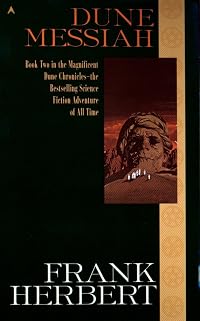
The deleted scenes. Well, I compare this section to the typical part of a DVD that has extras. The scenes that were cut from Dune were interesting to read, but there really wasn't anything awe inspiriing. In short, they were cool to read but the original novel didn't lose anything by having them cut. I won't say the same about the scenes from Dune Messiah, though. The last two "alternate ending" chapters included here were very interesting, beautifully written, and quite surprising. I think the original Dune Messiah ending was just fine as it was, but these two scenes show how it could have ended. They would have been a good way to end the novel as well, except that they would have screwed up the next novel, Children of Dune.
The short stories. Now, these were fun to read. The first one, "A Whisper of Caladan Seas" tells the story of a troop of Atreides fighters in the Harkonnen attack in Dune. It's sad and poignant, while giving an air of mystery and intrigue. The writing is a little jagged, which is understandable as it is the first collaboration work between Brian and Kevin.
The other three short stories deal with the Butlerian Jihad era, occuring some 10,000 years before Dune. These focus on the war between the "thinking machines" and the oppressed humans. I feel sure that Herbert's orginal ideas for this era were a big influence on later works by movie producers such as Battlestar Galactica, The Terminator and The Matrix. These three stories serve as an appetizing introduction to the Legends of Dune series written by Brian & Kevin. As entertaining as they were, I've pushed those books up on my TBR. Great stuff! These stories probably pushed The Road to Dune up to a 4-star rating for me, from the 3-star I was thinking it would get until I read those.
My only complaint about this book: the paperback edition was released about a year later and it included a new short story left out of the hardcover edition: "Sea Child". Those that buy the more expensive hardcovers should not get less than those that wait a year and buy the cheaper edition. The only way I can get that story now is to buy the paperback. I don't want to spend that kind of money on a single short story, and I don't want to give up my copy when I have the entire Dune library in hardcover. They did this again with the release of their next book, Hunters of Dune. They should at least make those stories available for free as ebooks or something to those that bought the hardcovers. show less
"Spice Planet" takes up most of the first half of the book. The cover advertises this as a "new" novel by Brian Herbert & Kevin J. Anderson. In reality, it is a short novel length work that they put together based on an outline by Frank Herbert. This outline was a very early draft of what would eventually become Dune. Dubbed "the alternate Dune" novel, this is really an early vision of what might have been. The story itself is much different than what Frank Herbert eveutnally published, though there are many recognizable show more plot points and characters that are kept in the final product. This story on its own was a fun read. The writing is bad in places and quite adolescent in many spots. It seems to lack any kind of editing, which surprised me since Kevin J. Anderson is also a professional editor as well as author. It read like a rough draft. But that being said, the story was very engaging. The characters had cheesy dialogue, but were otherwise well detailed. Perhaps the parallels to Dune helped make them likable, but "Spice Planet" on its own is an entertaining story. But let's all be thankful that Frank Herbert kept expanding on his ideas and polished them up to produce the true masterpiece that Dune was.
The letters of Frank Herbert and those sent to him about the Dune publishing experience were interesting. It was cool to see the path that the novel took before being accepted and finally published. And you know some of those publishers that rejected the manuscript have to be beating their heads on the wall to this day.
The deleted scenes. Well, I compare this section to the typical part of a DVD that has extras. The scenes that were cut from Dune were interesting to read, but there really wasn't anything awe inspiriing. In short, they were cool to read but the original novel didn't lose anything by having them cut. I won't say the same about the scenes from Dune Messiah, though. The last two "alternate ending" chapters included here were very interesting, beautifully written, and quite surprising. I think the original Dune Messiah ending was just fine as it was, but these two scenes show how it could have ended. They would have been a good way to end the novel as well, except that they would have screwed up the next novel, Children of Dune.
The short stories. Now, these were fun to read. The first one, "A Whisper of Caladan Seas" tells the story of a troop of Atreides fighters in the Harkonnen attack in Dune. It's sad and poignant, while giving an air of mystery and intrigue. The writing is a little jagged, which is understandable as it is the first collaboration work between Brian and Kevin.
The other three short stories deal with the Butlerian Jihad era, occuring some 10,000 years before Dune. These focus on the war between the "thinking machines" and the oppressed humans. I feel sure that Herbert's orginal ideas for this era were a big influence on later works by movie producers such as Battlestar Galactica, The Terminator and The Matrix. These three stories serve as an appetizing introduction to the Legends of Dune series written by Brian & Kevin. As entertaining as they were, I've pushed those books up on my TBR. Great stuff! These stories probably pushed The Road to Dune up to a 4-star rating for me, from the 3-star I was thinking it would get until I read those.
My only complaint about this book: the paperback edition was released about a year later and it included a new short story left out of the hardcover edition: "Sea Child". Those that buy the more expensive hardcovers should not get less than those that wait a year and buy the cheaper edition. The only way I can get that story now is to buy the paperback. I don't want to spend that kind of money on a single short story, and I don't want to give up my copy when I have the entire Dune library in hardcover. They did this again with the release of their next book, Hunters of Dune. They should at least make those stories available for free as ebooks or something to those that bought the hardcovers. show less
Are you a fan of Frank Herbert's Dune series? A really big fan? If so, you might find this book to be of some interest. Compiled by his son Brian and his erstwhile coauthor Kevin J. Anderson, Road to Dune provides a lot of Franks notes, as well as a reconstruction of the prototype novel "Dune World."
Dune was serialized in a sci-fi magazine, and in the process, some chapters were cut and never restored tot he full novel. These are included -- I read Dune three times now, so I could place these chapters in the appropriate place. It might not make sense to other readers -- perhaps what is needed is a "author's cut" of the original Dune. Of course, some of these wayward chapters extended to the sequels, and a few late chapters relate to show more the prequel novels written by Brian and Kevin.
"Dune World" was a clearly inferior story compared with the with the final Dune. The only familiar character is Gurney Hallek (although the smuggler, Tuek is a general in this version, rather than a smuggler). Herbert had an interest in the subject of desert ecology, and a non-fiction article he had written is also repeated here. It tells us where the inspiration for Dune came from, but the prototype book lacks the complexity of the finished product. show less
Dune was serialized in a sci-fi magazine, and in the process, some chapters were cut and never restored tot he full novel. These are included -- I read Dune three times now, so I could place these chapters in the appropriate place. It might not make sense to other readers -- perhaps what is needed is a "author's cut" of the original Dune. Of course, some of these wayward chapters extended to the sequels, and a few late chapters relate to show more the prequel novels written by Brian and Kevin.
"Dune World" was a clearly inferior story compared with the with the final Dune. The only familiar character is Gurney Hallek (although the smuggler, Tuek is a general in this version, rather than a smuggler). Herbert had an interest in the subject of desert ecology, and a non-fiction article he had written is also repeated here. It tells us where the inspiration for Dune came from, but the prototype book lacks the complexity of the finished product. show less
This book's a collected 'leftovers' of the Dune universe, but ihis doesn't mean it's cheap... It contains the original 'Spice planet' short novel, some letters of FH, some unpublished parts of Dune and few shorts stories of BH and KJA. It worth to read if you are familiar with this world and like it.
a companion to the Dune series. Short prequel stories by B. Herbert and Anderson, letters by F. Herbert when he was first writing Dune, alternate and deleted chapters from Dune and Dune Messiah and a novella that was an unpublished forerunner to Dune. Extremely interesting!
A MUST-READ for fans of the series! Especially if you really enjoyed Dune Messiah. It's well worth it for the background info and the alternate ending.
Members
- Recently Added By
Lists

Mind Expanding Books by hackerkid
581 works; 8 members

Epic Science Fiction
15 works; 4 members
Author Information

139+ Works 35,486 Members
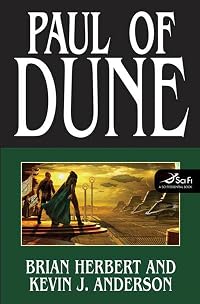
Brian Herbert is an author and the son of Frank Herbert, the creator of the Dune series. Brian Herbert has had several stand-alone novels published but he is perhaps most well-known for his books that expand on his father's Dune novels. Written with author Kevin J. Anderson, these novels have been commercially successful and generally well show more received by the public. Brian Herbert is the co-author of the Dune novels House Atreides, House Harkonnen, House Corrino, The Butlerian Jihad, The Machine Crusade, The Battle of Corrin, The Road To Dune, Hunters of Dune, Sandworms Of Dune, Paul Of Dune, The Winds Of Dune, and Sisterhood of Dune. Brian Herbert has also edited several works relating to the Dune universe and to his father. In 2003, he authored Dreamer of Dune, the biography of Frank Herbert, a Hugo Award finalist nomination. (Bowker Author Biography) show less

463+ Works 86,610 Members
Kevin J. Anderson was born on March 27, 1962. Before becoming a full-time author, he worked in California for twelve years as a technical writer and editor at the Lawrence Livermore National Laboratory. His science fiction books include Resurrection, Inc., the Star Wars Jedi Academy Trilogy, the Young Jedi Knights series, Ground Zero, Ruins, show more Climbing Olympus, Blindfold, and The Dark Between the Stars. He has also written several books with Doug Beason including Ignition, Virtual Destruction, Fallout, and Ill Wind. (Bowker Author Biography) Kevin J. Anderson has written twenty seven bestsellers and has been nominated for the Nebula Award, the Bram Stoker Award, and the SFX Reader's Choice Award. He also holds the Guinness world record for "The Largest Single-Author Signing". (Publisher Provided) show less

259+ Works 148,677 Members
Frank Herbert was born Franklin Patrick Herbert, Jr. in Tacoma, Washington on October 8, 1920. He worked originally as a journalist, but then turned to science fiction. His Dune series has had a major impact on that genre. Some critics assert that Herbert is responsible for bringing in a new branch of ecological science fiction. He had a personal show more interest in world ecology, and consulted with the governments of Vietnam and Pakistan about ecological issues. The length of some of Herbert's novels also helped make it acceptable for science fiction authors to write longer books. It is clear that, if the reader is engaged by the story---and Herbert certainly has the ability to engage his readers---length is not important. As is usually the case with popular fiction, it comes down to whether or not the reader is entertained, and Herbert is, above all, an entertaining and often compelling writer. His greatest talent is his ability to create new worlds that are plausible to readers, in spite of their alien nature, such as the planet Arrakis in the Dune series. Frank Herbert died of complications from pancreatic cancer on February, 11, 1986, in Madison, Wisconsin. He was 65. (Bowker Author Biography) show less
Some Editions
Series

Belongs to Publisher Series
Pocket (5969)
Work Relationships
Common Knowledge
- Canonical title
- The Road to Dune
- Original title
- The Road to Dune
- Original publication date
- 2005
- People/Characters
- Alia Atreides
- Important places
- Arrakeen, Arrakis; Arrakis
- Important events
- Butlerian Jihad
- Publisher's editor
- LoBrutto, Pat
- Original language*
- Anglais (Etats-Unis) (Etats-Unis); English US
- Disambiguation notice
- This, "The Road to Dune", is the collected miscellany and is not to be confused with the short story which is also titled "The Road to Dune".
*Some information comes from Common Knowledge in other languages. Click "Edit" for more information.
Classifications
Statistics
- Members
- 1,253
- Popularity
- 19,649
- Reviews
- 13
- Rating
- (3.43)
- Languages
- 8 — Czech, Dutch, English, French, German, Hungarian, Italian, Polish
- Media
- Paper, Audiobook, Ebook
- ISBNs
- 28
- ASINs
- 13