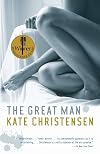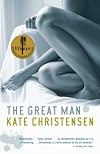
The Great Man
by Kate Christensen
On This Page
Description
National Bestseller and Winner of the PEN/Faulkner Award for FictionOscar Feldman, the renowned figurative painter, has passed away. As his obituary notes, Oscar is survived by his wife, Abigail, their son, Ethan, and his sister, the well-known abstract painter Maxine Feldman. What the obituary does not note, however, is that Oscar is also survived by his longtime mistress, Teddy St. Cloud, and their daughters.
As two biographers interview the women in an attempt to set the record straight, show more the open secret of his affair reaches a boiling point and a devastating skeleton threatens to come to light. From the acclaimed author of The Epicure's Lament, a scintillating novel of secrets, love, and legacy in the New York art world.
"Mischievous...funny, astute...As unexpectedly generous as it is entertaining.... Christensen is a witty observer of the art universe." —The New York Times
. show less
Tags
Recommendations











Member Reviews
The greatest irony of The Great Man that it isn't really about a great man at all, save incidentally. Rather, this novel is about three women who have a relationship with the same man -- who, while important to and loved by all of them, never knew or even tried to know the essence of any of them. Getting to know the three of them as they see themselves is something we get to do in this engrossing, witty treasure of a book.
The spark that ignites the book is that two biographers are simultaneously researching the painter Oscar Feldman, the "great man" of the title. Feldman was a painter known for his female nudes -- both for painting them and for bedding them. He never ventured into abstraction or any other form of modern art, but stuck show more solely to representational paintings of the female body. He was opinionated, stubborn, and a complete shit toward women, no matter how much he admired their physicality.
Oscar was married to Abigail, the mother of his only son, the deeply autistic Ethan. It is never clear whether or how much Oscar loved Abigail, or whether she was merely a deep pocket to keep him in food and shelter while he developed his art. Certainly Abigail loved him, but the greater love of her life seems to have been her son, whose care consumed her life. There is evidence that perhaps Oscar had a deep, abiding, unexpressed and unexpressable love for her that was somehow divorced from sexual passion. Perhaps their marriage was oddly happy. And perhaps that is why Abigail does what she does when the biographers come around.
Oscar's longtime mistress was Teddy, a secretary in the law firm that took care of Oscar's legal affairs. Teddy is the mother of Oscar's twin daughters, for whom Oscar never provided a penny in support. In fact, Oscar did not leave Teddy so much as a single painting when he died, and she found out about his death by reading the obituary page in the New York Times. Teddy never wanted Oscar's support, because she deeply valued her independence. She had a passion for Oscar, clearly, but it seems almost to have been an intellectual passion more than any other sort -- not a cool commingling of minds, but a hot, fierce passion that erupted into sex more often than not, a love of argument that contained a heat and light that is rarely depicted in literature. She now lives in genteel poverty, and takes great pride in making do.
Oscar's sister was Maxine, now a woman in her mid-80's, who is also an artist. She is, perhaps, a greater artist than Oscar ever was, but she has never received the recognition that Oscar did. Certainly no one is working on her biography. Her work is abstract, cerebral, and her palette limited to black and white. Her work, like Oscar's, hangs in museums around the world. But she has reached old age without wealth, without a partner, and with precious few friends. She is grumpy and defensive, including of Oscar's reputation, but also extremely competitive with her famous brother, even after his death. And there is a secret about Oscar that she is protecting, although she seems to be yearning for the secret to be revealed.
The probing of the two biographers leads to dramatic changes in the lives of all three women. It is a delight to see older women -- in fact, old women, women well past the point where we would call them middle-aged -- portrayed as having passion for life, sexual passion, plans for their futures. They form new friendships, meet new men, reassess old relationships, reassess their own lives. These women are thoroughly alive and do not intend to stop living before they die. There is not a one of them I wouldn't like to meet and befriend. There is not one of them I do not intend to emulate, each in a different way.
Christensen's writing is strong and elegant. Her viewpoint wanders from woman to woman, sometimes without warning, so that in one paragraph you're seeing the world from Teddy's eyes and in the next from Maxine's. Seeing the same scene through different eyes -- the pride Teddy has in a meal she has assembled, for instance, as seen through the eyes of one of Oscar's biographers -- enhances every description (and Christensen's food descriptions are especially gorgeous, leading me to believe that her earlier book, The Epicure's Lament, is probably very tasty; it's now on my list).
This book belongs on your shelf next to such volumes as Susan Minot's Evening and Michael Cunningham's The Hours. I'm surprised not to find The Great Man on the New York Times list of notable books of the year; it's that good. You'll definitely find it on mine. show less
The spark that ignites the book is that two biographers are simultaneously researching the painter Oscar Feldman, the "great man" of the title. Feldman was a painter known for his female nudes -- both for painting them and for bedding them. He never ventured into abstraction or any other form of modern art, but stuck show more solely to representational paintings of the female body. He was opinionated, stubborn, and a complete shit toward women, no matter how much he admired their physicality.
Oscar was married to Abigail, the mother of his only son, the deeply autistic Ethan. It is never clear whether or how much Oscar loved Abigail, or whether she was merely a deep pocket to keep him in food and shelter while he developed his art. Certainly Abigail loved him, but the greater love of her life seems to have been her son, whose care consumed her life. There is evidence that perhaps Oscar had a deep, abiding, unexpressed and unexpressable love for her that was somehow divorced from sexual passion. Perhaps their marriage was oddly happy. And perhaps that is why Abigail does what she does when the biographers come around.
Oscar's longtime mistress was Teddy, a secretary in the law firm that took care of Oscar's legal affairs. Teddy is the mother of Oscar's twin daughters, for whom Oscar never provided a penny in support. In fact, Oscar did not leave Teddy so much as a single painting when he died, and she found out about his death by reading the obituary page in the New York Times. Teddy never wanted Oscar's support, because she deeply valued her independence. She had a passion for Oscar, clearly, but it seems almost to have been an intellectual passion more than any other sort -- not a cool commingling of minds, but a hot, fierce passion that erupted into sex more often than not, a love of argument that contained a heat and light that is rarely depicted in literature. She now lives in genteel poverty, and takes great pride in making do.
Oscar's sister was Maxine, now a woman in her mid-80's, who is also an artist. She is, perhaps, a greater artist than Oscar ever was, but she has never received the recognition that Oscar did. Certainly no one is working on her biography. Her work is abstract, cerebral, and her palette limited to black and white. Her work, like Oscar's, hangs in museums around the world. But she has reached old age without wealth, without a partner, and with precious few friends. She is grumpy and defensive, including of Oscar's reputation, but also extremely competitive with her famous brother, even after his death. And there is a secret about Oscar that she is protecting, although she seems to be yearning for the secret to be revealed.
The probing of the two biographers leads to dramatic changes in the lives of all three women. It is a delight to see older women -- in fact, old women, women well past the point where we would call them middle-aged -- portrayed as having passion for life, sexual passion, plans for their futures. They form new friendships, meet new men, reassess old relationships, reassess their own lives. These women are thoroughly alive and do not intend to stop living before they die. There is not a one of them I wouldn't like to meet and befriend. There is not one of them I do not intend to emulate, each in a different way.
Christensen's writing is strong and elegant. Her viewpoint wanders from woman to woman, sometimes without warning, so that in one paragraph you're seeing the world from Teddy's eyes and in the next from Maxine's. Seeing the same scene through different eyes -- the pride Teddy has in a meal she has assembled, for instance, as seen through the eyes of one of Oscar's biographers -- enhances every description (and Christensen's food descriptions are especially gorgeous, leading me to believe that her earlier book, The Epicure's Lament, is probably very tasty; it's now on my list).
This book belongs on your shelf next to such volumes as Susan Minot's Evening and Michael Cunningham's The Hours. I'm surprised not to find The Great Man on the New York Times list of notable books of the year; it's that good. You'll definitely find it on mine. show less
I loved Kate Christensen's The Great Man, a graceful, smart and character-driven novel set in motion by the death of a renowned artist. The characters are the great man's widow and autistic son, his paramour (and mother of his two daughters), his sister (and fellow stellar artist), and others whose lifelong orbits around the titular character begin to decay rapidly away from the weaker gravity of his memory. In the resulting chaos there are collisions and near-misses and certainly damage is done. But when a dark secret about one of The Great Man's most famous works is revealed, it sparks a realignment of those other bodies into a new configuration that just might work. Spot-on dialogue, wonderful sense of place, lovely insights into show more what makes human life so interesting. show less
The Great Man in question is artist Oscar Feldman, now deceased, who gained recognition in the New York art scene of the mid-twentieth century. Unlike his contemporaries, he eschewed the abstract, preferring to paint female nudes almost exclusively. One could say, with some justification, that Oscar, really liked women, though, in the aftermath of his passing, both his wife, Abigail, and his mistress, Claire, or Teddy, as she is known, are fairly clear-eyed about his limitations as a husband, father and partner. But Oscar was important enough that two biographers are suddenly interested in talking to both Abigail and Teddy as well as Oscar's sister, Maxine, a painter in her own right. These three have much to say about Oscar and much to show more say about and to each other as well, particularly when Maxine orchestrates a meeting. This is the first time Abigail and Teddy have ever spoken to each other, though they've each been well aware of the other from the beginning of the affair.
Writing the above reminds me that when I read the dust jacket flap, I thought to myself, "I'm probably not going to like this." How wrong I was! Christensen's characters are as complex and surprising as any you're likely to meet in fiction and her understanding of the human heart is profound. She also has really great things to say about inspiration and creativity. I was particularly impressed by this passage, one of those times in reading where one says, "Yes, that's it exactly!"
"Maxine hated to be interrupted when she was working, even by Katerina. Being dragged from the world of painting back into the world of life was as difficult as forcing herself from the world of like back into the world of painting. A thick but permeable membrane separated them. Going from one to another required a shape-shifting in the brain. She was never entirely safely ensconced in either world: the demands of the other one could be heard, muffled from whichever one you were in, so no matter where you were, you felt a tug of anxiety that something might go wrong in the other one in your absence, something you'd failed to account for before you left. It would have been much easier if the transition could have been accomplished through a series of of soundproof air locks, decompression chambers. It felt as if there were only room in one lifetime to inhabit one of these parallel worlds, but here she was, trying to cram them both in. Each parallel life sucked the air out of the other one. When she was deep in painting, she felt how short her time there was and panicked because she would never get to do it all before she died. It only got harder as she got older, harder because, as with sleep, she could never be as fully in either world as she'd been when she was younger. The membrane had become worn and weakened with age, like everything else."
Pretty good, eh? And I wouldn't know a burnt umber from a raw sienna but that comes about as close to how I feel when I'm writing as anything I've ever read. At the end of that quote you also get a glimpse of just how smart Ms Christensen is about aging. Her three main characters are all card-carrying seniors of long duration yet she lets them have complete personalities, desires and ambitions, colored by their histories but not overwhelmed by them. It's a remarkable achievement for a writer still decades away from these experiences.
In a year that started out strong and has had more than a few gems strewn along the path, I'll remember The Great Man as one of the great ones. show less
Writing the above reminds me that when I read the dust jacket flap, I thought to myself, "I'm probably not going to like this." How wrong I was! Christensen's characters are as complex and surprising as any you're likely to meet in fiction and her understanding of the human heart is profound. She also has really great things to say about inspiration and creativity. I was particularly impressed by this passage, one of those times in reading where one says, "Yes, that's it exactly!"
"Maxine hated to be interrupted when she was working, even by Katerina. Being dragged from the world of painting back into the world of life was as difficult as forcing herself from the world of like back into the world of painting. A thick but permeable membrane separated them. Going from one to another required a shape-shifting in the brain. She was never entirely safely ensconced in either world: the demands of the other one could be heard, muffled from whichever one you were in, so no matter where you were, you felt a tug of anxiety that something might go wrong in the other one in your absence, something you'd failed to account for before you left. It would have been much easier if the transition could have been accomplished through a series of of soundproof air locks, decompression chambers. It felt as if there were only room in one lifetime to inhabit one of these parallel worlds, but here she was, trying to cram them both in. Each parallel life sucked the air out of the other one. When she was deep in painting, she felt how short her time there was and panicked because she would never get to do it all before she died. It only got harder as she got older, harder because, as with sleep, she could never be as fully in either world as she'd been when she was younger. The membrane had become worn and weakened with age, like everything else."
Pretty good, eh? And I wouldn't know a burnt umber from a raw sienna but that comes about as close to how I feel when I'm writing as anything I've ever read. At the end of that quote you also get a glimpse of just how smart Ms Christensen is about aging. Her three main characters are all card-carrying seniors of long duration yet she lets them have complete personalities, desires and ambitions, colored by their histories but not overwhelmed by them. It's a remarkable achievement for a writer still decades away from these experiences.
In a year that started out strong and has had more than a few gems strewn along the path, I'll remember The Great Man as one of the great ones. show less
Continuing to work through the old Kindle books. The Great Man by Kate Christensen was excellent: the story of the women left behind when "the great man," a painter who specialized in female nudes, dies. Five years after, two biographers are working on books, interviewing the women left behind including his wife, his mistress, his two daughters and his sister. There is clearly a shared secret that is eventually revealed. I loved this book: the title was ironic as the book was really about the women and the roles they played in order to allow him to have such a moniker.
The title is deceptive, or at best ironic., because it's all about the women.
The "great man" is dead, and the women with whom he was involved- mostly his wife, his mistress, and his sister- are (with the help of 2 aspiring biographers) working out his legacy- both public and private.
It was a fascinating look into both the modern art world, and into the ways we women navigate and explain our lives- and how we can re-interpret, at least occasionally.
The image we gather of the "great man" ends up being pretty nuanced; some of his flaws are widely known, and some more private, but many come to kight. He does seem like a fairly awful human being... but for some reason, he was able to attract the respect and attention of some very fine women, show more and it was fascinating to see how they moved on once he and his charisma were out of the picture.
This is not the sort of novel I usually read, but it was pretty gripping. Somewhat recommended, because although well-written, it was not so much to my taste. show less
The "great man" is dead, and the women with whom he was involved- mostly his wife, his mistress, and his sister- are (with the help of 2 aspiring biographers) working out his legacy- both public and private.
It was a fascinating look into both the modern art world, and into the ways we women navigate and explain our lives- and how we can re-interpret, at least occasionally.
The image we gather of the "great man" ends up being pretty nuanced; some of his flaws are widely known, and some more private, but many come to kight. He does seem like a fairly awful human being... but for some reason, he was able to attract the respect and attention of some very fine women, show more and it was fascinating to see how they moved on once he and his charisma were out of the picture.
This is not the sort of novel I usually read, but it was pretty gripping. Somewhat recommended, because although well-written, it was not so much to my taste. show less
I was going to write a typical Goodreads-y kind of review for this, but I'm too damn tired, so here's the review I posted on my blog:Kate Christensen’s newest novel The Great Man, for which she recently won the 2008 PEN/Faulkner Award for fiction, is actually about three women and their relationship to one not-so-great man, the figurative painter Oscar Feldman. Claire St. Cloud, or “Teddy” as she’s known to her confidants, was Oscar’s lover, Abigail Feldman, his widow and the mother of his autistic son, and Maxine Feldman, his sister, an abstract painter and a masculine lesbian. While he was alive, these three women orbited Oscar each in their own path, glimpsing one another at openings and parties, but never approaching, show more knowing of each other’s existence but not acknowledging it.After Oscar’s death, a pair of biographers come calling in search of the life of the great Oscar Feldman. These two biographers -- Henry Burke, a tentative 40 year-old white man heading into a difficult stretch in his marriage, and Ralph Washington, a gay black man struggling with his own analysis and critique of Oscar’s work – dredge up feelings long buried and force hard confrontations between the three female protagonists.Christensen’s previous novel, The Epicure’s Lament, was a tour de force of voice, a blistering first-person screed that showed her flair for language, pacing and character. Here, the voice is reserved, but the point of view is constantly shifting. Indeed, the genius of this novel is in how, through its floating perspective, it coaxes the reader into making certain assumptions about the characters, and then subverts those assumptions. In this way, it mirrors the experience of a work of art in the critical marketplace. Much of the book is concerned with the legacies of the two artists – Oscar and Maxine – and how their work has been and will be perceived by critics. While some of the theoretical discussions of art seem facile, Christensen makes a sly comment on the “eye of the beholder.” Implicit in these discussions, of course, is the notion of taste and its inherent place within perspective.The novel opens on Teddy, a particularly crafty bit of manipulation on Christensen’s part, as it places the reader firmly in Teddy’s camp, never giving him a second to see Teddy as the “other woman.” We get Teddy’s view of Abigail, “Oscar’s fat wife,” and feel her sacrifices (when she went into labor with Oscar’s twin daughters, Ruby and Samantha, it was her friend Lila she called, since she couldn’t call Oscar. In fact, she learned of his death when she read the obituary in the New York Times).Just as we settle perfectly beside elegant, seductive Teddy, Christensen moves on to Maxine, Oscar’s cantankerous sister. Maxine can’t stand Teddy, who she feels is all flash and no substance and a home-wrecker. Maxine, easily the least happy of the characters, hungers for some sort of companionship, preferably that of younger assistant Katerina. Maxine feels “that her advanced age should have granted her some kind of immunity from the humiliation of unrequited lust. That it didn’t was yet another of the many indignities of old age.”Surprisingly, the indignities of old age are few and far between in this story of three women, all of whom are north of 70. Not since Kingsley Amis’ The Old Devils has there been a novel that addresses aging so well. Where Amis was largely concerned with the collision between infirmity and desire, his old men chasing women like twenty-year-olds while gingerly biting into toast to avoid rotted teeth, Christensen are more feminine concerns. Companionship, or lack thereof, motherhood and its consolations, and plenty of domestic issues take precedence in The Great Man. That’s not to say there’s no lust – there’s plenty of it. Requited and unrequited love takes up much of the book. Sure there’s talk of exhaustion and failing erections, and yes, one of the characters discusses her will, but the reader is left with the sense that these women are vibrantly alive, still entangled in the messiness of love and sex, of family, of living.For all the comparisons between Amis and Christensen (Is it a coincidence that the Christensen chose a poem from Amis’ good friend Philip Larkin as her epigraph?), there is a key difference between her work and Amis’. Kingsley Amis published The Old Devils in 1986, when he was 64 years old and just nine years from the grave (not that he could’ve known it). He was writing from experience. Christensen published The Great Man in 2007 at the age of 45. For Christensen to so thoroughly craft the twilight of these women’s lives is a remarkable feat of imagination. To project forward is a hundredfold harder than looking back, and Christensen masters it with this novel.Among the pleasures of Christensen’s writing are the dining and cooking scenes. Many authors, most in fact, treat eating as something the characters occasionally must do, no different than crossing the street, or as a prop to fill the scene with action, or a topic of conversation, maybe. But nobody uses food quite as well as Christensen. The Epicure’s Lament was laden with detailed descriptions of meals prepared, including a fine recipe for Shrimp Newberg. For the narrator, Hugo Whittier, food is a benchmark of culture, like a play or a novel, and its proper execution a matter of pride and honor. The Great Man is no different. Many of the scenes revolve around a meal. When Henry first visits Teddy, she seduces him with a subtle, surprisingly tasty stew: “The food, which looked bland and unprepossessing, was subtle and amazing. The couscous tasted nutty and buttery. The rich chicken stew was laced with hints of saffron, cinnamon, cayenne, lemon zest, and something else, unfamiliar and exotic, but these things announced themselves very faintly, so he had to concentrate to taste them through the perfectly cooked meat and grain.”Each meal reveals something about its maker. Teddy’s dish, made from a chicken for which she bartered and vegetables from her backyard garden, displays not only her skills as a seductress, but also her independence, her resourcefulness. It’s a different story when Maxine attends a dinner party at her longtime dealer, Michael Rubinstein’s house: “The soup bowls were whisked away and plates of summery salad replaced them: a Japanese woodcut sea of curly pale green frisee lettuce on which floated almond slice rafts, each holding a tiny, near-translucent poached baby shrimp as pink and naked as a newborn. Crisp blanched haricots verts darted through the sea like needle-nosed fish. Cerise-rimmed radish slices bobbed here and there like sea foam. The dressing was a briny green lime juice and olive oil emulsion. Maxine stared at the thing, trying to imagine the person who had so painstakingly made it. It would be demolished in three bites. She would have been perfectly happy with a wedge of iceberg lettuce with a glop of bottled Russian dressing, like you got in the olden days. Food had become so fussy and contrived.”Christensen’s obsession with food can, at times, overwhelm (I stopped noticing how often a scene revolved around a meal about halfway through the book), but it adds a verisimilitude that eludes lesser authors. Christensen’s characters eat, they sleep and work. They live. show less
I'll be honest: 20 pages into this book I was looking for a way out. The character the book opens on, Teddy St. Cloud ("The Great Man's" mistress) struck me as cliched and tired, the pace was terrifyingly slow, and I just was having a hard time sticking with it.
But, before I even realized what was happening, I soon found myself engrossed in the tale of the 6 disparate women who loved this "Great Man."
The Great Man is Oscar Feldman, a deceased artist well-know for his unfailing devotion to the female nude. Five years after his death, two separate would-be Oscar biographers interview the surviving women in his life: Abigail, his wife; Teddy, his longtime mistress; Ruby, one of Oscars two daughters by Teddy; his sister Maxine, a show more moderately successful abstract artist; and Teddy's friend Lila, who long nurtured unrequited love for Oscar.
The biographers provide impetus for the women to work together to preserve Oscar's legacy, even though a long-lingering secret threatens to realign Feldman's place in the art world.
This secret is really at the heart of the novel -- and the introduction of it into the story is when Christensen's narrative really comes alive. Christensen artfully moves her women away from their earlier stereotypical selves and onto paths of rejuvenation. These "old ladies" are not sitting around sipping tea; they are wonderfully alive, even as the story of the dead man who binds them is rewritten.
Christensen has an excellent knack for describing the frenzied relationship between artist and viewer, and that of artist and subject. Her portrayal of Maxine (Oscar's sister) as an acerbic aging artist who longs after lost love, is particularly well done.
In short: give the book time and enjoy the blossoming of each woman. This book is plodding at times, but overall it is a funny, tight novel that lays bare how we look at art, love and women. show less
But, before I even realized what was happening, I soon found myself engrossed in the tale of the 6 disparate women who loved this "Great Man."
The Great Man is Oscar Feldman, a deceased artist well-know for his unfailing devotion to the female nude. Five years after his death, two separate would-be Oscar biographers interview the surviving women in his life: Abigail, his wife; Teddy, his longtime mistress; Ruby, one of Oscars two daughters by Teddy; his sister Maxine, a show more moderately successful abstract artist; and Teddy's friend Lila, who long nurtured unrequited love for Oscar.
The biographers provide impetus for the women to work together to preserve Oscar's legacy, even though a long-lingering secret threatens to realign Feldman's place in the art world.
This secret is really at the heart of the novel -- and the introduction of it into the story is when Christensen's narrative really comes alive. Christensen artfully moves her women away from their earlier stereotypical selves and onto paths of rejuvenation. These "old ladies" are not sitting around sipping tea; they are wonderfully alive, even as the story of the dead man who binds them is rewritten.
Christensen has an excellent knack for describing the frenzied relationship between artist and viewer, and that of artist and subject. Her portrayal of Maxine (Oscar's sister) as an acerbic aging artist who longs after lost love, is particularly well done.
In short: give the book time and enjoy the blossoming of each woman. This book is plodding at times, but overall it is a funny, tight novel that lays bare how we look at art, love and women. show less
Members
- Recently Added By
Lists

Pen/Faulkner Winners and Finalists
178 works; 9 members

Books To Get From The Library
115 works; 5 members
Author Information

Awards and Honors
Awards
Common Knowledge
- Canonical title
- The Great Man
- Original title
- The great man
- Original publication date
- 2007
- People/Characters
- Oscar Feldman
- Epigraph
- Perhaps being old is having lightened rooms
Inside your head, and people in them, acting
People you know, yet can't quite name; each looms
Like a deep loss restored, from known doors turning,
Setting down a lamp, ... (show all)smiling from a stair, extracting
A known book from the shelves; or sometimes only
The rooms themselves, chairs and a fire burning,
The blown bush at the window, or the sun's
Faint friendliness on the wall some lonely
Rain-ceased midsummer evening. There is where they live:
Not hear and now, but where all happened once.
- Philip Larkin, "The Old Fools" - Dedication
- For Lizzie
- First words
- "It's amazing how well you can live on very little money," said Teddy St. Cloud to Henry Burke over her shoulder as she strode into the kitchen of her Brooklyn row house.
- Last words
- (Click to show. Warning: May contain spoilers.)Ralph said, "Come on, lets join the party."
- Original language*
- Amerikanisch
*Some information comes from Common Knowledge in other languages. Click "Edit" for more information.
Classifications
Statistics
- Members
- 511
- Popularity
- 58,970
- Reviews
- 32
- Rating
- (3.48)
- Languages
- English, German, Italian
- Media
- Paper, Ebook
- ISBNs
- 7
- ASINs
- 2