On This Page
Description
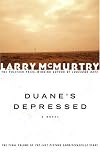
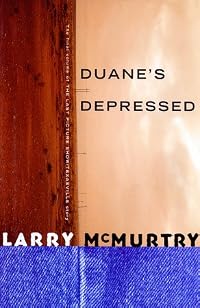
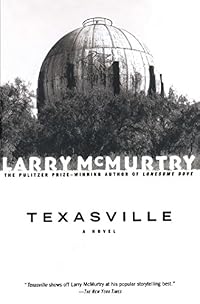
A comedy on a man's belated mid-life crisis at the age of 62. It strikes Texas oil tycoon Duane Moore and not even his wife of 40 years can figure out what caused it. That task is left to a pretty psychiatrist. By the author of The Last Picture Show.Tags
Recommendations
















Member Reviews
I was surprised by how much I loved this book, and I loved it a lot. It is the third in what turned out to be a 5-part series by McMurtry following the lives of the residents of Thalia, Texas, whom we first see in the wonderful, and famous, novel, The Last Picture Show. My perspective on Last Picture Show has changed, now, having read three books of the series. It has dawned on me recently that one of the important aspects of Last Picture Show is the characters' dawning realization, as they prepare to begin their adult lives, of the pervasive part that discontent is going to play in those lives.
The second book in the series, Texasville, shows Duane Moore, one of the main characters of the first book, struggling to reconcile his relative show more success as an oilman with his confusion about his wife's, and his own, restlessness amid the claustrophobia of small-town Texas life. Texasville, is funny and knowing, but the restlessness manifests itself in frequent bickering, which is difficult for me to get past sometimes (I hate bickering in real life and in books/films/TV shows). Still an enjoyable book, but not a comfortable one.
Duane's Depressed, on the other hand, is a different deal, entirely. Yes, the book is about depression, as a 62-year-old Duane Moore suddenly decides to stop riding in pickup trucks and begin walking everywhere he goes. This is considered the height of looniness in his part of Texas. And soon Duane is living in his cabin rather than in his big house, full of a squalling family of kids and grandkids, much to the understandable consternation of his wife, Karla. There's not much plot to this book, or at least to the first half of it, but the beauty of the writing, for me, is transcendent. It is a book about a man looking back at his life and feeling disappointment at what he sees, as in this passage:
"The list of things he had never done was far longer than the list of things that might be considered accomplishments. All that he had done in the way of building things had merely slipped away, into the great stream of human effort, gone as silently as the sand below him slid into the flowing water. What had happened to his life? Why in 62 years, had he made so little of it? He was not educated, he had not traveled, he knew nothing of the great cities of the world, he could speak no language except a crude English; he had never visited a great museum, or seen a great picture or heard a great symphony orchestra, or read a great book. He was ignorant, except at the most general level, of the works of great men and women who had made something in their time as living beings. Duane felt both a need to hurry and a sense of the hopelessness of hurry. How could he now, a sixty-two-year-old man with no education, hope to encompass more than a tiny fraction of what he had missed by casual misapplication through decades of wasted time."
There is nothing out of the ordinary about Duane's predicament, certainly. But, to me, sometimes I feel like the greatest of all art is that which is able to clearly and gracefully turn a fresh, knowing and tender spotlight onto the commonplace. It is impressive enough that McMurtry makes of Duane Moore in this book an sympathetic character rather than a man simply awash in self-absorption and self-pity.
At any rate, I found Duane's Depressed to be a fine, moving read, more than a little because throughout the work runs a current of hope and of a love of life. It helps to have read the first two books in the series, but I think this book could also stand on its own quite well. show less
The second book in the series, Texasville, shows Duane Moore, one of the main characters of the first book, struggling to reconcile his relative show more success as an oilman with his confusion about his wife's, and his own, restlessness amid the claustrophobia of small-town Texas life. Texasville, is funny and knowing, but the restlessness manifests itself in frequent bickering, which is difficult for me to get past sometimes (I hate bickering in real life and in books/films/TV shows). Still an enjoyable book, but not a comfortable one.
Duane's Depressed, on the other hand, is a different deal, entirely. Yes, the book is about depression, as a 62-year-old Duane Moore suddenly decides to stop riding in pickup trucks and begin walking everywhere he goes. This is considered the height of looniness in his part of Texas. And soon Duane is living in his cabin rather than in his big house, full of a squalling family of kids and grandkids, much to the understandable consternation of his wife, Karla. There's not much plot to this book, or at least to the first half of it, but the beauty of the writing, for me, is transcendent. It is a book about a man looking back at his life and feeling disappointment at what he sees, as in this passage:
"The list of things he had never done was far longer than the list of things that might be considered accomplishments. All that he had done in the way of building things had merely slipped away, into the great stream of human effort, gone as silently as the sand below him slid into the flowing water. What had happened to his life? Why in 62 years, had he made so little of it? He was not educated, he had not traveled, he knew nothing of the great cities of the world, he could speak no language except a crude English; he had never visited a great museum, or seen a great picture or heard a great symphony orchestra, or read a great book. He was ignorant, except at the most general level, of the works of great men and women who had made something in their time as living beings. Duane felt both a need to hurry and a sense of the hopelessness of hurry. How could he now, a sixty-two-year-old man with no education, hope to encompass more than a tiny fraction of what he had missed by casual misapplication through decades of wasted time."
There is nothing out of the ordinary about Duane's predicament, certainly. But, to me, sometimes I feel like the greatest of all art is that which is able to clearly and gracefully turn a fresh, knowing and tender spotlight onto the commonplace. It is impressive enough that McMurtry makes of Duane Moore in this book an sympathetic character rather than a man simply awash in self-absorption and self-pity.
At any rate, I found Duane's Depressed to be a fine, moving read, more than a little because throughout the work runs a current of hope and of a love of life. It helps to have read the first two books in the series, but I think this book could also stand on its own quite well. show less
Okay, so first, Larry's McMurtry's Thalia trilogy (now actually four books) isn't something I would recommend universally. On the whole, I can see men relating to and enjoying these books more than women (there are always exceptions, of course). Second, I lived in Wichita Falls for a few years and so am pretty well acquainted with the regional setting and its culture. Most people who read these books won't share that intimate context. For me, having vivid images in my head of the relatively tiny area that Duane Moore navigates within greatly enhances the reading experience. The town of Thalia is based on McMurtry's hometown of Archer City, a tiny crossroads southwest of Wichita Falls that I often rode my bike to. While McMurtry renames show more Archer City in his books, he leaves all surrounding place, street, and landmark names intact. So, each mention of a name triggers my own memories of that place.
This book finds Duane somewhat lost in his own life and in desperate need of changes. While he does manage to make those changes, he's not able to do so without encountering resistance to them on several fronts, including family, friends, coworkers...basically a large portion of the town's populace. The story follows his attempts to meet and ward off these challenges to his new lifestyle, while at the same time struggling to understand the root cause of his feelings of distress and alienation.
Definitely more introspective than Texasville, this volume focuses almost solely on Duane, leaving his family members and coworkers behind to play minor characters. Since they were all so well established in the previous book, McMurtry is able to drop them in and out of Duane's life as needed, and provided the reader has read Texasville, there is no confusion as to who these characters are and why they are acting the way they are.
I really enjoyed the book, as I did the others in the series, and will be visiting the library this weekend to pick up the fourth book, When the Light Goes. show less
This book finds Duane somewhat lost in his own life and in desperate need of changes. While he does manage to make those changes, he's not able to do so without encountering resistance to them on several fronts, including family, friends, coworkers...basically a large portion of the town's populace. The story follows his attempts to meet and ward off these challenges to his new lifestyle, while at the same time struggling to understand the root cause of his feelings of distress and alienation.
Definitely more introspective than Texasville, this volume focuses almost solely on Duane, leaving his family members and coworkers behind to play minor characters. Since they were all so well established in the previous book, McMurtry is able to drop them in and out of Duane's life as needed, and provided the reader has read Texasville, there is no confusion as to who these characters are and why they are acting the way they are.
I really enjoyed the book, as I did the others in the series, and will be visiting the library this weekend to pick up the fourth book, When the Light Goes. show less
It snuck up on me but I ended up loving this book. Very nice meditation on growing old and accepting loss.
A strangely wonderful book. McMurtry has a wide skill set. I love almost all of the stuff he has written. I'd have given this a perfect score, but I have problems with the use of certain language. It was slow starting for me, but once I got going, I read quickly.
Of the five Thalia novels, this is one of the best. McMurtry writes with a kind of detachment wherein the poignance can blindside you. I loved this book.
3.5 ***
This is the third book in the series of novels that explore the lives of the residents of Thalia Texas. Duane Moore is 62 and a successful oilman, married, with 4 children and 9 grandchildren. One day he parks his pick-up truck and starts walking, becoming the subject of town gossip and speculation, and completely baffling his wife, Karla. Duane’s “mid-life crisis” and search for a meaningful life forms the central plot of this work.
This is the third book in the series of novels that explore the lives of the residents of Thalia Texas. Duane Moore is 62 and a successful oilman, married, with 4 children and 9 grandchildren. One day he parks his pick-up truck and starts walking, becoming the subject of town gossip and speculation, and completely baffling his wife, Karla. Duane’s “mid-life crisis” and search for a meaningful life forms the central plot of this work.
This is one of my favorite books. Duane's journey represents an inner journey with which most people can relate.
Members
- Recently Added By
Lists

Favourite Books
1,817 works; 316 members
Author Information

97+ Works 43,123 Members
Larry McMurtry, winner of the Pulitzer Prize for Fiction, among other awards, is the author of twenty-four novels, two collections of essays, two memoirs, more than thirty screenplays, & an anthology of modern Western fiction. He lives in Archer City, Texas. (Publisher Provided) Novelist Larry McMurtry was born June 3, 1936 in Wichita Falls, show more Texas. He received a B.A. from North Texas State University in 1958, an M.A. from Rice University in 1960, and attended Stanford University. He married Josephine Ballard in 1959, divorced in 1966, and had one son, folksinger James McMurtry. Until the age of 22, McMurtry worked on his father's cattle ranch. When he was 25, he published his first novel, "Horseman, Pass By" (1961), which was turned into the Academy Award-winning movie Hud in 1962. "The Last Picture Show" (1966) was made into a screenplay with Peter Bogdanovich, and the 1971 movie was nominated for eight Oscars, including one for best screenplay adaptation. "Terms of Endearment" (1975) received little attention until the movie version won five Oscars, including Best Picture, in 1983. McMurtry's novel "Lonesome Dove" (1985) won the Pulitzer Prize in 1986 and the Spur Award and was followed by two popular TV miniseries. The other titles in the Lonesome Dove Series are "Streets of Laredo" (1993), "Dead Man's Walk" (1995), and "Comanche Moon" (1997). The other books in his Last Picture Show Trilogy are "Texasville" (1987) and "Duane's Depressed" (1999). McMurtry suffered a heart attack in 1991 and had quadruple-bypass surgery. Following that, he suffered from severe depression and it was during this time he wrote "Streets of Laredo," a dark sequel to "Lonesome Dove." His companion Diana Ossana, helping to pull him out of his depression, collaborated with him on "Pretty Boy Floyd" (1994) and "Zeke and Ned" (1997). He co-won the Best Screenplay Golden Globe and the Academy Award for Best Adapted Screenplay for Brokeback Mountain in 2006. He made The New York Times Best Seller List with his title's Custer and The Last Kind Words Saloon. McMurtry is considered one of the country's leading antiquarian book dealers. (Bowker Author Biography) show less
Awards and Honors
Awards
Distinctions
Series

Common Knowledge
- Original publication date
- 1999
- People/Characters
- Duane Moore; Karla Moore; Honor Carmichael
- Important places
- Texas, USA
- Dedication
- For Karen Kennedy
- First words
- Two years into his sixties, Duane Moore -- a man who had driven pickups for as long as he had been licensed to drive -- parked his pickup in his own carport one day and began to walk wherever he went.
- Last words
- (Click to show. Warning: May contain spoilers.)At the Wichita Falls airport he chained his bicycle to a sapling in the parking lot, and, the very next afternoon, he was able to look down on many, many white boats, all of them floating on the Mediterranean Sea.
Classifications
Statistics
- Members
- 699
- Popularity
- 40,547
- Reviews
- 10
- Rating
- (3.73)
- Languages
- English, French
- Media
- Paper, Audiobook, Ebook
- ISBNs
- 20
- ASINs
- 8