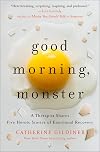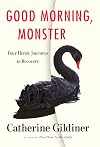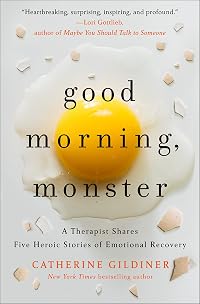
Good Morning, Monster: A Therapist Shares Five Heroic Stories of Emotional Recovery
by Catherine Gildiner
On This Page
Description
"Catherine Gildiner is nothing short of masterful--as both a therapist and writer. In these pages, she has gorgeously captured both the privilege of being given access to the inner chambers of people's lives, and the meaning that comes from watching them grow into the selves they were meant to be." --Lori Gottlieb, New York Times bestselling author of Maybe You Should Talk to Someone In this fascinating narrative, therapist Catherine Gildiner's presents five of what she calls her most heroic show more and memorable patients. Among them: a successful, first generation Chinese immigrant musician suffering sexual dysfunction; a young woman whose father abandoned her at age nine with her younger siblings in an isolated cottage in the depth of winter; and a glamorous workaholic whose narcissistic, negligent mother greeted her each morning of her childhood with "Good morning, Monster." Each patient presents a mystery, one that will only be unpacked over years. They seek Gildiner's help to overcome an immediate challenge in their lives, but discover that the source of their suffering has been long buried. As in such recent classics as The Glass Castle and Educated, each patient embodies self-reflection, stoicism, perseverance, and forgiveness as they work unflinchingly to face the truth. Gildiner's account of her journeys with them is moving, insightful, and sometimes very funny. Good Morning Monster offers an almost novelistic, behind-the-scenes look into the therapist's office, illustrating how the process can heal even the most unimaginable wounds. show lessTags
Recommendations
















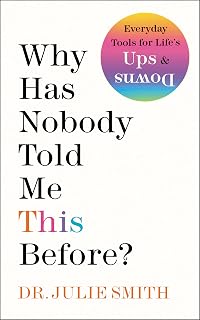






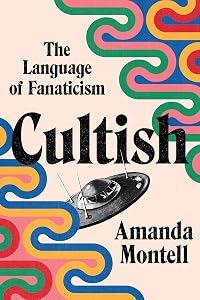




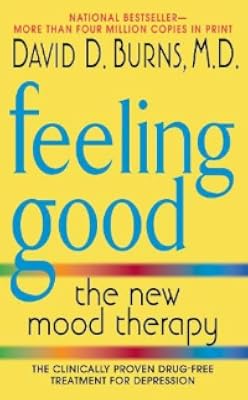





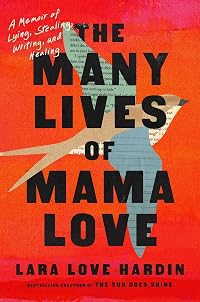





Member Reviews
An interesting book that sheds the light on what the most damaged of us can do to those they are supposed to protect and love.
These are five horrible stories. I've lived long enough to understand that everyone that gets on this ride of life generally experiences some of the shit laid out in this book, though, thankfully, to a much lesser degree. I have personally dealt with caregivers and siblings and their personalities warped by alcoholism, drugs, sexual addiction, and psychopathy. I've experienced violence, mental abuse, and abandonment.
And, thankfully, I've also had the help of a good therapist along the way. So, for someone to be able to take on these people in all their broken tragedy and lead them through all the horrible things show more in their lives, staring at it wide-eyed and unblinkingly, and mapping a path out of that hell?
Yeah, that's powerful. So are these stories.
Interestingly, the one thing I found a touch off-putting was Gildiner's narrative voice, but I think she had to write in a more dispassionate, emotionally removed tone than I'm used to.
Regardless, this is an important insight into the unseen burdens we all carry around with us. When you encounter that person and casually label them an "asshole" (as, I shamefully admit, I do far too often), it's good to remember that most of these patients were likely considered assholes by those around them due strictly to their survival behaviours.
If, for nothing else, this book helps you see others in a different light, it's worth the read. show less
These are five horrible stories. I've lived long enough to understand that everyone that gets on this ride of life generally experiences some of the shit laid out in this book, though, thankfully, to a much lesser degree. I have personally dealt with caregivers and siblings and their personalities warped by alcoholism, drugs, sexual addiction, and psychopathy. I've experienced violence, mental abuse, and abandonment.
And, thankfully, I've also had the help of a good therapist along the way. So, for someone to be able to take on these people in all their broken tragedy and lead them through all the horrible things show more in their lives, staring at it wide-eyed and unblinkingly, and mapping a path out of that hell?
Yeah, that's powerful. So are these stories.
Interestingly, the one thing I found a touch off-putting was Gildiner's narrative voice, but I think she had to write in a more dispassionate, emotionally removed tone than I'm used to.
Regardless, this is an important insight into the unseen burdens we all carry around with us. When you encounter that person and casually label them an "asshole" (as, I shamefully admit, I do far too often), it's good to remember that most of these patients were likely considered assholes by those around them due strictly to their survival behaviours.
If, for nothing else, this book helps you see others in a different light, it's worth the read. show less
An exceptional clear-eyed report on the psychoanalytic process from a skilled and compassionate doctor drawing from a lifetime of work. In her epilogue Gildiner owns up to choosing patients for whom the process worked and was miraculously transformative (to the extent once can refer changes wrought through years of hard work as "miraculous.") The cases she has chosen are to my mind truly miraculous. All five are quite different in terms of the ways in which the psychological damage manifested, but all are very much the same in that they started with mothers largely absent (whether through death, physical abandonment, or emotional abandonment) and fathers cruel or weak or hapless. This is a QAnon dream come true -- child abuse is show more everywhere, and no one seems to protect the children.
The approach that Dr. Gildiner takes is strict Freudian, which feels quaint at this point since we understand the biology of mental illness so much better 100 years later. Gildiner though makes a solid case for a Freudian approach in at least some cases. Clearly, like cancer or heart disease or many other diseases mental illness usually had both biological and behavioral/environmental causes, and if we just address the biology, we are not treating the whole patient. Gildiner's approach, while it does not account for biology, is intellectual, compassionate, and creative, and provides a path for her patients to do the hard work and reap the benefits of getting better. In these five lives treatment was utterly metamorphic. There are happy(ish) endings to all these stories, and Gildiner is right when she calls these people heroes. show less
The approach that Dr. Gildiner takes is strict Freudian, which feels quaint at this point since we understand the biology of mental illness so much better 100 years later. Gildiner though makes a solid case for a Freudian approach in at least some cases. Clearly, like cancer or heart disease or many other diseases mental illness usually had both biological and behavioral/environmental causes, and if we just address the biology, we are not treating the whole patient. Gildiner's approach, while it does not account for biology, is intellectual, compassionate, and creative, and provides a path for her patients to do the hard work and reap the benefits of getting better. In these five lives treatment was utterly metamorphic. There are happy(ish) endings to all these stories, and Gildiner is right when she calls these people heroes. show less
I love non-fiction - give me a great memoir or some juicy true crime and I'm a happy woman. I've read some great non-fiction this year and Good Morning, Monster is among the best.
Catherine Gildiner is a therapist who shares "five heroic stories of emotional recovery." There's Laura, a young woman who was abandoned at age nine with two younger siblings in an isolated cottage in the winter; Danny, an indigenous Cree man unable to grieve the loss of his wife and daughter; Peter, a successful but lonely musician suffering sexual dysfunction; Alana, a certified genius whose psychopathic father's abuse resulted in a severe personality disorder; and Madeline, a glamorous workaholic whose mother greeted her each morning of her childhood with show more "Good morning, Monster." Each of these blurbs just scratches the surface of the patients' remarkable stories - the level of trauma each one endured and survived is almost unimaginable.
Beyond the patients' journeys, you also follow Dr. Gildiner's path as a new therapist who has to learn as she goes. When she says psychology is like a mystery novel, it's clearly true - not only is she trying to help her patients find clues as to why they are the way they are, she must also dig for answers on her end, consulting other experts to find the most effective therapy for each person (in a pre-Internet age!). It's a riveting look at how a doctor works with her patients and what role psychology and therapy can play in changing people's lives.
If you loved Maybe You Should Talk to Someone by Lori Gottlieb (I did!) or if you want to read truly amazing stories about the perseverance and resilience of people who've endured tragic things, pick up Good Morning, Monster. Be warned - it's not easy to read but I couldn't put it down. There were times this book broke my heart but it left me feeling nothing but hope.
Thank you to NetGalley, St. Martin's Press & the author for an advanced copy to review. show less
Catherine Gildiner is a therapist who shares "five heroic stories of emotional recovery." There's Laura, a young woman who was abandoned at age nine with two younger siblings in an isolated cottage in the winter; Danny, an indigenous Cree man unable to grieve the loss of his wife and daughter; Peter, a successful but lonely musician suffering sexual dysfunction; Alana, a certified genius whose psychopathic father's abuse resulted in a severe personality disorder; and Madeline, a glamorous workaholic whose mother greeted her each morning of her childhood with show more "Good morning, Monster." Each of these blurbs just scratches the surface of the patients' remarkable stories - the level of trauma each one endured and survived is almost unimaginable.
Beyond the patients' journeys, you also follow Dr. Gildiner's path as a new therapist who has to learn as she goes. When she says psychology is like a mystery novel, it's clearly true - not only is she trying to help her patients find clues as to why they are the way they are, she must also dig for answers on her end, consulting other experts to find the most effective therapy for each person (in a pre-Internet age!). It's a riveting look at how a doctor works with her patients and what role psychology and therapy can play in changing people's lives.
If you loved Maybe You Should Talk to Someone by Lori Gottlieb (I did!) or if you want to read truly amazing stories about the perseverance and resilience of people who've endured tragic things, pick up Good Morning, Monster. Be warned - it's not easy to read but I couldn't put it down. There were times this book broke my heart but it left me feeling nothing but hope.
Thank you to NetGalley, St. Martin's Press & the author for an advanced copy to review. show less
I'm just going to come out and say it: I'm not buying what Catherine Gildiner is selling. In this book, the author congratulates herself over and over as she shares exaggerations of her 5 most memorable psychotherapy cases, showing how each individual is a hero in their own right.
Despite being published in 2020, this book is incredibly outdated on multiple levels but what stood out most to me was her fetishization of a Native American man, whom she told was sexually assaulted because he was handsome. Or maybe it was that another patient had dated a transgender individual because they were seeking a mother AND father figure and could find them both in that one person. Or maybe it was using an abusive father's name to make a cute pun, show more which was so absolutely distasteful. show less
Despite being published in 2020, this book is incredibly outdated on multiple levels but what stood out most to me was her fetishization of a Native American man, whom she told was sexually assaulted because he was handsome. Or maybe it was that another patient had dated a transgender individual because they were seeking a mother AND father figure and could find them both in that one person. Or maybe it was using an abusive father's name to make a cute pun, show more which was so absolutely distasteful. show less
Catherine Gildiner worked as a clinical psychologist for some three decades, and in this book she recounts five of her particularly "heroic" patients. The book is divided into five parts, one for each patient, and Gildiner recounts the often several years she spent with each of her patients.
The stories recounted in this book were really impactful, but it's worth noting that they are not easy to get through. Gildiner's training was in Freudian psychology, and her patients' backgrounds are full of child abuse/neglect, sexual abuse, and combinations thereof. (In this, it's a very different book than Maybe You Should Talk to Someone.) I definitely think that this book is worth reading, but it'd probably be best to know about this going in.
The stories recounted in this book were really impactful, but it's worth noting that they are not easy to get through. Gildiner's training was in Freudian psychology, and her patients' backgrounds are full of child abuse/neglect, sexual abuse, and combinations thereof. (In this, it's a very different book than Maybe You Should Talk to Someone.) I definitely think that this book is worth reading, but it'd probably be best to know about this going in.
Dr. Catherine Gildiner is a retired clinical psychologist who, in her book, "Good Morning Monster," recounts the harrowing stories of Laura, Peter, Danny, Alana, and Madeline (their identities are disguised to protect their privacy), all of whom have a history of physical and/or emotional abuse. Gildiner draws upon her long career treating patients who lack the necessary coping skills to live joyous, productive, and fulfilling lives. Despite having been humiliated, neglected, and rejected as youngsters, these individuals eventually learn to acknowledge and deal with their insecurity, fear, rage, and anxiety.
Laura Wilkes and her two siblings were abandoned by their ne'er-do-well father when they were very young. Before their father left, show more their mother died under mysterious circumstances. Instead of reporting the situation to the authorities, Laura shoplifted groceries and clothing for her younger sister and brother, and pretended that everything was normal at home. Now Laura is twenty-six, and she is distressed because her lying and cheating boyfriend gave her an STD and, in addition, her boss is a slacker who expects her to put in extra hours to complete her tasks and his. Why does Laura allow these self-serving men to exploit her?
Gildiner recounts the fascinating cases of people who do not realize that their dysfunctional childhoods deprived them of the solid foundation they needed in order feel cherished and safe. This heartbreaking book is not for the faint-of-heart. It is distressing to read that when Peter was a little boy, his single mother locked him in the attic while she ran her restaurant; that Danny, whose wife and child were killed in a tragic accident, is unable express his feelings of grief and loss; that Alana's sadistic and predatory father began assaulting her when she was four; and that Madeline's mom was a cruel narcissist who belittled her daughter and was unable to offer her even a modicum of love and kindness. Gildiner takes a long and painful journey with these courageous men and women. With her help, they reexamine their faulty assumptions; establish boundaries to prevent toxic relatives, colleagues, and friends from taking advantage of them; and ultimately acquire a sense of self-worth. "Good Morning Monster" is an intriguing and engrossing work of non-fiction about a dedicated therapist and five patients who, because their parents failed to nurture and protect them, developed a distorted view of their place in the world. show less
Laura Wilkes and her two siblings were abandoned by their ne'er-do-well father when they were very young. Before their father left, show more their mother died under mysterious circumstances. Instead of reporting the situation to the authorities, Laura shoplifted groceries and clothing for her younger sister and brother, and pretended that everything was normal at home. Now Laura is twenty-six, and she is distressed because her lying and cheating boyfriend gave her an STD and, in addition, her boss is a slacker who expects her to put in extra hours to complete her tasks and his. Why does Laura allow these self-serving men to exploit her?
Gildiner recounts the fascinating cases of people who do not realize that their dysfunctional childhoods deprived them of the solid foundation they needed in order feel cherished and safe. This heartbreaking book is not for the faint-of-heart. It is distressing to read that when Peter was a little boy, his single mother locked him in the attic while she ran her restaurant; that Danny, whose wife and child were killed in a tragic accident, is unable express his feelings of grief and loss; that Alana's sadistic and predatory father began assaulting her when she was four; and that Madeline's mom was a cruel narcissist who belittled her daughter and was unable to offer her even a modicum of love and kindness. Gildiner takes a long and painful journey with these courageous men and women. With her help, they reexamine their faulty assumptions; establish boundaries to prevent toxic relatives, colleagues, and friends from taking advantage of them; and ultimately acquire a sense of self-worth. "Good Morning Monster" is an intriguing and engrossing work of non-fiction about a dedicated therapist and five patients who, because their parents failed to nurture and protect them, developed a distorted view of their place in the world. show less
his book written by a therapist about 5 of her patients who survived jaw-droppingly horrible childhoods was fascinating. Gildiner illustrates the therapeutic process with skill and honesty about her own failures and struggles in the process. These are some very powerful stories well-told.
Members
- Recently Added By
Lists

Psychology: Abuse, Grief, Self-Help
189 works; 1 member

el
1,139 works; 1 member

Healing resources for women
587 works; 1 member
Author Information

8 Works 1,230 Members
Catherine McClure Gildiner was born in Niagara Falls, New York & grew up in the small border town of Lewiston, New York, the setting for her novel "Too Close to the Falls." She has both a B.A. & an M.A. in English literature & an M.A. & a Ph.D. in psychology. She lives in downtown Toronto with her husband & three sons. (Bowker Author Biography)
Classifications
- Genres
- Nonfiction, General Nonfiction, Biography & Memoir
- DDC/MDS
- 616.89 — Applied science & technology Medicine & health Diseases, Allergies, Skin Conditions Nervous Disorders: Autism, Anorexia, OCD Mental disorders: bi-polar/schizophrenia
- LCC
- RC465 .G55 — Medicine Internal medicine Internal medicine Neurosciences. Biological psychiatry. Neuropsychiatry Psychiatry
- BISAC
Statistics
- Members
- 336
- Popularity
- 94,171
- Reviews
- 17
- Rating
- (4.33)
- Languages
- English, Polish
- Media
- Paper, Audiobook, Ebook
- ISBNs
- 9
- ASINs
- 3