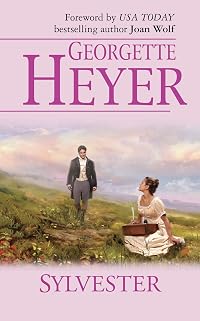
Sylvester
by Georgette Heyer
On This Page
Description
"Reading Georgette Heyer is the next best thing to reading Jane Austen."—Publishers WeeklyRank, wealth, and elegance are no match for a young lady who writes novels...
Sylvester, Duke of Salford, has exacting requirements for a bride. Then he meets Phoebe Marlow, a young lady with literary aspirations, and suddenly life becomes very complicated. She meets none of his criteria, and even worse, she has written a novel that is sweeping through the ton and causing all kinds of gossip... and show more he's the main character!
What Readers Say:
"A truly brilliant Heyer with an adorable and very real heroine and a hero who is very human!"
"One of Heyer's most unsung achievements, a classic Pride and Prejudice story. Hilarity and adventure throughout."
"The hero may be my all-time favorite. He is so drily funny it takes your breath away. What a wonderful love story."
"Hilariously funny, romantic, even touching in a subtle way."
Georgette Heyer wrote over fifty novels, including Regency romances, mysteries, and historical fiction. She was known as the Queen of Regency romance, and was legendary for her research, historical accuracy, and her extraordinary plots and characterizations.
. show less
Tags
Recommendations










Member Reviews
Very, very entertaining in a very Heyer-ish way, and I kept listening to the audiobook at every available opportunity, even if I only had ten minutes.
Sylvester, the Duke of Salford (to his mother’s private dismay) is approaching finding a wife like buying a horse; his godmother recommends he consider her granddaughter, Phoebe. But Phoebe, who met Sylvester briefly during the Season, gave his appearance to the wicked uncle in her soon-to-be-published novel and is horrified at the prospect of a proposal.
”It was shockingly slippery this morning, and you will have enough to do in holding those greys of yours without having that added to it! I could not reconcile it with my conscience to let you set forth in such show more circumstances!”
“Never,” declared Sylvester, much moved, “did I think to hear you express so much solicitude on my behalf, ma’am!”
“Well, I can’t but see what a fix we should be in if anything should happen to you,” she replied candidly.
The appreciative gleam in his eyes acknowledged a hit, but he said gravely: “The charm of your society, my Sparrow, lies in not knowing what you will say next – though one rapidly learns to expect the worst!” show less
Sylvester, the Duke of Salford (to his mother’s private dismay) is approaching finding a wife like buying a horse; his godmother recommends he consider her granddaughter, Phoebe. But Phoebe, who met Sylvester briefly during the Season, gave his appearance to the wicked uncle in her soon-to-be-published novel and is horrified at the prospect of a proposal.
”It was shockingly slippery this morning, and you will have enough to do in holding those greys of yours without having that added to it! I could not reconcile it with my conscience to let you set forth in such show more circumstances!”
“Never,” declared Sylvester, much moved, “did I think to hear you express so much solicitude on my behalf, ma’am!”
“Well, I can’t but see what a fix we should be in if anything should happen to you,” she replied candidly.
The appreciative gleam in his eyes acknowledged a hit, but he said gravely: “The charm of your society, my Sparrow, lies in not knowing what you will say next – though one rapidly learns to expect the worst!” show less
So far I've been a lukewarm reader of Georgette Heyer, but this was probably one of the more enjoyable ones I've picked up. Sylvester is a Duke who is determined to finally get married. He is the guardian of his nephew, and this and other reasons convince him that it is time to select a suitable wife. His godmother and mother have picked out a girl for him. Phoebe Marlow. He reluctantly agrees to see her but is not impressed. Neither is she. She runs away from home to avoid a marriage proposal that he had decided never to make! Naturally, snow halts her on her runaway journey, and Sylvester meets up with her on the road to London. These unorthodox circumstances allow Phoebe to speak her mind with more freeness, and she and Sylvester show more find themselves clashing. And then sharing a sense of humor. From then on it might be typical romantic comedy stuff, but there's another complication: Phoebe is a budding authoress who has just published her first book, and who was her model for a villain? None other than Sylvester! So thinly disguised that anyone could recognize him. Sylvester's pride and Phoebe's mortification set the town talking. show less
Deciding that the time has come to be married, Sylvester, Duke of Salford, arbitrarily decides to wed Phoebe Marlow, sight unseen. But when the headstrong Phoebe rejects him out of hand, Sylvester is determined to make her sorry. Things get even more complicated when Sylvester discovers that Phoebe has written a novel featuring himself as the main villain.
The two protagonists of Sylvester have separate concerns throughout most of the novel: Sylvester is determined to make Phoebe regret her decision, while Phoebe is obsessed with preventing Sylvester from finding out that she's written a Gothic novel about him. In theory, these two plot threads should intertwine and influence one another; in effect, they never come in contact. The first show more half of the novel deals with Sylvester's romance-novel-style "revenge;" that plot is almost entirely dropped in the second half of the novel in favor of the abrupt complications of Phoebe's novel. Sylvester feels like two separate stories spliced inexpertly together.
The worst of it is that the first half of Sylvester is good. Admittedly, Sylvester's flaws and inevitable character growth is handled with sledgehammer subtlety, but Phoebe herself -- a girl who knows her way around a stable but shrinks into a stuttering terror around her intimidating stepmother -- is quite good. In theory. But as the novel proceeds, it soon becomes apparent that while our heroine is ostensibly horse-mad and unconventional, mostly people are just going to talk about her horses and unconventionality. She never really demonstrates the alleged unconventionality, and her novelistic ambitions seem tacked-on. Thus, all the interest generated by the premise slowly peters out as characters do inconsistent things for the sake of furthering and complicating the plot. show less
The two protagonists of Sylvester have separate concerns throughout most of the novel: Sylvester is determined to make Phoebe regret her decision, while Phoebe is obsessed with preventing Sylvester from finding out that she's written a Gothic novel about him. In theory, these two plot threads should intertwine and influence one another; in effect, they never come in contact. The first show more half of the novel deals with Sylvester's romance-novel-style "revenge;" that plot is almost entirely dropped in the second half of the novel in favor of the abrupt complications of Phoebe's novel. Sylvester feels like two separate stories spliced inexpertly together.
The worst of it is that the first half of Sylvester is good. Admittedly, Sylvester's flaws and inevitable character growth is handled with sledgehammer subtlety, but Phoebe herself -- a girl who knows her way around a stable but shrinks into a stuttering terror around her intimidating stepmother -- is quite good. In theory. But as the novel proceeds, it soon becomes apparent that while our heroine is ostensibly horse-mad and unconventional, mostly people are just going to talk about her horses and unconventionality. She never really demonstrates the alleged unconventionality, and her novelistic ambitions seem tacked-on. Thus, all the interest generated by the premise slowly peters out as characters do inconsistent things for the sake of furthering and complicating the plot. show less
Things are busy at the moment and I don’t have much brain space to spare, so I turned gratefully to the next novel on my Georgette Heyer pile. This was Sylvester, which several people have picked out as one of their favourites. And it’s no wonder: it’s vintage Heyer, the literary equivalent of crumpets by a roaring fire on a winter’s night. From the moment our arrogant but misunderstood hero meets our stubborn, bookish heroine, there’s no doubt what’s going to happen, but that’s not the point. As they lock horns over the course of a book stuffed with warmth, wit and adventure, the question isn’t ‘what?’ but ‘how on earth?’. In my current state, it was exactly what I needed and I might even go so far as to name show more this my favourite Heyer after the nonpareil These Old Shades...
For the full review, please see my blog:
https://theidlewoman.net/2017/10/19/sylvester-georgette-heyer/ show less
For the full review, please see my blog:
https://theidlewoman.net/2017/10/19/sylvester-georgette-heyer/ show less
Many romance novelists, even the best ones, have the same characters hopping from one of their novel to another. Those characters change names and addresses, sometimes even centuries, but they remain basically the same people: he – an alpha male; she – a plucky, no-nonsense damsel. Not Heyer! Each time I read another of her novels, I’m surprised at how different her protagonists are in every story she told.
Sylvester is an arrogant duke, full of his own consequence. He is invariably courteous to anyone below him on the social ladder; not because he likes and respect his fellow humans, oh no, but because to be anything but courteous would diminish his Consequence. Used to people fawning over him, he can’t imagine any other show more possibility.
Phoebe is a country miss, intimidated all her life by a stringent, autocratic stepmother. Phoebe hates arrogance in all its varieties. To escape her joyless existence, she has written a satirical novel, which is on the brink of being published. And after having met Sylvester once at a ball and being subjected to his icy courtesy, she cast him as a villain in her novel.
Now, he arrives at her father’s estate to look her over as a possible candidate, among five others, for becoming his wife. Terrified that he might select her after all, Phoebe runs away from home, to her grandmother in London.
What follows is a comedy of manners. Two strong wills collide. Sparks fly. The plot twists in all directions but the right one. Laughter flits and wriggles, especially after the novel is published, and the proud duke finds himself an object of gleeful snickers of recognition.
Eventually, of course, after many a misadventure, the hero and the heroine end up in each other’s arms, but while they groped their way to the happy ending, the reader enjoyed every page.
The author’s wicked sense of humor leads into some situations so absurd, I could die of mirth. One such a circus-worthy scene occurs, while Phoebe and Sylvester are trapped in a tiny inn, with all the roads blocked by impassable snow. Nobody in that obscure village had ever seen a duke before, which results in a jolly disclosure by an inn’s serving wench:
Could anything pump up the duke’s Consequence better, you tell me? In such a delicious accent too. show less
Sylvester is an arrogant duke, full of his own consequence. He is invariably courteous to anyone below him on the social ladder; not because he likes and respect his fellow humans, oh no, but because to be anything but courteous would diminish his Consequence. Used to people fawning over him, he can’t imagine any other show more possibility.
Phoebe is a country miss, intimidated all her life by a stringent, autocratic stepmother. Phoebe hates arrogance in all its varieties. To escape her joyless existence, she has written a satirical novel, which is on the brink of being published. And after having met Sylvester once at a ball and being subjected to his icy courtesy, she cast him as a villain in her novel.
Now, he arrives at her father’s estate to look her over as a possible candidate, among five others, for becoming his wife. Terrified that he might select her after all, Phoebe runs away from home, to her grandmother in London.
What follows is a comedy of manners. Two strong wills collide. Sparks fly. The plot twists in all directions but the right one. Laughter flits and wriggles, especially after the novel is published, and the proud duke finds himself an object of gleeful snickers of recognition.
Eventually, of course, after many a misadventure, the hero and the heroine end up in each other’s arms, but while they groped their way to the happy ending, the reader enjoyed every page.
The author’s wicked sense of humor leads into some situations so absurd, I could die of mirth. One such a circus-worthy scene occurs, while Phoebe and Sylvester are trapped in a tiny inn, with all the roads blocked by impassable snow. Nobody in that obscure village had ever seen a duke before, which results in a jolly disclosure by an inn’s serving wench:
She nodded, her eyes sparkling with joyful anticipation. “Happen we’ll have ’em all up to the tap today, wishful for to see you with their own eyes!” she told Sylvester. “Why, there’s been nothing like it, not since we had the girl with two heads putting up here! Her dad was taking of her to London, being wishful to put her into a big fair they do be having there. We had half Hungerford here, as well as Kintbury, and not a drop of liquor left in the house by ten o’clock.”
The fascinated horror with which Sylvester listened to these artless confidences had long since proved to be too much for Phoebe’s gravity. Alice, grinning sympathetically upon her mirth, went off to supervise the transport of Mr. Shap’s pig; and Sylvester demanded, with some asperity, whether his attractions were rated above or below those of a freak.
Could anything pump up the duke’s Consequence better, you tell me? In such a delicious accent too. show less
Sylvester, more formally known as the Duke of Salford, is a duke right down to the beautifully shined toes of his Hessian boots. His manners are impeccable and he is careful to treat his lessers with cool courtesy. For all that, his attitude strikes Phoebe as the very height of arrogance, and she responds to the prospect of marriage to him by running away from home. Part of her consternation has to do with the roman a clef she has written and published anonymously which skewers many members of the aristocracy but none more pointedly than the Dook. Antics, misunderstandings, and shenanigans ensure before the requisite happy ending.
It's hard to say this is one of Heyer's funniest Regency romances because so many of them are delightfully show more humorous, but the characters of Sylvester and Phoebe are well-drawn and there is a stellar supporting cast that adds greatly to the novel's enjoyment. And I would give anything to read Phoebe's tell-all tale! show less
It's hard to say this is one of Heyer's funniest Regency romances because so many of them are delightfully show more humorous, but the characters of Sylvester and Phoebe are well-drawn and there is a stellar supporting cast that adds greatly to the novel's enjoyment. And I would give anything to read Phoebe's tell-all tale! show less
Sylvester is one of those books that teeter on the edge of being guilty pleasures. Heyer is not what I would call high-brow literature or deep philosophy. Instead, she's just plain fun. Novels like this tend to be somewhat predictable, though the way this one was set up allowed for several different endings and it didn't become clear right away what would happen. There are spoilers below, so proceed with caution.
Heyer is often said to be "the next best thing to reading Jane Austen," and while I certainly agree with that, there are some important differences between their work. One in particular struck me in Sylvester; unlike Austen, Heyer explores the inner world of her male characters, analyzing their feelings and motivations. It makes show more sense that this tale would begin with a comprehensive character sketch of Sylvester, as the book is titled with his name.
But our heroine Phoebe Marlow doesn't suffer in characterization either, though I found her a bit contradictory at first. She is a fearless rider and manages her father's stables with authority, but she morphs into a fearful, dull, insipid girl under the stern eye of her stepmother? It didn't quite add up. But as the story progressed, I began to understand her better, and actually found the combination of contradictory traits truer to life than the "sassy lady" or "timid child" stock characters that so often people historical novels. Phoebe can certainly be forthright in a most unladylike way, but that isn't the sum of her. She's a little more complex than that, with real fears and struggles.
I was expecting a scene in which Phoebe finally faces down her stepmother without the crippling fear of her childhood to hamper her, but it didn't happen, alas! And looking back, it probably would have done violence to Phoebe as a believable character to have her suddenly pluck up such courage. It's possible it could happen some years later after Phoebe grows more accustomed to her position and consequence, but Heyer was wise not to insert a scene like that.
The rest of the characters are delightful in their own ways. Ianthe is the very picture of an emptyheaded, self-absorbed beauty, Nugent Fotherby the epitome of a foolish dandy, and Ianthe's son Edmund such a believable, michievous little boy. I enjoyed the understated but quite present rivalry between Keighley and Swales, Sylvester's groom and valet, respectively. Alice from the inn was also quite fun with her rough, outspoken speech. It was a pity she seemed to drop out the story when they arrived in London.
Through Phoebe's scandalously popular novel, written after her first season in London, Heyer pokes a little gentle fun at the literature of the day. Like Austen, Phoebe publishes her novel anonymously, and her sketches of the leading members of the ton are so witty that everyone is simply wild to find out the identity of the authoress. Many of the people Phoebe mimics in her book come off looking foolish, but only one positively wicked. Yes, Sylvester! In Phoebe's book he figures as the diabolical Count Ugolino who wants to murder his nephew, the heir of the estate. It's all the fault of his eyebrows, of course.
As in Friday's Child, the hero and heroine find themselves in need of older and wiser heads to unravel their romantic problems and finally bring them together. In this story it was Sylvester's mother, a most unusually sympathetic and pleasant invalid. I appreciated Elizabeth's clear perception of her son's faults and her ready forgiveness for Phoebe's literary indiscretion. It's refreshing to meet an invalid in a Regency novel who is not a fussing hypochondriac.
Heyer has such a gift for creating characters the reader cares about, and humorous scenes which are made so by every character simply behaving according to his personality. Fotherby's distress over the dog eating the gold tassels off his boots, and the scene that ensues, is hilarious. The dialogue is witty and sprinkled with the slang of the period, the motivations for each character's behavior are realistic, and the story keeps pace. I just love Heyer's wry narrative voice. Near the end, she writes:
He was silent. Well! now she knew how right she had been. He was not in the least in love with her, and very happy she was to know it. All she wanted was a suitable retreat, such as a lumber-room, or a coal-cellar, in which to enjoy her happiness to the full.
It may not be illustrious literature, but Sylvester satisfies the fundamental reason why I read: for the sheer enjoyment of it. I recommend Heyer to anyone else who reads for the same reason; she's just too much fun to keep a secret. show less
Heyer is often said to be "the next best thing to reading Jane Austen," and while I certainly agree with that, there are some important differences between their work. One in particular struck me in Sylvester; unlike Austen, Heyer explores the inner world of her male characters, analyzing their feelings and motivations. It makes show more sense that this tale would begin with a comprehensive character sketch of Sylvester, as the book is titled with his name.
But our heroine Phoebe Marlow doesn't suffer in characterization either, though I found her a bit contradictory at first. She is a fearless rider and manages her father's stables with authority, but she morphs into a fearful, dull, insipid girl under the stern eye of her stepmother? It didn't quite add up. But as the story progressed, I began to understand her better, and actually found the combination of contradictory traits truer to life than the "sassy lady" or "timid child" stock characters that so often people historical novels. Phoebe can certainly be forthright in a most unladylike way, but that isn't the sum of her. She's a little more complex than that, with real fears and struggles.
I was expecting a scene in which Phoebe finally faces down her stepmother without the crippling fear of her childhood to hamper her, but it didn't happen, alas! And looking back, it probably would have done violence to Phoebe as a believable character to have her suddenly pluck up such courage. It's possible it could happen some years later after Phoebe grows more accustomed to her position and consequence, but Heyer was wise not to insert a scene like that.
The rest of the characters are delightful in their own ways. Ianthe is the very picture of an emptyheaded, self-absorbed beauty, Nugent Fotherby the epitome of a foolish dandy, and Ianthe's son Edmund such a believable, michievous little boy. I enjoyed the understated but quite present rivalry between Keighley and Swales, Sylvester's groom and valet, respectively. Alice from the inn was also quite fun with her rough, outspoken speech. It was a pity she seemed to drop out the story when they arrived in London.
Through Phoebe's scandalously popular novel, written after her first season in London, Heyer pokes a little gentle fun at the literature of the day. Like Austen, Phoebe publishes her novel anonymously, and her sketches of the leading members of the ton are so witty that everyone is simply wild to find out the identity of the authoress. Many of the people Phoebe mimics in her book come off looking foolish, but only one positively wicked. Yes, Sylvester! In Phoebe's book he figures as the diabolical Count Ugolino who wants to murder his nephew, the heir of the estate. It's all the fault of his eyebrows, of course.
As in Friday's Child, the hero and heroine find themselves in need of older and wiser heads to unravel their romantic problems and finally bring them together. In this story it was Sylvester's mother, a most unusually sympathetic and pleasant invalid. I appreciated Elizabeth's clear perception of her son's faults and her ready forgiveness for Phoebe's literary indiscretion. It's refreshing to meet an invalid in a Regency novel who is not a fussing hypochondriac.
Heyer has such a gift for creating characters the reader cares about, and humorous scenes which are made so by every character simply behaving according to his personality. Fotherby's distress over the dog eating the gold tassels off his boots, and the scene that ensues, is hilarious. The dialogue is witty and sprinkled with the slang of the period, the motivations for each character's behavior are realistic, and the story keeps pace. I just love Heyer's wry narrative voice. Near the end, she writes:
He was silent. Well! now she knew how right she had been. He was not in the least in love with her, and very happy she was to know it. All she wanted was a suitable retreat, such as a lumber-room, or a coal-cellar, in which to enjoy her happiness to the full.
It may not be illustrious literature, but Sylvester satisfies the fundamental reason why I read: for the sheer enjoyment of it. I recommend Heyer to anyone else who reads for the same reason; she's just too much fun to keep a secret. show less
Members
- Recently Added By
Published Reviews
ThingScore 75
Thanks to the antics of Sir Nugent Fotherby and the histrionics of Lady Ianthe, the flight to France is hands down the most amusing section of the novel. (An adorable dog helps add to the fun.) But Sylvester has several other delights as well: the thoroughly platonic relationship between Phoebe and Tom (watched with slight suspicion by some, even if the mere thought of romance there causes show more both of them to laugh); a series of increasingly ludicrous characters; and one of the richer romances Heyer had written for some time. show less
added by lquilter
Lists

Favorite Georgette Heyer Novels, Ranked
49 works; 29 members

Books I've Read More Than Once
602 works; 49 members

Historical Fiction
889 works; 91 members

Books tagged "feel good"
129 works; 20 members

Fiction Featuring Cranky, Eccentric Old Folks
80 works; 35 members

Books Read in 2016
4,666 works; 199 members

Books Read in 2018
4,360 works; 110 members

Books Read in 2021
5,361 works; 114 members
Favorite Romance Fiction
247 works; 115 members
Author Information

125+ Works 78,308 Members
Georgette Heyer was born on August 16, 1902 at Wimbledon, London. She wrote The Black Moth as a story for her brother Boris. Her father, impressed with his daughter's imagination, suggested that she prepare it to be published, which it was by Constable in 1921. Having scored an instant success with The Black Moth at the age of nineteen under her show more own name, Georgette Heyer, she experimented with a pseudonym, Stella Martin, for her third book, published by Mills & Boon. She continued writing and in 1925 she married Ronald Rougier, a mining engineer. After reasonable but not spectacular sales from her first few books the instant success of These Old Shades in 1926 brought her a solid source of income which was very necessary at the time since the family relied to a large extent on the income from Georgette Heyer's writing. She wrote over fifty books during her lifetime and created the Regency England genre of romance novels. She died on July 4, 1974 at the age of 71. (Bowker Author Biography) show less
Some Editions
Series
Belongs to Publisher Series
rororo (1618)
Work Relationships
Is contained in
Is abridged in
Common Knowledge
- Canonical title*
- El tío Sylvester
- Original title
- Sylvester or the Wicked Uncle
- Original publication date
- 1957
- People/Characters
- Lord Sylvester Rayne, Duke of Salford; Phoebe Marlow; Thomas Orde; Lady Ianthe Rayne; Edmund Rayne; Sir Nugent Fotherby
- Important places
- London, England, UK
- First words
- Sylvester stood in the wondow of his breakfast parlour, leaning his hands on the ledge, and gazing out upon a fair prospect.
- Quotations
- "You are the cause of every ill that has befallen me! You say I ill used you: if I did you are wonderfuly revenged, for you have ruined me!"
-- chapter 26
“I was feeling miserably shy before I quarreled with him, and there is nothing like quarrelling with a person to set one at one’s ease!” -- chapter 9
As for Sylvester, however much it might seem to the casual observer that he was hardly to be blamed for possessing a nephew who was also his ward, anyone with the smallest knowledge of his character must recognize at a glance... (show all) that it was conduct entirely typical of him. -- chapter 15 - Last words
- (Click to show. Warning: May contain spoilers.)He then, with great presence of mind, put a stop to any further recriminations by kissing her; and his indignant betrothed, apparently feeling that he was too deeply sunk in depravity to be reclaimable, abandoned (for the time being, at all events) any further attempt to bring him to a sense of his iniquity.
- Original language
- English
- Disambiguation notice
- Original title: "Sylvester or the Wicked Uncle" reedited only as "Sylvester".
*Some information comes from Common Knowledge in other languages. Click "Edit" for more information.
Classifications
Statistics
- Members
- 1,983
- Popularity
- 10,686
- Reviews
- 78
- Rating
- (4.08)
- Languages
- 5 — English, Estonian, German, Italian, Spanish
- Media
- Paper, Audiobook, Ebook
- ISBNs
- 35
- UPCs
- 2
- ASINs
- 34