
Apocalypse Never: Why Environmental Alarmism Hurts Us All
by Michael Shellenberger
On This Page
Description
Now a National Bestseller!Climate change is real but it's not the end of the world. It is not even our most serious environmental problem.
Michael Shellenberger has been fighting for a greener planet for decades. He helped save the world's last unprotected redwoods. He co-created the predecessor to today's Green New Deal. And he led a successful effort by climate scientists and activists to keep nuclear plants operating, preventing a spike of emissions.
But in 2019, as some claimed show more "billions of people are going to die," contributing to rising anxiety, including among adolescents, Shellenberger decided that, as a lifelong environmental activist, leading energy expert, and father of a teenage daughter, he needed to speak out to separate science from fiction.
Despite decades of news media attention, many remain ignorant of basic facts. Carbon emissions peaked and have been declining in most developed nations for over a decade. Deaths from extreme weather, even in poor nations, declined 80 percent over the last four decades. And the risk of Earth warming to very high temperatures is increasingly unlikely thanks to slowing population growth and abundant natural gas.
Curiously, the people who are the most alarmist about the problems also tend to oppose the obvious solutions.
What's really behind the rise of apocalyptic environmentalism? There are powerful financial interests. There are desires for status and power. But most of all there is a desire among supposedly secular people for transcendence. This spiritual impulse can be natural and healthy. But in preaching fear without love, and guilt without redemption, the new religion is failing to satisfy our deepest psychological and existential needs.
. show less
Tags
Recommendations
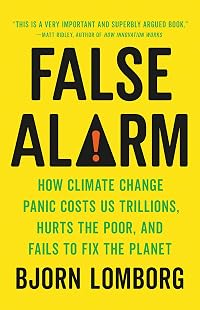

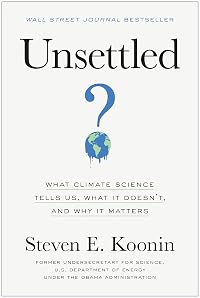



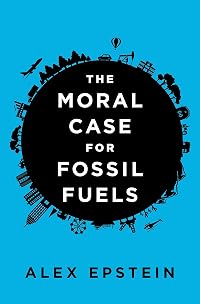
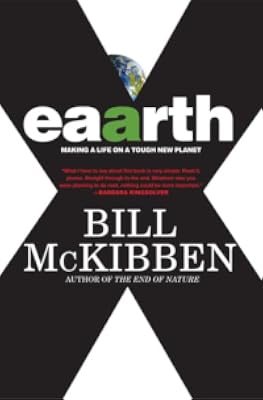

































Member Reviews
Well written look at the way the desire for most people to have a clean world gets hijacked. He takes a very consistent approach in the construction of his chapters which makes for good flow of information. His writing is clear and straightforward and very readable.
The author shows clearly the law of unintended consequences as it pertains to first world activists dictating conduct and policy to the developing world. The self serving conduct of Jerry Brown’s closing of nuclear power plants is worth the book alone. His family provided the oil and gas imports from Indonesia.
Excellent book, worth anyone’s time.
The author shows clearly the law of unintended consequences as it pertains to first world activists dictating conduct and policy to the developing world. The self serving conduct of Jerry Brown’s closing of nuclear power plants is worth the book alone. His family provided the oil and gas imports from Indonesia.
Excellent book, worth anyone’s time.
I couldn't give this 5 stars because it is missing what is, to me, perhaps the most important part: a non-catastrophizing description of climate change and trade-offs. I agree that much of the discussion has been politicized, with one side 'denying' climate change in almost any shape or form (outside of admitting that it exists, but that it doesn't actually matter), and one side increasingly unable to brook any dissent from the 'extinction' and '100% green renewables by 2030' lines (or else you are, ipso facto, a climate change denying right-wing nutjob).
Fine. And detailing how ridiculous much of the exaggeration is, and how damaging, and how neo-colonial, and how anti-science and etc. is very important (especially given the overlap show more with people who tend to claim loudly how opposed to all those things they are.)
But what about setting the record straight, or at least conveying what e.g. the IPCC consensus on "business as usual", progress at the current rate, etc. are? A couple of chapters laying that out, toward the end, would serve very well. Without it, the hints and suggestions sprinkled throughout the book as to what those are (or might be) are underwhelming and leaves the overall tone of the book closer to that of just yet another volley in the socio-political war that has eaten (along with everything else) discussion of climate change. show less
Fine. And detailing how ridiculous much of the exaggeration is, and how damaging, and how neo-colonial, and how anti-science and etc. is very important (especially given the overlap show more with people who tend to claim loudly how opposed to all those things they are.)
But what about setting the record straight, or at least conveying what e.g. the IPCC consensus on "business as usual", progress at the current rate, etc. are? A couple of chapters laying that out, toward the end, would serve very well. Without it, the hints and suggestions sprinkled throughout the book as to what those are (or might be) are underwhelming and leaves the overall tone of the book closer to that of just yet another volley in the socio-political war that has eaten (along with everything else) discussion of climate change. show less
Shellenberger is a reformed environmentalist, rejecting the apocalyptic predictions of the world’s demise unless we de-populate, de-industrialize, de-capitalize and eliminate our use of oil and gas. He recognizes growth results in a cleaner environment and better lives for all.
He does a good job of showing the corruption of the current environmental movement and how the IPCC has become political and less scientific.
Here are my favorite quotes from the book and makes up most of the last chapter about the psychology of the current climate change movement:
Page 263
Environmentalism today is the dominant secular religion of the educated, upper-middle-class elite in most developed and many developing nations. It provides a new story about show more our collective and individual purpose. It designates good guys and bad buys, heroes and villains. And it does so in the language of science, which provides it with legitimacy. [51]
. . . it is a kind of new Judeo-Christian religion, one that has replaced God with nature.
Page 265.
The trouble with the new environmental religion is that it has become increasingly apocalyptic, destructive, and self-defeating. It leads its adherents to demonize their opponents, often hypocritically. It drives them to seek to restrict power and prosperity at home and abroad. And it spreads anxiety and depression without meeting the deeper psychological, existential, and spiritual needs its ostensibly secular devotees seek. show less
He does a good job of showing the corruption of the current environmental movement and how the IPCC has become political and less scientific.
Here are my favorite quotes from the book and makes up most of the last chapter about the psychology of the current climate change movement:
Page 263
Environmentalism today is the dominant secular religion of the educated, upper-middle-class elite in most developed and many developing nations. It provides a new story about show more our collective and individual purpose. It designates good guys and bad buys, heroes and villains. And it does so in the language of science, which provides it with legitimacy. [51]
. . . it is a kind of new Judeo-Christian religion, one that has replaced God with nature.
Page 265.
The trouble with the new environmental religion is that it has become increasingly apocalyptic, destructive, and self-defeating. It leads its adherents to demonize their opponents, often hypocritically. It drives them to seek to restrict power and prosperity at home and abroad. And it spreads anxiety and depression without meeting the deeper psychological, existential, and spiritual needs its ostensibly secular devotees seek. show less
Anyone unduly worried about a climate change cataclysm should read this book. I was considering the purchase of rooftop solar panels until I read Shellenberger's thoughtful analysis and realized they made no sense for me to acquire, i. e., the break even point and the end of depreciation point fall uncomfortably close together.
The author puts solutions to climate change in a sobering perspective. The manufacturers of wind turbines have thwarted census efforts for the birds, bats and insects killed by these structures. Antinuclear hysteria has been fanned by those who stand to profit by replacing nuclear energy with inadequate renewables that will inevitably cause greater carbon emissions. Many climate alarmists are elitists who distain show more the poor of the third world and dismiss out of hand their desire for reliable, abundant and practical ("real" is their idiom) electricity.
I quit the Nature Conservancy after reading this book. show less
The author puts solutions to climate change in a sobering perspective. The manufacturers of wind turbines have thwarted census efforts for the birds, bats and insects killed by these structures. Antinuclear hysteria has been fanned by those who stand to profit by replacing nuclear energy with inadequate renewables that will inevitably cause greater carbon emissions. Many climate alarmists are elitists who distain show more the poor of the third world and dismiss out of hand their desire for reliable, abundant and practical ("real" is their idiom) electricity.
I quit the Nature Conservancy after reading this book. show less
An excellent book about how foolish many of today’s perceived “fixes” for climate change are and how they are doing more harm than good. Shellenberger is not a climate change “denier”. He is a strong environmentalist and has been most of his life; yet, through very detailed research and extraordinary documentation, he proves his case that we need to move to strong nuclear and hydroelectric sources of energy. Use of any other sources (fossil fuels, solar, wind) will not reduce but could make it worse, not better. Unfortunately, our news media and politicians do not understand these issues and continue to push foolish choices. So many of those that should read his book and truly research what he is saying, will condemn it or show more totally ignore it. Our “Green New Deal” is idiocy, and we will suffer the consequences – of course, our continuing to ruin the climate and cause additional climate change by following foolish paths pointed out by Shellenberger will simply be used by the news media and politicians to push for more spending on non-nuclear sources of energy. We cannot get where we need to get by relying on solar and wind.
If you care about climate change and the need to change our ways, read his book and then try to prove his arguments wrong. show less
If you care about climate change and the need to change our ways, read his book and then try to prove his arguments wrong. show less
Pretty good argument from someone who is an environmentalist about how the religion of climate change hurts the both human development and the overall environment. There were a few areas which were weak or incorrect (vegetarianism presented vs. standard diet with the argument of "animals take up less space than plants" or something like that, not factoring in the land for growing animal feed...), but most of it was pretty good. Exposing anti-nuclear as basically fearmongering or politics (anti-weapons people transitioning to anti-power), the essential racism/etc. of forcing people in developing economies to do with less, and the massive benefits of natural gas (or even coal) vs. a lot of traditional power sources for people seemed good. show more I think someone could probably write a better book on this topic, but this is the best one I've found so far.
Most of the targets of the book were "activist organizations" vs science, although there is an allegation that IPCC is primarily activist vs. scientific in how it presents reports to policymakers (so, it's hybrid; decent science, but unconnected policy recommendations). The primary targets were weird self-flagellationists like Greta and Extinction Rebellion, so that's mostly attacking strawmen. My biggest problem with this book is it seems to use a broad brush for both these activists and real science. I'm torn between 3 and 4 stars as a result; it does some good (especially the pro-nuclear parts), but also gets enough wrong to cause some harm, and probably should be held to a higher standard. show less
Most of the targets of the book were "activist organizations" vs science, although there is an allegation that IPCC is primarily activist vs. scientific in how it presents reports to policymakers (so, it's hybrid; decent science, but unconnected policy recommendations). The primary targets were weird self-flagellationists like Greta and Extinction Rebellion, so that's mostly attacking strawmen. My biggest problem with this book is it seems to use a broad brush for both these activists and real science. I'm torn between 3 and 4 stars as a result; it does some good (especially the pro-nuclear parts), but also gets enough wrong to cause some harm, and probably should be held to a higher standard. show less
Profound and persuasive. It is ;provocative in that the book challenges my belief system. Required reading.
Members
- Recently Added By
Published Reviews
"he assumes a position and seeks data and facts to fit that position rather than, as science demands, using data and facts to develop, test, and refine a theory. As a result, the book suffers from logical fallacies, arguments based on emotion and ideology, the setting up and knocking down of strawman arguments, and the selective cherry-picking and misuse of facts, all interspersed with simple show more mistakes and misrepresentations of science. Distressingly, this is also an angry book, riddled with ugly ad hominem attacks on scientists, environmental advocates, and the media." show less
added by chrisharpe
Lists

Books Read in 2022
5,226 works; 115 members
Author Information
Awards and Honors
Distinctions
Observer Book of the Week (2020-08-09)
Classifications
- Genres
- Science & Nature, General Nonfiction, Nonfiction
- DDC/MDS
- 304.2 — Society, government, & culture Social sciences, sociology & anthropology Factors affecting social behavior Human ecology
- LCC
- GE195 — Geography, Anthropology and Recreation Environmental Sciences Environmental sciences Environmentalism. Green movement
- BISAC
Statistics
- Members
- 462
- Popularity
- 66,176
- Reviews
- 12
- Rating
- (4.02)
- Languages
- English, French, Portuguese, Spanish
- Media
- Paper, Audiobook, Ebook
- ISBNs
- 13
- ASINs
- 4