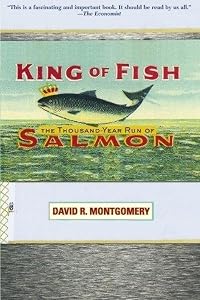
King of Fish: The Thousand-Year Run of Salmon
by David R. Montgomery
On This Page
Description
This book is an accounting of the natural history of the rise and fall of salmon in England, New England, and the Pacific Northwest--with recommendations for bringing the salmon back. In coming to understand the natural and human forces shaping the rivers and mountains of the Pacific Northwest, geologist David Montgomery learned to see the evolution and near-extinction of the salmon as a story of changing landscapes. An integral part of the region's rivers and seas, the salmon that symbolize show more the Northwest's natural splendor are now endangered, either gone or threatened with extinction across much of their ancestral range. Montgomery shows how a succession of de facto historical experiments-first in the United Kingdom, then in New England, and now in the Pacific Northwest-followed a similar story in which overfishing and sweeping changes to the landscape rendered the world inhospitable to salmon. In King of fish, Montgomery traces the human impacts on salmon over the last 1000 years and examines the implications for both salmon recovery efforts and the more general problem of human impacts on the natural world. The book concludes with recommendations for reinventing the ways in which we make environmental decisions about land, water, and fish. show lessTags
Recommendations
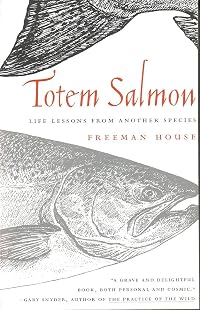

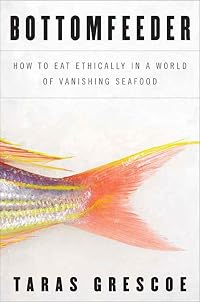
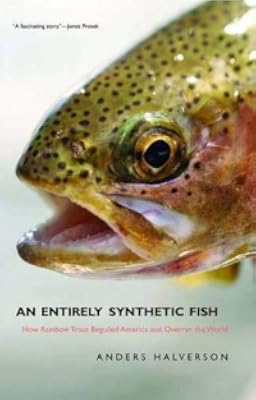
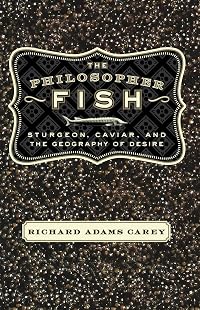













Member Recommendations
Member Reviews
This book about salmon is written by a geologist, so he's particularly interested in how salmon and the landscape interact, and how human interference with rivers is driving salmon to extinction.
Montgomery starts the book with an overview of salmon and their lifecycle, and the importance of rivers to the life of salmon and the importance of salmon to the health of forests. He then looks at the history of Atlantic salmon, first in Britain and then on the east coast of North America, and how they were driven to the brink of extinction by human greed, despite the understanding that over-fishing the salmon and destroying their rivers was the cause of their extinction. The exact same historical process is playing out in the Pacific show more Northwest, even though we ought to know better.
Ultimately, Montgomery argues that better management of our rivers is the key to restoring salmon populations, and he provides some concrete ideas for how to do this. Not that anyone will actually listen to these ideas.
Overall, this is a fascinating look at the life cycle of salmon and the interaction between salmon and the landscape. The history chapters didn't need to be nearly as long as they are to make the point that humans are greedy and bad at working for long-term gains when there are short-term gains to be had instead. show less
Montgomery starts the book with an overview of salmon and their lifecycle, and the importance of rivers to the life of salmon and the importance of salmon to the health of forests. He then looks at the history of Atlantic salmon, first in Britain and then on the east coast of North America, and how they were driven to the brink of extinction by human greed, despite the understanding that over-fishing the salmon and destroying their rivers was the cause of their extinction. The exact same historical process is playing out in the Pacific show more Northwest, even though we ought to know better.
Ultimately, Montgomery argues that better management of our rivers is the key to restoring salmon populations, and he provides some concrete ideas for how to do this. Not that anyone will actually listen to these ideas.
Overall, this is a fascinating look at the life cycle of salmon and the interaction between salmon and the landscape. The history chapters didn't need to be nearly as long as they are to make the point that humans are greedy and bad at working for long-term gains when there are short-term gains to be had instead. show less
Once I began reading this book, I realized that I did not like how the illustrations included only blue, green, and yellow throughout. In addition, most of the scenes from the book were of the bottom of the ocean, but they were dull and not very creative or detailed.
The story starts with the King of the fish who has a fishhook stuck in his nose. He demands all the other fish to get it off and the Old Sea Raven keeps crying “theeyesofahare!” This part of the book foreshadowed to the hare that would enter the story as a main character later in the story. The Sea turtle then says, “Old Sea Raven means that only the eyes of a hare can cure you. I have to swim to the land to lay my eggs, and I have seen hares there.”
The turtle show more convinces the rabbit to come with him to the sea, by fooling him, saying, that there are “whole fields of sea lettuce sway with the waves. Sea carrots are there for picking.” Her, we see one of the main ideas of the story, deception.
Once the turtle and the hare arrived at the King’s throne, the hare claimed to the king that he “ left his sharpest eyes in a box by his bedside.” And was only wearing his “farseeing eyes to enjoy the view.” I thought this part of the book was funny because although I thought the hare had been oblivious to the trick that the turtle played on him, the hare ended up tricking the entire school of fish, the King, and the turtle. show less
The story starts with the King of the fish who has a fishhook stuck in his nose. He demands all the other fish to get it off and the Old Sea Raven keeps crying “theeyesofahare!” This part of the book foreshadowed to the hare that would enter the story as a main character later in the story. The Sea turtle then says, “Old Sea Raven means that only the eyes of a hare can cure you. I have to swim to the land to lay my eggs, and I have seen hares there.”
The turtle show more convinces the rabbit to come with him to the sea, by fooling him, saying, that there are “whole fields of sea lettuce sway with the waves. Sea carrots are there for picking.” Her, we see one of the main ideas of the story, deception.
Once the turtle and the hare arrived at the King’s throne, the hare claimed to the king that he “ left his sharpest eyes in a box by his bedside.” And was only wearing his “farseeing eyes to enjoy the view.” I thought this part of the book was funny because although I thought the hare had been oblivious to the trick that the turtle played on him, the hare ended up tricking the entire school of fish, the King, and the turtle. show less
Ratings
Members
- Recently Added By
Author Information

6 Works 1,108 Members
David R. Montgomery is a MacArthur Fellow and professor of geomorphology at the University of Washington. His books include Dirt and The Hidden Half of Nature (cowritten with his wife, Anne Bikl).
Awards and Honors
Awards
Common Knowledge
- Important places
- United Kingdom; Atlantic Ocean; Pacific Ocean; New Zealand; Alaska, USA; Pacific Northwest, USA
Classifications
- Genres
- Nonfiction, Science & Nature, General Nonfiction, Hunting and Fishing, Sports and Leisure, Politics and Government
- DDC/MDS
- 333.95 — Society, government, & culture Economics Economics of land and energy Other natural resources Biofuel, biodiversity, wildlife refuges
- LCC
- QL638 .S2 .M659 — Science Zoology Zoology Chordates. Vertebrates Fishes
- BISAC
Statistics
- Members
- 77
- Popularity
- 410,568
- Reviews
- 2
- Rating
- (3.64)
- Languages
- English
- Media
- Paper, Ebook
- ISBNs
- 3