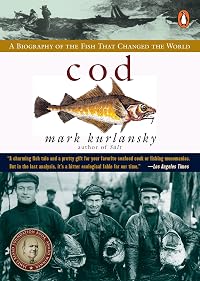
Cod: A Biography of the Fish That Changed the World
by Mark Kurlansky
On This Page
Description
Cod spans a thousand years and four continents. From the Vikings, who pursued the codfish across the Atlantic, and the enigmatic Basques, who first commercialized it in medieval times, to Bartholomew Gosnold, who named Cape Cod in 1602, and Clarence Birdseye, who founded an industry on frozen cod in the 1930s, Mark Kurlansky introduces the explorers, merchants, writers, chefs, and of course the fishermen, whose lives have interwoven with this prolific fish. He chronicles the show more fifteenth-century politics of the Hanseatic League and the cod wars of the sixteenth and twentieth centuries. He embellishes his story with gastronomic detail, blending in recipes and lore from the Middle Ages to the present. And he brings to life the cod itself: its personality, habits, extended family, and ultimately the tragedy of how the most profitable fish in history is today faced with extinction. From fishing ports in New England and Newfoundland to coastal skiffs, schooners, and factory ships across the Atlantic; from Iceland and Scandinavia to the coasts of England, Brazil, and West Africa, Mark Kurlansky tells a story that brings world history and human passions into captivating focus. The codfish. Wars have been fought over it, revolutions have been spurred by it, national diets have been based on it, economies and livelihoods have depended on it, and the settlement of North America was driven by it. To the millions it has sustained, it has been a treasure more precious than gold. Indeed, the codfish has played a fascinating and crucial role in world history. show lessTags
Recommendations

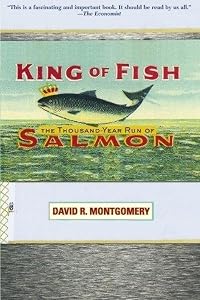
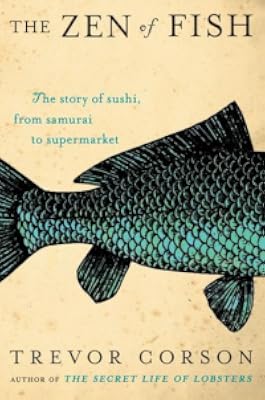
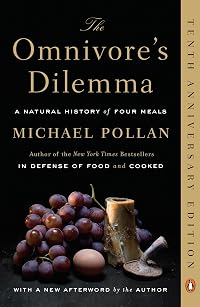
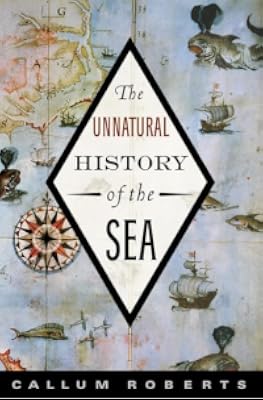

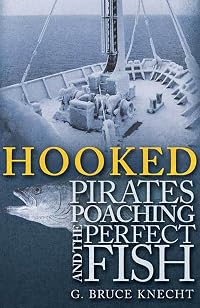
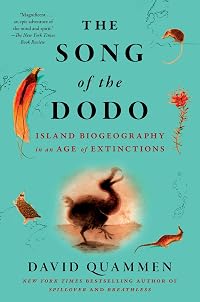
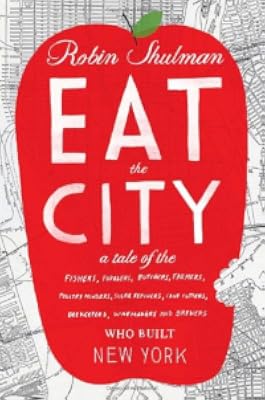


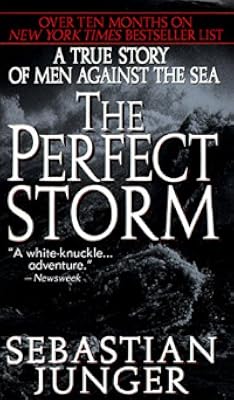
Member Recommendations
Member Reviews
This nonfiction account of all things cod is a worthy example of what I've come to think of as the "commodities" genre of literature - where the author chooses a particular commodity (salt, sugar, corn, paper) and then uses this as a lattice upon which to construct a narrative that combines history, science, economics and sociology to create an entertaining whole.
In this instance, felt like the chapters of the book devoted to the history of cod-fishing were the author's most notable achievement. Who knew that salted cod is what made those long Viking ocean journeys possible? That Basque fishermen had already been cruising off the coast of Plymouth decades before the Pilgrims arrived? That the cod trade may have laid the foundation for show more the American Revolution? That salted cod played an insidious role in the slave trade? This is just a sampling of some of the book's many historical revelations. Always eye-opening to realize how much history never gets taught in classrooms!
The book also provides thoughtful explorations of the ecological importance of cod, the ecological and economic impacts of overfishing, why government efforts to control overfishing almost always fail, and the appropriate role of governments in protecting ways of life (like small-craft fishing) that may no longer be relevant. Also cod recipes, cod quotes, and notable cod literary cameos. :-)
Admit I skimmed the first chapter (about current measures to protect cod from overfishing) and the final chapters (recipes) - but the chapters in the middle were well worth the effort, and the next time cod comes up in the ordinary course of conversation (as the topic is wont to do), I'm looking forward to sharing all my new cod expertise! show less
In this instance, felt like the chapters of the book devoted to the history of cod-fishing were the author's most notable achievement. Who knew that salted cod is what made those long Viking ocean journeys possible? That Basque fishermen had already been cruising off the coast of Plymouth decades before the Pilgrims arrived? That the cod trade may have laid the foundation for show more the American Revolution? That salted cod played an insidious role in the slave trade? This is just a sampling of some of the book's many historical revelations. Always eye-opening to realize how much history never gets taught in classrooms!
The book also provides thoughtful explorations of the ecological importance of cod, the ecological and economic impacts of overfishing, why government efforts to control overfishing almost always fail, and the appropriate role of governments in protecting ways of life (like small-craft fishing) that may no longer be relevant. Also cod recipes, cod quotes, and notable cod literary cameos. :-)
Admit I skimmed the first chapter (about current measures to protect cod from overfishing) and the final chapters (recipes) - but the chapters in the middle were well worth the effort, and the next time cod comes up in the ordinary course of conversation (as the topic is wont to do), I'm looking forward to sharing all my new cod expertise! show less
Victorian scientists said that cod was the fish in the miracle of the loaves and fishes because there were so darn many of them....
Yeah, late to the party yet again...13 years late. I read this book, I would swear, when it came out; I recognized a few of the anecdotes, and I remember the jacket design very clearly. But a lot had slipped from my memory, and I now wonder if I actually read it, or had enough conversations about it to think I had.
Well, whatever, if it was a re-read it was a fun one. I like Kurlansky's informative-yet-chatty style, and I love the angle of view in the book...what's cod done for us as a species? So what? What's cod made possible in the world? The rise of an independent America. The agrarian horrors of African show more chattel slavery. The Industrial Revolution. Little stuff like that was built on the white-fleshed back of a formerly abundant fish.
I like cod. Salted, dried, fresh-frozen, the tongues, the cheeks...it's all good, as my daughter's generation says with monotonous regularity (and questionable factual basis). I never once thought about Cod, the deliverer from hunger, until the Cod Wars of the early 1970s. I remember the world reaction to Iceland going to a 200-mile fishing limit with a teenager's detached bemusement: "So? Little teeny place like that, let 'em have it, big whoop." For rhetorical effect, let's assume I was sitting in front of the TV eating Gorton's fish sticks at the time I said this, though I spent little time with the TV and less eating fish sticks as a kid.
It caused such trouble because of cod's enormous significance even now as an agribusiness output. Iceland's post-colonial economy was built on cod; Canada's Maritime provinces relied on it in those days (and on unemployment payments from the rest of Canada now that cod's commercially extinct); Norway and the UK want all there is to have so their fisheries industries don't wither away and leave them hungry as well as sailor-less.
Kurlansky wrote a very enjoyable read about a very important food-source and industrial product. I recommend it to anyone even marginally interested in the world around them, to science browsers, and to policy wonks of a scientific bent. You won't regret it. show less
Yeah, late to the party yet again...13 years late. I read this book, I would swear, when it came out; I recognized a few of the anecdotes, and I remember the jacket design very clearly. But a lot had slipped from my memory, and I now wonder if I actually read it, or had enough conversations about it to think I had.
Well, whatever, if it was a re-read it was a fun one. I like Kurlansky's informative-yet-chatty style, and I love the angle of view in the book...what's cod done for us as a species? So what? What's cod made possible in the world? The rise of an independent America. The agrarian horrors of African show more chattel slavery. The Industrial Revolution. Little stuff like that was built on the white-fleshed back of a formerly abundant fish.
I like cod. Salted, dried, fresh-frozen, the tongues, the cheeks...it's all good, as my daughter's generation says with monotonous regularity (and questionable factual basis). I never once thought about Cod, the deliverer from hunger, until the Cod Wars of the early 1970s. I remember the world reaction to Iceland going to a 200-mile fishing limit with a teenager's detached bemusement: "So? Little teeny place like that, let 'em have it, big whoop." For rhetorical effect, let's assume I was sitting in front of the TV eating Gorton's fish sticks at the time I said this, though I spent little time with the TV and less eating fish sticks as a kid.
It caused such trouble because of cod's enormous significance even now as an agribusiness output. Iceland's post-colonial economy was built on cod; Canada's Maritime provinces relied on it in those days (and on unemployment payments from the rest of Canada now that cod's commercially extinct); Norway and the UK want all there is to have so their fisheries industries don't wither away and leave them hungry as well as sailor-less.
Kurlansky wrote a very enjoyable read about a very important food-source and industrial product. I recommend it to anyone even marginally interested in the world around them, to science browsers, and to policy wonks of a scientific bent. You won't regret it. show less
A microhistory on the history of Cod, which is not something I ever expected to care about, but this book was an enjoyable trek through history, how crucial it was to human exploration of North America and the trade. The book does leave one a bit sad ultimately, as it's clear that humans are overfishing Cod and other fish, and there is clearly no desire from the fishermen to reduce their catches. One of the best things to happen to Cod were the world wars where fishing was extremely limited for obvious reasons. I came away from the book with a hope that we could just leave the oceans alone for a while to let nature recover.
A fast, fun and informative read about the oversized influence a single fish has had on human history — and how humans managed to all but wipe out the fish once thought immune to overfishing due to its fecundity and toughness.
Lots of little factoid gems buried in the text, like:
• How Basque and English cod fishermen almost certainly had reached the Americas decades before Christopher Columbus' famous voyage (the fishermen kept their discovery a secret to keep monopolizing the magnificent fishing ground they had found)
• That the fortress town of Louisbourg on Cape Breton (which I had visited just days before reading this) was founded where it was not so much for its decent harbor but because it was on the same latitude as the show more French city of La Rochelle, and thus easy to find via the primitive navigational method of "easting and westing" — sticking to the same easy-to-calculate latitude across the open ocean.
• Cod's role in making Britain's North American colonies economically independent long before political independence. (Britain's mercantilist laws were worthless because New England fishermen brought back far more cod than the British market could absorb, forcing them to allow trade with other nations.)
• The existence of three miraculously non-fatal "Cod Wars" between Iceland and Britain over offshore fishing.
Nice color comes from the collection of cod recipes inserted at the start of each chapter and collected in a sizable appendix at the end of the book. I doubt I'll actually ever prepare any of them, but they were fun to read.
My biggest frustration with the book was no fault of its own: it's nearly two decades old now, and I want to learn more about what's happened to the cod fisheries since its publication in 1999! show less
Lots of little factoid gems buried in the text, like:
• How Basque and English cod fishermen almost certainly had reached the Americas decades before Christopher Columbus' famous voyage (the fishermen kept their discovery a secret to keep monopolizing the magnificent fishing ground they had found)
• That the fortress town of Louisbourg on Cape Breton (which I had visited just days before reading this) was founded where it was not so much for its decent harbor but because it was on the same latitude as the show more French city of La Rochelle, and thus easy to find via the primitive navigational method of "easting and westing" — sticking to the same easy-to-calculate latitude across the open ocean.
• Cod's role in making Britain's North American colonies economically independent long before political independence. (Britain's mercantilist laws were worthless because New England fishermen brought back far more cod than the British market could absorb, forcing them to allow trade with other nations.)
• The existence of three miraculously non-fatal "Cod Wars" between Iceland and Britain over offshore fishing.
Nice color comes from the collection of cod recipes inserted at the start of each chapter and collected in a sizable appendix at the end of the book. I doubt I'll actually ever prepare any of them, but they were fun to read.
My biggest frustration with the book was no fault of its own: it's nearly two decades old now, and I want to learn more about what's happened to the cod fisheries since its publication in 1999! show less
Cod--not a favorite food. Mind you, salt-cod (bacalao) was a staple in my Puerto Rican family, but Americanized that I am, for me it was a reason to flee the family apartment until the smell was gone. This book on the fish was... moderately interesting. I didn't feel it was compelling in its narrative--it felt like a long extended textbook inset. You know, you're reading an American history textbook and there's this box that tells you how important cotton was to Georgia or silver to Nevada? Well, it was that sort of thing... only about cod. With lots of recipes thrown in, both before each new chapter and 40 pages of cod cookery in the back. The writer in fact was a chef and a food writer for the New York Times--and notably not a show more historian. So we got dabs of natural and human history such as suggestions the Basques may have discovered the New World first (and kept quiet so as to have the Grand Banks fisheries all to themselves), learn cod "built Boston" and was crucial to the Atlantic slave trade and the dilemma of contemporary fisherman caused by overfishing: fishing enough to keep earning a living is fishing too much to sustain the wild fish population. At least according to Kurlansky circa 1997--and a search online will quickly let you know it's still an issue today in 2012. show less
I often enjoy reading "microhistories": non-fiction that focuses on one very narrow subject but manages to tie that subject into much larger aspects of history and society. I think this may be one of the first books that really popularized this particular subgenre, back in 1997, which is what made it interesting to me. In this case, the narrow subject the book revolves around is the humble codfish, which, it turns out, has indeed played a massive role in human history, as well as telling us some important things about the effect of humans on the natural world today. It's decently written and informative (and also contains a large number of cod-related recipes from many different times and places, if that's something you're into). I will show more admit that, as someone who has very little inherent interest in fish -- I don't even eat them very much -- I sometimes had a little trouble staying entirely engaged even as I fully recognized the scope and importance of the subject, but I hardly feel like I can complain that a book about fish was a little too much about fish for me. show less
Unfortunately this is a sad story. Kurlansky documents the relentless transition from a situation where there was more Cod than anyone knew what to do with, to a point where the fish have been pushed to the point of extinction. Ever improving technology made it easier for fewer and fewer people to harvest more and more fish. Countries subsidized fleets, provided unemployment payments in off seasons and continually extended the zones where their fisherman had exclusive rights. While the governments in the last century have begun to limit catches so that populations could replenish these efforts have been too late and too little.
Kurlansky shows how the picture has changed since even before the days of the Vikings. He describes not only a show more historical perspective but how different geographical areas were involved. Norway, Denmark, Britain, France, Spain, Iceland, Greenland, Russia, Canada, the Caribbean, Newfoundland, Nova Scotia, Cape Cod, Gloucester, Boston, The Great Banks, The Grand Banks, the American colonies, and of course the United States. He explains the various technologies, schooners, dinghies, trawlers, three inch nets, six inch nets, drying, salting, gillnetting, bottom crawling, sail, steam engines, diesel engines. Fishing rights led to competition and wars. Some were in various forms of denial, they'll come back, they're just migrating somewhere else just now, it's climate change, not over fishing, nature will provide a correction, etc. Others were more realistic, factories closed, fleets were mothballed, ships were scrapped, some found alternate employment opportunities, catch limits were reduced, other fish were substituted in recipes, etc. Cod figured prominently in the in/famous triangle trade. Cod was exchanged for slaves or molasses. Cod meal fed slaves cheaply and kept them alive enough to work another day.
Throughout the book Kurlansky describes the various ways Cod became food staples in various cultures and how those cultures have had to adapt to Cod being too expensive as a basic food staple. There must be at least 50 recipes in this book with small stories of where the dish featured in time and place. There are numerous well known individuals with their reference to Cod or their favorite recipes. I was not expecting quotes from Huxley, Thoreau, Kipling, W.H. Auden, Zola, Dumas, Melville, Cervantes, etc. And of course there were names from the food world, Birds Eye, Groton, and Fannie Farmer, etc. To make this even more real there were black and photos of people, places, and ships, and diagrams. show less
Kurlansky shows how the picture has changed since even before the days of the Vikings. He describes not only a show more historical perspective but how different geographical areas were involved. Norway, Denmark, Britain, France, Spain, Iceland, Greenland, Russia, Canada, the Caribbean, Newfoundland, Nova Scotia, Cape Cod, Gloucester, Boston, The Great Banks, The Grand Banks, the American colonies, and of course the United States. He explains the various technologies, schooners, dinghies, trawlers, three inch nets, six inch nets, drying, salting, gillnetting, bottom crawling, sail, steam engines, diesel engines. Fishing rights led to competition and wars. Some were in various forms of denial, they'll come back, they're just migrating somewhere else just now, it's climate change, not over fishing, nature will provide a correction, etc. Others were more realistic, factories closed, fleets were mothballed, ships were scrapped, some found alternate employment opportunities, catch limits were reduced, other fish were substituted in recipes, etc. Cod figured prominently in the in/famous triangle trade. Cod was exchanged for slaves or molasses. Cod meal fed slaves cheaply and kept them alive enough to work another day.
Throughout the book Kurlansky describes the various ways Cod became food staples in various cultures and how those cultures have had to adapt to Cod being too expensive as a basic food staple. There must be at least 50 recipes in this book with small stories of where the dish featured in time and place. There are numerous well known individuals with their reference to Cod or their favorite recipes. I was not expecting quotes from Huxley, Thoreau, Kipling, W.H. Auden, Zola, Dumas, Melville, Cervantes, etc. And of course there were names from the food world, Birds Eye, Groton, and Fannie Farmer, etc. To make this even more real there were black and photos of people, places, and ships, and diagrams. show less
Members
- Recently Added By
Lists

Best "Foodie" Books
114 works; 40 members

Best Books on Fisheries, Fishing Fleets and Fish
42 works; 3 members
New England Foodways: An Annotated Bibliography
11 works; 1 member

Environmental History
46 works; 8 members

The Great Courses: Earth at the Crossroads
48 works; 1 member

The r/AskScience Reading List
159 works; 3 members

r/AskHistorians' Recommended Books
1,068 works; 19 members
Books That Changed Our Perspective
423 works; 168 members

Books cited in Progress by Samuel McDonald
160 works; 1 member
Author Information

Mark Kurlansky is the author of The Basque History of the World, the New York Times bestseller Cod: A Biography of the Fish that Changed the World (among the New York Public Library's Best Books of the Year in 1998), as well as A Chosen Few: The Resurrection of European Jewry; A Continent of Islands: Searching for the Caribbean Destiny, and show more several acclaimed works of short fiction and journalism about the Caribbean. He spent seven years as the Caribbean correspondent for the Chicago Tribune. He lives in New York City. (Bowker Author Biography) show less
Some Editions
Awards and Honors
Series
Belongs to Publisher Series
Work Relationships
Is abridged in
Has as a student's study guide
Common Knowledge
- Canonical title*
- Il merluzzo: storia del pesce che ha cambiato il mondo
- Original title
- Cod. A biography of a fish that changed the world
- Original publication date
- 1997
- Important places
- Newfoundland, Canada
- First words
- These are the fishermen who stand sentry over the cod stocks off the headlands of North America, the fishermen who went to sea but forgot their pencil.
- Last words
- (Click to show. Warning: May contain spoilers.)But after 1,000 years of hunting the Atlantic cod, we know that it can be done.
- Blurbers
- McCullough, David
- Original language
- English
- Disambiguation notice
- Do not combine Cod: A Biography of the Fish That Changed the World with A Cod's Tale. A Cod's Tale is a much shorter, illustrated version of Cod aimed at children.
*Some information comes from Common Knowledge in other languages. Click "Edit" for more information.
Classifications
- Genres
- Hunting and Fishing, General Nonfiction, History, Science & Nature, Nonfiction, Sports and Leisure, Food & Cooking
- DDC/MDS
- 333.956633 — Society, government, & culture Economics Economics of land and energy Other natural resources Biofuel, biodiversity, wildlife refuges Fish & Seafood
- LCC
- SH351 .C5 .K87 — Agriculture Aquaculture. Fisheries. Angling Aquaculture. Fisheries. Angling Fisheries Fishery for individual species
- BISAC
Statistics
- Members
- 3,628
- Popularity
- 4,510
- Reviews
- 77
- Rating
- (3.88)
- Languages
- 10 — Dutch, English, French, German, Icelandic, Italian, Norwegian (Bokmål), Portuguese, Spanish, Swedish
- Media
- Paper, Audiobook, Ebook
- ISBNs
- 42
- UPCs
- 1
- ASINs
- 7