Consider The Eel: A Natural And Gastronomic History
by Richard Schweid
On This Page
Description
Journalist Richard Schweid first learned the strange facts of the freshwater eel's life from a fisherman in a small Spanish town just south of Valencia. ""The eeler who explained the animal's life cycle to me did so as he served up an eel he had just taken from a trap, killed, cleaned, and cooked in olive oil in an earthenware dish,"" writes Schweid. ""I ate it with a chunk of fresh, crusty bread. It was delicious. I was immediately fascinated."" As this engaging culinary and natural history show more reveals, the humble eel is indeed an amazing creature. Every European and American eel begins i show lessTags
Recommendations













Member Recommendations
Member Reviews
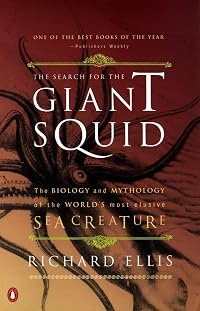
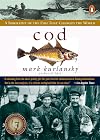
I know, I know. Eels are icky. They're twisty and slimy and thoroughly unappealing. And yet, I couldn't put this book down. Schweid does for eels what Ellis did for Giant Squid or Kurlansky did for cod: take a maligned or little-known creature and show us the wonder to be found.
Did you know we're still not really sure how eels mate? Or that we wouldn't have a clue where they gave birth if someone hadn't accidentally found a tiny, translucent elver in the Sargasso Sea? It really blows me away that humanity has been interacting with eels for a good long time and we still have so many unanswered questions.
Scweid also introduces us to various people who have some connection to eels, either through their culture or their job (eel fishermen) show more or their fascination (eel scientist). He does an excellent job introducing us to these people and letting them tell their own stories.
On top of all this, Schweid gives a culinary history of eels, complete with recipes and his own culinary adventures in tracking the recipes down.
Who would have thought that the humble eel would prove so fascinating? show less
Did you know we're still not really sure how eels mate? Or that we wouldn't have a clue where they gave birth if someone hadn't accidentally found a tiny, translucent elver in the Sargasso Sea? It really blows me away that humanity has been interacting with eels for a good long time and we still have so many unanswered questions.
Scweid also introduces us to various people who have some connection to eels, either through their culture or their job (eel fishermen) show more or their fascination (eel scientist). He does an excellent job introducing us to these people and letting them tell their own stories.
On top of all this, Schweid gives a culinary history of eels, complete with recipes and his own culinary adventures in tracking the recipes down.
Who would have thought that the humble eel would prove so fascinating? show less
Rather unusual for me to be reading a book on food, particularly seafood, and not be stimulated to cook and eat it. Ell, like gator-tail, chocolate-covered locust, dog, mealy-grub, and snake however are foods that I have decided not to eat again – once, maybe for some, twice - was enough.
However, it is fascinating animal and well worth the considering given to it by Schweid, a Barcelona ex-pat from Nashville, who savors the “rich, fish taste” of eel like a true European. Still largely unknown to science in all its habits, gestation, reproduction and even exactly how it selects it breeding and living grounds. Once chosen however; the eel settles “right in” growing and living in the same place for twenty, thirty or even show more (observed) 57 years. Then comes the long haul out, from fresh water to salt, to the middle of the Atlantic to breed – it is thought- in the Saragossa Sea, that mysterious Triangle off Bermuda. In order to perform the miracle of changing from a fresh-water fish to a pelagic the eel decides to stop eating, and its digestive tract atrophies! After breeding the offspring, having decided if they are Americans or Europeans, begin to swim back to those respective coasts, making a further triggered-decision not just of species, but of gender.
Americans no longer eat the eel, but the booming markets of Japan and North Europe are hard to satisfy, particularly – the old sad story – as pollution and over-fishing take the inevitable toll on the entire species. The smoked eel of northern Europe is celebrated throughout history and in all literature. There is a scene in Len Deighton’s Berlin Game where the hero orders schnapps after eating smoked-eel in a small Gasthaus up close to the “wall”. Merely, he insists as part of a long established German ritual, to wash the smell of eel off his fingers.
No, perhaps I will never eat eel again, but I now know much more about a fascinating animal from this well written intriguing book. show less
However, it is fascinating animal and well worth the considering given to it by Schweid, a Barcelona ex-pat from Nashville, who savors the “rich, fish taste” of eel like a true European. Still largely unknown to science in all its habits, gestation, reproduction and even exactly how it selects it breeding and living grounds. Once chosen however; the eel settles “right in” growing and living in the same place for twenty, thirty or even show more (observed) 57 years. Then comes the long haul out, from fresh water to salt, to the middle of the Atlantic to breed – it is thought- in the Saragossa Sea, that mysterious Triangle off Bermuda. In order to perform the miracle of changing from a fresh-water fish to a pelagic the eel decides to stop eating, and its digestive tract atrophies! After breeding the offspring, having decided if they are Americans or Europeans, begin to swim back to those respective coasts, making a further triggered-decision not just of species, but of gender.
Americans no longer eat the eel, but the booming markets of Japan and North Europe are hard to satisfy, particularly – the old sad story – as pollution and over-fishing take the inevitable toll on the entire species. The smoked eel of northern Europe is celebrated throughout history and in all literature. There is a scene in Len Deighton’s Berlin Game where the hero orders schnapps after eating smoked-eel in a small Gasthaus up close to the “wall”. Merely, he insists as part of a long established German ritual, to wash the smell of eel off his fingers.
No, perhaps I will never eat eel again, but I now know much more about a fascinating animal from this well written intriguing book. show less
eels! i picked this book up with only a mild interest; when i put it down, i had developed a bona fide fascination with eels. an excellent read, engaging and informative, with historical, social, economic, biological and gastronomical context.
Ratings
Members
- Recently Added By
Published Reviews
Much of the charm of Consider the Eel is that Richard Schweid imparts his freshly acquired knowledge in the words of those directly involved in the industry. . . . Those who fish for or deal in eels . . . are a secretive bunch, and it says much for Schweid's professionalism and underlying sympathy that he was able to extract so much colour and interest from the men and women he sought out.
added by John_Vaughan
Lists

Best Books on Fisheries, Fishing Fleets and Fish
42 works; 3 members

The Joe Rogan Experience Library
254 works; 3 members
Author Information

13 Works 303 Members
Richard Schweid is a journalist, documentary reporter, and author of nine nonfiction books, including Che's Chevrolet, Fidel's Oldsmobile: On the Road in Cuba, The Cockroach Papers: A Compendium of History and Lore. He has produced or reported more than two dozen documentaries for Catalonian public television, including the Oscar-nominated show more Balseros. show less
Classifications
- Genres
- Science & Nature, Nonfiction, General Nonfiction, Food & Cooking, Hunting and Fishing, Music, Sports and Leisure
- DDC/MDS
- 597.432 — Natural sciences & mathematics Animals Fishes, Sharks Ganoidei: Sturgeons, garpikes, etc.
- LCC
- QL638 .A55 .S38 — Science Zoology Zoology Chordates. Vertebrates Fishes
- BISAC
Statistics
- Members
- 79
- Popularity
- 401,206
- Reviews
- 3
- Rating
- (4.43)
- Languages
- English
- Media
- Paper, Ebook
- ISBNs
- 6