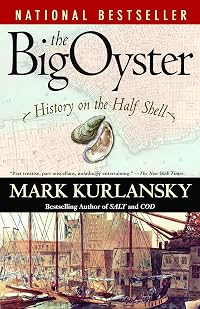
The Big Oyster: History on the Half Shell
by Mark Kurlansky
On This Page
Description
Cooking & Food. History. Nonfiction. HTML:Before New York City was the Big Apple, it could have been called the Big Oyster. Now award-winning author Mark Kurlansky tells the remarkable story of New York by following the trajectory of one of its most fascinating inhabitants–the oyster, whose influence on the great metropolis remains unparalleled.For centuries New York was famous for its oysters, which until the early 1900s played such a dominant a role in the city’s economy, gastronomy, show more and ecology that the abundant bivalves were Gotham’s most celebrated export, a staple food for the wealthy, the poor, and tourists alike, and the primary natural defense against pollution for the city’s congested waterways.
Filled with cultural, historical, and culinary insight–along with historic recipes, maps, drawings, and photos–this dynamic narrative sweeps readers from the island hunting ground of the Lenape Indians to the death of the oyster beds and the rise of America’s environmentalist movement, from the oyster cellars of the rough-and-tumble Five Points slums to Manhattan’s Gilded Age dining chambers.
Kurlansky brings characters vividly to life while recounting dramatic incidents that changed the course of New York history. Here are the stories behind Peter Stuyvesant’s peg leg and Robert Fulton’s “Folly”; the oyster merchant and pioneering African American leader Thomas Downing; the birth of the business lunch at Delmonico’s; early feminist Fanny Fern, one of the highest-paid newspaper writers in the city; even “Diamond” Jim Brady, who we discover was not the gourmand of popular legend.
With The Big Oyster, Mark Kurlansky serves up history at its most engrossing, entertaining, and delicious. show less
Tags
Recommendations


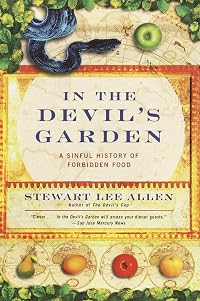
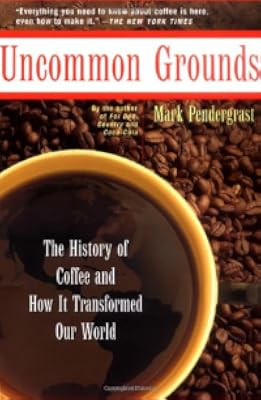
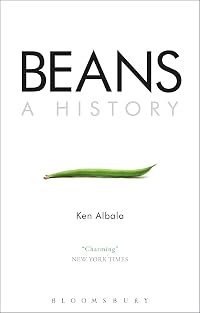
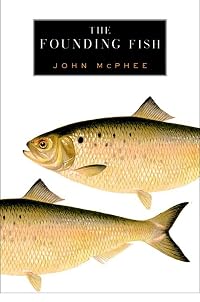
Member Recommendations

Member Reviews
I read McPhee's "Oranges" at an impressionable age, so, ever since, I've been susceptible to the charms of this sort of "one-word title" specialized history. (And while (strictly speaking) this lacks a one-word title, it's close: it's a specialized history by the author of "Salt" and "Cod" that - if it were more broadly focused , might have been called "Oyster".)
Monty Python once did a sketch called "News for Parrots": the evenings news, told from the perspective of how events affect parrots. "The Big Oyster" is in the same vein: it's the history of the city of New York, told from the perspective of its relationship with the oyster.
Interesting enough.
Monty Python once did a sketch called "News for Parrots": the evenings news, told from the perspective of how events affect parrots. "The Big Oyster" is in the same vein: it's the history of the city of New York, told from the perspective of its relationship with the oyster.
Interesting enough.
I liked The Big Oyster, even though I was expecting to read about different types of oysters and associated history around the world. This book was mainly part history of New York and part natural history of one type of oyster, and how they intertwined. The discovering of New York and environs I read quickly through; I more enjoyed reading about the 1800s. And Kurlansky referred a lot to present place/street names, in relation to historical events, that meant nothing to me, but I think someone more familiar with New York would find these parts interesting.
The book also made me mad/glum though; it's another case of human-kind thinking the riches (New York Harbour and area used to have 50% of the world's oysters) will last forever but show more actually being a part of it's destruction. show less
The book also made me mad/glum though; it's another case of human-kind thinking the riches (New York Harbour and area used to have 50% of the world's oysters) will last forever but show more actually being a part of it's destruction. show less
Who would have thought that a non-academic book would be written about the history of oysters in New York? Who would have thought that I would have read such a book? Who would have thought I would like the book?
I was drawn to “The Big Oyster” after enjoying other Kurlansky books and while it was New York-centred and some of the references went over my head I was amazed at how the oyster; today a food for the wealthy ($18 for a dozen at my local supermarket) was once just about the most common of foods with oyster bars dotting New York streets. I was a bit disappointed Kurlansky didn’t refer to Dr W.G. Grace’s (the most famous cricketer of the nineteenth century) visit to New York with his cricket team, where he had “a dinner show more fit for the gods”, feasting on oysters of a size they had never seen before. show less
I was drawn to “The Big Oyster” after enjoying other Kurlansky books and while it was New York-centred and some of the references went over my head I was amazed at how the oyster; today a food for the wealthy ($18 for a dozen at my local supermarket) was once just about the most common of foods with oyster bars dotting New York streets. I was a bit disappointed Kurlansky didn’t refer to Dr W.G. Grace’s (the most famous cricketer of the nineteenth century) visit to New York with his cricket team, where he had “a dinner show more fit for the gods”, feasting on oysters of a size they had never seen before. show less
An excellent history of the role of oysters, oystering, food and fishing industries in the New York City area.
My one complaint is that despite frequent mentions of the Sandy Ground neighborhood of Staten Island--an early free Black community comprised largely of oystermen--it does not appear in the index.
My one complaint is that despite frequent mentions of the Sandy Ground neighborhood of Staten Island--an early free Black community comprised largely of oystermen--it does not appear in the index.
I really love Kurlasnky's way of telling history though a small slice of the world. While this in mind falls short of "Cod", "Salt", and "A Basque History of the World" due to its narrow, New York City focus, it is still a great read.
This was my first Mark Kurlansky book and I am happy to report I wasn't disappointed. At first I was skeptical about the size of the book in relation to its subject-matter (afterall, my previous major encounter with a book on oysters was the slim and elegantly written Consider the Oyster by M. F. K. Fisher). But indeed there are many things to consider while reviewing Manhattan's history using oysters as the parameter. Absorbing, fluid, interesting, and delectable! One drawback: I had incredible oyster cravings throughout my reading...
This book was incredibly fascinating to me. It wasn't a history of oysters but more of the history of New York and how the oyster impacted it. There was biology, social history, transportation history, people history, environmentalism,and more. Loved it! I will definitely read his other "food history" books!
Members
- Recently Added By
Lists

Best "Foodie" Books
114 works; 40 members

Best Books on Fisheries, Fishing Fleets and Fish
42 works; 3 members
Author Information

49+ Works 21,568 Members
Mark Kurlansky is the author of The Basque History of the World, the New York Times bestseller Cod: A Biography of the Fish that Changed the World (among the New York Public Library's Best Books of the Year in 1998), as well as A Chosen Few: The Resurrection of European Jewry; A Continent of Islands: Searching for the Caribbean Destiny, and show more several acclaimed works of short fiction and journalism about the Caribbean. He spent seven years as the Caribbean correspondent for the Chicago Tribune. He lives in New York City. (Bowker Author Biography) show less
Common Knowledge
- Original publication date
- 1986
- Important places
- New York, New York, USA; New Amsterdam, New Netherlands
- First words
- To anyone who is familiar with New Yorkers, it should not be surprising to learn that they were once famous for eating their food live.
- Last words
- (Click to show. Warning: May contain spoilers.)Certainly anyone who could have seen that would have understood that the great and unnatural city was built at the site of a natural wonder, and that the lowly oysters working at the bottom were a treasure more precious than pearls.
Classifications
- Genres
- Nonfiction, History, General Nonfiction, Science & Nature, Food & Cooking
- DDC/MDS
- 641.694 — Applied science & technology Home economics & family management Food, Cooking & Recipes / Meals, Picnics Cooking specific materials Cooking game, seafood, miscellaneous foods Mollusks
- LCC
- TX754 .O98 .K87 — Technology Home economics Home economics Cooking
- BISAC
Statistics
- Members
- 1,065
- Popularity
- 24,239
- Reviews
- 26
- Rating
- (3.67)
- Languages
- Dutch, English
- Media
- Paper, Audiobook, Ebook
- ISBNs
- 15
- ASINs
- 5