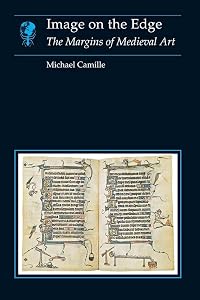
Image on the Edge: The Margins of Medieval Art
by Michael Camille
On This Page
Description
What do they all mean - the lascivious ape, autophagic dragons, pot-bellied heads, harp-playing asses, arse-kissing priests and somersaulting jongleurs to be found protruding from the edges of medieval buildings and in the margins of illuminated manuscripts? Michael Camille explores that riotous realm of marginal art, so often explained away as mere decoration or zany doodles, where resistance to social constraints flourished.Medieval image-makers focused attention on the underside of show more society, the excluded and the ejected. Peasants, servants, prostitutes and beggars all found their place, along with knights and clerics, engaged in impudent antics in the margins of prayer-books or, as gargoyles, on the outsides of churches. Camille brings us to an understanding of how marginality functioned in medieval culture and shows us just how scandalous, subversive, and amazing the art of the time could be. show lessTags
Recommendations
























Member Reviews
As someone who, upon having their first experience with a real medieval manuscript, was confounded when the title page had what appeared to be a projectile vomiting peacock doodled into the margins by some ancient monk, this book was very illuminating. This book offers a very interesting look at the meanings behind medieval artwork and structures, whilst also telling me what to make of the little half naked men on goats and vomiting peacocks which seemed to make a mockery of ancient manuscripts. Those monks must have gone a little stir crazy being stuck in their monastery all that time. :D
Camille explores the marginal art of medieval manuscripts, usually discussing how it can be used to react against the main text of the manuscripts, allowing the margins of society to be represented on the margins of the page. There are times the book seems to not so much present an interpretation as go "Look what neat stuff I found!" but that might be forgivable given some of the stuff Camille found. There's a lot of pooping in the margins, apparently. (At one point he gives us the sentence, "His anus is indistinguishable from the many fascinating rectums paraded by monkeys throughout the book.") A fun read, though you often wish he could linger over an image and really go in-depth; it might help better substantiate his occasional broad show more generalizations. (But no index! Why do works of nonfiction without indices even exist?) show less
This book is good because of the subject - what do all those seemingly random doodles on the margin mean? Why is a knight fighting a snail? Why is a giant head with two legs walking around? But it suffers in my reading from vaguely rambling and disorganized writing. I don't know why one section follows another. Still, it's short, and I don't know of any other books on this neat little subject, so it's a keeper.
Ratings
Members
- Recently Added By
Lists

Best books about books
209 works; 106 members

Books Read in 2019
4,052 works; 110 members
Author Information

12+ Works 1,096 Members
Michael Camille is Professor of Art History at the University of Chicago, where he has taught since completing his PhD at Cambridge University. He is the author of numerous articles on medieval art
Series
Belongs to Publisher Series
Common Knowledge
- Canonical title
- Image on the Edge: The Margins of Medieval Art
- Original publication date
- 1992
- Original language
- English
Classifications
Statistics
- Members
- 353
- Popularity
- 89,787
- Reviews
- 4
- Rating
- (4.22)
- Languages
- English, French
- Media
- Paper, Ebook
- ISBNs
- 7
- ASINs
- 1