Turner: New and Selected Poems
by David Dabydeen
On This Page
Description
David Dabydeen s Turner is a long narrative poem written in response to J. M. W. Turner s celebrated poem Slavers Throwing Overboard the Dead and Dying. Dabydeen s poem focuses on what is hidden in Turner s painting, the submerged head of the drowning African. In inventing a biography and the drowned man s unspoken desires, the poem brings into confrontation the wish for renewal and the inescapable stains of history, including the meaning of Turner s painting."Tags
Recommendations




















Member Reviews
The main work in Turner is an extended poem written in reaction to J.M.W. Turner's painting "Slavers Throwing overboard the Dead and Dying—Typhon coming on" (1840), now in the Museum of Fine Arts, Boston (see Wikipedia: https://en.wikipedia.org/wiki/The_Slave_Ship). Dabydeen sadly doesn't pick up the comment attributed by Mark Twain to a Boston reporter, that the painting resembles "a tortoise-shell cat having a fit in a platter of tomatoes", but instead lets himself be provoked by Ruskin's famously ecstatic comments, which completely ignored the painting's political message and treated it as though it were an abstract composition.
In Dabydeen's version, the long-overlooked drowning African slave in the foreground of the picture (whom show more the poet calls "Turner") becomes the narrator of the poem. After many years in the water he is trying, unsuccessfully, to reconnect with his past. Things are complicated by various other characters in the poem also called "Turner", including the captain of the slave-ship and a stillborn child. As the poem moves around unpredictably in time and place between Africa, Guyana, and India, and the slave-Turner and the captain-Turner both keep shifting ages and genders (and even numbers), this isn't a poem to read if you want to keep a close grip on what's happening and why. There's a lot in the poem to enjoy in terms of language and images, but in the end I'm not sure if we are really any further than agreeing with Dabydeen that slavery was cruel and evil. And an impression that somewhere a tortoiseshell cat has been at the tomatoes...
I found some of the other poems in this collection, where Dabydeen plays around with Guyanan creole, more interesting.
In Dabydeen's version, the long-overlooked drowning African slave in the foreground of the picture (whom show more the poet calls "Turner") becomes the narrator of the poem. After many years in the water he is trying, unsuccessfully, to reconnect with his past. Things are complicated by various other characters in the poem also called "Turner", including the captain of the slave-ship and a stillborn child. As the poem moves around unpredictably in time and place between Africa, Guyana, and India, and the slave-Turner and the captain-Turner both keep shifting ages and genders (and even numbers), this isn't a poem to read if you want to keep a close grip on what's happening and why. There's a lot in the poem to enjoy in terms of language and images, but in the end I'm not sure if we are really any further than agreeing with Dabydeen that slavery was cruel and evil. And an impression that somewhere a tortoiseshell cat has been at the tomatoes...
I found some of the other poems in this collection, where Dabydeen plays around with Guyanan creole, more interesting.
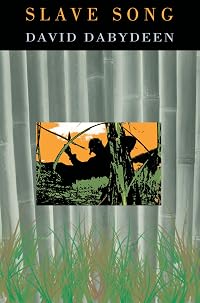
Tie me haan up.show less
Juk out me eye.
Haal me teet out
So me na go bite.
(from "Slave song")
Ratings
Members
- Recently Added By
Lists

Books Read in 2016
4,666 works; 197 members

Art-inspired fiction
45 works; 2 members
Author Information
25+ Works 475 Members
David Dabydeen is Professor of Literary Studies at the University of Warwick.
Classifications
Statistics
- Members
- 37
- Popularity
- 781,049
- Reviews
- 1
- Rating
- (2.25)
- Languages
- English
- Media
- Paper
- ISBNs
- 2