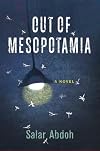
Out of Mesopotamia
by Salar Abdoh
On This Page
Description
"Saleh, the narrator of Out of Mesopotamia, is a middle-aged Iranian journalist who moonlights as a writer for one of Iran's most popular TV shows but cannot keep himself away from the front lines in neighboring Iraq and Syria. There, the fight against the Islamic State is a proxy war, an existential battle, a declaration of faith, and, for some, a passing weekend affair. After weeks spent dodging RPGs, witnessing acts of savagery and stupidity, Saleh returns to his civilian life of Tehran show more bookstore readings and trendy art openings and finds it to be an unbearably dislocating experience. Pursued by the woman who broke his heart, his official handler from state security (who wants him for questioning over a suspicious volume of Proust), and the screenwriters with whom he is supposed to be collaborating, Saleh has reason to flee again from everyday life--but not necessarily to discard it. Surrounded by men whose willingness to achieve martyrdom both fascinates and appalls him, Saleh struggles to make sense of himself and the turmoil that surrounds him."--Provided by publisher. show lessTags
Recommendations
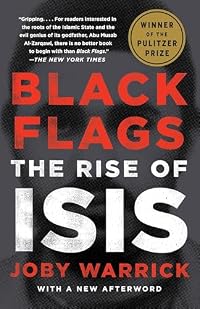
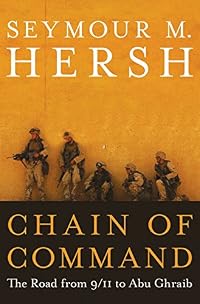
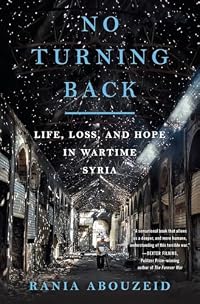
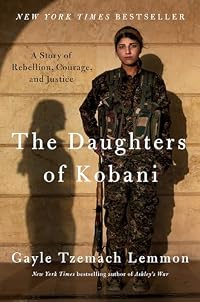


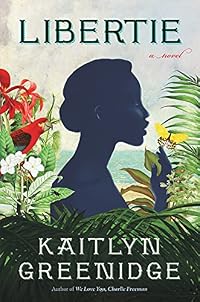
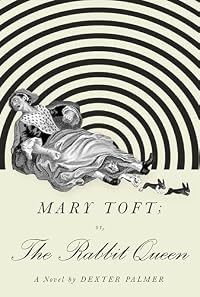
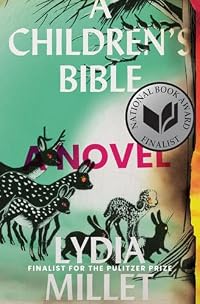
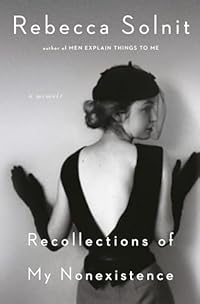
Member Recommendations
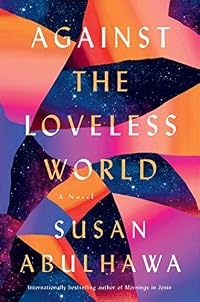
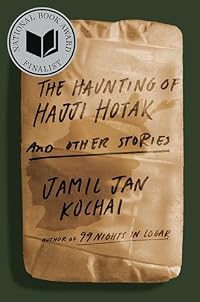
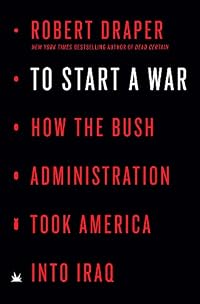
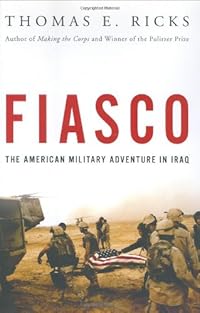
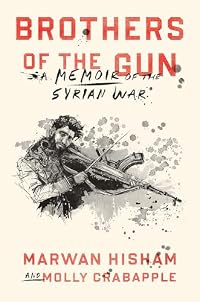
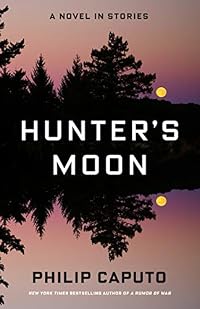
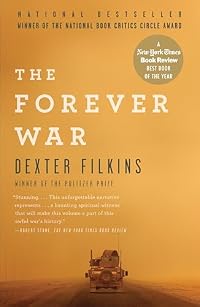
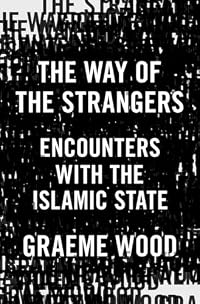
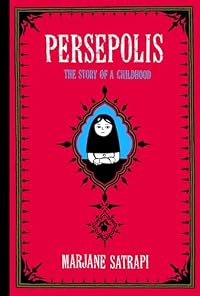
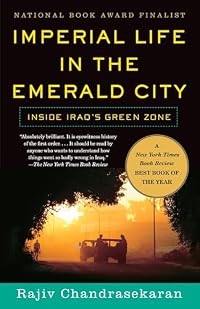
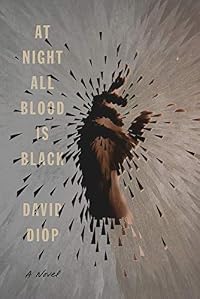
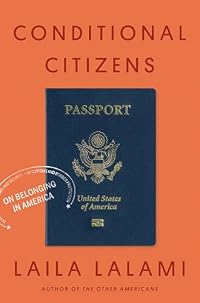
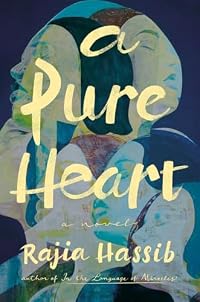
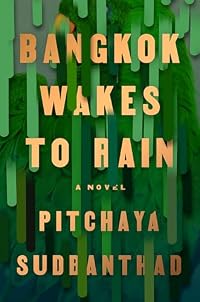
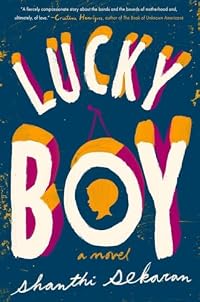
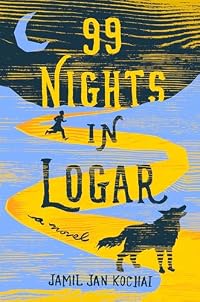
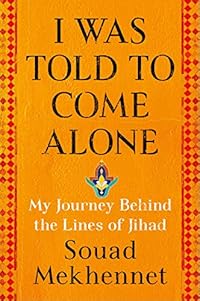
susanbooks Both books do a great job portraying the bewildering surrealism of fighting a war in your own country. At one minute you're on the battlefield; the next you're watching movies at home with friends. Both are amazing books.

susanbooks Both novels are about people outside & within wars in the Middle East trying to make sense of their insanity
Member Reviews
An Iranian journalist, Saleh, ends up at the front lines of the war in Iraq and Syria - repeatedly. Despite the fact that he is actually an art critic - in the craziness that was ISIS, such details did not matter much. In between his trips there, he deals with the backstabbing world of journalism (and censorship) in Tehran. The story weaves between the two - the peaceful Tehran and the martyrdom at the border cannot offer a bigger contrast on paper. Except that reality is a lot more complicated.
The novel is not the usual story of a reporter at war - these had been done. But then this war was not really like any other. Saleh chooses his own path more often than not and ends up part of a war that noone seems to believe in anymore. It is show more a cynical take on what was happening there but it also rings true.
I would have called the novel absurd but its sheer absurdity in places makes it sound real - from the old painter who wants to die and ends up in Samarra to the guy who goes to war with Proust in his backpack, from the state interrogator who starts quoting Proust to the marriage proposal that comes to late, from fighters citing Arabic poetry to a French man with a death wish - it all makes sense in a weird sort of way.
The style takes awhile to get used to - the prose switches between almost lyrical to almost crude and back and just like the style, the story itself jumps between times and people. The story is also full of Persian philosophy and regional history - and I suspect I missed some of it - the text assumes you already know it. That makes some part read dryer than they would read to someone who recognizes the references but they are as important as the war itself for what really is happening over there.
It wasn't always an easy novel to read but if you are in the mood for a war novel, give this one a try. show less
The novel is not the usual story of a reporter at war - these had been done. But then this war was not really like any other. Saleh chooses his own path more often than not and ends up part of a war that noone seems to believe in anymore. It is show more a cynical take on what was happening there but it also rings true.
I would have called the novel absurd but its sheer absurdity in places makes it sound real - from the old painter who wants to die and ends up in Samarra to the guy who goes to war with Proust in his backpack, from the state interrogator who starts quoting Proust to the marriage proposal that comes to late, from fighters citing Arabic poetry to a French man with a death wish - it all makes sense in a weird sort of way.
The style takes awhile to get used to - the prose switches between almost lyrical to almost crude and back and just like the style, the story itself jumps between times and people. The story is also full of Persian philosophy and regional history - and I suspect I missed some of it - the text assumes you already know it. That makes some part read dryer than they would read to someone who recognizes the references but they are as important as the war itself for what really is happening over there.
It wasn't always an easy novel to read but if you are in the mood for a war novel, give this one a try. show less
Brilliant. Beautiful. Horrifying. Abdoh echoes Western war authors (Hemingway, Tim O'Brien), making their familiar words newly painful. Then he brings in Proust and TV and the postmodern kaleidoscope of this book whirls. Our narrator is an art critic who somehow finds himself covering, then aiding the war in Iraq against ISIS. Sometimes he returns to his art critic job and the change is bewildering: at an art auction,
A lot of the people in those rooms who bid on the art would be in other rooms the next day sending money for one side or the other fighting in Syria, in Iraq, in Libya, in Yemen. . . . I'd get invited to dinners . . . where they brought lobster and sushi not on trays but in crates the size of golf carts. I was a part of show more it. A small cog in the pageant of Middle Eastern excess and injustice (99).
And later, watching a Hollywood movie on video with fellow combatants,
We were mesmerized. Just a few kilometers from the [battlefield] we sat watching the world of the beautiful. Their fictions broadcasting right into the broken room that the enemy almost managed to capture some months ago on their way . . . to the capital of their fictitious empire down the road in Syria. I do not know how to translate any of this. I do not know in how many worlds a person can live simultaneously before they lose themselves completely. There is not language to explain all of this (133-34).
That whirling dislocation becomes the book's topic. How can horror, so constant it becomes boring, exist in the same world as children eating ice cream, as craven collectors betting on artists's reputations?
There is a plot: our Iranian narrator is interrogated in Iran, has a complicated relationship with a woman, has myriad relationships with his fellow fighters, colleagues, and one pretend cousin. But it's the way our narrator tries to bring it all together, tries to realize this is all happening at once, so close, even as people in one place seem wholly unaware of those in the other, except as cartoon-like martyrs, devoid of real humanity, that makes this book so special.
For several years I co-taught a class on World War I literature, so I've read and studied a fair amount of war novels. This is by far one of the best I've experienced. It starts a little slow -- the prose takes a bit of getting used to -- but stick with it: this is an extraordinary work.
Many thanks to Librarything, Akashic, and Salar Abdoh for allowing me to read this amazing book. show less
A lot of the people in those rooms who bid on the art would be in other rooms the next day sending money for one side or the other fighting in Syria, in Iraq, in Libya, in Yemen. . . . I'd get invited to dinners . . . where they brought lobster and sushi not on trays but in crates the size of golf carts. I was a part of show more it. A small cog in the pageant of Middle Eastern excess and injustice (99).
And later, watching a Hollywood movie on video with fellow combatants,
We were mesmerized. Just a few kilometers from the [battlefield] we sat watching the world of the beautiful. Their fictions broadcasting right into the broken room that the enemy almost managed to capture some months ago on their way . . . to the capital of their fictitious empire down the road in Syria. I do not know how to translate any of this. I do not know in how many worlds a person can live simultaneously before they lose themselves completely. There is not language to explain all of this (133-34).
That whirling dislocation becomes the book's topic. How can horror, so constant it becomes boring, exist in the same world as children eating ice cream, as craven collectors betting on artists's reputations?
There is a plot: our Iranian narrator is interrogated in Iran, has a complicated relationship with a woman, has myriad relationships with his fellow fighters, colleagues, and one pretend cousin. But it's the way our narrator tries to bring it all together, tries to realize this is all happening at once, so close, even as people in one place seem wholly unaware of those in the other, except as cartoon-like martyrs, devoid of real humanity, that makes this book so special.
For several years I co-taught a class on World War I literature, so I've read and studied a fair amount of war novels. This is by far one of the best I've experienced. It starts a little slow -- the prose takes a bit of getting used to -- but stick with it: this is an extraordinary work.
Many thanks to Librarything, Akashic, and Salar Abdoh for allowing me to read this amazing book. show less
 This review was written for LibraryThing Early Reviewers.
Saleh, the narrator of Out of Mesopotamia frequently returns to the war zones in Iraq and Syria as part of a band of Iranians seeking martyrdom in the rather endless war against the Islamic State. The fighting scenes are realistic in telling but these are alternated with some of the absurdities of his life back in Iran. There he is an art critic, a writer of a popular TV program, and a frequent interviewee of his Iranian state security handler, H. He is being investigated for burying a worn copy of Proust’s Remembrance of Things Past that possibly contain hidden messages. He travels back to Tehran frequently which contrasts to his life in battle. His love interest decides to follow her head instead of her heart and marries a show more well-connected magazine editor. Saleh struggles to make sense of his life but realizes in the end that you can’t stop about anything too long because “the business of the living is always too immensely turbulent…” The author brings a realistic view of an area and war that seems incomprehensible at times. show less
This review was written for LibraryThing Early Reviewers.I found this book to be a fresh-to-Western-eyes take on the flip side, in a way, of the Forever Wars against Terror (as well as the deep fatigue and destruction brought about by war). I say that as one who has read pretty widely and deeply in this area. The narrator is Iranian, a writer and sometimes correspondent who becomes addicted to being adjacent to war - in this case, the fight against ISIS - and, as the Islamic world views them, “martyrs.” He works at a Mokeb (something like a field kitchen / hospitality unit) for Hashd fighters, who may be, and are, barbarous, but their barbarism is in the service of “protecting the holy places” from the predations and martyrdoms of Isis fighters. I think the author stumbles a bit here show more and there, perhaps most at the ending - though I am not even sure what a better ending would have looked like, and maybe that’s the point - but overall this is a war novel that manages something fresh among all the soul emptying of war, and the (to borrow Ackerman’s phrase) Misfits, Mercenaries, and Missionaries who go to war. Abdoh sketches and creates some extremely memorable characters and some extremely difficult situations, and this book will stay with me for a long time. show less
Out of Mesopotamia is one of those rare books that I know I will read again and again. The prose is beautiful, the emotions raw and authentic in their confusion and contradiction. It is everything a true war story must be, contradictory, confusing, and full of love.
Saleh is a writer in Tehran who is officially an art critic, reluctantly a plot writer for the most popular TV series, and inexorably a war chronicler on the Iraqi and Syrian fronts against ISIS. He has served as a war correspondent in the past, but this time he is there cooking for the soldiers and editing the journals and notes of the martyrs.
The official censor/interrogator assigns him a task on the front, to search for a martyr who may be still alive. People are always show more asking him to do things, to write reviews, to go to the front, to take someone else to the front, to help them live and die. And he, he doesn’t know exactly what he wants other than to be at the front where life seems to have something ineffable, nothing so rich as meaning or purpose, but perhaps urgency.
We hear so little from the people actually fighting ISIS. From the Iranians with whom we are loosely allied in the battle against the Islamic State, we hear even less. Even if this were not such an excellent book, it would bring us a fresh perspective on an important war. But it is excellent in every way a book can be. Well written with an intriguing plot and big ideas.
Early in the book, the author references Tim O’Brien’s The Things They Carried though not by name, paraphrasing from How to Tell a True War Story, one of the stories in that collection. By calling in Tim O’Brien, Abdoh invites comparison, a bold thing to do. The Things They Carried is one of those books that will still be read and admired in a hundred years. Reading, I saw several references to O’Brien’s work. When his interrogator H sends him to look for Proust, I thought of Going After Cacciato” and even Paris plays the same role as a refuge. There is a death that immediately brought to mind the death of Curt Lemon, told and retold in story after story. There even is the same discontinuity of time from chapter to chapter.
To say I loved Out of Mesopotamia is an understatement. I know it is a book I will treasure because it says more in its few pages than most books five times its size.
Out of Mesopotamia will be released on September 1st. I received an ARC from the publisher through LibraryThing.
Out of Mesopotamia at Akashic Books
Salar Abdoh Faculty Page
https://tonstantweaderreviews.wordpress.com/2020/08/21/out-of-mesopotamia-by-sal... show less
Saleh is a writer in Tehran who is officially an art critic, reluctantly a plot writer for the most popular TV series, and inexorably a war chronicler on the Iraqi and Syrian fronts against ISIS. He has served as a war correspondent in the past, but this time he is there cooking for the soldiers and editing the journals and notes of the martyrs.
The official censor/interrogator assigns him a task on the front, to search for a martyr who may be still alive. People are always show more asking him to do things, to write reviews, to go to the front, to take someone else to the front, to help them live and die. And he, he doesn’t know exactly what he wants other than to be at the front where life seems to have something ineffable, nothing so rich as meaning or purpose, but perhaps urgency.
We hear so little from the people actually fighting ISIS. From the Iranians with whom we are loosely allied in the battle against the Islamic State, we hear even less. Even if this were not such an excellent book, it would bring us a fresh perspective on an important war. But it is excellent in every way a book can be. Well written with an intriguing plot and big ideas.
Early in the book, the author references Tim O’Brien’s The Things They Carried though not by name, paraphrasing from How to Tell a True War Story, one of the stories in that collection. By calling in Tim O’Brien, Abdoh invites comparison, a bold thing to do. The Things They Carried is one of those books that will still be read and admired in a hundred years. Reading, I saw several references to O’Brien’s work. When his interrogator H sends him to look for Proust, I thought of Going After Cacciato” and even Paris plays the same role as a refuge. There is a death that immediately brought to mind the death of Curt Lemon, told and retold in story after story. There even is the same discontinuity of time from chapter to chapter.
To say I loved Out of Mesopotamia is an understatement. I know it is a book I will treasure because it says more in its few pages than most books five times its size.
Out of Mesopotamia will be released on September 1st. I received an ARC from the publisher through LibraryThing.
Out of Mesopotamia at Akashic Books
Salar Abdoh Faculty Page
https://tonstantweaderreviews.wordpress.com/2020/08/21/out-of-mesopotamia-by-sal... show less
This review was written for LibraryThing Early Reviewers.This review was done as a LibraryThing Early Reviewer. In following the tale of Saleh and his involvement in war in Syria and Iraq I am reminded of a moth who cannot overcome its attraction to the flame. Perhaps the moth does not understand such flirtation can have an ending where it "goes up in smoke", but Saleh has personally experienced his fellow soldiers going up in smoke and should keep his distance. Unfortunately, his personal life is so unfulfilling, his career so unrewarding, that he seeks refuge in his ongoing dance with the flame. He is not, by his own admission, a warrior, and his war zone duties seem to center on mundane activities such as cooking for those who actually engage the enemy in combat. Saleh is enamored of the show more Arabs who fight ISIS, however, he is repeatedly ambivalent about the contribution of the U.S.A. He does succeed, very aptly, in depicting the fighting as often senseless, futile, chaotic, stupid and the results usually pointless. He brings to life an entire litany of unique characters who are intertwined in his personal life and his life on the battlefield, and paints them with great precision and dimension. Abdoh's novel is an eminently readable, engrossing look at war in the Middle East, and his perspective is unique. This is an engaging book, difficult to put down, but it is a quick read, as well! show less
This review was written for LibraryThing Early Reviewers.Not a bad read. It was good but not great. I wasn’t a fan of the main character. He seemed just as reckless as Proust and Abu Faranci were but yet felt the need to judge them. Especially since Saleh, the main character just like them on purpose goes to join the war even though he has no interest in actually fighting and his eyesight is terrible. I wanted to like him but I couldn’t. I found him to be immature, foolish and too indecisive about every aspect of his life. There was real potential for this book to go real deep when talking about war, love, fear and how foolish people are but it just fell short for me. Nonetheless it was a quick read and does shed some light on Iranian culture and certain beliefs Shias have. Not sure how show more realistic the depiction of war was but that was also interesting. I don’t regret my decision to read it and still find it worthwhile despite all of the cons I mentioned. show less
This review was written for LibraryThing Early Reviewers.Members
- Recently Added By
Author Information

8+ Works 274 Members
Awards and Honors
Distinctions
Classifications
Statistics
- Members
- 52
- Popularity
- 581,245
- Reviews
- 11
- Rating
- (4.03)
- Languages
- English
- Media
- Paper, Audiobook, Ebook
- ISBNs
- 7
- ASINs
- 1