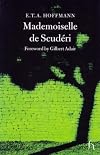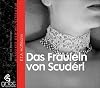
Mademoiselle de Scudéri
by E. T. A. Hoffmann
On This Page
Description
Who isn't familiar with the fascinating events surrounding E.T.A. Hoffmann's famous Mademoiselle de Scuderi? The historical incidents portrayed in the novella were once famously recounted by Voltaire in his Age of Louis XIV. In the series Law in Art - Art in Law (Recht in der Kunst - Kunst im Recht), which is edited by the criminal law expert Professor Dr. Dr. Thomas Vormbaum from the Open University Hagen, two renowned commentators offer their perspectives on E.T.A. Hoffman's work: literary show more scholar, Marion Bo nnighausen, andHeinz Mu ller-Dietz, jurist. show lessTags
Recommendations














































Member Reviews
I have a large pile of slim Reclam editions, usually each of one novella a two short stories, seldom more than 90 pages. They are very cheap, but good editions of mostly German classics. Last year I read a few by Theodor Storm and to go for a change, I picked up this novella by E.T.A Hoffmann.
I was quite surprised that this is a detective story, not my favourite genre, but every now and then, I can enjoy reading some, and this is particularly well-written. I can remember how often I have read that this or that was the first or earliest detective story, but published in 1819, this apparently is a strong contender.
I was quite surprised that this is a detective story, not my favourite genre, but every now and then, I can enjoy reading some, and this is particularly well-written. I can remember how often I have read that this or that was the first or earliest detective story, but published in 1819, this apparently is a strong contender.
I once read on wikipedia that Das Fräulein von Scudery by E. T. A. Hoffmann is sometimes considered one of the first novels of the evolving detective fiction genre. And as I read this booklet some long time ago in my literature classes at gymnasium I couldn’t see how it fits in the context. So I bought a new copy and re-read the story.
The plot concentrates around Magdaleine von Scudery, a poet reagarded by König Ludwig XIV. as highly talented and entertaining, a shizophrencic goldsmith named René Cardillac (who is the best goldsmith known to man at day, but a murderous, jewelery obsessed killer at night), his angellike daughter Madelon and her boyfriend and René’s fellow guild member Olivier Brußon.
As René Cardillac is found show more dead, Olivier Brußon is accused to have murdered his master in cold blood. But hearing him swear he hadn’t done it and seeing little Madelon wipe without end, Magdaleine von Scudery is shortly before getting to know René Cardillacs dark secret and then tries everything to rid Olivier Brußon from his occupied guilt.
In my opinion E. T. A. Hoffman is one of the shiny figures of German literature and so Das Fräulein von Scudery is, by itself, a very nice novel that shows the talent of the author. But in terms of the question of being one of the first detective fiction novels, I cannot see it's importance. Sure, Magdaleine von Scudery is carried away into the “Reich der Möglichkeiten” with her thoughts sometimes, but first of all she doesn’t deduct much worth mentioning from it and second of all she is not a real character who investigates the case. In contrast to the men in charge of the chambre ardente, a special unit set to life by König Ludwig XIV. to relentlessly hunting down the culprit scum of Paris back in the days, Magdaleine von Scudery is more sensitive for the truth and doesn’t fall for early suspicions and suppositions though. But then she is so terribly emotional that you could hardly speak of her as making elborate decisions or even educated guesses.
In the end Das Fräulein von Scudery is a short, entertaining classic by one of Germans best writers, but personally I wouldn’t consider the novel as one of the first novels of the new evolving detective fiction genre. But I can surely see that it can be considered one of the works that led to its evolution (stylistically and structurally at least for I’m not sure if Poe had read Hoffmann before writing his Dupin tales). show less
The plot concentrates around Magdaleine von Scudery, a poet reagarded by König Ludwig XIV. as highly talented and entertaining, a shizophrencic goldsmith named René Cardillac (who is the best goldsmith known to man at day, but a murderous, jewelery obsessed killer at night), his angellike daughter Madelon and her boyfriend and René’s fellow guild member Olivier Brußon.
As René Cardillac is found show more dead, Olivier Brußon is accused to have murdered his master in cold blood. But hearing him swear he hadn’t done it and seeing little Madelon wipe without end, Magdaleine von Scudery is shortly before getting to know René Cardillacs dark secret and then tries everything to rid Olivier Brußon from his occupied guilt.
In my opinion E. T. A. Hoffman is one of the shiny figures of German literature and so Das Fräulein von Scudery is, by itself, a very nice novel that shows the talent of the author. But in terms of the question of being one of the first detective fiction novels, I cannot see it's importance. Sure, Magdaleine von Scudery is carried away into the “Reich der Möglichkeiten” with her thoughts sometimes, but first of all she doesn’t deduct much worth mentioning from it and second of all she is not a real character who investigates the case. In contrast to the men in charge of the chambre ardente, a special unit set to life by König Ludwig XIV. to relentlessly hunting down the culprit scum of Paris back in the days, Magdaleine von Scudery is more sensitive for the truth and doesn’t fall for early suspicions and suppositions though. But then she is so terribly emotional that you could hardly speak of her as making elborate decisions or even educated guesses.
In the end Das Fräulein von Scudery is a short, entertaining classic by one of Germans best writers, but personally I wouldn’t consider the novel as one of the first novels of the new evolving detective fiction genre. But I can surely see that it can be considered one of the works that led to its evolution (stylistically and structurally at least for I’m not sure if Poe had read Hoffmann before writing his Dupin tales). show less
One of those books that you pick up not knowing what is in store. This is the book that is supposed to have inspired Poe and Agatha Christie. I can understand why, but I lost interest in it fairly soon.
German Novel
Ratings
Members
- Recently Added By
Lists

Historical Fiction
889 works; 91 members

German Literature
518 works; 49 members
Author Information

German writer, composer, and painter ErnstTheodor Amadeus Hoffman was born in Konigsberg, Prussia in 1776. After beginning a career in the law, Hoffman turned to music, working as a conductor, music director, and critic, and later composing a ballet, an opera, and other works. He established himself as a writer with the four-volume story show more collection Phatasiestucke in Callier Manier (Fantasy Stories in the Manner of Callot), which was published in 1814-1815. Even though he published several novels and story collections, including Nachtstucke (Hoffman's Strange Stories, 1817) and Die Serapionsbruder (The Serapion Brethren, 1819-1821), Hoffman continued to support himself as a legal official in Berlin. This struggle between artistry and bureaucracy is played out in many of his works. Hoffman died of progressive paralysis in 1822. (Bowker Author Biography) show less
Some Editions
Awards and Honors
Notable Lists
Series
Belongs to Publisher Series
Work Relationships
Is contained in
Hamburger Lesehefte plus Königs Materialien : E. T. A. Hoffmann : Das Fräulein von Scuderi by Horst Grobe (indirect)
Hoffmanns Werke in drei Bänden. Bd. 2: Erzählungen und Märchen (Meister Martin der Küfner und seine Gesellen. Das Fräulein von Scuderi. Meister Floh - Ein Märchen in sieben Abenteuern zweier Freunde. Des Vetters Eckfenster) by E. T. A. Hoffmann
E.T.A. Hoffmann Werke in vier Bänden Band 2: Nachtstücke - Klein Zaches genannt Zinnober - Die Serapionsbrüder by Ernst Theodor Amadeus Hoffmann (indirect)
Is retold in
Has the adaptation
Has as a commentary on the text
Has as a student's study guide
Reclam Erläuterungen und Dokumente : E. T. A. Hoffmann : Das Fräulein von Scuderi by Hans-Ulrich Lindken
Common Knowledge
- Canonical title
- Mademoiselle de Scudéri
- Original title
- Das Fräulein von Scuderi; Das Fräulein von Scuderi
- Alternate titles
- Mademoiselle de Scudéry
- Original publication date
- 1819 (German original) (German original); 1908 (English translation|Ransome) (English translation | Ransome)
- People/Characters
- Madeleine de Scudéry; René Cardillac; Olivier Brusson
- Important places
- Paris, France
- First words
- Mademoiselle de Scudéry, whom her graceful verses and the patronage of Louis XIV. and Madame de Maintenon had made famous, lived in a small house in the Rue St. Honoré.
(Ransome translation, 1908).
In the rue St-Honore was situated the little house which Madeleine de Scuderi, well-known for her charming poetry, lived in through the grace and favour of Louis XIV and Mme de Maintenon. - Last words
- (Click to show. Warning: May contain spoilers.)What remained unclaimed was handed over to the Church of St. Eustache.
(Ransome translation, 1908).
(Click to show. Warning: May contain spoilers.)The rest fell to the treasury of St Eustache. - Original language
- German
- Disambiguation notice
- 3150000254 Reclam UB
3159600041 Reclam UB eBook
3423026456 dtv
3458200274 2018 hardcover German Insel-Bücherei 2027
Classifications
- Genres
- Fiction and Literature, General Fiction, Mystery
- DDC/MDS
- 833.6 — Literature & rhetoric German & related literatures German fiction 1750-1832 : 18th century, classical period, romantic period
- LCC
- PT2360 .F8 — Language and Literature German, Dutch and Scandinavian literatures German literature Individual authors or works 1700-ca. 1860/70
- BISAC
Statistics
- Members
- 519
- Popularity
- 57,679
- Reviews
- 4
- Rating
- (3.41)
- Languages
- 12 — Catalan, Czech, Dutch, English, Estonian, French, German, Italian, Portuguese, Russian, Swedish, Turkish
- Media
- Paper, Audiobook, Ebook
- ISBNs
- 64
- ASINs
- 14