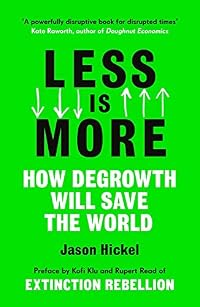
Less Is More: How Degrowth Will Save the World
by Jason Hickel
On This Page
Description
The world has finally awoken to the reality of climate breakdown and ecological collapse. Now we must face up to its primary cause. Capitalism demands perpetual expansion, which is devastating the living world. There is only one solution that will lead to meaningful and immediate change: DEGROWTH. If we want to have a shot at halting the crisis, we need to restore the balance. We need to change how we see nature and our place in it, shifting from a philosophy of domination and extraction to show more one that's rooted in reciprocity and regeneration. We need to evolve beyond the dogmas of capitalism to a new system that is fit for the twenty-first century. But what does such a society look like? What about jobs? What about health? What about progress? This book tackles these questions and traces a clear pathway to a post-capitalist economy. An economy that's more just, more caring, and more fun. An economy that enables human flourishing while reversing ecological breakdown. An economy that will not only lift us out of our current crisis, but restore our sense of connection to a world that's brimming with life. By taking less, we can become more. show lessTags
Recommendations
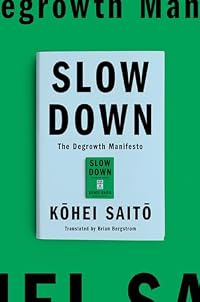
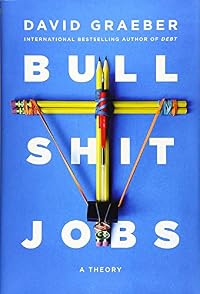
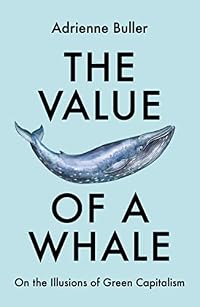
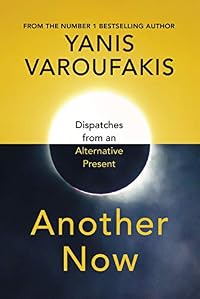





Member Reviews
This is not the first time that I have regretted my inclination to give so many books a five star review. I have, on more than one occasion, wished for a sixth star. The problem here is that even that would not be sufficient: at least ten stars are required to indicate just how important and significant this tome is.
Jason Hickel provides, in just 290 pages, the best history of Capitalism that I have ever read. Surely, that's enough, but no; the author goes on to point towards the way in which we should be looking to move on to pastures new. Absolutely brilliant!
Towards the end, I was finding myself frustrated at Mr Hickel's use of the word human to cover the relationship between other animals, plants and the terrain. It was only when I show more tried to insert a more suitable word that I realised that, whilst 'human' is not right, our language, rich as it is, has no suitable one to explain this relationship and that, until something more accurate comes along, 'human' will have to suffice.
This is a MUST read book!!!! show less
Jason Hickel provides, in just 290 pages, the best history of Capitalism that I have ever read. Surely, that's enough, but no; the author goes on to point towards the way in which we should be looking to move on to pastures new. Absolutely brilliant!
Towards the end, I was finding myself frustrated at Mr Hickel's use of the word human to cover the relationship between other animals, plants and the terrain. It was only when I show more tried to insert a more suitable word that I realised that, whilst 'human' is not right, our language, rich as it is, has no suitable one to explain this relationship and that, until something more accurate comes along, 'human' will have to suffice.
This is a MUST read book!!!! show less
Less is More: How Degrowth Will Save the World by Jason Hickel offers an interesting perspective on the relationship between capitalism and the destruction of the Earth, societies, and even our connections to one another and the planet itself. Less is More explores the history and evolution of capitalism in the world without making excuses for it. Hickel exposes the damage of treating the planet as a place for resources rather than as the home we all share. Hickel writes in an engaging, informative way that explains and dissects the problem while offering reasons for hope. Less is More demonstrates possible paths toward degrowth that feel plausible but left me wondering if it's too late for some of the incremental changes proposed. show more Hickel does a really good job demonstrating why degrowth is a viable option for creating a more equitable society that holds the potential to save the world for all. Less is More is a call to all of us to connect with the world on a deeper level and find ways to a better life that doesn't revolve around capitalism but provides for appreciating the interconnectedness of all the beings inhabiting the Earth. show less
I am assuming in our heart of hearts that the majority of us know that we must consume less to save planet earth from ecological disaster. Jason Hickel outlines the history of the rise of capitalism whose central tenant is that we must all consume more. It is little wonder then that he is of the belief that capitalism is going to destroy the planet. I don't think he ever uses those words exactly, but this is his message. This all chimes very neatly with my own views and so for the majority of the book I was nodding my head in agreement. However a book with such a dramatic title and subtitle is bent on changing the minds of other people who do not hold the same views: this I think is where it might fail. It can seem a bit simplistic with show more perhaps not enough gravitas, although there are pages of references and end notes.
The book is divided into two parts; More is Less and Less is More, but in my view there is a third part to this book, which continually threatens and then succeeds in tipping it over into the realms of an anthropological conclusion, which strays too far away from the issues of climate change. So lets start with the first two parts of the book as stated in the contents list. More is Less is Hickel's take on the rise of capitalism; a history that neatly reflects my own views, because at many points I was thinking to myself I could have written this. He starts or should that be; we start, with a long definition of capitalism and how it is based on continued growth: the breakdown of feudalism in the late middle ages which gave rise to the enclosure acts in Britain and the wealth created by the merchant class. The early capitalism fuelled more inequality and the continued race to expand, led to colonisation in the search for raw materials and cheap labour. This section concludes with the authors view that: the over reliance on a country's GDP (Gross Domestic Product) as a measurement of well being is hopelessly flawed. He concludes by asking the question: Why do we need to keep expanding the economy year on year. The Second Section; Less is More starts with the premise:
"We know exactly what works: reduce inequality, invest in universal public goods, and distribute income and opportunity more fairly.
What’s exciting about this approach is that it also has a direct positive impact on the living world. As societies become more egalitarian, people feel less pressure to pursue ever-higher incomes and more glamorous status goods. This liberates people from the treadmill of perpetual consumerism."
He then explores alternative approaches to capitalist consumerism, before running through the obstacles to any new initiatives: noting the richest 10% of the population are responsible for over 50% of carbon emissions, the richest 1% have their hands firmly on the levers of power and will do all they can to stifle democracy. He says the reason why we are starring down the barrel of an ecological crisis is because our political systems have become completely corrupted.
Jason Hickel is an economic anthropologist by training and what is bubbling beneath the surface of his text and which finally breaks through towards the end is his belief in the interconnectedness of nature. He gives examples of anthropological studies of peoples who have learned to live with their environments, people that see little difference between humans, other animals and plant life. People that believe in reciprocity: what you take away from the planet you should put back in. He believes in the more than human world:
"It gestures towards how we might begin to heal the rift from which this crisis has ultimately sprung. It empowers us to imagine a richer, more fertile future: a future free from the old dogmas of capitalism and rooted instead in reciprocity with the living world. The ecological crisis requires a radical policy response. We need high-income countries to scale down excess energy and material use; we need a rapid transition to renewables; and we need to shift to a post-capitalist economy that’s focused on human well-being and ecological stability rather than on perpetual growth."
Hickel does stray into the realms of Gaia a sort of personification of the earth that might deter some readers. I understand where he is coming from, but have not the understanding of the issues to make any sort of valid judgement. I am more at home with the historic, economic and practical information that is contained in this book. The book is easy to read and I wish some of my friends would read it. A four star read show less
The book is divided into two parts; More is Less and Less is More, but in my view there is a third part to this book, which continually threatens and then succeeds in tipping it over into the realms of an anthropological conclusion, which strays too far away from the issues of climate change. So lets start with the first two parts of the book as stated in the contents list. More is Less is Hickel's take on the rise of capitalism; a history that neatly reflects my own views, because at many points I was thinking to myself I could have written this. He starts or should that be; we start, with a long definition of capitalism and how it is based on continued growth: the breakdown of feudalism in the late middle ages which gave rise to the enclosure acts in Britain and the wealth created by the merchant class. The early capitalism fuelled more inequality and the continued race to expand, led to colonisation in the search for raw materials and cheap labour. This section concludes with the authors view that: the over reliance on a country's GDP (Gross Domestic Product) as a measurement of well being is hopelessly flawed. He concludes by asking the question: Why do we need to keep expanding the economy year on year. The Second Section; Less is More starts with the premise:
"We know exactly what works: reduce inequality, invest in universal public goods, and distribute income and opportunity more fairly.
What’s exciting about this approach is that it also has a direct positive impact on the living world. As societies become more egalitarian, people feel less pressure to pursue ever-higher incomes and more glamorous status goods. This liberates people from the treadmill of perpetual consumerism."
He then explores alternative approaches to capitalist consumerism, before running through the obstacles to any new initiatives: noting the richest 10% of the population are responsible for over 50% of carbon emissions, the richest 1% have their hands firmly on the levers of power and will do all they can to stifle democracy. He says the reason why we are starring down the barrel of an ecological crisis is because our political systems have become completely corrupted.
Jason Hickel is an economic anthropologist by training and what is bubbling beneath the surface of his text and which finally breaks through towards the end is his belief in the interconnectedness of nature. He gives examples of anthropological studies of peoples who have learned to live with their environments, people that see little difference between humans, other animals and plant life. People that believe in reciprocity: what you take away from the planet you should put back in. He believes in the more than human world:
"It gestures towards how we might begin to heal the rift from which this crisis has ultimately sprung. It empowers us to imagine a richer, more fertile future: a future free from the old dogmas of capitalism and rooted instead in reciprocity with the living world. The ecological crisis requires a radical policy response. We need high-income countries to scale down excess energy and material use; we need a rapid transition to renewables; and we need to shift to a post-capitalist economy that’s focused on human well-being and ecological stability rather than on perpetual growth."
Hickel does stray into the realms of Gaia a sort of personification of the earth that might deter some readers. I understand where he is coming from, but have not the understanding of the issues to make any sort of valid judgement. I am more at home with the historic, economic and practical information that is contained in this book. The book is easy to read and I wish some of my friends would read it. A four star read show less
“Less is More” offers insights about the limitations of green energy, the effects of growth policies on our approach to climate change, and the very useful social policies that could derive from a no growth approach.
“Capitalism artificially creates scarcity to drive growth. It avoids satisfying human needs. It is irrational and ecologically violent.”
The author complains that the drive for profits causes capitalists to use up the bounty of the planet.
I must interject here to say that I am a businessman although it would be a stretch to say I am a successful capitalist, or any kind of capitalist.
In my experience, making a profit in this go-go economy is increasingly difficult at the micro level.
This is not something the author show more seems to have any expertise in. A no growth economy could have deleterious effects on my livelihood, but I am older. Maybe a younger man can figure it out.
I can tell you one thing: higher sales does not necessarily equate to higher profits.
As far as I can tell it is completely verboten to discuss a no growth strategy at any level of policy with the powerful economies of the world.
When people ask me whether my next purchase of a car will be electrical I usually answer “First I must take at least one car off the road. Why not two?”
According to the author at every stage of the game capitalism has sectioned off the commons for the personal gain. That is why wealth is exponentially accumulating in the hands of the few, and little will be done to curb our ravenous destruction of the earth’s abundance.
The gig economy will game the system. Increasing numbers of refugees will work for less and increase domestic strife. The Syrian exodus was just the beginning of much larger waves of immigration from climate change effected regions to the benefactor wealthier nations in the north.
Is no growth the answer forever? That’s hard to say. There is plenty of wealth to redistribute in the meantime that will not undercut the lifestyle of the middle class.
If the pandemic showed us anything it’s that there are alternatives to millions of commutes along the roadways.
And surely the world’s banking system can muscle up to squeeze the tax havens and global money-laundering.
Does every family need a dog? Research tells us that one-fifth of all meat production in the US goes to create pet food, and meat production is a leading source of greenhouse gases.
All that is needed here is a little honesty to start. show less
“Capitalism artificially creates scarcity to drive growth. It avoids satisfying human needs. It is irrational and ecologically violent.”
The author complains that the drive for profits causes capitalists to use up the bounty of the planet.
I must interject here to say that I am a businessman although it would be a stretch to say I am a successful capitalist, or any kind of capitalist.
In my experience, making a profit in this go-go economy is increasingly difficult at the micro level.
This is not something the author show more seems to have any expertise in. A no growth economy could have deleterious effects on my livelihood, but I am older. Maybe a younger man can figure it out.
I can tell you one thing: higher sales does not necessarily equate to higher profits.
As far as I can tell it is completely verboten to discuss a no growth strategy at any level of policy with the powerful economies of the world.
When people ask me whether my next purchase of a car will be electrical I usually answer “First I must take at least one car off the road. Why not two?”
According to the author at every stage of the game capitalism has sectioned off the commons for the personal gain. That is why wealth is exponentially accumulating in the hands of the few, and little will be done to curb our ravenous destruction of the earth’s abundance.
The gig economy will game the system. Increasing numbers of refugees will work for less and increase domestic strife. The Syrian exodus was just the beginning of much larger waves of immigration from climate change effected regions to the benefactor wealthier nations in the north.
Is no growth the answer forever? That’s hard to say. There is plenty of wealth to redistribute in the meantime that will not undercut the lifestyle of the middle class.
If the pandemic showed us anything it’s that there are alternatives to millions of commutes along the roadways.
And surely the world’s banking system can muscle up to squeeze the tax havens and global money-laundering.
Does every family need a dog? Research tells us that one-fifth of all meat production in the US goes to create pet food, and meat production is a leading source of greenhouse gases.
All that is needed here is a little honesty to start. show less
Reading this book was akin to sitting around with your friends describing what you would do if you won the lottery. You would spend a half hour saying “wouldn’t it be cool if..” and “how awesome would it be to have..” Great plans would be made! But then the conversation would die down and the realization that you will never win the lottery will sink in.
So many great ideas! Such amazing possibilities! How content we would be! We only need to stop the people and systems in control. Easy peasy. :-/
So many great ideas! Such amazing possibilities! How content we would be! We only need to stop the people and systems in control. Easy peasy. :-/
After reading this book, I'm still not on board with degrowth as the best approach to dealing with climate change, and found it a disappointing follow-up to his previous book The Divide: Global Inequality from Conquest to Free Markets.
Early on, the author observes that: "global CO2 emissions continue to rise year after year, while ecosystems unravel at a deadly pace. Even though we have known for nearly half a century that human civilisation itself is at stake, there has been no progress in arresting ecological breakdown. None."
He then goes on to carefully document how the world economy has been extractive for the past 500 years, and details how this is not sustainable, followed by several chapters that boil down to "capitalism is show more bad".
After painstakingly establishing these basic facts that literally no one reading this book would question in the first place [preacher, meet choir] he jumps to the conclusion that the solution is that the economy needs to stop growing and we all need to consume less and use less energy.
When he gets to the point of proposing an alternative structure to our current capitalist economic system, he quotes David Graeber and Henry Ford and mumbles something about worker collectives and banks not charging interest for loans and governments handing out a UBI then shrugs and defensively states that he's an anthropologist and not an economist or political scientist and therefore has no idea what we should do. Gee thanks.
As a technologist deeply concerned with climate change, inequality, sustainability, and related "social justice" issues, I'm looking for concrete proposals backed up by hard numbers (a la Vaclav Smil). With a wave of the hand, Hickel dismisses any possibility that the 100+ Project drawdown solutions will be able to turn the tide, or that we have any hope of developing renewable forms of energy this century. He claims that he isn't advocating an economic collapse or a return to living in caves, but then he turns around and appeals to indigenous knowledge (i.e. animism) as the solution to solving our ecological problems, with prose seemingly lifted from a Mr. Rogers episode on "listening, empathy, dialogue."
Then we get a philosophical discourse on the evils of Cartesian dualism and some self-indulgent rambling that culminates with an unironic espousal of the Gaia hypothesis (complete with Earth as Mother), and concludes with a paragraph that sums up the entire book (so you won't have to read it):
Early on, the author observes that: "global CO2 emissions continue to rise year after year, while ecosystems unravel at a deadly pace. Even though we have known for nearly half a century that human civilisation itself is at stake, there has been no progress in arresting ecological breakdown. None."
He then goes on to carefully document how the world economy has been extractive for the past 500 years, and details how this is not sustainable, followed by several chapters that boil down to "capitalism is show more bad".
After painstakingly establishing these basic facts that literally no one reading this book would question in the first place [preacher, meet choir] he jumps to the conclusion that the solution is that the economy needs to stop growing and we all need to consume less and use less energy.
When he gets to the point of proposing an alternative structure to our current capitalist economic system, he quotes David Graeber and Henry Ford and mumbles something about worker collectives and banks not charging interest for loans and governments handing out a UBI then shrugs and defensively states that he's an anthropologist and not an economist or political scientist and therefore has no idea what we should do. Gee thanks.
As a technologist deeply concerned with climate change, inequality, sustainability, and related "social justice" issues, I'm looking for concrete proposals backed up by hard numbers (a la Vaclav Smil). With a wave of the hand, Hickel dismisses any possibility that the 100+ Project drawdown solutions will be able to turn the tide, or that we have any hope of developing renewable forms of energy this century. He claims that he isn't advocating an economic collapse or a return to living in caves, but then he turns around and appeals to indigenous knowledge (i.e. animism) as the solution to solving our ecological problems, with prose seemingly lifted from a Mr. Rogers episode on "listening, empathy, dialogue."
Then we get a philosophical discourse on the evils of Cartesian dualism and some self-indulgent rambling that culminates with an unironic espousal of the Gaia hypothesis (complete with Earth as Mother), and concludes with a paragraph that sums up the entire book (so you won't have to read it):
Degrowth stands for de-colonisation, of both lands and peoples and even our minds. It stands for the de-enclosure of commons, the de-commodification of public goods, and the de-intensification of work and life. It stands for the de-thingification of humans and nature, and the de-escalation of ecological crisis. Degrowth begins as a process of taking less. But in the end it opens up whole vistas of possibility. It moves us from scarcity to abundance, from extraction to regeneration, from dominion to reciprocity, and from loneliness and separation to connection with a world that’s fizzing with life.show less
It wasn’t exactly an easy read, hence the long time it took to digest the painful reality so skillfully depicted on the pages of this book. I was sceptical at first and couldn’t see how it is possible to achieve degrowth. But by the end of it, the book offered a clear bigger picture where all hangs together. I appreciate the effort that the author took to write it in the first place. And the time it took me and my partner to read it, all the precious hours filled with profound thoughts, insights and hope that this book has given us. Much recommended (read: should be prescribed) to anyone living in a growth economy.
Members
- Recently Added By
Lists

Top Five Books of 2022
736 works; 272 members

ORCID Book list
27 works; 1 member

Books Read in 2021
5,361 works; 114 members

Top Five Books of 2023
767 works; 317 members

2025 Reading List
51 works; 2 members

Books cited in Progress by Samuel McDonald
160 works; 1 member
Author Information

8+ Works 611 Members
Jason Hickel is Postdoctoral Fellow at the London School of Economics. He is coeditor of the book Ekhaya: The Politics of Home in KwaZulu-Natal.
Common Knowledge
- Canonical title*
- Menos es más : cómo el decrecimiento salvará al mundo
*Some information comes from Common Knowledge in other languages. Click "Edit" for more information.
Classifications
- Genres
- Economics, Nonfiction, General Nonfiction, Science & Nature, History
- DDC/MDS
- 338.927 — Social sciences Economics Production Economic Development And Growth Particular Policy Tendencies Greening
- LCC
- HC79 .E5 .H53 — Social sciences Economic history and conditions Economic history and conditions Special topics
- BISAC
Statistics
- Members
- 352
- Popularity
- 89,166
- Reviews
- 10
- Rating
- (4.00)
- Languages
- 7 — Dutch, English, German, Italian, Polish, Spanish, Turkish
- Media
- Paper, Audiobook, Ebook
- ISBNs
- 13
- ASINs
- 3