On This Page
Description
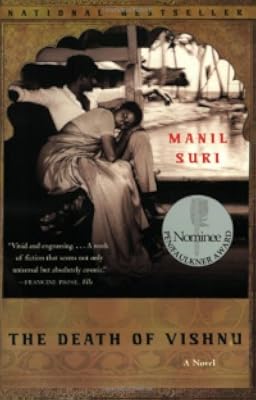
"At the opening of this novel, Vishnu, the resident odd-job man, lies dying on the staircase he inhabits, while his neighbors the Pathaks and the Asranis squabble over who will pay for an ambulance. As the action spirals up through the floors of their building, the dramas of the residents' lives unfold: Mr. Jalal's obsessive search for higher meaning; Vinod Taneja's longing for the wife he has lost; the comic elopement of Kavita Asrani, who fancies herself the heroine of a Hindi movie." show more "Suffused with Hindu mythology and the exuberance of Bombay cinema, this story of one apartment building becomes a metaphor for the social and religious divisions of contemporary India, and Vishnu's ascent of the staircase parallels the soul's progress through the various stages of existence. As Vishnu closes in on the riddle of his own mortality, he begins to wonder whether he might not be the god Vishnu, guardian not only of the fate of the building and its occupants but also of the entire universe."--Jacket. show lessTags
Recommendations
















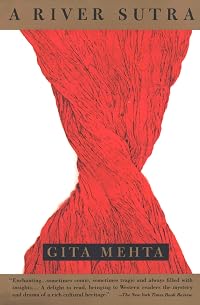

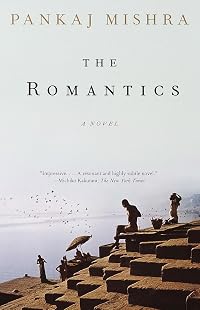

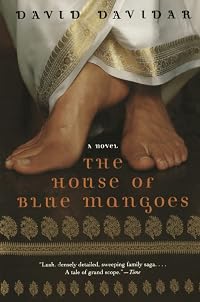





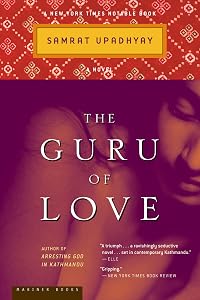
Member Recommendations

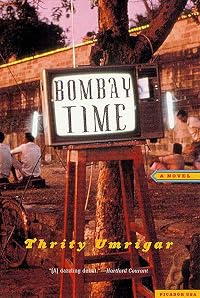
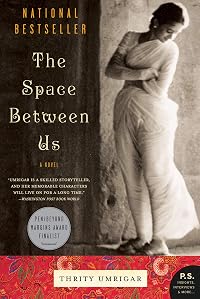
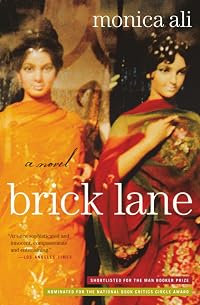
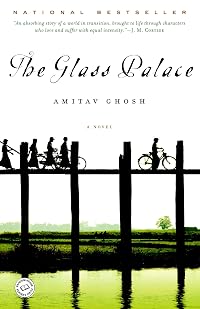
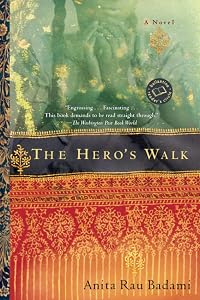
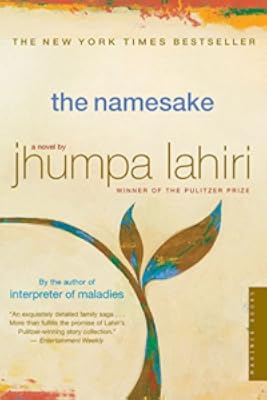
hairball I read The Death of Vishnu ages ago, so I don't recall the details, but both use apartment buildings as metaphors for India.

jennybhatt Another work of fiction set in a Bombay apartment complex
jennybhatt Another work of fiction set in a Bombay apartment complex
Member Reviews
A wonderful tale that revolves around Vishnu, who sleeps on the staircase landing of a Bombay apartment block and does odd-jobs for the residents. He is dying and we begin to meet the residents as they argue about who will pay for an ambulance to take Vishnu away. There are two Hindu families, the Pathaks and Asranis, who have petty arguments about sharing a kitchen, there is Mr Taneja, whose wife has died and who has become a recluse and there is the unfortunate Mr and Mrs Jalal and Mr Jalal's search for enlightenment in different religions and their son who is secretly meeting Kavita, the Asrani's daughter. All of this is intertwined with Indian myths and religion. There is humour as the residents deal with each other. Vishnu looks show more back on his life as he dies and we read the back story of many of the residents but it is the flats and the staircase where the novel happens. show less
The landing of an apartment building in Mumbai is occupied by Vishnu who lives there upon the sufferance of the apartment residents. He has "earned" his landing by running errands for the residents, but now as he is dying they all react with varying degrees of guilt, hostility, avoidance, repulsion. What a portrait of these dreadful, all too human, all too familiar, people! And Vishnu's dying is its own separate story ending with a kind of grace. I will not forget this book.
On a concrete landing in an apartment block in Mumbai, Vishnu, who scrapes a living by running errands for the tenants, is dying. Above and below, all around him, life in the flats continues. Mrs Ashrani and Mrs Pathak squabble over their shared kitchen, and a pair of star-crossed teenage lovers meets on the roof terrace while the parents of one struggle to come to terms with the difficulties of faith and marriage, and the mother of the other plots to get her daughter safely married off. Upstairs an elderly recluse mourns the loss of his wife, and Vishnu’s successor guards the sounds from his transistor like a drowning man clinging to the wreckage. The building seems almost like a microcosm of life on earth, even down to the ants that show more pass the dying man as his soul finds its way up the stairs to the roof.
A beautifully written novel, the tone judged exquisitely from the first page to the last. It’s all here, between these covers; the almost comic tragedy of the human condition contrasted and compared with the extraordinary mythology of the god Vishnu, and glimpses from the brain of the dying Vishnu of delicious and tender eroticism. The act of death itself becomes something very real and almost experienced. Like Hilary Mantel in Beyond Black, Manil Suri seems to pin the magic to the page and make it true. I read the last sentences and uttered ‘What?’ aloud, read them twice more before it hit me, then laughed aloud. Brilliant. show less
A beautifully written novel, the tone judged exquisitely from the first page to the last. It’s all here, between these covers; the almost comic tragedy of the human condition contrasted and compared with the extraordinary mythology of the god Vishnu, and glimpses from the brain of the dying Vishnu of delicious and tender eroticism. The act of death itself becomes something very real and almost experienced. Like Hilary Mantel in Beyond Black, Manil Suri seems to pin the magic to the page and make it true. I read the last sentences and uttered ‘What?’ aloud, read them twice more before it hit me, then laughed aloud. Brilliant. show less
There is so much going on in this novel on so many different levels that I immediately want to read it again. The juxtaposition of interior and exterior life and the human desire for connection and transcendance are common threads manifested in numerous characters who are often humorous and sometimes tragic in their obessions. Vishnu's death becomes a celebration of the senses as he remembers his life through scenes with his mother and his lover. This is not a horrible death-- although the graphic details of his very public dying create turmoil and discomfort for his neighbors who try to discover the appropriate level of compassion. Vishnu seems to have lived more deeply than those who judge him.
The mundane and mythic are interwoven-- show more is this a biological demise, spiritual ascension or both?
The setting in Mumbai is wonderfully descriptive; the characters' obessions with the trivial and obsurd are recognizable and poignant. Sometimes the writing took me to an uncomfortable edge, but I appreciate the challenge. show less
The mundane and mythic are interwoven-- show more is this a biological demise, spiritual ascension or both?
The setting in Mumbai is wonderfully descriptive; the characters' obessions with the trivial and obsurd are recognizable and poignant. Sometimes the writing took me to an uncomfortable edge, but I appreciate the challenge. show less
Manil Suri's debut novel 'The Death of Vishnu' was inspired by a real man named Vishnu who lived and died on the steps in the apartment building in Bombay where Suri grew up. That's correct, my dear fellow Western reader 'lived and died on the steps'. Even the mildly attentive reader will immediately grasp that 'The Death of Vishnu' is not a standard piece of Western literature.
The book centers around Vishnu as he lies dying on these steps where he has lived for years occasionally serving the needs of the apartment dwellers, who offer him weak tea and stale food in return. Vishnu, of course, is also the name of a major god in Hinduism and Indian mythology, the preserver of the Universe. Vishnu begins to dream while his life force ebbs. show more Another apartment dweller on his own almost inadvertent search for religious insight suggests that this often-drunk and dying Vishnu really is the Lord 'Vishnu'.
'The Death of Vishnu' is peopled with an array of interesting characters who live in or work near the building like the Asranis, Pathaks, and the Muslim Jalals, as well the cigarettewalla and the paanwalla, Short Ganga, and Tall Ganga (the book has a handy glossary). Suri explores the tribulations of living in arranged or negotiated marriages (and also the act of arranging and negotiating of these marriages), the search for religious enlightenment, religious conflict, middle-class social pretensions (all the fiercer for being so pedestrian), and more. There is a lot going on in 'The Death of Vishnu' and Suri intended this busy-ness to reflect the reality of life in Bombay (as he calls it).
'The Death of Vishnu' is the first of a trilogy with each book bearing the name of a major Hindu god. The second book The Age of Shiva: A Novel is due out in early 2008. For the Western reader like this reviewer, 'The Death of Vishnu' at times presents challenges of interpretation - is Mr. Jalal's semi-accidental search for enlightenment supposed to be comic or not? India is a very strange place to Westerners, but Suri deftly brings it closer without greatly Westernizing the story.
Highly recommended. show less
The book centers around Vishnu as he lies dying on these steps where he has lived for years occasionally serving the needs of the apartment dwellers, who offer him weak tea and stale food in return. Vishnu, of course, is also the name of a major god in Hinduism and Indian mythology, the preserver of the Universe. Vishnu begins to dream while his life force ebbs. show more Another apartment dweller on his own almost inadvertent search for religious insight suggests that this often-drunk and dying Vishnu really is the Lord 'Vishnu'.
'The Death of Vishnu' is peopled with an array of interesting characters who live in or work near the building like the Asranis, Pathaks, and the Muslim Jalals, as well the cigarettewalla and the paanwalla, Short Ganga, and Tall Ganga (the book has a handy glossary). Suri explores the tribulations of living in arranged or negotiated marriages (and also the act of arranging and negotiating of these marriages), the search for religious enlightenment, religious conflict, middle-class social pretensions (all the fiercer for being so pedestrian), and more. There is a lot going on in 'The Death of Vishnu' and Suri intended this busy-ness to reflect the reality of life in Bombay (as he calls it).
'The Death of Vishnu' is the first of a trilogy with each book bearing the name of a major Hindu god. The second book The Age of Shiva: A Novel is due out in early 2008. For the Western reader like this reviewer, 'The Death of Vishnu' at times presents challenges of interpretation - is Mr. Jalal's semi-accidental search for enlightenment supposed to be comic or not? India is a very strange place to Westerners, but Suri deftly brings it closer without greatly Westernizing the story.
Highly recommended. show less
I am a (mostly nonfiction and essay) writer whose plots pretty much suck. So I notice plots. This is a lovely plot. The writer is a mathematician, and the book's structure corresponds with the levels through which the Indian god Vishnu rises in heaven (as the story goes.)
Suri has a lovely ear for dialogue and takes great catty humor in setting up two dueling middle-aged females who share a kitchen and a floor in an apartment. On their stairs lies Vishnu, a poor beggar who is dying.
Simple, elegant, funny, interesting, pithy. Such a nice change from the "Geeta got a master's degree and is now SO UPSET because her parents want her to get MARRIED" plot that you see with the less sophisticated Indian authors.
Incidentally, I love Jane Austen show more and I find that many of the modern Indian authors are the modern equivalent to the wonderfully ironic comedy of manners that Austen used to play with. The social situations and striations are similar; it's a wonderful read.
This book is different, though. It's got an elegant structure. And no young marrieds. show less
Suri has a lovely ear for dialogue and takes great catty humor in setting up two dueling middle-aged females who share a kitchen and a floor in an apartment. On their stairs lies Vishnu, a poor beggar who is dying.
Simple, elegant, funny, interesting, pithy. Such a nice change from the "Geeta got a master's degree and is now SO UPSET because her parents want her to get MARRIED" plot that you see with the less sophisticated Indian authors.
Incidentally, I love Jane Austen show more and I find that many of the modern Indian authors are the modern equivalent to the wonderfully ironic comedy of manners that Austen used to play with. The social situations and striations are similar; it's a wonderful read.
This book is different, though. It's got an elegant structure. And no young marrieds. show less
With just the right touch of humor, the author brings us a story of relationships between residents of an apartment building in Bombay. Vishnu, resident of the first floor landing, is dying in full view of all apartment residents. First floor apartment residents, Mrs. Arani and Mrs. Pathak, disagree as to what to do about this situation and demand that the husbands of each decide. During this painful process, the Asrani’s daughter Kavita tries to decide whether or not to elope with Salim Jalal who lives on the second floor. Arifa, Salim’s mother, becomes concerned about her husband’s increasingly aberrant behavior such as sleeping one night next to the dying man Vishnu. .
The stories of these apartment dwellers and other related show more people become hopelessly and amusingly intertwined as the plot develops. There is love and feuding and life and death. Within the story, Hindu mythology abounds. At the end of the story, a glossary highlights the terms unfamiliar to the Western reader. Within the story, there’s the incredibly rich writing of a debut novelist with a promising literary future. show less
The stories of these apartment dwellers and other related show more people become hopelessly and amusingly intertwined as the plot develops. There is love and feuding and life and death. Within the story, Hindu mythology abounds. At the end of the story, a glossary highlights the terms unfamiliar to the Western reader. Within the story, there’s the incredibly rich writing of a debut novelist with a promising literary future. show less
Members
- Recently Added By
Lists

Booker Prize
491 works; 62 members

All Things India
95 works; 21 members

Pen/Faulkner Winners and Finalists
178 works; 9 members

Man Booker Prize Longlist 2001
24 works; 2 members

Most Popular Books Tagged India
36 works; 5 members
Author Information

8+ Works 2,688 Members
Manil Suri was born in Bombay. He is a mathematics professor at the University of Maryland, Baltimore County. (Bowker Author Biography)
Some Editions
Awards and Honors
Awards
Distinctions
Notable Lists
Series

Belongs to Publisher Series
Common Knowledge
- Canonical title
- The Death of Vishnu
- Original title
- The Death of Vishnu
- Original publication date
- 2001
- People/Characters
- Vishnu; Padmini; Mr. Jalal; Kavita Asrani
- Important places
- Bombay, India; Lonavala, India; India; Mumbai, India; Arabian Sea
- Epigraph
- "I am Vishnu striding among sun gods,
the radiant sun among lights...
I stand sustaining the entire world
with a fragment of my being."
- From Krishna's discourse to Arjun, Chapter Ten, The Bhagavad-Gita, translat... (show all)ed by Barbara Stoler Miller - Dedication
- For my mother and father.
- First words
- Not wanting to arouse Vishnu in case he hadn't died yet, Mrs. Asrani tiptoed down to the third step above the landing on which he lived, teakettle in hand.
- Last words
- (Click to show. Warning: May contain spoilers.)"Tomorrow, you go back," the boy says, and Vishnu hears the notes start up again.
- Blurbers
- Tharoor, Shashi; Cunningham, Michael; Tan, Amy; Crace, Jim; Barrett, Andrea; Chandra, Vikram
Classifications
Statistics
- Members
- 1,999
- Popularity
- 10,501
- Reviews
- 43
- Rating
- (3.55)
- Languages
- 15 — Basque, Catalan, Danish, Dutch, English, Estonian, Finnish, French, German, Greek, Italian, Portuguese, Spanish, Swedish, Thai
- Media
- Paper, Audiobook, Ebook
- ISBNs
- 42
- ASINs
- 18