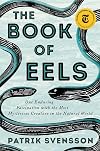
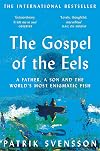
The Book of Eels: Our Enduring Fascination with the Most Mysterious Creature in the Natural World
by Patrik Svensson
On This Page
Description
Part H Is for Hawk, part The Soul of an Octopus, The Book of Eels is both a meditation on the world's most elusive fish-the eel-and a reflection on the human condition Remarkably little is known about the European eel, Anguilla anguilla. So little, in fact, that scientists and philosophers have, for centuries, been obsessed with what has become known as the "eel question": Where do eels come from? What are they? Are they fish or some other kind of creature altogether? Even today, in an age show more of advanced science, no one has ever seen eels mating or giving birth, and we still don't understand what drives them, after living for decades in freshwater, to swim great distances back to the ocean at the end of their lives. They remain a mystery. Drawing on a breadth of research about eels in literature, history, and modern marine biology, as well as his own experience fishing for eels with his father, Patrik Svensson crafts a mesmerizing portrait of an unusual, utterly misunderstood, and completely captivating animal. In The Book of Eels, we meet renowned historical thinkers, from Aristotle to Sigmund Freud to Rachel Carson, for whom the eel was a singular obsession. And we meet the scientists who spearheaded the search for the eel's point of origin, including Danish marine biologist Johannes Schmidt, who led research efforts in the early twentieth century, catching thousands upon thousands of eels, in the hopes of proving their birthing grounds in the Sargasso Sea. Blending memoir and nature writing at its best, Svensson's journey to understand the eel becomes an exploration of the human condition that delves into overarching issues about our roots and destiny, both as humans and as animals, and, ultimately, how to handle the biggest question of all: death. The result is a gripping and slippery narrative that will surprise and enchant. show lessTags
Recommendations









Member Reviews
I really honestly thought I'd learn more about eels. And not just one kind of eel, but plural-eels.
I feel bad that I don't care about the author's relationship with his father but I wanted to read The Book of Eels, not The Book of a Man Reflecting on His Father and Mortality Via the Narrative Device of Eel-Fishing.
I also do not care about Freud and think it's really quite a stretch to think any of Freud's later theories came from his summer of eel science.
I found a LOT of the supposition in the supposedly scientific chapters of this book full of "well this COULD be true" handwaving, which is really horrible writing because people who haven't been taught to read scientific papers can easily read that as "this IS true." Because it's in a show more book that uses scientific language. I find it unprofessional and tantamount to fraud, and also intellectually lazy.
My kindle version of this book is full of a lot of all-caps outrage.
I think if Svensson had wanted to write a memoir about his father and share some eel/science facts and also muse on metaphysics, religion, and the meaning of life - he's welcome to do so. But it's vitally important to maintain scrupulous clarity regarding which of those things one is doing in any given piece of writing. And he blurs the line between "eel/science facts" and "muse on metaphysics; religion, and the meaning of life" far more than anyone should while still being taken seriously.
Thomas Nagel was also done dirty, by essentially dismissing "What Is It Like to Be a Bat?" by saying - this is a direct quote - "But it’s not enough, Nagel argued. When it comes to consciousness, there are states that are completely unknown to us and will remain so, even if the human species were to survive until the end of time. Some things will always remain out of our grasp, be they about bats or eels. We can learn where these creatures come from, how they move and navigate, we can get to know them, almost as humans, but we will never fully understand what it’s like to be them.
This is a logical approach to the world, and by all appearances correct. And yet it’s tempting to think Rachel Carson did manage to reach a kind of understanding that shouldn’t really be possible. Not through reductionism or empiricism or even science’s traditional belief in truth as it appears under the microscope, but by having faith in an ability that may in fact be unique to humans: imagination."
SO IF WE JUST USE OUR HUMAN MAGIC POWER OF IMAGINATION WE CAN KNOW WHAT IT'S LIKE TO BE ALL OTHER ANIMALS
This doesn't give bats OR eels enough credit. And it gives humans far too much. And shows a deep, fundamental misunderstanding of Nagel's work.
This is the exact kind of thing that makes me unable to overlook the memoir or comparisons of eels to Jesus to enjoy the eel facts in this book. It is trying to hard to make eels fit the author's theories and needs, rather than allowing eels to be exactly who and what they are.
I received a free electronic ARC of this book from the publisher in exchange for an honest review, which they may regret. show less
I feel bad that I don't care about the author's relationship with his father but I wanted to read The Book of Eels, not The Book of a Man Reflecting on His Father and Mortality Via the Narrative Device of Eel-Fishing.
I also do not care about Freud and think it's really quite a stretch to think any of Freud's later theories came from his summer of eel science.
I found a LOT of the supposition in the supposedly scientific chapters of this book full of "well this COULD be true" handwaving, which is really horrible writing because people who haven't been taught to read scientific papers can easily read that as "this IS true." Because it's in a show more book that uses scientific language. I find it unprofessional and tantamount to fraud, and also intellectually lazy.
My kindle version of this book is full of a lot of all-caps outrage.
I think if Svensson had wanted to write a memoir about his father and share some eel/science facts and also muse on metaphysics, religion, and the meaning of life - he's welcome to do so. But it's vitally important to maintain scrupulous clarity regarding which of those things one is doing in any given piece of writing. And he blurs the line between "eel/science facts" and "muse on metaphysics; religion, and the meaning of life" far more than anyone should while still being taken seriously.
Thomas Nagel was also done dirty, by essentially dismissing "What Is It Like to Be a Bat?" by saying - this is a direct quote - "But it’s not enough, Nagel argued. When it comes to consciousness, there are states that are completely unknown to us and will remain so, even if the human species were to survive until the end of time. Some things will always remain out of our grasp, be they about bats or eels. We can learn where these creatures come from, how they move and navigate, we can get to know them, almost as humans, but we will never fully understand what it’s like to be them.
This is a logical approach to the world, and by all appearances correct. And yet it’s tempting to think Rachel Carson did manage to reach a kind of understanding that shouldn’t really be possible. Not through reductionism or empiricism or even science’s traditional belief in truth as it appears under the microscope, but by having faith in an ability that may in fact be unique to humans: imagination."
SO IF WE JUST USE OUR HUMAN MAGIC POWER OF IMAGINATION WE CAN KNOW WHAT IT'S LIKE TO BE ALL OTHER ANIMALS
This doesn't give bats OR eels enough credit. And it gives humans far too much. And shows a deep, fundamental misunderstanding of Nagel's work.
This is the exact kind of thing that makes me unable to overlook the memoir or comparisons of eels to Jesus to enjoy the eel facts in this book. It is trying to hard to make eels fit the author's theories and needs, rather than allowing eels to be exactly who and what they are.
I received a free electronic ARC of this book from the publisher in exchange for an honest review, which they may regret. show less
7. The Book of Eels: Our Enduring Fascination with the Most Mysterious Creature in the Natural World by Patrik Svensson
translation: from Swedish by Agnes Broomé (2020)
published: 2019
format: 241-page Kindle ebook
acquired: January 1 read: Jan 3-26 time reading: 7:11, 1.8 mpp
rating: 4
genre/style: natural history theme: Naturalitsy
locations: Sweden, the Sargasso Sea and a whole lot of other places
about the author: Swedish journalist and author born in 1972.
The danger of good quality nature books is that they might not stand out. Eels is nicely written book by a thoughtful writer. He brings in the oddly fun history of the study of Eels. Aristotle had a lot to say on them. Freud spend a summer looking for male genitals, I kid you not. He show more didn't find any, as it turns out he didn't have a chance. Not sure how that experience played into his later theories of penis envy. Svensson's life of Rachel Carson was my favorite part of the book, focusing on her study and writing on eels, and later, on her last book, [Silent Spring], in a chapter that addresses an apparent coming eel extinction. Eels are poorly understood. They metamorphose three times, can live a hundred years, but typically live less than ten. They have never been bred in captivity, or been observed breeding. And no one really understands why they are dying out or what to do about it.
But back to Svensson. I think he does a good job of creating apparent effortlessness. He mixes in autobiographical parts but keeps them simple and very effective and moving. And he manages to create a reflective space here and there with his writing. I admired this. This is a light book, but a pleasant one to spend time with.
2023
https://www.librarything.com/topic/347061#8052586 show less
translation: from Swedish by Agnes Broomé (2020)
published: 2019
format: 241-page Kindle ebook
acquired: January 1 read: Jan 3-26 time reading: 7:11, 1.8 mpp
rating: 4
genre/style: natural history theme: Naturalitsy
locations: Sweden, the Sargasso Sea and a whole lot of other places
about the author: Swedish journalist and author born in 1972.
The danger of good quality nature books is that they might not stand out. Eels is nicely written book by a thoughtful writer. He brings in the oddly fun history of the study of Eels. Aristotle had a lot to say on them. Freud spend a summer looking for male genitals, I kid you not. He show more didn't find any, as it turns out he didn't have a chance. Not sure how that experience played into his later theories of penis envy. Svensson's life of Rachel Carson was my favorite part of the book, focusing on her study and writing on eels, and later, on her last book, [Silent Spring], in a chapter that addresses an apparent coming eel extinction. Eels are poorly understood. They metamorphose three times, can live a hundred years, but typically live less than ten. They have never been bred in captivity, or been observed breeding. And no one really understands why they are dying out or what to do about it.
But back to Svensson. I think he does a good job of creating apparent effortlessness. He mixes in autobiographical parts but keeps them simple and very effective and moving. And he manages to create a reflective space here and there with his writing. I admired this. This is a light book, but a pleasant one to spend time with.
2023
https://www.librarything.com/topic/347061#8052586 show less
I live in New Zealand where eels hold a special place in Maori culture. I am not Maori or of Maori descent, I am an immigrant in this beautiful land. Whilst driving almost anywhere in NZ when one comes across new roads with cuttings and embankments, any concrete is often adorned with relief work of eels.
A while back I lived in a remote/weird settlement in an area surrounded by lakes, rivers and what are referred to as drainage ditches. In every lake or waterway in NZ there are eels. That particular place was an eel migration point from the local lake. The eels would gather round the seaward side of the lake until we had a huge southerly storm when the shingle bank would be wet, then the eels would slither out of the lake and over the show more shingle into the sea then off to who knew where to breed and die.
For a while I used to catch a few eels for food. I did that until I found out that the eels were anywhere from upwards of 45 years old. At that point I stopped because I felt that having lived so long who was I to take their life when I could easily get food anywhere, this was not a life or death struggle. I have seen eels here that were between 80 and 100 years old. People I have met who climb mountais tell me that wherever you find running water, no matter how high up there will be eels there.
In the Northern Hemisphere, the fantasy is that the eels migrate to the Sargasso Sea to breed and die. Even though the Sargasso Sea has no borders apart from 4 ocean currents and is a "sea within a sea", a gyre if you will, and not one single human being has ever seen a single eel in the Sargasso Sea.
The simple truth is that we know nothing of these creatures. I have seen that most people have a visceral reaction to them if seen up close. I also know that eel blood is a neurotoxin to humans. They seem to occupy a place nearer to our subconscious than our conscious selves.
Personally, they remind me that we are just trouble and if the virus were to kill every single one of us the eels would just carry on as before, they would shed no tears over us and sometimes I wonder if they even know we are here.
I loved this book because it takes us to their territory, which is really a very undefined place, and not them to us.
Throughout human history they have been an enigma, it's as if on a "need to know" basis we are not on the list of those that need to know. show less
A while back I lived in a remote/weird settlement in an area surrounded by lakes, rivers and what are referred to as drainage ditches. In every lake or waterway in NZ there are eels. That particular place was an eel migration point from the local lake. The eels would gather round the seaward side of the lake until we had a huge southerly storm when the shingle bank would be wet, then the eels would slither out of the lake and over the show more shingle into the sea then off to who knew where to breed and die.
For a while I used to catch a few eels for food. I did that until I found out that the eels were anywhere from upwards of 45 years old. At that point I stopped because I felt that having lived so long who was I to take their life when I could easily get food anywhere, this was not a life or death struggle. I have seen eels here that were between 80 and 100 years old. People I have met who climb mountais tell me that wherever you find running water, no matter how high up there will be eels there.
In the Northern Hemisphere, the fantasy is that the eels migrate to the Sargasso Sea to breed and die. Even though the Sargasso Sea has no borders apart from 4 ocean currents and is a "sea within a sea", a gyre if you will, and not one single human being has ever seen a single eel in the Sargasso Sea.
The simple truth is that we know nothing of these creatures. I have seen that most people have a visceral reaction to them if seen up close. I also know that eel blood is a neurotoxin to humans. They seem to occupy a place nearer to our subconscious than our conscious selves.
Personally, they remind me that we are just trouble and if the virus were to kill every single one of us the eels would just carry on as before, they would shed no tears over us and sometimes I wonder if they even know we are here.
I loved this book because it takes us to their territory, which is really a very undefined place, and not them to us.
Throughout human history they have been an enigma, it's as if on a "need to know" basis we are not on the list of those that need to know. show less
Welch ein beeindruckendes Buch! Patrik Svensson erzählt von der gemeinsam Zeit, die er als Kind mit seinem Vater verbrachte: Sie gingen Aale angeln. Gekonnt verknüpft er diese Erlebnisse mit Informationen zu diesem mysteriösen Tier, das der Wissenschaft bis heute Rätsel aufgibt. Das Spektrum der einzelnen Kapitel reicht von Aristoteles über Siegmund Freud (vor seiner Karriere als Psychoanalytiker forschte er über Aale - erfolglos) bis hin zum Christentum und dem Klimawandel, und nichts davon wirkt konstruiert, ganz im Gegenteil.
So entsteht eine Art literarisches Sachbuch mit Familiengeschichte, das sich (natürlich) mit Biologie, Philosophie (Wer sind wir? Woher kommen wir?), der Wissenschaft an sich und historischen Begebenheiten show more (auf der Suche nach dem Aal) zu einer faszinierenden Lektüre entwickelt. Der Autor offenbart uns Lesenden Verbindungen ("Und so kam es, dass der Aal auch die moderne Psychoanalyse beeinflusste"), die meist sehr überraschend und erstaunlich, aber auch einleuchtend sind. Und das der Mensch mehr mit dem Aal gemeinsam hat, als er sich das vermutlich vorstellen kann.
'Das Evangelium der Aale' ist nicht nur ein ungemein informatives, sondern auch sehr unterhaltendes Sachbuch in einer wunderschönen Sprache ("Unsere geschlossene kleine Welt unten am Fluss vermochte immer weniger mit all den anderen Welten zu konkurrieren, die sich mir nach und nach öffneten. ... Man wächst heran, wird ein anderer, befreit sich, man bricht auf, verwandelt sich, man hört auf, Aale zu angeln."), das von einer gefühlvollen Vater-Sohn-Geschichte umrahmt wird. Grandios! show less
So entsteht eine Art literarisches Sachbuch mit Familiengeschichte, das sich (natürlich) mit Biologie, Philosophie (Wer sind wir? Woher kommen wir?), der Wissenschaft an sich und historischen Begebenheiten show more (auf der Suche nach dem Aal) zu einer faszinierenden Lektüre entwickelt. Der Autor offenbart uns Lesenden Verbindungen ("Und so kam es, dass der Aal auch die moderne Psychoanalyse beeinflusste"), die meist sehr überraschend und erstaunlich, aber auch einleuchtend sind. Und das der Mensch mehr mit dem Aal gemeinsam hat, als er sich das vermutlich vorstellen kann.
'Das Evangelium der Aale' ist nicht nur ein ungemein informatives, sondern auch sehr unterhaltendes Sachbuch in einer wunderschönen Sprache ("Unsere geschlossene kleine Welt unten am Fluss vermochte immer weniger mit all den anderen Welten zu konkurrieren, die sich mir nach und nach öffneten. ... Man wächst heran, wird ein anderer, befreit sich, man bricht auf, verwandelt sich, man hört auf, Aale zu angeln."), das von einer gefühlvollen Vater-Sohn-Geschichte umrahmt wird. Grandios! show less
An unusual, and very charming interdisciplinary look at eels, our relationship with them as objects of culinary, scientific, ecological, religious, literary, historical and philosophical interest, interleaved with the more personal story of the role of eel-related father-son bonding moments in the author's own life, and at what that tells us about recent Swedish social history.
At the centre of the story is the way that eels are in one sense quite familiar, everyday creatures — we may only rarely see them but we know they are around, or at least we think we do — and in another sense deeply mysterious, living important parts of their lives in ways that science has had great difficulties studying. We know, for instance, that eel show more larvae appear to migrate across the Atlantic from the Sargasso Sea, and that sexually mature eels have been seen heading towards it, so it seems to follow that that's where eels breed, but despite many attempts, no-one has actually seen any sign of them doing it (the Japanese eel is slightly less coy than its Atlantic cousins, apparently).
It almost seems too good to be true that Sigmund Freud had his first scientific job attempting to find an eel with male sex organs, in a marine science lab in Trieste. Svensson looks at this, and many other wonderful anecdotes from the history of great scientists struggling with "the eel question". And at eels in literature, with starring roles for Graham Swift and Günter Grass, as we would expect (but no mention of Arthur Ransome, sadly). There's a little bit about eels in various religions and popular beliefs, although this doesn't go quite as deep as the more zoological parts of the book. And quite a lot, as we would expect, about how eels now seem to be under threat from human activity, and how their obscure life-cycle complicates things (species are counted by numbers of breeding adults, but for the eel that's exactly the thing we know least about!).
The personal story of Svensson's relationship with his working-class father, as expressed through their night-time eel-fishing expeditions together, alternates with these more general sections of the book. And they are, like most fishing stories, much more about the fishermen than about the fish (or indeed the fishing). Quite moving at times, but also often touching and funny.
An interesting and lively book, even if ichthyology isn't your thing. show less
At the centre of the story is the way that eels are in one sense quite familiar, everyday creatures — we may only rarely see them but we know they are around, or at least we think we do — and in another sense deeply mysterious, living important parts of their lives in ways that science has had great difficulties studying. We know, for instance, that eel show more larvae appear to migrate across the Atlantic from the Sargasso Sea, and that sexually mature eels have been seen heading towards it, so it seems to follow that that's where eels breed, but despite many attempts, no-one has actually seen any sign of them doing it (the Japanese eel is slightly less coy than its Atlantic cousins, apparently).
It almost seems too good to be true that Sigmund Freud had his first scientific job attempting to find an eel with male sex organs, in a marine science lab in Trieste. Svensson looks at this, and many other wonderful anecdotes from the history of great scientists struggling with "the eel question". And at eels in literature, with starring roles for Graham Swift and Günter Grass, as we would expect (but no mention of Arthur Ransome, sadly). There's a little bit about eels in various religions and popular beliefs, although this doesn't go quite as deep as the more zoological parts of the book. And quite a lot, as we would expect, about how eels now seem to be under threat from human activity, and how their obscure life-cycle complicates things (species are counted by numbers of breeding adults, but for the eel that's exactly the thing we know least about!).
The personal story of Svensson's relationship with his working-class father, as expressed through their night-time eel-fishing expeditions together, alternates with these more general sections of the book. And they are, like most fishing stories, much more about the fishermen than about the fish (or indeed the fishing). Quite moving at times, but also often touching and funny.
An interesting and lively book, even if ichthyology isn't your thing. show less
What an unexpected surprise! This combination of memoir, science, and history examines what we know and still do not know about the eel. They are born in the Sargasso Sea, travel thousands of miles upstream to lakes where the spend a portion of their lives, then migrate back. No one knows how they reproduce. No one has seen a mature adult in the Sargasso Sea. They have been studied since Aristotle’s time.
Svensson has been around eels since his childhood years in Sweden, where his father taught him eel fishing. He cites eels in literature, scientific studies, and Basque traditions. He weaves together chapters of nature writing and personal stories. I particularly enjoyed the touching scenes with his father toward the end.
The author show more has a point of view and is not shy in expressing his opinions. It is a nice change of pace. I tend to enjoy books about creatures of our natural world with secrets we have not yet discovered. If you enjoy great nature writing and scientific mysteries, this is a good one to pick up.
4.5 show less
Svensson has been around eels since his childhood years in Sweden, where his father taught him eel fishing. He cites eels in literature, scientific studies, and Basque traditions. He weaves together chapters of nature writing and personal stories. I particularly enjoyed the touching scenes with his father toward the end.
The author show more has a point of view and is not shy in expressing his opinions. It is a nice change of pace. I tend to enjoy books about creatures of our natural world with secrets we have not yet discovered. If you enjoy great nature writing and scientific mysteries, this is a good one to pick up.
4.5 show less
Yep, it's a book about eels. I will admit, I didn't have good feeling about eels when I started this. There's just something about them that felt sort of vaguely creepy or disgusting in a way that made me not want to think about them too much. Which is weird, because that's not a reaction I have to many animals. Like, snakes and spiders? Bring 'em on!
Anyway, I now feel as if I should apologize to the eel, because it turns out they are deeply interesting creatures, and rather impressive ones, and every bit as deeply mysterious as the subtitle of the book suggests. All the scientific stuff in here about the things we do and don't know about eels, and how we do or why we don't know them, was absolutely fascinating to me. Some of the show more tangents the author goes on about famous people who studied eels and such was a bit less so, but still plenty interesting enough. I will say that for much of the book, I found his attempts at philosophizing and his reminiscences about his father, with whom he used to fish for eels, much less compelling, But damned if I didn't come around to that, too, and by the end I appreciated it as something both thoughtful and touching. show less
Anyway, I now feel as if I should apologize to the eel, because it turns out they are deeply interesting creatures, and rather impressive ones, and every bit as deeply mysterious as the subtitle of the book suggests. All the scientific stuff in here about the things we do and don't know about eels, and how we do or why we don't know them, was absolutely fascinating to me. Some of the show more tangents the author goes on about famous people who studied eels and such was a bit less so, but still plenty interesting enough. I will say that for much of the book, I found his attempts at philosophizing and his reminiscences about his father, with whom he used to fish for eels, much less compelling, But damned if I didn't come around to that, too, and by the end I appreciated it as something both thoughtful and touching. show less
Members
- Recently Added By
Lists

Science: Zoology
107 works; 1 member

aborted books in 2020
36 works; 1 member

Books Read in 2022
5,166 works; 114 members

Favorite Animal Non-Fiction
293 works; 144 members

Favorite Books in Translation
320 works; 133 members
Author Information

2 Works 923 Members
Patrik Svensson is a writer and journalist. He lives with his family in Malm, Sweden. The Book of Eels is his first book.
Some Editions
Awards and Honors
Awards
Distinctions
Common Knowledge
- Canonical title
- The Book of Eels: Our Enduring Fascination with the Most Mysterious Creature in the Natural World
- Original title
- Ålevangeliet: berättelsen om världens mest gåtfulla fisk
- Alternate titles
- The Gospel of the Eels
- Original publication date
- 2019; 2020 (English) (English)
- Epigraph
- Later in the same fields
He stood at night when eels
Moved through the grass like hatched fears
--Seamus Heaney - First words
- This is how the birth of the eel comes about: it takes place in a region of the northwest Atlantic Ocean called the Sargasso Sea, a place that is in every respect suitable for the creation of eels.
- Last words
- (Click to show. Warning: May contain spoilers.)What lay hidden underneath was a secret, but now it was my secret.
- Original language
- Swedish
Classifications
Statistics
- Members
- 897
- Popularity
- 29,966
- Reviews
- 34
- Rating
- (3.89)
- Languages
- 12 — Danish, Dutch, English, Estonian, Finnish, German, Hungarian, Italian, Polish, Portuguese, Spanish, Swedish
- Media
- Paper, Audiobook, Ebook
- ISBNs
- 43
- ASINs
- 7