
On This Page
Description
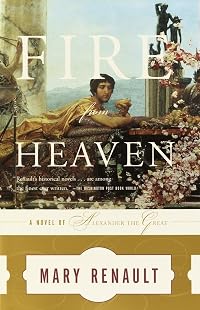
Alexander the Great stands alone as a leader and strategist, and Fire from Heaven is Mary Renault's unsurpassed dramatization of the formative years of his life. His parents fight for their precocious son's love: On one side, his volatile father, Philip, and on the other, his overbearing mother, Olympias. The story tells of the conqueror's two great bonds-to his horse, Oxhead, and to his dearest friend and eventual lover, Hephaistion-and of the army he commands when he is barely an adult. show more Coming of age during the battles for southern Greece, Alexander the Great appears in all of his colors-as the man who first takes someone's life at age twelve and who swiftly eliminates his rivals as soon as he comes to power-and emerges as a captivating, complex, larger-than-life figure. Fire from Heaven is the first volume of the Novels of Alexander the Great trilogy, which continues with The Persian Boy and Funeral Games. This ebook features an illustrated biography of Mary Renault including rare images of the author. show lessTags
Recommendations



















Member Recommendations
themulhern This is entirely obvious; a novel and a biography about the same subject by the very same author.
Member Reviews
My introduction to Mary Renault was The King Must Die, the first of two novels about Theseus--it was actually assigned reading in high school. What impressed me so much there was how she took a figure out of myth and grounded him historically. After that I quickly gobbled up all of Renault's works of historical fiction set in Ancient Greece. The two novels about Theseus and the trilogy centered on Alexander the Great are undoubtedly her most famous of those eight novels.
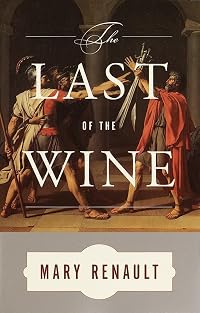
The first book of that trilogy Fire from Heaven, is about the young Alexander of Macedon before his famous conquests, ending with his inheriting the Kingdom of Macedon. I was fascinated by the portrait drawn of him and his family--and his teacher--Aristotle. It also show more draws vivid portraits of his "Companions" who helped him conquer much of the civilized world surrounding the Mediterranean and divide it between them after his death. Hephaistion is his particular close friend and lover. That was probably a shock to me as a sheltered young teen, pre-AIDS when homosexuality just wasn't very visible. What was amazing was the picture of a society where this was not just tolerated but completely accepted, and this novel (and her novel The Last of the Wine also featuring a homosexual relationship) made an indelible impression on me--more than any kind of lecture on tolerance. The second book, The Persian Boy, is Alexander seen through the eyes of another of his lovers, Bagoas, covers the period of this conquest, and is every bit as remarkable. I thought Funeral Games a bit of a disappointment after those first two, but it missed a lot with Alexander's absence, dealing with the aftermath of his death.
And this was one of those books that cemented my love of historical fiction and fascination with Ancient Greece. If I have any criticism, it's that Renault's Alexander is too much the paragon. You get the feeling Renault was more than in love with her Alexander. But it's certainly not a criticism that occurred to me while I was reading this--given how fully I was under Renault's spell. Nor am I the only one entranced by these books--you can definitely see the influence of the Alexander trilogy on such books as Jo Graham's Stealing Fire about the wake of Alexander's death and Madeline Miller's Song of Achilles. show less
The first book of that trilogy Fire from Heaven, is about the young Alexander of Macedon before his famous conquests, ending with his inheriting the Kingdom of Macedon. I was fascinated by the portrait drawn of him and his family--and his teacher--Aristotle. It also show more draws vivid portraits of his "Companions" who helped him conquer much of the civilized world surrounding the Mediterranean and divide it between them after his death. Hephaistion is his particular close friend and lover. That was probably a shock to me as a sheltered young teen, pre-AIDS when homosexuality just wasn't very visible. What was amazing was the picture of a society where this was not just tolerated but completely accepted, and this novel (and her novel The Last of the Wine also featuring a homosexual relationship) made an indelible impression on me--more than any kind of lecture on tolerance. The second book, The Persian Boy, is Alexander seen through the eyes of another of his lovers, Bagoas, covers the period of this conquest, and is every bit as remarkable. I thought Funeral Games a bit of a disappointment after those first two, but it missed a lot with Alexander's absence, dealing with the aftermath of his death.
And this was one of those books that cemented my love of historical fiction and fascination with Ancient Greece. If I have any criticism, it's that Renault's Alexander is too much the paragon. You get the feeling Renault was more than in love with her Alexander. But it's certainly not a criticism that occurred to me while I was reading this--given how fully I was under Renault's spell. Nor am I the only one entranced by these books--you can definitely see the influence of the Alexander trilogy on such books as Jo Graham's Stealing Fire about the wake of Alexander's death and Madeline Miller's Song of Achilles. show less
This was amazing - where's Mary Renault been all my life?!
It's a beautifully imagined retelling of the youth of Alexander the Great, and the ancient world it describes is gorgeously alien and yet psychologically authentic.
Apparently there are another two books of this, so know what I'll be reading in the run-up to Christmas.
It's a beautifully imagined retelling of the youth of Alexander the Great, and the ancient world it describes is gorgeously alien and yet psychologically authentic.
Apparently there are another two books of this, so know what I'll be reading in the run-up to Christmas.
The first of Mary Renault's novels about Alexander the Great, it takes us through his early life up to the assassination of his father, Philip of Macedon.
Basically, Mary Renault's works are the standard by which all other fiction set in the ancient world should be judged, and she is in top form in this novel. Somebody, I forget who, once said that the first sentence is one of the best openings ever: "The child was wakened by the knotting of the snake's coils about his waist."
As we watch the spectacular clashes between Alexander's parents, his interaction with soldiers, courtiers, and diplomats, his education, the famous story of the horse Bucephalus, and Alexander's developing relationship with Hephaistion, we can see that these are not show more 20th century people dressed up in ancient costumes, these are people from a very different society.
Real life probably wasn't quite the way Mary Renault portrays it. So much the worse for real life. Six stars out of five. show less
Basically, Mary Renault's works are the standard by which all other fiction set in the ancient world should be judged, and she is in top form in this novel. Somebody, I forget who, once said that the first sentence is one of the best openings ever: "The child was wakened by the knotting of the snake's coils about his waist."
As we watch the spectacular clashes between Alexander's parents, his interaction with soldiers, courtiers, and diplomats, his education, the famous story of the horse Bucephalus, and Alexander's developing relationship with Hephaistion, we can see that these are not show more 20th century people dressed up in ancient costumes, these are people from a very different society.
Real life probably wasn't quite the way Mary Renault portrays it. So much the worse for real life. Six stars out of five. show less
The story of Alexander the Great opens with Alexander as a young child waking to find a snake in bed with him. He assumes it is his mother's pet snake, Glaukos. From there we are, guided by Renault's excellent storytelling, witness to Alexander's rise to greatness with fiction interwoven with nonfiction. For example, Renault wasn't there for Alexander's first battle and there is little documentation of it. So, the battle and subsequent kill at the age of twelve is purely fictional but Renault makes it easy to picture it as fact even if it is a little incredulous. With no ornament or artifact to take from the body as a trophy, Alexander saws off the head of his enemy.
Renault skillfully shows Alexander growing up, becoming more and more show more of a leader. Played against each other are his parents, the ever jealous Olympia and King Philip. Alexander learns how to manipulate them equally. Hephaistion starts his relationship with Alexander as a schoolmate and, as both boys mature, becomes a devoted friend with a level of intimacy that borders on homosexuality. Renault does not shy away from such relationships as they were commonplace. show less
Renault skillfully shows Alexander growing up, becoming more and more show more of a leader. Played against each other are his parents, the ever jealous Olympia and King Philip. Alexander learns how to manipulate them equally. Hephaistion starts his relationship with Alexander as a schoolmate and, as both boys mature, becomes a devoted friend with a level of intimacy that borders on homosexuality. Renault does not shy away from such relationships as they were commonplace. show less
I like Mary Renault's books, because she makes her subject come alive (& I can feel like I am improving my mind with high-browed reading about Alexander the Great & the Greeks).
I'm impressed by the psychological study and how Renault ties in clues found in historic writings. e.g. creating an episode where Demosthenes assumes he is a servant/kept boy, Alexander's hero worship for Demosthenes (based on his writings) gets shredded by this meeting, and he plans a silent confrontation during an important public event which causes Demosthenes to lose track of his oration: this last fact is in written history. I've got a lot of sympathy for the way Alexander was raised, caught in the power struggle between his mother & father. The development show more of his character from relatively happy precocious child to repressed and driven man is clearly explained by the unfolding of events.
I can't say I ended up learning more history. I tended to skim over details of people's names and places without bothering to remember their historical context. About halfway thru I finally pulled out my copy of Hammond's Historical Atlas so I could figure out where all these kingdoms and countries stood in relation to each other & in relation to the former Greek Empire and the current Persian Empire. City groups, e.g. Amphissa, were undifferentiated in my mind from larger country groups, e.g. Chalcidiceans. And I still don't have a sense of it all, but did enjoy the telling. show less
I'm impressed by the psychological study and how Renault ties in clues found in historic writings. e.g. creating an episode where Demosthenes assumes he is a servant/kept boy, Alexander's hero worship for Demosthenes (based on his writings) gets shredded by this meeting, and he plans a silent confrontation during an important public event which causes Demosthenes to lose track of his oration: this last fact is in written history. I've got a lot of sympathy for the way Alexander was raised, caught in the power struggle between his mother & father. The development show more of his character from relatively happy precocious child to repressed and driven man is clearly explained by the unfolding of events.
I can't say I ended up learning more history. I tended to skim over details of people's names and places without bothering to remember their historical context. About halfway thru I finally pulled out my copy of Hammond's Historical Atlas so I could figure out where all these kingdoms and countries stood in relation to each other & in relation to the former Greek Empire and the current Persian Empire. City groups, e.g. Amphissa, were undifferentiated in my mind from larger country groups, e.g. Chalcidiceans. And I still don't have a sense of it all, but did enjoy the telling. show less
Ahem...
So this book starts with Alexander as a young boy, in bed, playing with his pet snake. (Nudge, nudge, wink, wink.) Then his snake slithers away. He trundles off on his little toddler feet to search for it and wanders into his mother's room. (He really loves his mother. This is VERY important!) And then he sees his father naked.
Two words: SIGMUND FREUD.
On a billboard, approximately 900 feet tall, on a mountaintop, glowing with the brilliance of a thousand suns. Avert your eyes, lest you be blinded!
You know, if I'd quit after that first chapter (something I seriously considered), I wouldn't have known that the rest of the book is not nearly so heavy-handed. It's actually very adroitly-written, beautifully-researched, and show more fascinating. The masterful descriptions of places and people showcase Renault at the very top of her game. I really loved the interactions between Alexander and his lover/ best friend, Hephaestion, and the story of how Alexander tamed Bucephalus. It's a good novel, once you get past that first chapter. show less
So this book starts with Alexander as a young boy, in bed, playing with his pet snake. (Nudge, nudge, wink, wink.) Then his snake slithers away. He trundles off on his little toddler feet to search for it and wanders into his mother's room. (He really loves his mother. This is VERY important!) And then he sees his father naked.
Two words: SIGMUND FREUD.
On a billboard, approximately 900 feet tall, on a mountaintop, glowing with the brilliance of a thousand suns. Avert your eyes, lest you be blinded!
You know, if I'd quit after that first chapter (something I seriously considered), I wouldn't have known that the rest of the book is not nearly so heavy-handed. It's actually very adroitly-written, beautifully-researched, and show more fascinating. The masterful descriptions of places and people showcase Renault at the very top of her game. I really loved the interactions between Alexander and his lover/ best friend, Hephaestion, and the story of how Alexander tamed Bucephalus. It's a good novel, once you get past that first chapter. show less
Compared to the last of the wine, this one felt less realistic and historical. Alexander is this figure of myth and his awful parents who hate each other try to manipulate him to their side.
However, I liked it more as a story. It follows Alexander from infancy to about twenty, from a child to a respected general whose succession right is debated. This felt like a grand character arc instead of the grand plot that was the Peloponessian war.
Following him as he learned what he could do (and what he shouldn’t) to outwit opponents made this book a great read.
The book is in third person and sometimes the many perspectives jumps made it feel like a story about Alexander, not the story of Alexander.
D.A.2. 21 oct 2024
However, I liked it more as a story. It follows Alexander from infancy to about twenty, from a child to a respected general whose succession right is debated. This felt like a grand character arc instead of the grand plot that was the Peloponessian war.
Following him as he learned what he could do (and what he shouldn’t) to outwit opponents made this book a great read.
The book is in third person and sometimes the many perspectives jumps made it feel like a story about Alexander, not the story of Alexander.
D.A.2. 21 oct 2024
Members
- Recently Added By
Lists

Best Historical Fiction
620 works; 261 members

Historical Fiction
889 works; 91 members

Best historical fiction set in the ancient world
126 works; 40 members

Booker Prize
491 works; 62 members

Favourite Virago Modern Classics
183 works; 38 members

Pre-1969 LGBTQ Literature
182 works; 66 members

Lost Man Booker Prize Longlist 1970
6 works; 2 members

Booker Prize Shortlist: Titles Not Yet Read
161 works; 4 members

Good LGBT fiction for LGBT folk and friends
545 works; 54 members

once upon a time ~ ancient world
46 works; 7 members

Books Read in 2015
3,299 works; 126 members

Published in 1970
58 works; 7 members

1970 Club
85 works; 2 members

Books recommended in the history category on FiveBooks.com
329 works; 4 members
Author Information

25+ Works 18,965 Members
Some Editions
Awards and Honors
Awards
Distinctions
Series

Belongs to Publisher Series
Work Relationships
Is contained in
Common Knowledge
- Original publication date
- 1969
- People/Characters
- Alexander the Great; Philip II of Macedon; Olympias; Hephaestion; Aristotle; Ptolemy I Soter (show all 12); Lysimachos (Phoinix); Demosthenes; Antipatros; Parmenion; Thettalos; Nikeratos
- Important places
- Pella, Macedonia; Mieza, Macedonia; Ancient Greece
- Epigraph
- When Perdikkas asked him at what times he wished divine honours paid to him, he answered that he wished it done when they themselves were happy. These were the last words of the King.
Quintus Curtius - First words
- The child was wakened by the knotting of the snake's coils about his waist.
- Last words
- (Click to show. Warning: May contain spoilers.)As they reached the ramparts which overlooked the Pella plain, the new summer sun stretched out its glittering pathway across the eastern sea.
- Original language
- English
Classifications
- Genres
- Fiction and Literature, General Fiction, LGBTQ+, Historical Fiction
- DDC/MDS
- 823.912 — Literature & rhetoric English & Old English literatures English fiction 1900- 1901-1999 1901-1945
- LCC
- PZ3 .R2913 — Language and Literature Fiction and juvenile belles lettres Fiction and juvenile belles lettres Fiction in English
- BISAC
Statistics
- Members
- 2,476
- Popularity
- 7,789
- Reviews
- 35
- Rating
- (3.93)
- Languages
- 12 — Chinese, Czech, Danish, Dutch, English, French, German, Hungarian, Italian, Polish, Portuguese, Spanish
- Media
- Paper, Audiobook, Ebook
- ISBNs
- 41
- ASINs
- 31