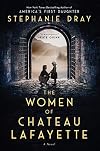
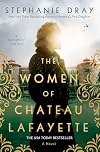
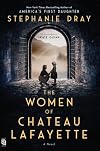
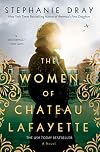
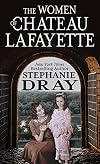
The Women of Chateau Lafayette
by Stephanie Dray 
On This Page
Description
The USA Today Bestseller!Recommended by Oprah Magazine ? Cosmopolitan ? PopSugar ? SheReads ? Parade ? and more!
An epic saga from New York Times bestselling author Stephanie Dray based on the true story of an extraordinary castle in the heart of France and the remarkable women bound by its legacy.
Most castles are protected by men. This one by women.
A founding mother...
1774. Gently-bred noblewoman Adrienne Lafayette becomes her husband, the Marquis de Lafayette’s political partner show more in the fight for American independence. But when their idealism sparks revolution in France and the guillotine threatens everything she holds dear, Adrienne must renounce the complicated man she loves, or risk her life for a legacy that will inspire generations to come.
A daring visionary...
1914. Glittering New York socialite Beatrice Chanler is a force of nature, daunted by nothing—not her humble beginnings, her crumbling marriage, or the outbreak of war. But after witnessing the devastation in France firsthand, Beatrice takes on the challenge of a lifetime: convincing America to fight for what's right.
A reluctant resistor...
1940. French school-teacher and aspiring artist Marthe Simone has an orphan's self-reliance and wants nothing to do with war. But as the realities of Nazi occupation transform her life in the isolated castle where she came of age, she makes a discovery that calls into question who she is, and more importantly, who she is willing to become.
Intricately woven and powerfully told, The Women of Chateau Lafayette is a sweeping novel about duty and hope, love and courage, and the strength we take from those who came before us. show less
Tags
Recommendations
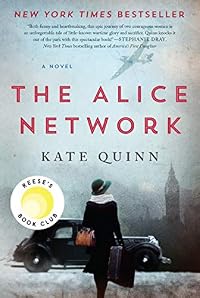
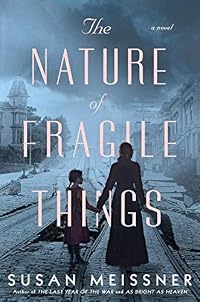
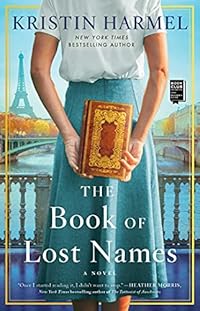
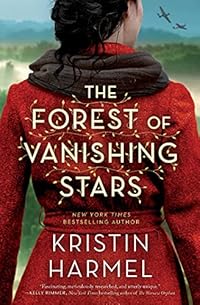
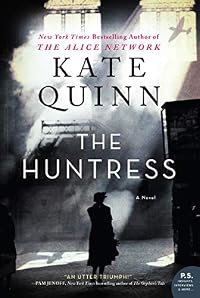
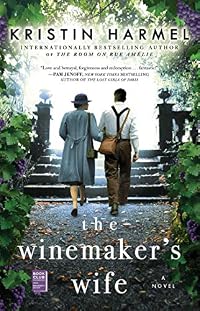
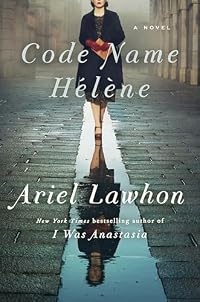
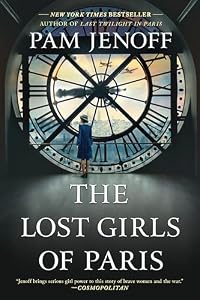









Member Reviews
The Women of Chateau Lafayette was an absorbing book that I thoroughly enjoyed. I am not typically a fan of the multiple time lines as they are used in so many historical fiction books today simply because I tend to enjoy one much more than the others and wish the author would focus on that one. And while I definitely loved Adrienne's story the best of the three, the other two story lines were fascinating in their own way, even if they weren't quite as absorbing for me.
Adrienne's story line was my favourite, but one of my interests in uni was the French Revolution (the other being the Roman Empire), so anything to do with Lafayette tends to draw my interest. I loved the focus on the women and how they dealt with the political side of show more things and I thought the author did a great job trying to show how Adrienne's family manoeuvred the political ups and downs in France during this time period. This would have been so tricky to do as so much was going on. I have a pretty solid knowledge of who was who however, but I do think it could be challenging for those who have little knowledge to really understand who had political power during this time period and to keep everyone straight. I applaud the author's choices as to who she focused on to keep the story easy to understand, which kept Adrienne's story from getting too convoluted. And gosh, did I like Adrienne. It would take a brilliant person to be able to navigate the situations that she had to navigate. Personally, I could have read an entire book just about her.
I didn't know as much about Beatrice going into this story so it was a treat to read her story. I found her personally relationship with her husband fascinating, but I also found her so interesting simply because of her accomplishments in a time period that didn't accept outsiders in their wealthy echelons. I don't think the author went far enough showing how remarkable this lady actually was in her accomplishments. I teach about the world wars and although I knew about the packages she sent to soldiers overseas, I had no idea how many and how involved she was, nor did I know about some of the other endeavours. I liked how the author showed her vulnerabilities, secrets from her past, through simple things like being upset when losing her hats and having to go without. It showed how she often hid her true self behind her more chic outer self.
Marthe's story line I thought was the weakest and I tended to rush through these chapters. While showing a bit more of the importance of how Lafayette's castle was used during the war, I don't think it really added anything to the story. I think compared to the other two story lines, it took a long time for Marthe to really do anything to help, and to me, it seemed like the focus was more on her love life than her activities. I would have preferred to read more about the resistance as there was such a strong element of it in that area during the war.
Verdict
The Women of Chateau Lafayette was well-written, but I definitely enjoyed Adrienne's story the best. And while the book is fairly long, it was worth the ride. The story lines weren't overly disruptive and I found it fairly easy to return to each story, but I do think Marthe's story is the weakest of the three; I was not a big fan of Marthe and her petulance did get on my nerves after a while. Highly recommend. show less
Adrienne's story line was my favourite, but one of my interests in uni was the French Revolution (the other being the Roman Empire), so anything to do with Lafayette tends to draw my interest. I loved the focus on the women and how they dealt with the political side of show more things and I thought the author did a great job trying to show how Adrienne's family manoeuvred the political ups and downs in France during this time period. This would have been so tricky to do as so much was going on. I have a pretty solid knowledge of who was who however, but I do think it could be challenging for those who have little knowledge to really understand who had political power during this time period and to keep everyone straight. I applaud the author's choices as to who she focused on to keep the story easy to understand, which kept Adrienne's story from getting too convoluted. And gosh, did I like Adrienne. It would take a brilliant person to be able to navigate the situations that she had to navigate. Personally, I could have read an entire book just about her.
I didn't know as much about Beatrice going into this story so it was a treat to read her story. I found her personally relationship with her husband fascinating, but I also found her so interesting simply because of her accomplishments in a time period that didn't accept outsiders in their wealthy echelons. I don't think the author went far enough showing how remarkable this lady actually was in her accomplishments. I teach about the world wars and although I knew about the packages she sent to soldiers overseas, I had no idea how many and how involved she was, nor did I know about some of the other endeavours. I liked how the author showed her vulnerabilities, secrets from her past, through simple things like being upset when losing her hats and having to go without. It showed how she often hid her true self behind her more chic outer self.
Marthe's story line I thought was the weakest and I tended to rush through these chapters. While showing a bit more of the importance of how Lafayette's castle was used during the war, I don't think it really added anything to the story. I think compared to the other two story lines, it took a long time for Marthe to really do anything to help, and to me, it seemed like the focus was more on her love life than her activities. I would have preferred to read more about the resistance as there was such a strong element of it in that area during the war.
Verdict
The Women of Chateau Lafayette was well-written, but I definitely enjoyed Adrienne's story the best. And while the book is fairly long, it was worth the ride. The story lines weren't overly disruptive and I found it fairly easy to return to each story, but I do think Marthe's story is the weakest of the three; I was not a big fan of Marthe and her petulance did get on my nerves after a while. Highly recommend. show less
In her author's note and throughout the book, Dray talks about the "Spirit of Lafayette," which, even as an American history major, I'm ashamed to know I knew very little about until reading this book. Now, I know a lot more, and am inspired to continue my learning with non-fiction (to me, this is a mark of good historical fiction). Dray's research is exacting, but she avoids the well-researched novelist's abyss of needing to share everything she's learned. Instead, this is a deep and rich portrait of three women, each of whom embody the "Spirit of Lafayette" throughout three different wars.
Dray bit off a lot with this book, which weaves together three separate stories, that of Adrienne de Lafeyette during the American and French show more Revolutions, Beatrice Chanler during WWI, and the fictional Marthe Simone during WWII. Each could have sustained a story on their own. And it might have been less confusing if Dray had made this into a trilogy, rather than a single, interweaving story. In fact, my only teeny complaint about this book is that I sometimes forgot which war we were in. (My actual thoughts several times during the book: "You can't go to Paris now, the Nazis will get you! Oh wait, this is WWI...") I can only imagine that people who lived through both wars might have felt the same way. But I understand that each story gained power from being told alongside the others.
To say that this book moves slowly doesn't do it justice. Think of it like a lazy, meandering river. It'll take you a long time to get from one end to the other, but the journey is more than worth it. show less
Dray bit off a lot with this book, which weaves together three separate stories, that of Adrienne de Lafeyette during the American and French show more Revolutions, Beatrice Chanler during WWI, and the fictional Marthe Simone during WWII. Each could have sustained a story on their own. And it might have been less confusing if Dray had made this into a trilogy, rather than a single, interweaving story. In fact, my only teeny complaint about this book is that I sometimes forgot which war we were in. (My actual thoughts several times during the book: "You can't go to Paris now, the Nazis will get you! Oh wait, this is WWI...") I can only imagine that people who lived through both wars might have felt the same way. But I understand that each story gained power from being told alongside the others.
To say that this book moves slowly doesn't do it justice. Think of it like a lazy, meandering river. It'll take you a long time to get from one end to the other, but the journey is more than worth it. show less
Gripping historical fiction about three strong women, all connected to the childhood home of Gilbert du Motier, better known as the Marquis de Lafayette, that same French general who helped Americans win The Revolutionary War (aka "the Lancelot of the revolutionary set" from Hamilton: The Musical).
Each of the three women has a compelling story:
1. Adrienne is Lafayette's wife. An intelligent and fierce heroine, she shares her husband's passion for freedom, fights behind the scenes to promote it (in revolutions in both America and France), and sacrifices repeatedly for her family and principles.
2. Beatrice Chanler is a 20th century socialite, who rises from rags to riches by marrying the wealthy William Chanler. Both are actual show more historical figures. Despite her showgirl background, Beatrice becomes known for her active role in helping France during the early years of World War I and for encouraging the United States to enter that war.
3. Marte Simone, the only one of the three women who is fictitious, is teaching at a school housed at the old Lafayette chateau in 1940. As the war unfolds, she is forced to decide whether to hang onto her lifelong commitment to self-preservation or put the safety of others ahead of her own.
All three stories are related, as they usually are when artists employ this "multiple-stories" device in novels. But the connection doesn't matter as much in this one. Each story is captivating on its own and you won't spend time trying to figure out the "big mystery."
So, why didn't I give it five stars? One small reason and one big one:
• The small one is a few passages where characters hit you on the head with over-the-top political statements that are completely unnecessary. For example, the novel ends with one about the nature of war. Fortunately, there are not THAT many of these show-stoppers.
• The bigger reason is that as much as I enjoyed reading the book, and as interesting as each story was, frankly, the book felt LONG at times. 576 pages in the standard edition. I can't help but think it would have been stronger with a bit more judicious editing. show less
Each of the three women has a compelling story:
1. Adrienne is Lafayette's wife. An intelligent and fierce heroine, she shares her husband's passion for freedom, fights behind the scenes to promote it (in revolutions in both America and France), and sacrifices repeatedly for her family and principles.
2. Beatrice Chanler is a 20th century socialite, who rises from rags to riches by marrying the wealthy William Chanler. Both are actual show more historical figures. Despite her showgirl background, Beatrice becomes known for her active role in helping France during the early years of World War I and for encouraging the United States to enter that war.
3. Marte Simone, the only one of the three women who is fictitious, is teaching at a school housed at the old Lafayette chateau in 1940. As the war unfolds, she is forced to decide whether to hang onto her lifelong commitment to self-preservation or put the safety of others ahead of her own.
All three stories are related, as they usually are when artists employ this "multiple-stories" device in novels. But the connection doesn't matter as much in this one. Each story is captivating on its own and you won't spend time trying to figure out the "big mystery."
So, why didn't I give it five stars? One small reason and one big one:
• The small one is a few passages where characters hit you on the head with over-the-top political statements that are completely unnecessary. For example, the novel ends with one about the nature of war. Fortunately, there are not THAT many of these show-stoppers.
• The bigger reason is that as much as I enjoyed reading the book, and as interesting as each story was, frankly, the book felt LONG at times. 576 pages in the standard edition. I can't help but think it would have been stronger with a bit more judicious editing. show less
Gripping historical fiction about three strong women, all connected to the childhood home of Gilbert du Motier, better known as the Marquis de Lafayette, that same French general who helped Americans win The Revolutionary War (aka "the Lancelot of the revolutionary set" from Hamilton: The Musical).
Each of the three women has a compelling story:
1. Adrienne is Lafayette's wife. An intelligent and fierce heroine, she shares her husband's passion for freedom, fights behind the scenes to promote it (in revolutions in both America and France), and sacrifices repeatedly for her family and principles.
2. Beatrice Chanler is a 20th century socialite, who rises from rags to riches by marrying the wealthy William Chanler. Both are actual show more historical figures. Despite her showgirl background, Beatrice becomes known for her active role in helping France during the early years of World War I and for encouraging the United States to enter that war.
3. Marte Simone, the only one of the three women who is fictitious, is teaching at a school housed at the old Lafayette chateau in 1940. As the war unfolds, she is forced to decide whether to hang onto her lifelong commitment to self-preservation or put the safety of others ahead of her own.
All three stories are related, as they usually are when artists employ this "multiple-stories" device in novels. But the connection doesn't matter as much in this one. Each story is captivating on its own and you won't spend time trying to figure out the "big mystery."
So, why didn't I give it five stars? One small reason and one big one:
• The small one is a few passages where characters hit you on the head with over-the-top political statements that are completely unnecessary. For example, the novel ends with one about the nature of war. Fortunately, there are not THAT many of these show-stoppers.
• The bigger reason is that as much as I enjoyed reading the book, and as interesting as each story was, frankly, the book felt LONG at times. 576 pages in the standard edition. I can't help but think it would have been stronger with a bit more judicious editing. show less
Each of the three women has a compelling story:
1. Adrienne is Lafayette's wife. An intelligent and fierce heroine, she shares her husband's passion for freedom, fights behind the scenes to promote it (in revolutions in both America and France), and sacrifices repeatedly for her family and principles.
2. Beatrice Chanler is a 20th century socialite, who rises from rags to riches by marrying the wealthy William Chanler. Both are actual show more historical figures. Despite her showgirl background, Beatrice becomes known for her active role in helping France during the early years of World War I and for encouraging the United States to enter that war.
3. Marte Simone, the only one of the three women who is fictitious, is teaching at a school housed at the old Lafayette chateau in 1940. As the war unfolds, she is forced to decide whether to hang onto her lifelong commitment to self-preservation or put the safety of others ahead of her own.
All three stories are related, as they usually are when artists employ this "multiple-stories" device in novels. But the connection doesn't matter as much in this one. Each story is captivating on its own and you won't spend time trying to figure out the "big mystery."
So, why didn't I give it five stars? One small reason and one big one:
• The small one is a few passages where characters hit you on the head with over-the-top political statements that are completely unnecessary. For example, the novel ends with one about the nature of war. Fortunately, there are not THAT many of these show-stoppers.
• The bigger reason is that as much as I enjoyed reading the book, and as interesting as each story was, frankly, the book felt LONG at times. 576 pages in the standard edition. I can't help but think it would have been stronger with a bit more judicious editing. show less
This historical novel chronicles the lives of three women in three different time periods who are connected to Lafayette’s ancestral home in France.
In the 1770s, Adrienne de Noailles marries Gilbert du Motier, Marquis de Lafayette who fights for American independence and sparks the French Revolution. While her husband is often away from home, she raises the children and unfailingly supports him and his battles for freedom and justice, even if she has to risk her life to do so.
Beatrice Astor Chanler, a New York socialite, is inspired by Lafayette to urge the U.S. to support France in World War I. She helps raise money for humanitarian aid, eventually turning Lafayette’s chateau into a school, orphanage, and preventorium for the show more care of frail and malnourished children, as well as a museum of the life and family of Lafayette.
During World War II, Marthe Simone is a teacher at the Chateau Lafayette where she grew up as an orphan. When the Germans invade, she becomes involved in secretly hiding Jewish children at the chateau.
The book describes historical events from the perspective of women. Adrienne Lafayette and Beatrice Chanler were real people who influenced events, whereas Marthe is a fictional character. All three women are courageous, resilient, resourceful, tenacious and intelligent. Though Beatrice and Marthe are flawed, Adrienne seems flawless. She is unfailingly loyal and supportive and supremely heroic.
Just as Adrienne is portrayed as virtually perfect, the same is true of the depiction of Lafayette. The author and the three protagonists all seem to suffer from hero worship. I understand that Lafayette is an almost mythic figure for Americans so the mere mention of any flaws might seem almost sacrilegious, but showing him to be less than perfect would make him more realistic. In this regard, omitting Lafayette’s 30-year relationship with Diane, the Comtesse de Simiane was a mistake.
Marthe’s story is also problematic. A woman is sexually attracted to a woman, but seems to adapt to marriage to a man rather easily? She says, “I don’t long for her anymore. I’ve let that go.” Is the author making a comment about homosexuality?
The novel’s chapters alternate among the three women. Often chapters end in cliffhangers which are only resolved two chapters later. The author can be commended for connecting the three narratives. One of Marthe’s chapters ends with Americans landing in North Africa; it is followed by Beatrice’s chapter which begins with Americans joining the war. One of Adrienne’s chapters ends with a reunion; it is followed by Beatrice’s chapter which begins with a reunion. Several characters from Beatrice and Marthe’s stories overlap.
Dray can also be commended for her extensive historical research. Perhaps, however, she should have written three novels. This one, at 550+ pages, feels too long. A trilogy, with one book devoted to each character, might have worked better. In the Author’s Note, Dray mentions that she began by wanting to tell the story of Adrienne Lafayette and perhaps one book devoted to her would have depicted both her and her husband more realistically. The other books could have continued the story of the Lafayette legacy, ostensibly the purpose of this book.
Readers who enjoy historical fiction and strong female characters will find much to like in this book. Though I appreciate the message about the necessity of fighting for one’s principles, I wasn’t always totally engaged, primarily because of the worshipful characterization of the Lafayettes. And Beatrice and Marthe are inflicted with unquestioning, rapturous adoration of this couple. For me, a more nuanced portrayal is always preferable.
Note: I received an eARC from the publisher via NetGalley.
Please check out my reader's blog (https://schatjesshelves.blogspot.com/) and follow me on Twitter (@DCYakabuski). show less
In the 1770s, Adrienne de Noailles marries Gilbert du Motier, Marquis de Lafayette who fights for American independence and sparks the French Revolution. While her husband is often away from home, she raises the children and unfailingly supports him and his battles for freedom and justice, even if she has to risk her life to do so.
Beatrice Astor Chanler, a New York socialite, is inspired by Lafayette to urge the U.S. to support France in World War I. She helps raise money for humanitarian aid, eventually turning Lafayette’s chateau into a school, orphanage, and preventorium for the show more care of frail and malnourished children, as well as a museum of the life and family of Lafayette.
During World War II, Marthe Simone is a teacher at the Chateau Lafayette where she grew up as an orphan. When the Germans invade, she becomes involved in secretly hiding Jewish children at the chateau.
The book describes historical events from the perspective of women. Adrienne Lafayette and Beatrice Chanler were real people who influenced events, whereas Marthe is a fictional character. All three women are courageous, resilient, resourceful, tenacious and intelligent. Though Beatrice and Marthe are flawed, Adrienne seems flawless. She is unfailingly loyal and supportive and supremely heroic.
Just as Adrienne is portrayed as virtually perfect, the same is true of the depiction of Lafayette. The author and the three protagonists all seem to suffer from hero worship. I understand that Lafayette is an almost mythic figure for Americans so the mere mention of any flaws might seem almost sacrilegious, but showing him to be less than perfect would make him more realistic. In this regard, omitting Lafayette’s 30-year relationship with Diane, the Comtesse de Simiane was a mistake.
Marthe’s story is also problematic. A woman is sexually attracted to a woman, but seems to adapt to marriage to a man rather easily? She says, “I don’t long for her anymore. I’ve let that go.” Is the author making a comment about homosexuality?
The novel’s chapters alternate among the three women. Often chapters end in cliffhangers which are only resolved two chapters later. The author can be commended for connecting the three narratives. One of Marthe’s chapters ends with Americans landing in North Africa; it is followed by Beatrice’s chapter which begins with Americans joining the war. One of Adrienne’s chapters ends with a reunion; it is followed by Beatrice’s chapter which begins with a reunion. Several characters from Beatrice and Marthe’s stories overlap.
Dray can also be commended for her extensive historical research. Perhaps, however, she should have written three novels. This one, at 550+ pages, feels too long. A trilogy, with one book devoted to each character, might have worked better. In the Author’s Note, Dray mentions that she began by wanting to tell the story of Adrienne Lafayette and perhaps one book devoted to her would have depicted both her and her husband more realistically. The other books could have continued the story of the Lafayette legacy, ostensibly the purpose of this book.
Readers who enjoy historical fiction and strong female characters will find much to like in this book. Though I appreciate the message about the necessity of fighting for one’s principles, I wasn’t always totally engaged, primarily because of the worshipful characterization of the Lafayettes. And Beatrice and Marthe are inflicted with unquestioning, rapturous adoration of this couple. For me, a more nuanced portrayal is always preferable.
Note: I received an eARC from the publisher via NetGalley.
Please check out my reader's blog (https://schatjesshelves.blogspot.com/) and follow me on Twitter (@DCYakabuski). show less
My book club chose The Women of Chateau Lafayette by Stephanie Dray as our February selection. It was with some trepidation that I approached this novel mainly because of its length. At over 500 pages I feared I would never finish it in time for our meeting. I was so busy with a book festival I help host and a trip to Norway, I just knew I would never complete it. But with several plane rides and airport layovers, I managed to get the necessary reading time in. Thank goodness for a Kindle! At first the book dragged for me (book festival hangover and travel lags), but as I became immersed in the stories of three determined women, I couldn’t get enough. The chateau of the Marquis de Lafayette (yes, that one) connected each time period show more and story thread. Dray chose to tell the valiant stories of Adrienne de Lafayette, Beatrice Chanler, and fictional Marthe Simon, as they fought for love, freedom, and country. Dray does a wonderful job of creating riveting stories for each of the women. The time periods are the American and French Revolutions, WWI, and WWII — all important in the history of both France and he United States. With extensive research and wonderful plotting, the women’s stories are told against the backdrop of history. I cannot really say which character I liked best — all were intriguing. Perhaps Marthe was my favorite as she found her purpose and place in the world.
If you are fan of historical fiction based on fact, then The Women of Chateau Lafayette is definitely for you. Please note that this is a general market offering.
Highly Recommended.
Audience: Adults.
(I purchased the ebook from Amazon. All opinions expressed are mine alone.) show less
If you are fan of historical fiction based on fact, then The Women of Chateau Lafayette is definitely for you. Please note that this is a general market offering.
Highly Recommended.
Audience: Adults.
(I purchased the ebook from Amazon. All opinions expressed are mine alone.) show less
I took longer to read this one, but it was worth the every minute, especially when I reached the end and learned much of what I had presumed was fictionalized was actually based on the author's extensive research! Wow, the scope of this book - three storylines, spanning the French Revolution to World War II -makes for a complicated, yet connected tale. I was impressed by how distinctive so many of the characters were and how well the story flowed together, despite sometimes divergent plots. I really enjoyed this novel and I highly recommend it to any historical fiction readers.
Members
- Recently Added By
Lists

Sarah's Wish List
48 works; 1 member

Which house?
423 works; 16 members
Author Information

32+ Works 4,937 Members
Stephanie Dray is a New York Times and USA Today bestselling author of historical women¿s fiction and fantasy. Her critically acclaimed historical series about Cleopatra¿s daughter has been translated into eight languages, was nominated for a RITA Award, and won the Golden Leaf. Using the stories of women in history to inspire the young women of show more today, Stephanie remains fascinated by all things ancient and has, to the consternation of her devoted husband, collected a houseful of cats and Egyptian artifacts. show less
Stephanie Dray is a LibraryThing Author, an author who lists their personal library on LibraryThing.
Some Editions
Awards and Honors
Common Knowledge
- Important places
- Chateau Lafayette
Classifications
Statistics
- Members
- 613
- Popularity
- 47,343
- Reviews
- 31
- Rating
- (4.08)
- Languages
- English
- Media
- Paper, Audiobook, Ebook
- ISBNs
- 8
- ASINs
- 2