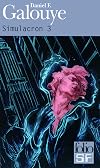
Simulacron-3
by Daniel F. Galouye
On This Page
Description
A virtual-reality novel from a time before virtual reality, Simulacron-3 is a prophetic tale of a future where nothing is as it appears to be. Douglas Hall is part of a team that builds an artificial environment to simulate reality. This enables them to get public opinion polls without waiting for the opinions of people around them. But then something goes terribly wrong and his partners on the program start disappearing. But is it a simulated disappearance, or is someone out to get them show more all? And what is the true nature of reality? show lessTags
Recommendations














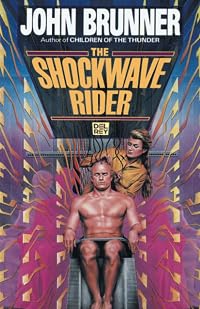


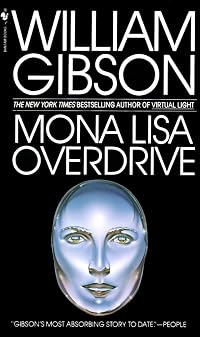


Member Recommendations
VictoriaPL Simulacron 3 and The Matrix have the same idea: the world we know is not the real one, there is another world beyond the simulation. Simulacron 3 is not a ripoff of The Matrix though, it was actually published back in 1964. If you enjoy The Matrix you might like this old-school forerunner.
Member Reviews
I bought and read this 1964 paperback in the year of its publication. This reread turned out to be both fun and timely.
Galouye looked ahead to the distant year 2034. There are aircars and slidewalks ("pedistrips"). The 33rd Amendment to the Constitution has outlawed smoking tobacco, so there are "smoke-easies" where one goes to smoke clandestinely.
And a giant corporation has built a computer that simulates a city. Not just the buildings, but the inhabitants, each of whom has the same degree of consciousness and interior life as you or I, living those lives unaware that they are just "...the surge of biasing impulses in simulectronic circuits." Simulacron-3's operators can look at the lower world through its denizen's eyes, or manifest show more directly to walk among them.
Protagonist Douglas Hall is putting the finishing touches on the project, after the suspicious death of the computer's creator. Odd things are happening: people and documents disappear, a crashing aircar almost kills Hall, and he is having momentary blackouts. The corporation's sinister CEO wants to repurpose Simulacron-3 from its intended use, market research, to seek sure wins of political elections, leading to a one-party state. Other people want the computer shut down permanently.
The twist in the story is thatHall's world, in which Simulacron-3 exists, is itself a simulation in a computer, one existing in an "upper" world. Hall's world is only a "middle" world. Man, that's Heavyyy...
The blackouts are the sign of the upper world's villainous project head logging into Hall's perceptions and reading his thoughts. The young woman who becomes Hall's love interest is connecting in directly from the upper world, looking to keep the middle world from being switched off.
As far as I can tell, this is the very first SF story to envision a world, and real, living people, existing as simulations in a computer. Philip K. Dick had been distrusting reality in numerous stories by 1964, but there was some degree of physicality to his simulacra; you might turn out to be a robot, but you still were made of physical parts in a single, real world. There are a couple of stories, by PKD and Stanislaw Lem, that may have got there first; I have to track them down. Of course, for years now people have taken this as a possibility for our own world, arguing about Roko's Basilisk and whatnot.
But for a 1964 reader, the twist was actually not all that twisty, because it was given away in the back-cover blurb. Evidently Bantam Book's editor didn't really understand what they had - they thought the book was about advertising. The blurb ends "THIS IS A SHATTERING PICTURE OF OUR WORLD IN THE VERY NEAR FUTURE, WHEN MADISON AVENUE AND THE PUBLIC-OPINION POLLSTERS TAKE OVER!" Madison Ave was a big deal in the 1950s and 60s, including in SF - see The Space Merchants from 1953. A classic case of missing the new by seeing it through the lens of the old.
Or so I thought when I picked the book up. And here's where the book's timeliness comes in. Advertising, the molding of public opinion, is still with us, and not just for selling cars. A plutocrat using computers to win elections and lock in one-party dominance - where have we heard about that recently? The connection is especially rich when said plutocrat is described as having "tiny hands." Not the same kind of computer use - Galouye didn't forsee social media - but that editor understood something we mustn't forget.
A film, The Thirteenth Floor, was based on Galouye's novel; it's pretty decent, but had the misfortune to come out two months after the less smart, but much more stylish The Matrix. In this connection it's amusing to note that Douglas Hall manifests in Simulacron-3 by showing up in - a phone booth! - although he doesn't say "we're in." There's also a German TV series from 1973, Welt Am Draht, based on this book. The series is by Rainer Werner Fassbinder, and I must really track it down someday.
This book also features an early use of lasers as a science-fictional weapon. They're nothing like the actual lasers of 1964 or today.
Books this old almost always have problematic presentations of gender and race. After meeting the love interest noted above, Hall remembers her as the 15-year-old daughter of his mentor. Heinlein wasn't the only period author to write about romance with someone previously known when a child. Majorly creepy. Also, if there's a person of color in the story, or anyone who's LGBTQ, I missed them.
This book is interesting as an early example of a now-common genre trope. The story is fast-paced and enjoyable, if one can overlook its faults. show less
Galouye looked ahead to the distant year 2034. There are aircars and slidewalks ("pedistrips"). The 33rd Amendment to the Constitution has outlawed smoking tobacco, so there are "smoke-easies" where one goes to smoke clandestinely.
And a giant corporation has built a computer that simulates a city. Not just the buildings, but the inhabitants, each of whom has the same degree of consciousness and interior life as you or I, living those lives unaware that they are just "...the surge of biasing impulses in simulectronic circuits." Simulacron-3's operators can look at the lower world through its denizen's eyes, or manifest show more directly to walk among them.
Protagonist Douglas Hall is putting the finishing touches on the project, after the suspicious death of the computer's creator. Odd things are happening: people and documents disappear, a crashing aircar almost kills Hall, and he is having momentary blackouts. The corporation's sinister CEO wants to repurpose Simulacron-3 from its intended use, market research, to seek sure wins of political elections, leading to a one-party state. Other people want the computer shut down permanently.
The twist in the story is that
The blackouts are the sign of the upper world's villainous project head logging into Hall's perceptions and reading his thoughts. The young woman who becomes Hall's love interest is connecting in directly from the upper world, looking to keep the middle world from being switched off.
As far as I can tell, this is the very first SF story to envision a world, and real, living people, existing as simulations in a computer. Philip K. Dick had been distrusting reality in numerous stories by 1964, but there was some degree of physicality to his simulacra; you might turn out to be a robot, but you still were made of physical parts in a single, real world. There are a couple of stories, by PKD and Stanislaw Lem, that may have got there first; I have to track them down. Of course, for years now people have taken this as a possibility for our own world, arguing about Roko's Basilisk and whatnot.
Or so I thought when I picked the book up. And here's where the book's timeliness comes in. Advertising, the molding of public opinion, is still with us, and not just for selling cars. A plutocrat using computers to win elections and lock in one-party dominance - where have we heard about that recently? The connection is especially rich when said plutocrat is described as having "tiny hands." Not the same kind of computer use - Galouye didn't forsee social media - but that editor understood something we mustn't forget.
A film, The Thirteenth Floor, was based on Galouye's novel; it's pretty decent, but had the misfortune to come out two months after the less smart, but much more stylish The Matrix. In this connection it's amusing to note that Douglas Hall manifests in Simulacron-3 by showing up in - a phone booth! - although he doesn't say "we're in." There's also a German TV series from 1973, Welt Am Draht, based on this book. The series is by Rainer Werner Fassbinder, and I must really track it down someday.
This book also features an early use of lasers as a science-fictional weapon. They're nothing like the actual lasers of 1964 or today.
Books this old almost always have problematic presentations of gender and race. After meeting the love interest noted above, Hall remembers her as the 15-year-old daughter of his mentor. Heinlein wasn't the only period author to write about romance with someone previously known when a child. Majorly creepy. Also, if there's a person of color in the story, or anyone who's LGBTQ, I missed them.
This book is interesting as an early example of a now-common genre trope. The story is fast-paced and enjoyable, if one can overlook its faults. show less
You know how they say that SF of today is insight into the world of tomorrow? While for several books I definitely would not like this to be the case (i.e. any cyber-punk or social dystopian novel, although current events seem to point towards different conclusion) for this book this statement is true.
Written in 1960's it is incredible how modern this book feels. Even technical details on i.e. electronic drums (old-style hard disks) sound and feel modern. Reason for this is very simple - author did not overload the reader with petty details. Everything is in the service of the story so human interaction is at the front. Everything else is in the background, used to build up the world but never taking the stage for itself. And this is show more reason why story remains modern. What might be novelty in 1960's for reader today all the technological descriptions sound pretty natural and common.
Story itself is excellent take on our world, inspired by famous Plato's cave - are we sure that we just see actual things or just their shadows, sort of echoes, playing in front of our eyes? Is the "cogito ergo sum" ultimate test for ones sanity?
I don't think there is something more destructive for a person from doubting the reality - is this in front of me real or not, just my perception stimulated by external source, whatever that might be. This type of thinking is a deadly spiral to the bottom because when touch with reality is lost it can only be re-established with great difficulty if ever. Some will embrace the theories of virtuality of their world while others will see no further purpose of living and just bungee jump into depression.
This topic can also be found in Matrix and movie from the same period, called "Thirteenth Floor'. When our protagonist (Doug Hall) starts realizing something weird is happening panic will take place because if his reality is under suspicion can he trust himself at all? Paranoia just creeps in.
Alongside the above, lets call it existential, story-line author manages to show how mass-population-control through various questionnaires (that are not optional but must be answered, I liked this twist :)) and finally simulations and testing on samples of population (by putting the selected set through various tests and prodding, sometimes just purely cruel and inhumane) will be a path taken by despots and wanna-be tyrants so they can manipulate the popular opinion and grab the power.
Book shows how these market-research companies are for all means and purposes very dangerous if left unchecked (and lets be honest how can they be controlled? very act of trying that would cause other issues of same gravity). Run by people who suffer from God-complex, who are automatons and completely devoid of empathy these companies can bring ruin, conflict and division in society (scenes of conflict between two .... well, to be honest since there is no better word, politically opposite populace groups and government alignment with one of them is so contemporary it is scary).
While world shown to us does not show any negative social elements (pestering pollster's aside) this is an ultimate dystopian world. Everything is quiet and at first looks normal until bad things start seeping in at the edge of ones sight.
I think we are already in the same situation as people described in this book, at mercy of various organizations that, playing untouchables, run very vile and cruel social experiments to collect data for future research. There is no creature anywhere in the universe more cold-blooded than these, true automatons that lost their humanity. It is on the rest to find a way to find way of preventing them from exerting full power over our lives.
Very good book, highly recommended. show less
Written in 1960's it is incredible how modern this book feels. Even technical details on i.e. electronic drums (old-style hard disks) sound and feel modern. Reason for this is very simple - author did not overload the reader with petty details. Everything is in the service of the story so human interaction is at the front. Everything else is in the background, used to build up the world but never taking the stage for itself. And this is show more reason why story remains modern. What might be novelty in 1960's for reader today all the technological descriptions sound pretty natural and common.
Story itself is excellent take on our world, inspired by famous Plato's cave - are we sure that we just see actual things or just their shadows, sort of echoes, playing in front of our eyes? Is the "cogito ergo sum" ultimate test for ones sanity?
I don't think there is something more destructive for a person from doubting the reality - is this in front of me real or not, just my perception stimulated by external source, whatever that might be. This type of thinking is a deadly spiral to the bottom because when touch with reality is lost it can only be re-established with great difficulty if ever. Some will embrace the theories of virtuality of their world while others will see no further purpose of living and just bungee jump into depression.
This topic can also be found in Matrix and movie from the same period, called "Thirteenth Floor'. When our protagonist (Doug Hall) starts realizing something weird is happening panic will take place because if his reality is under suspicion can he trust himself at all? Paranoia just creeps in.
Alongside the above, lets call it existential, story-line author manages to show how mass-population-control through various questionnaires (that are not optional but must be answered, I liked this twist :)) and finally simulations and testing on samples of population (by putting the selected set through various tests and prodding, sometimes just purely cruel and inhumane) will be a path taken by despots and wanna-be tyrants so they can manipulate the popular opinion and grab the power.
Book shows how these market-research companies are for all means and purposes very dangerous if left unchecked (and lets be honest how can they be controlled? very act of trying that would cause other issues of same gravity). Run by people who suffer from God-complex, who are automatons and completely devoid of empathy these companies can bring ruin, conflict and division in society (scenes of conflict between two .... well, to be honest since there is no better word, politically opposite populace groups and government alignment with one of them is so contemporary it is scary).
While world shown to us does not show any negative social elements (pestering pollster's aside) this is an ultimate dystopian world. Everything is quiet and at first looks normal until bad things start seeping in at the edge of ones sight.
I think we are already in the same situation as people described in this book, at mercy of various organizations that, playing untouchables, run very vile and cruel social experiments to collect data for future research. There is no creature anywhere in the universe more cold-blooded than these, true automatons that lost their humanity. It is on the rest to find a way to find way of preventing them from exerting full power over our lives.
Very good book, highly recommended. show less
Although the idea that the world isn’t quite what it seems—or even an outright fabrication—is an old one, during the past half-century or so it has been given a whole new lease of life by such developments as cockpit simulators for training pilots for example, computer games and, of course, virtual reality. It’s seriously discussed at scientific conferences and been explored in a whole series of novels and films.
But while most stories begin with the view from inside the simulated ‘world’, in Simulacron-3 we see things from the outside. Douglas Hall is leader of a team developing and testing just such a simulation, a whole counterfeit reality-in-a-computer, whose electronic inhabitants have no idea that that is all they show more are. Or at least, most of them remain unaware of it; occasionally one of these ‘ID units’ does begin to see through it all, to suspect that their world isn’t quite what it seems—and Hall, god-like, then has to decide whether to press ‘Delete’. Meanwhile, he also has troubles of his own: a man disappears into thin air, right in front of him; then a woman vanishes from a locked apartment. Is there something peculiar about his world? Or is this constant wielding of god-like powers affecting his mind, loosening his grip on reality? And (the trickiest part) how does he tell which?
Today, this sort of thing has been made familiar through those more recent novels and movies; but Galouye’s book was published way back in 1964 and inspired Rainer Werner Fassbinder’s classic World On A Wire, its 1999 remake The Thirteenth Floor and (so a number of other reviewers here suspect anyway) The Matrix. show less
But while most stories begin with the view from inside the simulated ‘world’, in Simulacron-3 we see things from the outside. Douglas Hall is leader of a team developing and testing just such a simulation, a whole counterfeit reality-in-a-computer, whose electronic inhabitants have no idea that that is all they show more are. Or at least, most of them remain unaware of it; occasionally one of these ‘ID units’ does begin to see through it all, to suspect that their world isn’t quite what it seems—and Hall, god-like, then has to decide whether to press ‘Delete’. Meanwhile, he also has troubles of his own: a man disappears into thin air, right in front of him; then a woman vanishes from a locked apartment. Is there something peculiar about his world? Or is this constant wielding of god-like powers affecting his mind, loosening his grip on reality? And (the trickiest part) how does he tell which?
Today, this sort of thing has been made familiar through those more recent novels and movies; but Galouye’s book was published way back in 1964 and inspired Rainer Werner Fassbinder’s classic World On A Wire, its 1999 remake The Thirteenth Floor and (so a number of other reviewers here suspect anyway) The Matrix. show less
L'intrigue me paraît aujourd'hui classique : la simulation d'une communauté de population et ses répercussions métaphysiques. Mais le savoir écrit en 1965 est assez hallucinant. Celà dit, le livre est très agréable à lire et se déroule parfaitement tout en explorant les problèmes philosophiques multiples de l'expérimentation.
An ancestor of "the Matrix", with a city created in a computer for market research purposes. The work forecasts both virtual reality, and the creation of artificial intelligence and self awareness. The prose is not first rate.
Really enjoyable cyberpunk novel written over 50 years ago, pondering the question "Are We Living in a Computer Simulation?" Just this year scientific american brought physicists and philosophers together to debate it. I can't believe it took me so long to get around to reading it.
I consider Jill Lepore's If Then the best book of 2020, an illuminating history of the proto-Google Simulmatics Corporation, its intersection with the politics of the sixties, and its inevitable self-immolation. The audacity of the claims made by Simulmatics spurred two mid-sixties novels, one long forgotten. This one, however, very much like many works of Philip K. Dick, keeps infiltrating the culture, never more poignantly than in Fassbinder's World on a Wire from 1973, a longform TV movie I never tire of.
Members
- Recently Added By
Lists

Simulated Reality in Fiction
124 works; 7 members
Author Information

34+ Works 1,258 Members
Some Editions
Series
Belongs to Publisher Series
Work Relationships
Has the adaptation
Common Knowledge
- Canonical title
- Simulacron-3
- Original title
- Simulacron-3
- Alternate titles
- Counterfeit World
- Original publication date
- 1964
- People/Characters
- Douglas Hall
- Related movies
- The Thirteenth Floor (1999 | IMDb); Welt am Draht (1973 | IMDb)
- First words
- From the outset, it was apparent that the evening's activities weren't going to detract a whit from Horace P. Siskin's reputation as an extraordinary host.
- Quotations*
- Aber ich dachte vor allem an den Obersten Simulektroniker - jenes transzendentale, allmächtige Wesen, dass arrogant und ungefährdet in der immensen Datenverarbeitungsabteilung seines Super-Simulators saß, Stimuli verteilen... (show all)d und integrierend, seine Analogwesen dirigierend.
Deus Ex Machina. - Last words
- (Click to show. Warning: May contain spoilers.)I caught her round the waist and drew her close. I, too, was sure I should.
- Publisher's editor*
- Jeschke, Wolfgang
- Original language
- English
*Some information comes from Common Knowledge in other languages. Click "Edit" for more information.
Classifications
Statistics
- Members
- 358
- Popularity
- 87,940
- Reviews
- 15
- Rating
- (3.82)
- Languages
- 8 — Dutch, English, French, German, Hungarian, Italian, Russian, Spanish
- Media
- Paper, Audiobook, Ebook
- ISBNs
- 23
- ASINs
- 17