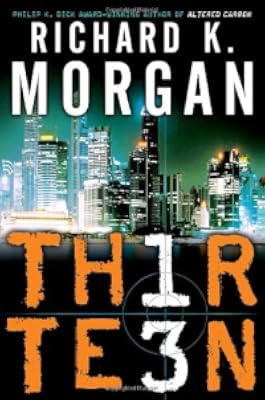
Thirteen
by Richard K. Morgan
On This Page
Description
Richard K. Morgan's Thirteen is near-future science fiction, very much in the vein of Bladerunner. A failed government program to produce a more violent, aggressive form of military fighter has resulted in the U.S. rounding up most of the test subjects and isolating them on Mars, a place where no one with any sense would wish to spend their days. But not all of the government subjects have been caught and shipped out to Mars. Enter Carl Marsalis, a hit man who would like nothing more than to show more stop killing and put his past behind him-and when he's eventually captured in Miami, it seems like the government might take care of his problems for him.Unfortunately, around the same time a transport from Mars arrives back on earth. The entire crew has been killed by a stowaway who turns out to be one of these violent superhumans-and maybe something worse. Now Marsalis is given a choice: use his heightened powers to hunt down the killer, or face a fate worse than death. show lessTags
Recommendations


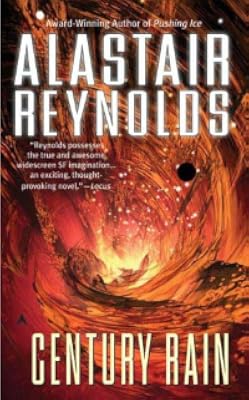
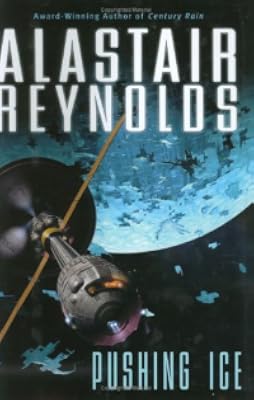
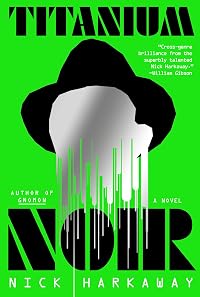
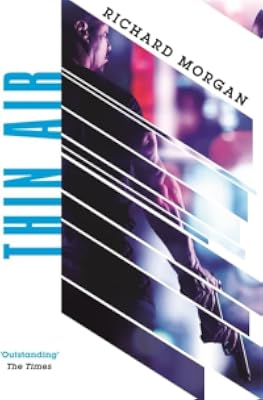
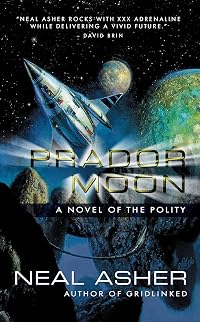
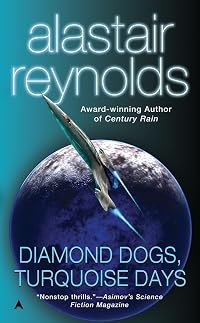
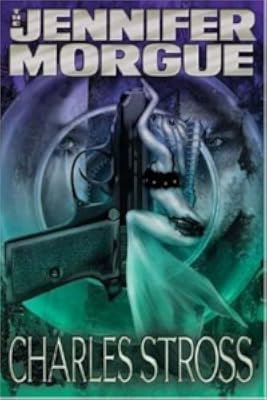
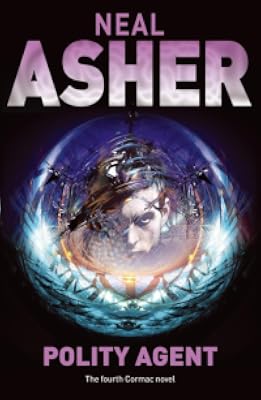


Member Recommendations

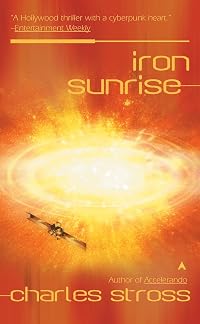
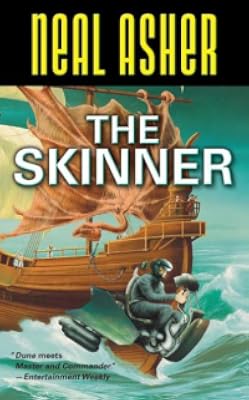
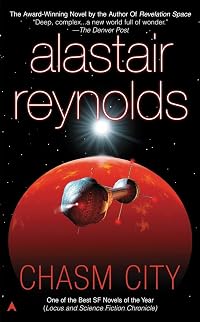
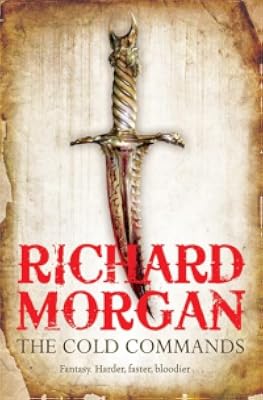
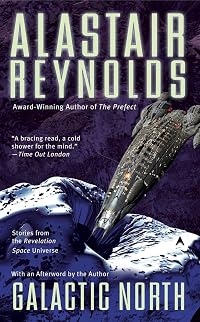
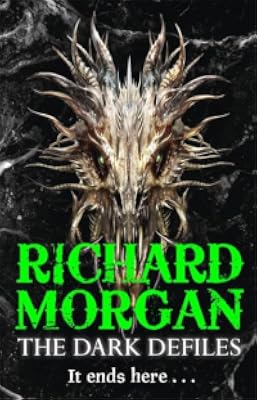
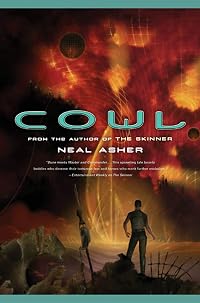
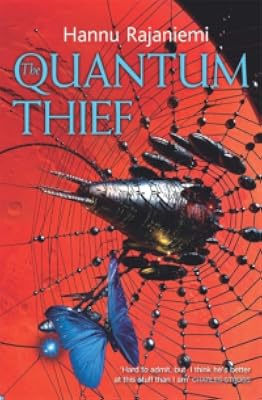
WildMaggie A thriller and a tragic romance--both authors explore the ethics of people created for specific purposes from the perspectives of those created individuals.
Member Reviews
Morgan continues the kind of neo-noir scifi that made him famous with Thirteen. Carl Marsalis is both a cutting-edge genetically engineered super-soldier and a dangerous throwback. The product of a secret program to create the ultimate warrior, Marsalis is stronger, faster, and more vicious than any baseline human, a sociopathic monster modeled on a pre-agriculture alpha male. The world used the Variant Thirteens to fight a dirty counter-terrorism war, and then when blowback proved too much, proscribed all the existing Thirteens to exile on Mars, or prison-reservations. Marsalis is legal; his job is hunting down renegades Thirteens. When a Thirteen does the impossible, hijacking a ship from Mars and brutally murdering people across the show more fragmented remains of North America (broken up into RemPac, Jesusland, and the Union), Marsalis teams up with a tough Turkish-American female cop to unravel dark conspiracy at the highest corporate levels.
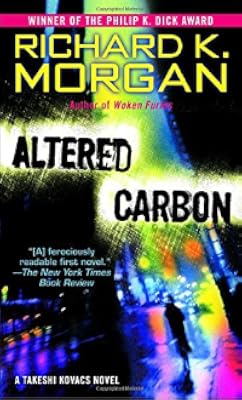
There's a definite deja vue to the story. Marsalis and Sevgi are a lot like Kovacs and Ortega from Altered Carbon. The bounty hunter tracking down deadly super-humans is straight out of Blade Runner. The setting of a USA fragmented on political lines is well-done, but nothing surprising. The only truly novel elements are a dash of evo-psych to explain the Thirteens and other semi-proscribed genetic variants, and a heavy dose of Andean altiplano as a stepping stone to Mars.
Thirteen is more generously paced than Altered Carbon. Morgan takes his time setting his pieces up, and letting the game play out. Style-wise, it's fairly restrained, stepping back from neon technological excess, but also a coherent picture of new technological world. As someone with a background in bioethics, I enjoyed the snippets of the 'Jacobsen Report' which proceeded each chapter, but I feel like Morgan comes down firmly on the boring side of genetic determinism. show less
There's a definite deja vue to the story. Marsalis and Sevgi are a lot like Kovacs and Ortega from Altered Carbon. The bounty hunter tracking down deadly super-humans is straight out of Blade Runner. The setting of a USA fragmented on political lines is well-done, but nothing surprising. The only truly novel elements are a dash of evo-psych to explain the Thirteens and other semi-proscribed genetic variants, and a heavy dose of Andean altiplano as a stepping stone to Mars.
Thirteen is more generously paced than Altered Carbon. Morgan takes his time setting his pieces up, and letting the game play out. Style-wise, it's fairly restrained, stepping back from neon technological excess, but also a coherent picture of new technological world. As someone with a background in bioethics, I enjoyed the snippets of the 'Jacobsen Report' which proceeded each chapter, but I feel like Morgan comes down firmly on the boring side of genetic determinism. show less
Carl Marsalis is a variant thirteen, genetically engineered for aggressive, hypermasculine traits. His kind were meant to be super-soldiers, but now exist in a society that hates and fears them. Marsalis makes a living hunting down other thirteens, but he's about to be hired for something much more strange and complicated than usual.
I find myself with very mixed feelings about this one. I'm not sure how much of that is due to me picking it up at the wrong time and with the wrong impressions, though. It looked like it was going to be a fast-paced action thriller, the kind of thing that would be great for a sleep-deprived week of night shifts when my brain wasn't exactly firing on all cylinders. Well, there is definitely lots of action show more (and lots of violence and sex), but there are also lots of political and philosophical conversations, lots of complex world-building, and a surprisingly complicated plot.
Mind you, even taking into account the sluggishness of my brain at following some of the plot, I'm still not sure what I think about that plot. It's an interesting set-up, and it ends in an interesting place, but some of the twists along the way are a bit... much. And those long political and philosophical conversations do slow down the pace and kill the momentum quite a bit. As for the philosophy itself, well, I'm not really buying the whole concept of the thirteens and what they're supposed to represent about humanity. Not that Morgan doesn't do some interesting things with it, but interesting isn't exactly the same as convincing.
The world-building, though... That I loved. There's a truly impressive and gratifying amount of care and attention to detail in the way Morgan builds his future world. It's not so much in the big things, the technological advancements and geopolitical changes, although there is certainly enough of that. It's the little references to pop culture or history or current events, things that don't necessarily have anything at all do to with the plot but make the world feel lived-in and real. So much SF, including stuff that I otherwise really like, feels impoverished to me when it comes to that kind of detail, so it always delights and fascinates me to see it done really well. Even during times when I found myself just kind of wishing I could be done with this story already -- and it took me long enough to finish that I definitely did get to that point -- that alone made it feel worthwhile to me.
Rating: 3.5/5. Which might honestly be a bit high, but I just gotta respect that world building. show less
I find myself with very mixed feelings about this one. I'm not sure how much of that is due to me picking it up at the wrong time and with the wrong impressions, though. It looked like it was going to be a fast-paced action thriller, the kind of thing that would be great for a sleep-deprived week of night shifts when my brain wasn't exactly firing on all cylinders. Well, there is definitely lots of action show more (and lots of violence and sex), but there are also lots of political and philosophical conversations, lots of complex world-building, and a surprisingly complicated plot.
Mind you, even taking into account the sluggishness of my brain at following some of the plot, I'm still not sure what I think about that plot. It's an interesting set-up, and it ends in an interesting place, but some of the twists along the way are a bit... much. And those long political and philosophical conversations do slow down the pace and kill the momentum quite a bit. As for the philosophy itself, well, I'm not really buying the whole concept of the thirteens and what they're supposed to represent about humanity. Not that Morgan doesn't do some interesting things with it, but interesting isn't exactly the same as convincing.
The world-building, though... That I loved. There's a truly impressive and gratifying amount of care and attention to detail in the way Morgan builds his future world. It's not so much in the big things, the technological advancements and geopolitical changes, although there is certainly enough of that. It's the little references to pop culture or history or current events, things that don't necessarily have anything at all do to with the plot but make the world feel lived-in and real. So much SF, including stuff that I otherwise really like, feels impoverished to me when it comes to that kind of detail, so it always delights and fascinates me to see it done really well. Even during times when I found myself just kind of wishing I could be done with this story already -- and it took me long enough to finish that I definitely did get to that point -- that alone made it feel worthwhile to me.
Rating: 3.5/5. Which might honestly be a bit high, but I just gotta respect that world building. show less
Sci-Fi always has something to say about the present, and the question here is a familiar one: How much does free will exist, and how much of our lives is determined by genetics, childhood experience, and society's prejudice? There are some excellent conversations between the characters on the topic, and the events of the book highlight the question more than they provide clear answers. Occasionally there was just a really strong sentence that stuck with me. For instance, "Anyone who's proud of their country is either a thug or just hasn't read enough history yet."
The book's protagonist has a relatively simple way of seeing the word that allows him to be a vehicle for the reader. His mentor summed it up, "Only live with what you've show more done, and try in future to only do what you're happy to live with."
The overarching story is a competent crime thriller with a couple of unique touches and page-turning writing, but the asides and philosophical moments were my favorite part of the book.
Here's a couple quotes to illustrate what I mean:
Yavuz said, "At times, it shames me to be male. I mean, we index how civilised a nation is by the level of female participation it enjoys. We fear those societies where women are still not empowered, and with good cause. Investigating violent crime, we assume, correctly, that the perpetrator will most likely be male. We use male social dominance as a predictor of trouble, and of suffering, because when all is said and done males are the problem."
In response, Sevgi says, "The way it looks from the historical context, the male cycle of civilisation had to come first, because there was no other way outside of male force to create a civilisation in the first place. To have law and art and science, you have to have settled agrarian societies and a non-labouring class that can develop that stuff. But that kind of society would have to be enforced, and pretty brutally in the terms we look at things today."
There's also a lot of subtext about racism couched in an overt examination of prejudice based on genetic modification. One of the most interesting reoccurring events in the book was the children who had at least one parent that was a genetically-modified super-soldier, but who were being set up to be raised outside of the oppressive system that the book's super-soldiers were subject to. The eventual fate of one of the three was very up in the air, subject to a contentious legal battle and kept in cryogenic stasis until their fate was decided. The book's brooding philosophical super-assassin protagonist is set up as a potential guardian for the child, but that plotline is never resolved. The other two were in the care of their relate-able criminal mothers, and almost certain to survive unscathed into adulthood. This is an obvious set-up for a sequel (that has never been written), and I want to read that story a great deal more than the one I got.
Words that jumped out at me from this book:
adipocere - a grayish waxy substance formed by the decomposition of soft tissue in dead bodies subjected to moisture.
antecuchos - Peruvian shish kabob, usually skewered beef and onions
atavistic - relating to or characterized by reversion to something ancient or ancestral.
blag - to persuade someone in a clever or slightly dishonest way
chunter - to mutter or to talk in a low inarticulate way
cimit - usually spelled "simit", a Turkish circular bread typically encrusted with sesame seeds. Widely known as a "Turkish bagel" in the USA.
demodynamic - ambiguously either the flow of a demonstration or the flow of demonic power.
lemeño - a type of criminal slang specific to Lima, Peru
occlude - to block passage through
onbekend - "unknown" in Dutch. A common surname in the former Dutch-ruled Indonesia where there weren't surnames.
raki - an unsweetened, occasionally anise-flavored, alcoholic drink that is popular in Turkey, Greece, Iran, Turkic countries, and in the Balkan countries.
rapprochment - (especially in international relations) an establishment or resumption of harmonious relations.
rectilinear - characterized by a straight line or lines
sahlep - a Turkish flour made from tubers of the orchid genus Orchis, or the drink made from the same.
sicario - hitman or hired killer, specifically one in the emlpoy of South American drug cartels
superannuated - no longer in use or valid or fashionable; too old to be useful; discharged as too old for use or work; especially with a pension
virilicide - the elimination of masculinity.
vivarium - an indoor enclosure for keeping and raising living animals and plants and observing them under natural conditions. show less
The book's protagonist has a relatively simple way of seeing the word that allows him to be a vehicle for the reader. His mentor summed it up, "Only live with what you've show more done, and try in future to only do what you're happy to live with."
The overarching story is a competent crime thriller with a couple of unique touches and page-turning writing, but the asides and philosophical moments were my favorite part of the book.
Here's a couple quotes to illustrate what I mean:
Yavuz said, "At times, it shames me to be male. I mean, we index how civilised a nation is by the level of female participation it enjoys. We fear those societies where women are still not empowered, and with good cause. Investigating violent crime, we assume, correctly, that the perpetrator will most likely be male. We use male social dominance as a predictor of trouble, and of suffering, because when all is said and done males are the problem."
In response, Sevgi says, "The way it looks from the historical context, the male cycle of civilisation had to come first, because there was no other way outside of male force to create a civilisation in the first place. To have law and art and science, you have to have settled agrarian societies and a non-labouring class that can develop that stuff. But that kind of society would have to be enforced, and pretty brutally in the terms we look at things today."
There's also a lot of subtext about racism couched in an overt examination of prejudice based on genetic modification. One of the most interesting reoccurring events in the book was the children who had at least one parent that was a genetically-modified super-soldier, but who were being set up to be raised outside of the oppressive system that the book's super-soldiers were subject to. The eventual fate of one of the three was very up in the air, subject to a contentious legal battle and kept in cryogenic stasis until their fate was decided. The book's brooding philosophical super-assassin protagonist is set up as a potential guardian for the child, but that plotline is never resolved. The other two were in the care of their relate-able criminal mothers, and almost certain to survive unscathed into adulthood. This is an obvious set-up for a sequel (that has never been written), and I want to read that story a great deal more than the one I got.
Words that jumped out at me from this book:
adipocere - a grayish waxy substance formed by the decomposition of soft tissue in dead bodies subjected to moisture.
antecuchos - Peruvian shish kabob, usually skewered beef and onions
atavistic - relating to or characterized by reversion to something ancient or ancestral.
blag - to persuade someone in a clever or slightly dishonest way
chunter - to mutter or to talk in a low inarticulate way
cimit - usually spelled "simit", a Turkish circular bread typically encrusted with sesame seeds. Widely known as a "Turkish bagel" in the USA.
demodynamic - ambiguously either the flow of a demonstration or the flow of demonic power.
lemeño - a type of criminal slang specific to Lima, Peru
occlude - to block passage through
onbekend - "unknown" in Dutch. A common surname in the former Dutch-ruled Indonesia where there weren't surnames.
raki - an unsweetened, occasionally anise-flavored, alcoholic drink that is popular in Turkey, Greece, Iran, Turkic countries, and in the Balkan countries.
rapprochment - (especially in international relations) an establishment or resumption of harmonious relations.
rectilinear - characterized by a straight line or lines
sahlep - a Turkish flour made from tubers of the orchid genus Orchis, or the drink made from the same.
sicario - hitman or hired killer, specifically one in the emlpoy of South American drug cartels
superannuated - no longer in use or valid or fashionable; too old to be useful; discharged as too old for use or work; especially with a pension
virilicide - the elimination of masculinity.
vivarium - an indoor enclosure for keeping and raising living animals and plants and observing them under natural conditions. show less
A great novel that takes place in a cyberpunk version of a collapsed United States that is partitioned into three separate states. The main character is essentially a super-soldier hired to hunt another super-soldier. A "Thirteen." But there's more at work here than mercenaries duking it out. This book is literally predicting the future of the USA, international trade organizations, and grass-roots religious and nationalist extremists. There are references to the PRC's future and speculation of global versus off-world free-trade agreements. All while following a police procedural/sci-fi military adventure.
Read this if you like Altered Carbon.
Read this if you like Titanium Noir.
Read this if you like Altered Carbon.
Read this if you like Titanium Noir.
I have to admit I truly enjoy Richard K Morgan's SF novels - stories that have action elements, lots of it, but always have background story - often having political connotations and glimpses into very believable future - as a main component. That was the case with Takeshi Kovac's novels and Thin Air (that is set in the same universe as this novel).
In this one accent is on biological design of human beings (unlike more cyber-improvements of Takeshi Kovacs's universe) and scientific and moral qualms about performing these actions.
Background of the story is following - during a rather turbulent era all world powers worked on genetically enhanced soldiers - so called variant thirteen (hence the name of the novel) to carry out covert and show more high risk military operations. Due to the widespread use of these genetical modifications world community led by UN decides to bring genetic manipulation technology under more strict observation (to prevent further genetic manipulations and abuse). Soon these highly successful combat teams were declared as unwanted on Earth and were given option to move to Mars (colonials always need hardened veterans) or move to reservations that are kept under constant control with threat of overwhelming firepower to prevent variant thirteens from exiting them.
And this is where our main protagonist - Carl Marsalis - comes into play. Variant thirteen himself he is now working as bounty hunter on Earth hunting those variant thirteens that are wandering the new Earth governments without permits. Until very serious crime takes place in Martian freighter that crashes on Earth. This incident will start bringing lots of very dark secrets to surface, bodies will start piling up and Carl's unique insight into violent behavior will make him invaluable to solve the series of murders.
Carl is a man that would not be out of place as mercenary or soldier in Warhammer universe, especially Age of Strife of Unification Wars period. As a matter of fact all variants would fit in just nicely. Sharp minded, bred for resilience, independence and ability to follow their orders through no matter what they are the ultimate weapon that can be used as a scalpel or as a broad-sword depending on the needs.
But they are just that - weapon. And as soon as politicians were faced with consequences of creating them in the first place they were discarded.
Only thing that I was annoyed with is the constant talk how rise of civilization made a more timid society. This reminds me of the theory of the peaceful savage. Rise of civilization did not create more peace in the world - I mean only check last 100 years, WW1, WW2, Balkan wars (pre-WW1 and in 1990s), Middle East wars, numerous conflicts in Africa, Middle East and Central and South America and in later days more visible conflicts in Central Asia (and lets not forget the Great Game period eh) etc etc. War just became more industrialized and huger in scope - no longer are wars waged to protect the city or country but to establish control of the various markets and economy directly or even through proxies. As a matter of fact modern warfare became more deadly and unfortunately less under control of the public - because public decided that all the conflicts in the world are not of interest to them (until they get drafted but then it is usually late).
Also society did not become feminized during the civilization development but in majority became indifferent because it is much easier to act like foreign policy is of no interest to anyone instead of taking active role in political life of the country. And if people are living good off corruption and nepotism and if no caskets come back from remote frontiers why change anything - right? And also if you live in good conditions why should you worry about somebody in remote parts of the world? There is no point in it. Indifference of the majority is the main driving force for lots of events in the world today.
So to say people became timid or domesticated is in my opinion wishful thinking. Violence is part of the nature and control of goods, resources and territory will always be driving force for it among the humans. And as long the society in general is indifferent and not willing to call out things their governments are doing it will just continue on.
And the societies opinion on variant thirteens - nothing strange. Just try going against public opinion today and you will see what I mean. Vilifying others and black/white approach (no more grey areas no discussions) have become so common today that voices of the moderates get drowned in shrieks of the banshees and intolerant.
Characters in the book and their interactions - from field operatives to gray-suite chiefs of various organizations and services- are given in great details. I especially liked how Carl constantly tries to keep his appearance as a thug even though deep inside he is suffering even more than those around him. Loss of one of the main characters was followed through just wonderfully and with deep emotions.
Highly recommended to all fans of the SF in general and in particular hard-core no-nosense action heroes and cyberpunk-noir-detective stories. show less
In this one accent is on biological design of human beings (unlike more cyber-improvements of Takeshi Kovacs's universe) and scientific and moral qualms about performing these actions.
Background of the story is following - during a rather turbulent era all world powers worked on genetically enhanced soldiers - so called variant thirteen (hence the name of the novel) to carry out covert and show more high risk military operations. Due to the widespread use of these genetical modifications world community led by UN decides to bring genetic manipulation technology under more strict observation (to prevent further genetic manipulations and abuse). Soon these highly successful combat teams were declared as unwanted on Earth and were given option to move to Mars (colonials always need hardened veterans) or move to reservations that are kept under constant control with threat of overwhelming firepower to prevent variant thirteens from exiting them.
And this is where our main protagonist - Carl Marsalis - comes into play. Variant thirteen himself he is now working as bounty hunter on Earth hunting those variant thirteens that are wandering the new Earth governments without permits. Until very serious crime takes place in Martian freighter that crashes on Earth. This incident will start bringing lots of very dark secrets to surface, bodies will start piling up and Carl's unique insight into violent behavior will make him invaluable to solve the series of murders.
Carl is a man that would not be out of place as mercenary or soldier in Warhammer universe, especially Age of Strife of Unification Wars period. As a matter of fact all variants would fit in just nicely. Sharp minded, bred for resilience, independence and ability to follow their orders through no matter what they are the ultimate weapon that can be used as a scalpel or as a broad-sword depending on the needs.
But they are just that - weapon. And as soon as politicians were faced with consequences of creating them in the first place they were discarded.
Only thing that I was annoyed with is the constant talk how rise of civilization made a more timid society. This reminds me of the theory of the peaceful savage. Rise of civilization did not create more peace in the world - I mean only check last 100 years, WW1, WW2, Balkan wars (pre-WW1 and in 1990s), Middle East wars, numerous conflicts in Africa, Middle East and Central and South America and in later days more visible conflicts in Central Asia (and lets not forget the Great Game period eh) etc etc. War just became more industrialized and huger in scope - no longer are wars waged to protect the city or country but to establish control of the various markets and economy directly or even through proxies. As a matter of fact modern warfare became more deadly and unfortunately less under control of the public - because public decided that all the conflicts in the world are not of interest to them (until they get drafted but then it is usually late).
Also society did not become feminized during the civilization development but in majority became indifferent because it is much easier to act like foreign policy is of no interest to anyone instead of taking active role in political life of the country. And if people are living good off corruption and nepotism and if no caskets come back from remote frontiers why change anything - right? And also if you live in good conditions why should you worry about somebody in remote parts of the world? There is no point in it. Indifference of the majority is the main driving force for lots of events in the world today.
So to say people became timid or domesticated is in my opinion wishful thinking. Violence is part of the nature and control of goods, resources and territory will always be driving force for it among the humans. And as long the society in general is indifferent and not willing to call out things their governments are doing it will just continue on.
And the societies opinion on variant thirteens - nothing strange. Just try going against public opinion today and you will see what I mean. Vilifying others and black/white approach (no more grey areas no discussions) have become so common today that voices of the moderates get drowned in shrieks of the banshees and intolerant.
Characters in the book and their interactions - from field operatives to gray-suite chiefs of various organizations and services- are given in great details. I especially liked how Carl constantly tries to keep his appearance as a thug even though deep inside he is suffering even more than those around him. Loss of one of the main characters was followed through just wonderfully and with deep emotions.
Highly recommended to all fans of the SF in general and in particular hard-core no-nosense action heroes and cyberpunk-noir-detective stories. show less
This is quite a hard book to review because there are so many things going on it.
If you're a fan of Morgan's you'll feel at home with the "alpha male" soldier character who is central to the book, although the milieu is much more cyberpunk than far future sci-fi. Except, it's not cyber, it's a genetically engineered future and the aftermath of accords to limit the effects of a range of GE experiments on people including the "super soldier" variant 13's. For the scientists out there, like me, there's a neat side step of the nature v nuture argument, because the super soldiers were also trained from birth as special forces soldiers, although the society they are in is firmly in the "nature" camp.
It's also a rather dystopian future of show more America vision - and a fascinating one. We don't find out everything about the new America, but there is a North Eastern (and basically only mentioned) coalition, a Rim (Pacific states) high-tech, high-finance state, and Jesusland - a fundamentalist, racist, collapsed republic.
Then there are all the discrimination issues - against the variant 13's and other "twists", in Jesusland against black people and so on.
Then, just to add to the fun, there's supernational agencies. There are basically only two, the UN has teeth now, and COLIN, the Colonisation Initiative, who run their own police, trample over local law enforcement and all the rest.
And that's all BEFORE you get to the plot.
The plot is basically that one of the variant 13's is on a killing spree. It's apparently random murders, but a "tamed" variant 13 is called in to hunt him down. There are stories and strands around the themes above that change and twist this, plus a love story or two and a few other wonderful little side trips.
Truly excellent. show less
If you're a fan of Morgan's you'll feel at home with the "alpha male" soldier character who is central to the book, although the milieu is much more cyberpunk than far future sci-fi. Except, it's not cyber, it's a genetically engineered future and the aftermath of accords to limit the effects of a range of GE experiments on people including the "super soldier" variant 13's. For the scientists out there, like me, there's a neat side step of the nature v nuture argument, because the super soldiers were also trained from birth as special forces soldiers, although the society they are in is firmly in the "nature" camp.
It's also a rather dystopian future of show more America vision - and a fascinating one. We don't find out everything about the new America, but there is a North Eastern (and basically only mentioned) coalition, a Rim (Pacific states) high-tech, high-finance state, and Jesusland - a fundamentalist, racist, collapsed republic.
Then there are all the discrimination issues - against the variant 13's and other "twists", in Jesusland against black people and so on.
Then, just to add to the fun, there's supernational agencies. There are basically only two, the UN has teeth now, and COLIN, the Colonisation Initiative, who run their own police, trample over local law enforcement and all the rest.
And that's all BEFORE you get to the plot.
The plot is basically that one of the variant 13's is on a killing spree. It's apparently random murders, but a "tamed" variant 13 is called in to hunt him down. There are stories and strands around the themes above that change and twist this, plus a love story or two and a few other wonderful little side trips.
Truly excellent. show less
A beautifully written, heartbreaking, gut-wrenching novel about a future in which what we think of as essential, innate human traits have been commodified - sexuality, masculinity, leadership, love, loyalty. The world-building is breathtaking. The protagonist is powerful, brave, brilliant, damaged and ultimately tragic. I think Black Man works on every level; lovers of the speculation of science fiction, the thrills of crime fiction and the craft of literary fiction should all find their respective itches scratched. It's known and appreciated within the SF community, but deserves to be far more widely read.
Members
- Recently Added By
Lists

Best Science Fiction Novels
816 works; 430 members

Arthur C. Clarke Award Winners and Shortlisted Books
219 works; 14 members

Read These Too
458 works; 9 members
Author Information

Some Editions
Awards and Honors
Awards
Notable Lists
Work Relationships
Is contained in
Common Knowledge
- Canonical title
- Thirteen
- Original title
- Black Man
- Alternate titles
- Th1rte3n
- Original publication date
- 2007-05; 2007
- People/Characters
- Carl Marsalis; Sevgi Ertekin; Tom Norton; Carmen Ren; Alvaro Ortiz; Helena Larsen
- Dedication
- Margaret Ann Morgan
- First words
- Gleaming steel, gleaming steel...
- Last words
- (Click to show. Warning: May contain spoilers.)Gleaming steel, gleaming steel...
Classifications
Statistics
- Members
- 1,868
- Popularity
- 11,572
- Reviews
- 65
- Rating
- (3.77)
- Languages
- 7 — Czech, English, Finnish, French, German, Hungarian, Polish
- Media
- Paper, Audiobook, Ebook
- ISBNs
- 27
- ASINs
- 12