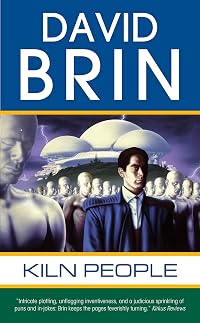
Kiln People
by David Brin 
There is 1 current discussion about this work.
On This Page
Description
Al Morris is a private investigator. Actually, he's lots of private investigators. For he lives in a world in which every person, every day, can be in any number of places at the same time. It's the world of dittos. It is our world. Welcome to the future. In a business where information is the currency, Al's dittos are loaded. And with a number of cases on the go at once, it is crucial that Al keeps track of what's going on. What he doesn't know is that he is about to be drawn into a plot show more that could throw this delicately balanced world into chaos. It seems that the technology has been developed for dittos to replicate themselves. It seems that real people may no longer be necessary. And, suddenly, it seems that mankind's dream of immortality could turn into a nightmare. Look out for more information about this book and others at www.orbitbooks.co.uk show lessTags
Recommendations

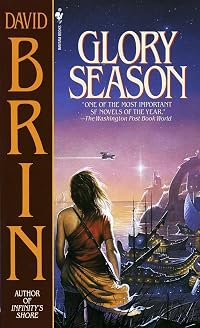
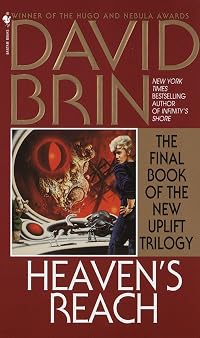
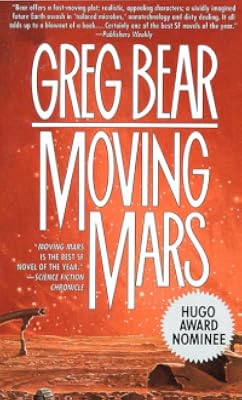
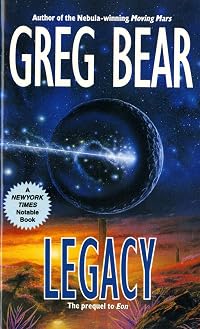
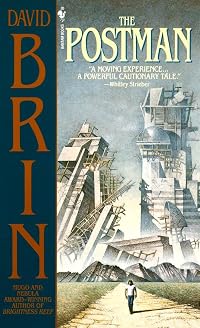
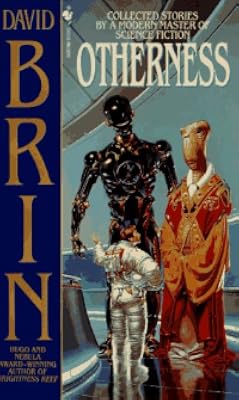
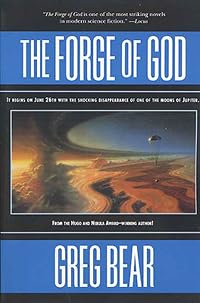

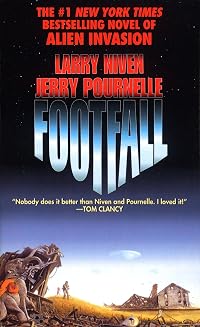



Member Recommendations
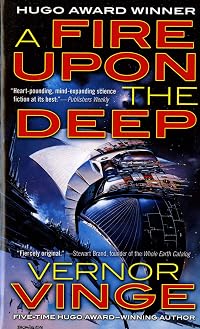
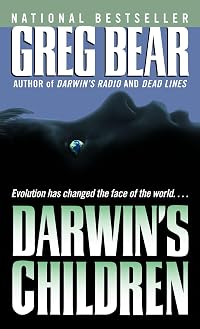
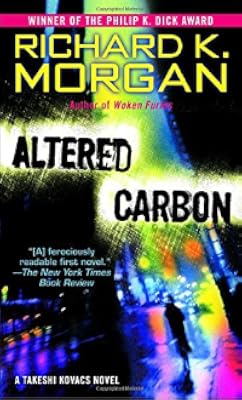
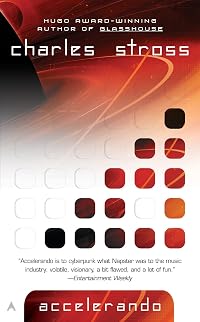
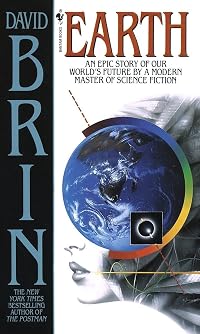
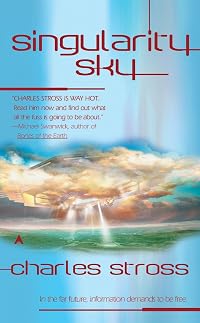
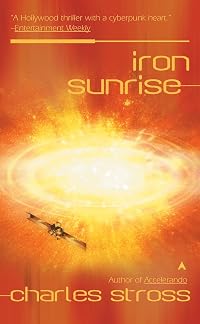
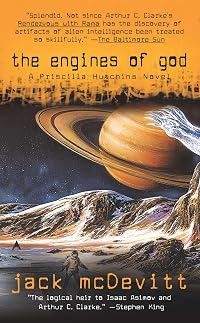
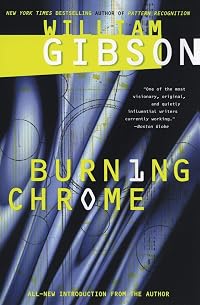
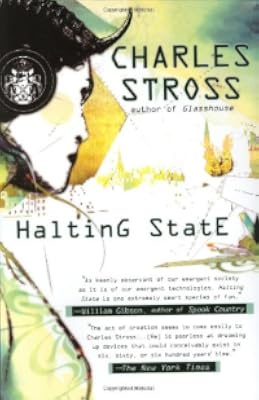
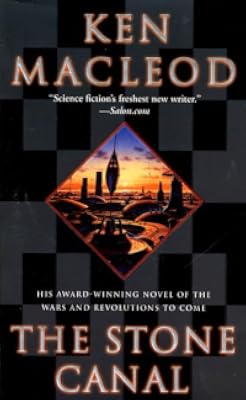
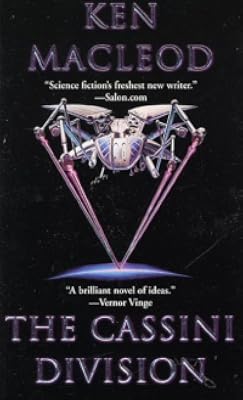
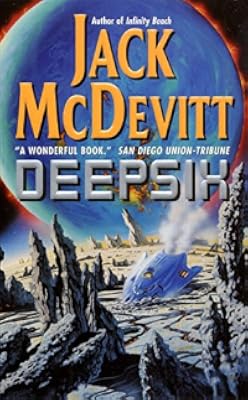
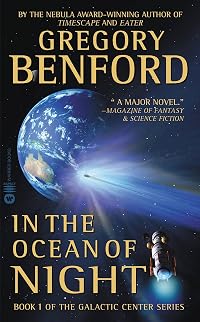
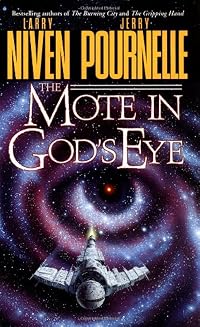
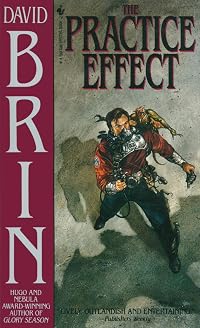
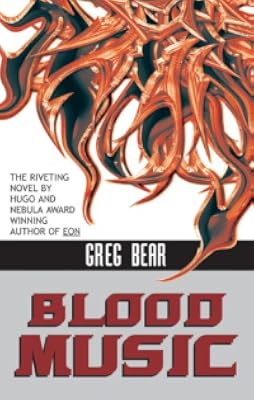
reading_fox Similar idea about transposable conciousness, and the corruption this can endevour in those with the money/power to exploit it.
31
Member Reviews
In this hard-boiled detective novel set in the future, Brin gleefully plays with the concepts of identity and immortality.
In this future, we have figured out how to clone short-lived, clay versions of ourselves, which can then go out and do the work while the originals enjoy lives of leisure. Since the copies are expendable, they are often assigned risky tasks or sent out to do chores or other drudgery. But since the copies possess all the memories and consciousness of the original, they are cursed with a knowledge of how brief their lives are, and their only fulfillment comes from making it back home to download their memories into the original, in that way achieving a kind of afterlife. Layered on top of all that is a mystery told show more from the points of view of a private investigator and several of his copies unraveling a conspiracy case culminating in a plot by a mad scientist to achieve godhood, and this becomes a very complicated plot indeed. Good thing Brin tells it with a sense of fun and humor. show less
In this future, we have figured out how to clone short-lived, clay versions of ourselves, which can then go out and do the work while the originals enjoy lives of leisure. Since the copies are expendable, they are often assigned risky tasks or sent out to do chores or other drudgery. But since the copies possess all the memories and consciousness of the original, they are cursed with a knowledge of how brief their lives are, and their only fulfillment comes from making it back home to download their memories into the original, in that way achieving a kind of afterlife. Layered on top of all that is a mystery told show more from the points of view of a private investigator and several of his copies unraveling a conspiracy case culminating in a plot by a mad scientist to achieve godhood, and this becomes a very complicated plot indeed. Good thing Brin tells it with a sense of fun and humor. show less
I have to admit David Brin wrote a damn fine book. Humorous, insightful, exciting and thought-provoking, it has an amazing description of what one might find beyond our corporeal homes - if our souls really do reach beyond to some other plane of existence.
Oh, never mind. I'm always just a bit grumpy getting up off the warming tray, grabbing paper garments from a rack and slipping them over limbs that still glow with ignition enzymes, knowing I'm the copy-for-a-day.
Of course I remember doing this thousands of times. Part of modern living, that's all. Still it feels like when my parents used to hand me a long list of chores, saying that today will be all work and no play . . . with the added touch that Albert Morris's golems have a high chance of getting snuffed while taking risks he'd never put his realbod through.
Society has undergone a major change since the introduction of golem technology. Using a cheap home kiln, people have the ability to create clay 'clones' of themselves. The show more clones, known as dittos or roxes (Xeroxes?) are brightly coloured to distinguish them from rigs (originals) with the colour signifying their role; you can produce high quality blacks for research, executive greys as representatives, cheap greens to run errands, etc. There are limitations to the technology, as dittos only last for 24 hours before disintegrating, but the ditto's consciousness can have a certain continuity, since if they return home before the day is up the rig can upload their memories if s/he wants to. Due to the introduction of dittos, most jobs are done by dittos and most real people live a life of leisure or become perpetual students.
The hero of this tale is one of the few people with a marketable skill who do have jobs. He is Albert Morris, a detective who can work on lots of cases at once by using dittos. When a woman employs him to find out who killed her father, who was a senior research scientist at Universal Kilns (the company who invented golem technology), realAlbert and various ditAlberts find themselves caught up in a deep-seated conspiracy.
A very interesting concept and fascinating descriptions of ditto technology and the resulting society, but the plot did rather fizzle out at the end. Definitely the best 30p I've spent at the library book sale recently!
I do that sometimes - underestimate the quarry. Nobody's perfect . . . and you can get lazy when such mistakes are never permalethal. It kind of makes you marvel at those detectives of olden times, who confronted and confounded remorseless evil while equipped with just one life. Now those guys really had it.
This book is also known as Kiln People, but Kil'n People is a betteer title really, as that apostrophe changes the emphasis of the title to imply Killing People as well as Kiln People. show less
Of course I remember doing this thousands of times. Part of modern living, that's all. Still it feels like when my parents used to hand me a long list of chores, saying that today will be all work and no play . . . with the added touch that Albert Morris's golems have a high chance of getting snuffed while taking risks he'd never put his realbod through.
Society has undergone a major change since the introduction of golem technology. Using a cheap home kiln, people have the ability to create clay 'clones' of themselves. The show more clones, known as dittos or roxes (Xeroxes?) are brightly coloured to distinguish them from rigs (originals) with the colour signifying their role; you can produce high quality blacks for research, executive greys as representatives, cheap greens to run errands, etc. There are limitations to the technology, as dittos only last for 24 hours before disintegrating, but the ditto's consciousness can have a certain continuity, since if they return home before the day is up the rig can upload their memories if s/he wants to. Due to the introduction of dittos, most jobs are done by dittos and most real people live a life of leisure or become perpetual students.
The hero of this tale is one of the few people with a marketable skill who do have jobs. He is Albert Morris, a detective who can work on lots of cases at once by using dittos. When a woman employs him to find out who killed her father, who was a senior research scientist at Universal Kilns (the company who invented golem technology), realAlbert and various ditAlberts find themselves caught up in a deep-seated conspiracy.
A very interesting concept and fascinating descriptions of ditto technology and the resulting society, but the plot did rather fizzle out at the end. Definitely the best 30p I've spent at the library book sale recently!
I do that sometimes - underestimate the quarry. Nobody's perfect . . . and you can get lazy when such mistakes are never permalethal. It kind of makes you marvel at those detectives of olden times, who confronted and confounded remorseless evil while equipped with just one life. Now those guys really had it.
This book is also known as Kiln People, but Kil'n People is a betteer title really, as that apostrophe changes the emphasis of the title to imply Killing People as well as Kiln People. show less
I just finished reading this book - and I couldn't put it down. It has a fast pace, and it is not at all as dark as I suspected it to be, and it does make you think- if you could download yourself into any number of short lived "Clay" people and then upload the experience, How does that work ethically. Is each copy of "you" a separate entity? Does it deserve rights? What about the You copy that ends up cleaning the toilets?
While the book is thick, it doesn't lag. Half way through, I wasn't sure if this was going to end up being a detective story set in the future, or a world changing sci-fi story. It kept me thinking. The one thing I would have liked to change is the ending - it seemed a bit rushed, and I would have liked to see more of show more a close on the ethics of the Ditto's (Copies). show less
While the book is thick, it doesn't lag. Half way through, I wasn't sure if this was going to end up being a detective story set in the future, or a world changing sci-fi story. It kept me thinking. The one thing I would have liked to change is the ending - it seemed a bit rushed, and I would have liked to see more of show more a close on the ethics of the Ditto's (Copies). show less
This is a brilliant and clever book. Science fiction books set in the future generally touch on one science technology - i.e. nanotechnology, rejuvenation/arresting aging, robotics, and so on. This book presents a unique idea I've never seen before, that of golems - temporary clones of oneself that people can use to get more stuff done. Heck, there are special golems for different tasks, like studying, or physical labor. A lot of thought went into this book, making for a completely unique and clever story. A+, would recommend for any sci fi fan.
This book has an absolutely awesome backdrop with wonderful characters.
Brin has enough great ideas and possibilities here for a half dozen novels, not just one.
In so many ways it's Brin at his best... but it's still not enough to save this one from being mediocre at best I'm afraid.
In pacing it really reminds me of his Earth novel. It starts out interesting but moderately paced, then around two thirds of the way through starts spiralling out, getting wilder and wilder.
In Earth, it worked. The craziness was still believable, and never completely threw you off the ride.
Here, it just doesn't work.
There's two things that make it impossible to hold on.
First, the ditto concept is the coolest part of the novel, and spotting the show more differences between the almost identical characters is part of the fun, but it's tough sledding at times. You often end up feeling lost. The result is a centre which just can't hold you through the insanity coming.
Part two, (and the biggest sin) is the weirdo plot progression. It starts out a detective novel, wanders into an honest to god multi-party conspiracy theory I still don't understand, then caps it all off with a convoluted theology section
that bears almost no resemblance to the rest of the novel.
I wanted to love this book, but it's neither fish nor fowl, bread nor wine. It's just a big mishmash painted on a gorgeous backdrop. show less
Brin has enough great ideas and possibilities here for a half dozen novels, not just one.
In so many ways it's Brin at his best... but it's still not enough to save this one from being mediocre at best I'm afraid.
In pacing it really reminds me of his Earth novel. It starts out interesting but moderately paced, then around two thirds of the way through starts spiralling out, getting wilder and wilder.
In Earth, it worked. The craziness was still believable, and never completely threw you off the ride.
Here, it just doesn't work.
There's two things that make it impossible to hold on.
First, the ditto concept is the coolest part of the novel, and spotting the show more differences between the almost identical characters is part of the fun, but it's tough sledding at times. You often end up feeling lost. The result is a centre which just can't hold you through the insanity coming.
Part two, (and the biggest sin) is the weirdo plot progression. It starts out a detective novel, wanders into an honest to god multi-party conspiracy theory I still don't understand, then caps it all off with a convoluted theology section
that bears almost no resemblance to the rest of the novel.
I wanted to love this book, but it's neither fish nor fowl, bread nor wine. It's just a big mishmash painted on a gorgeous backdrop. show less
Oh my this was a well paced and fun read. I loved it! In the future everyone has the ability to make clay copies of themselves. This story is about Albert Morris a detective in this future as he investigates the disappearance of one of the founders of Universal Kilns, the company that provides the technology.
Albert and his dittos provide a number of story lines that converge in a way that I did not expect. This is a fresh take on Sci-fi and I really liked Brin's ability to provide a plausible futuristic society based on the technology. I am so pleased to have to read this and actually hope that Brin will revisit this society someday as I am sure there are plenty of other stories that could be told.
Albert and his dittos provide a number of story lines that converge in a way that I did not expect. This is a fresh take on Sci-fi and I really liked Brin's ability to provide a plausible futuristic society based on the technology. I am so pleased to have to read this and actually hope that Brin will revisit this society someday as I am sure there are plenty of other stories that could be told.
Members
- Recently Added By
Lists

Best Science Fiction Novels
816 works; 430 members

Best 21st Century Books (So Far)
679 works; 86 members

Arthur C. Clarke Award Winners and Shortlisted Books
219 works; 14 members

Books Read in 2007
326 works; 7 members

Good (mostly) modern science fiction
40 works; 4 members
Favorite Science Fiction
456 works; 219 members

Books Tagged Clones
14 works; 6 members

Best Dystopias
280 works; 277 members
Talk Discussions
Current Discussions
Serious about it in Good Show Sir! — bad science fiction and fantasy covers (May 21)
Author Information

153+ Works 40,461 Members
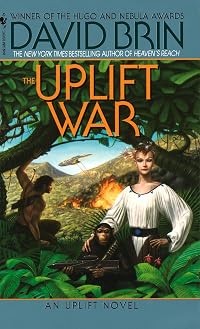
David Brin is a scientist, writer, and public speaker. He was born in Pasadena, California, on October 9, 1950. Brin attended the California Institute of Technology (Caltech) and later earned a doctorate at the University of California. He accepted a position as an engineer at Hughes Aircraft Company. Brin is a former fellow at the California show more Space Institute and serves on several government and nongovernment advisory committees dealing with issues involved with technological growth. Brin has lectured all over the world on such topics as space flight, ecology, and the search for extraterrestrial life. Brin deals with global warming, the destruction of the ozone layer, and pollution of Earth. His 1987 novel, The Uplift War, received the Hugo Award and the Locus Award. His novels have been translated into 20 languages. (Bowker Author Biography) show less
David Brin is a LibraryThing Author, an author who lists their personal library on LibraryThing.
Some Editions
Awards and Honors
Common Knowledge
- Canonical title
- Kiln People
- Original publication date
- 2002
- People/Characters
- Albert Morris; Clara Gonzalez
- Dedication
- For Poul Anderson, who explored for all of us, making the future fun.... ...and Greg Bear, who takes on every shadow, with edge... ...and Gregory Benford, who delves stark beauty in the dark ocean of night... ...al... (show all)l of them shamans by the campfire. Indispensable.
- First words
- It's hard to stay cordial while fighting for your life, even when your life doesn't amount to much. Even when you're just a lump of clay.
- Quotations
- Even in the old days it was normal to wonder, now and then, if you were real. At least it was normal for zen masters and college sophomores. Now, the thought can strike you in the middle of a busy day. Running errands and do... (show all)ing business, you actually lose track of which table you got up from that morning. You can't help checking, lifting a hand to glance at the color, or giving the flesh a quick pinch.
- Last words
- (Click to show. Warning: May contain spoilers.)Then I put my clay head down to begin life once again.
- Blurbers
- Vinge, Vernor; McCarthy, Wil
- Original language
- English
Classifications
Statistics
- Members
- 2,006
- Popularity
- 10,488
- Reviews
- 50
- Rating
- (3.72)
- Languages
- 5 — English, French, German, Hungarian, Spanish
- Media
- Paper, Audiobook, Ebook
- ISBNs
- 14
- ASINs
- 14