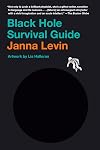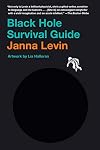
Black Hole Survival Guide
by Janna Levin
On This Page
Description
"From the acclaimed author of Black Hole Blues and Other Songs from Outer Space--an authoritative, wholly accessible, fascinating guide to the most challenging phenomena of contemporary science, which is now the anchor of our understanding of the cosmos. Throughout her career, astrophysicist Janna Levin has focused, alongside her research, on making the science she studies not just accessible, but, perhaps more important, intriguing to the nonscientist. And that is what she has done again show more here, helping us to understand the black hole: perhaps the most opaque theoretical construct ever imagined by physicists. She explains how their existence came to be proven decades after they were first predicted in Einstein's 1915 general theory of relativity. And she explores the ways in which what we know about them has changed our most basic understanding of the galaxy, the universe, the whole expanse of reality that we inhabit. Lively, engaging and utterly unique, Black Hole Survival Guide is not just informative. It is as well, a wonderful read from first to last"-- show lessTags
Recommendations


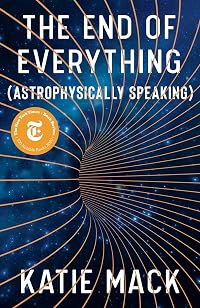
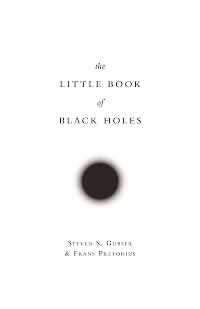
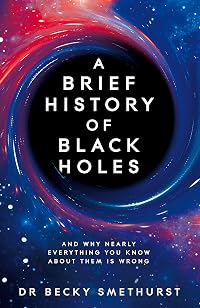

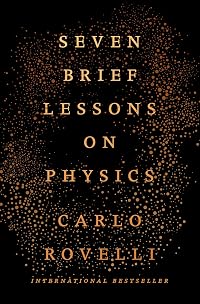

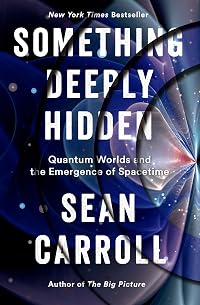
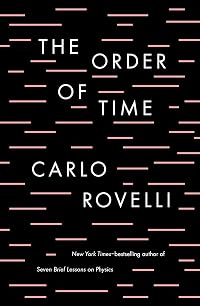

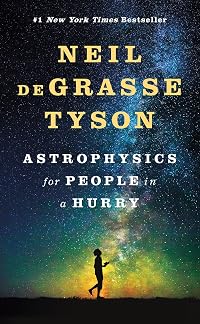


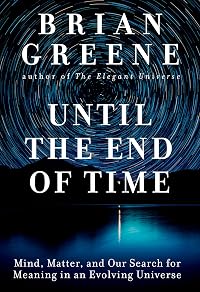
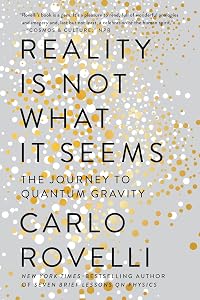

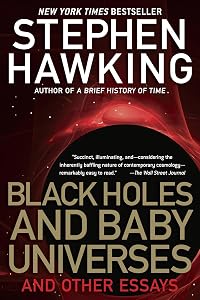
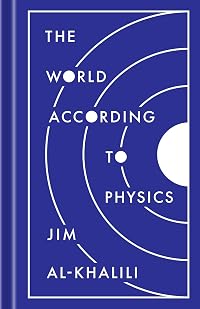


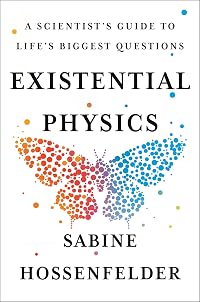

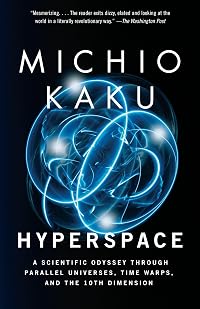

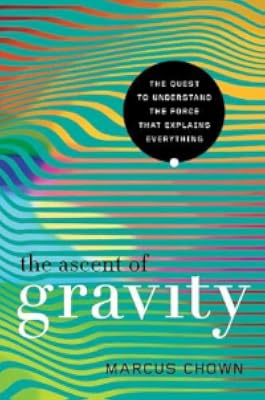
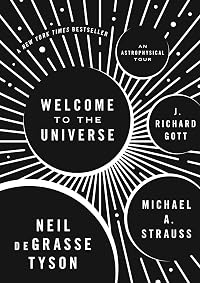



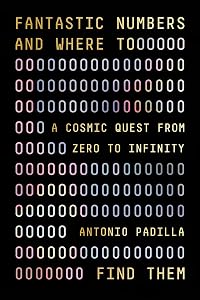
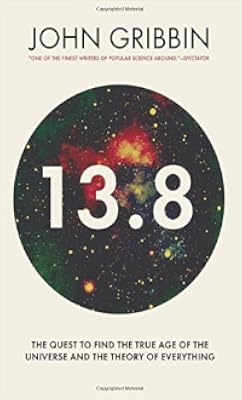

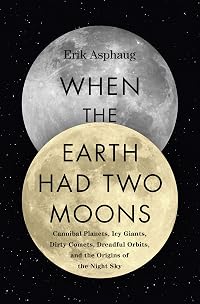
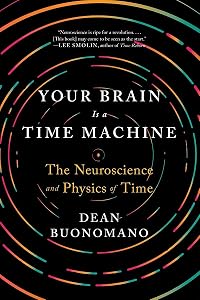
Member Recommendations

DarthFisticuffs Both books are well-written, layman-friendly explanations of quantum physics that explain complex concepts without getting dull.
Member Reviews
Black holes are complicated, largely because what we think we know is mostly extremely long distance observation, mixed with debatable quantum mechanics and a lot of plain old conjecture. Janna Levin, professor of Physics at Columbia, manages to explain it rationally, clearly and even excitingly in her microbook The Black Hole Survival Guide. Spoiler alert: there is no surviving a black hole.
Levin uses everyday objects to make understanding the process and the thing easy to follow. First of all, black holes are actually nothing. It takes her some time to get readers to understand that, but black holes contain nothing and are nothing. Yet they are fearsomely massive and dense. The old cliché is that they’re so dense even light cannot show more escape from them. But just because we can’t see light beyond the event horizon doesn’t mean black holes are dark on the other side. All the thrashing and smashing and tearing apart could well mean it is extremely bright on the other side as energy is released. We just can’t see it from our side. Plus, the event horizon is a hologram, not a window, she says. It contains all the information from everything that passes through, while the interior holds nothing. This kind of explanation makes the book a real page turner for me, and for sci-fi and astrophysics fans in general I would imagine.
First up for explanation is gravity. Gravitation is curved spacetime. The distortion of space means gravity fields around various bodies. Free-fall paths are curves in space, not straight lines. They trace an arc, much like throwing something across the room. Therefore the earth does not pull on the moon. Rather, it bends space and the moon falls freely along it, a very different concept. Levin says this was Einstein’s greatest finding.
A black hole, as everybody knows, is massively dense. A black hole with the same mass as our sun would be just six kilometers wide, if that puts it in perspective. It consumes everything that ventures near, and destroys it, instantly shredding it to its subatomic components. It destroys the information, the history that it carried with it for eons. Destroyed matter can reappear as flares, fairly vomited from the black hole, bearing no relation whatsoever to what came in through the event horizon.
A black hole warps time so much it basically stands still at the event horizon. Levin uses the example of two women in a mothership far from the black hole. If one leaves and ventures towards the black hole, her voyage would seem normal to her. But the woman in the mothership would die of old age watching her. The last moment, crossing the event horizon, would appear to take forever. From the event horizon looking out, the universe would advance billions of years in moments.
Meanwhile, back at wrapping your brain around incredible concepts, the black hole singularity that we naively think of as the center of a sphere within the black hole is really at a future point in time and not a point in space at all. She says light can no more travel toward you from the singularity than light can travel into the past. This is a further good reason why a black hole seems dark and no light escapes. It’s all in the past from our side of the event horizon.
There are contradictions to deal with as well. My favorite is that relativity’s prediction of the singularity means it cannot be.
Levin also has the best explanations through analogy of quantum mechanics that I have seen. She says as with a musical chord vs a single note, a quantum particle cannot be in a precise place and simultaneously have a precise motion. If a particle is in a precise location, it is in a superposition of motions. If it is moving at a precise speed, it is in a superposition of locations. Position and velocity are complementary observables in physics talk. Saying particles have precise motion and location is as silly as saying a note is the same as a chord in Levin’s description.
This comes closer to explaining it in plain English than anything I have yet reviewed, which is about ten other books on quantum mechanics now.
Bottom line: keep away from black holes. No great worry there, as the nearest one would take numerous lifetimes to reach, even at the speed of light. It’s a voyage that would end badly, unlike this fun little book.
David Wineberg show less
Levin uses everyday objects to make understanding the process and the thing easy to follow. First of all, black holes are actually nothing. It takes her some time to get readers to understand that, but black holes contain nothing and are nothing. Yet they are fearsomely massive and dense. The old cliché is that they’re so dense even light cannot show more escape from them. But just because we can’t see light beyond the event horizon doesn’t mean black holes are dark on the other side. All the thrashing and smashing and tearing apart could well mean it is extremely bright on the other side as energy is released. We just can’t see it from our side. Plus, the event horizon is a hologram, not a window, she says. It contains all the information from everything that passes through, while the interior holds nothing. This kind of explanation makes the book a real page turner for me, and for sci-fi and astrophysics fans in general I would imagine.
First up for explanation is gravity. Gravitation is curved spacetime. The distortion of space means gravity fields around various bodies. Free-fall paths are curves in space, not straight lines. They trace an arc, much like throwing something across the room. Therefore the earth does not pull on the moon. Rather, it bends space and the moon falls freely along it, a very different concept. Levin says this was Einstein’s greatest finding.
A black hole, as everybody knows, is massively dense. A black hole with the same mass as our sun would be just six kilometers wide, if that puts it in perspective. It consumes everything that ventures near, and destroys it, instantly shredding it to its subatomic components. It destroys the information, the history that it carried with it for eons. Destroyed matter can reappear as flares, fairly vomited from the black hole, bearing no relation whatsoever to what came in through the event horizon.
A black hole warps time so much it basically stands still at the event horizon. Levin uses the example of two women in a mothership far from the black hole. If one leaves and ventures towards the black hole, her voyage would seem normal to her. But the woman in the mothership would die of old age watching her. The last moment, crossing the event horizon, would appear to take forever. From the event horizon looking out, the universe would advance billions of years in moments.
Meanwhile, back at wrapping your brain around incredible concepts, the black hole singularity that we naively think of as the center of a sphere within the black hole is really at a future point in time and not a point in space at all. She says light can no more travel toward you from the singularity than light can travel into the past. This is a further good reason why a black hole seems dark and no light escapes. It’s all in the past from our side of the event horizon.
There are contradictions to deal with as well. My favorite is that relativity’s prediction of the singularity means it cannot be.
Levin also has the best explanations through analogy of quantum mechanics that I have seen. She says as with a musical chord vs a single note, a quantum particle cannot be in a precise place and simultaneously have a precise motion. If a particle is in a precise location, it is in a superposition of motions. If it is moving at a precise speed, it is in a superposition of locations. Position and velocity are complementary observables in physics talk. Saying particles have precise motion and location is as silly as saying a note is the same as a chord in Levin’s description.
This comes closer to explaining it in plain English than anything I have yet reviewed, which is about ten other books on quantum mechanics now.
Bottom line: keep away from black holes. No great worry there, as the nearest one would take numerous lifetimes to reach, even at the speed of light. It’s a voyage that would end badly, unlike this fun little book.
David Wineberg show less
Written somewhat tongue in cheek by an actual physicist and astronomer, this small book spends about 140 pages telling you all about black holes, how to approach them, and what (likely) happens if you fall inside before admitting that, in fact, there is no surviving a black hole. Good to know before I wasted a trip.
I don't think I remember more than 5% of what I read right now, and that'll probably be gone in a few days, but still I very much enjoyed reading this book. Rather than feeling baffled and lost, as I have lately with science books, I swear I could feel my brain cells expanding as I read this even tho I wasn't grasping more than a fraction of it. That was a very agreeable experience.
Also, I noticed that Levin has written a show more novel called "A Madman Dreams of Turing Machines", which I think I must read. show less
I don't think I remember more than 5% of what I read right now, and that'll probably be gone in a few days, but still I very much enjoyed reading this book. Rather than feeling baffled and lost, as I have lately with science books, I swear I could feel my brain cells expanding as I read this even tho I wasn't grasping more than a fraction of it. That was a very agreeable experience.
Also, I noticed that Levin has written a show more novel called "A Madman Dreams of Turing Machines", which I think I must read. show less
This is a quick but illuminating read. Levin explains black holes in easy-to-understand metaphors.... at least, as easy as black holes can be, because they are so complex and so far outside of everyday experience. She explains some really complicated theories of physics in relatively simple terms. The book is charming and engaging.
An very well-written overview of an incredibly complex subject, Levin gets into the weeds without losing the reader or becoming boring. Definitely worth the read!
From the acclaimed author of Black Hole Blues and Other Songs from Outer Space--an authoritative, wholly accessible, fascinating guide to the most challenging phenomena of contemporary science, which is now the anchor of our understanding of the cosmos. Throughout her career, astrophysicist Janna Levin has focused, alongside her research, on making the science she studies not just accessible, but, perhaps more important, intriguing to the nonscientist. And that is what she has done again here, helping us to understand the black hole: perhaps the most opaque theoretical construct ever imagined by physicists. She explains how their existence came to be proven decades after they were first predicted in Einstein's 1915 general theory of show more relativity. And she explores the ways in which what we know about them has changed our most basic understanding of the galaxy, the universe, the whole expanse of reality that we inhabit. Lively, engaging and utterly unique, Black Hole Survival Guide is not just informative. It is as well, a wonderful read from first to last. show less
Levin waxes rather lyrical about her favorite subject -- astronomical black holes -- in this whimsically illustrated minibook. Still, her fine presentation reaches to scientific concepts considerably more advanced than her visually dazzling _Nova_ episode did -- Hawking radiation, the information problem, the holographic principle, the firewall controversy, and the possible role of wormholes.
Quick accessible introduction to black holes, which are one of the most fascinating objects in the universe, but difficult to picture and even harder to understand without a LOT of advanced math. Levin does a good job of explaining what happens as the fabric of spacetime is stretched beyond its breaking point, as relativistic forces and the implications of quantum mechanics prevail over "normal" physics, and what the experience of falling into a black hole would be like.
Members
- Recently Added By
Lists

Science: Astronomy
62 works; 2 members

Books Read in 2021
5,361 works; 113 members
Author Information

7+ Works 1,860 Members
Janna Levin is a professor of physics and astronomy at Barnard College of Columbia University.
Awards and Honors
Common Knowledge
- Original publication date
- 2020-11-12
Classifications
Statistics
- Members
- 179
- Popularity
- 183,748
- Reviews
- 10
- Rating
- (3.89)
- Languages
- English, French, Italian, Spanish
- Media
- Paper, Audiobook, Ebook
- ISBNs
- 11
- ASINs
- 3