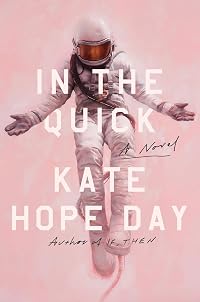
In the Quick
by Kate Hope Day
On This Page
Description
"June is a brilliant but difficult girl with a gift for mechanical invention who leaves home to begin a grueling astronaut training program. Six years later, she has gained a coveted post as an engineer on a space station, but is haunted by the mystery of Inquiry, a revolutionary spacecraft powered by her beloved late uncle's fuel cells. The spacecraft went missing when June was twelve years old, and while the rest of the world has forgotten them, June alone has evidence that makes her show more believe the crew is still alive. She seeks out James, her uncle's former protégée, also brilliant, also difficult, who has been trying to discover why Inquiry's fuel cells failed. James and June forge an intense intellectual bond that becomes an electric attraction. But the love that develops between them as they work to solve the fuel cell's fatal flaw threatens to destroy everything they've worked so hard to create--and any chance of bringing the Inquiry crew home alive."--Provided by publisher. show lessTags
Recommendations








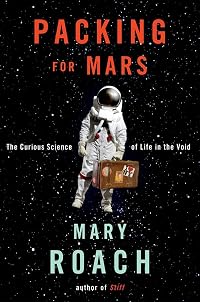

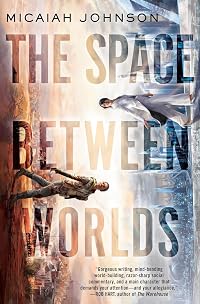
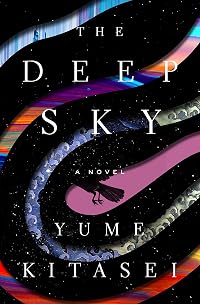

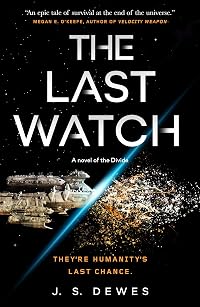


















Member Recommendations

Member Reviews
At an unspecified point in the probably-not-too-distant future, humanity has a solid start at space exploration, with bases on distant moons and regular liftoffs of supply rockets. It looks a little different from what we might expect; for one thing, rocket launches take place somewhere that's very cold. For another thing, the whole program seems to be organized around the protégées of Peter Reed, who invented a new kind of fuel cell that makes long-distance space exploration possible. This fictional space program also seems a rather down-and-dirty affair, not the gleaming high-tech of NASA.
When the fuel cells on the first long-distance mission malfunction, though, all long-distance exploration is on the verge of being scrapped. show more Everyone assumes the crew is dead, except for June Reed, Peter's niece, a young and difficult genius in her own right. Only twelve at the time of the malfunction, she must bide her time training for space before she can set her plan to save the crew in motion. It is six long years before she is assigned to the moon that was meant to the be the gateway for supply runs. Here she is able to collaborate with one of her uncle's students, and together they try to reconfigure the fuel cell so that they can mount a rescue mission, and reopen deep space to humanity.
The harshness of space is not new to the science fiction reader. In Kate Hope Day's hands, that harshness feels very immediate, as June trains for, and then tries to work in space. Giving equal measure to the human and the science is the mark of the best science fiction, and Day is more than up to the challenge. June is the only character to get full authorial treatment, but seeing the universe through June's eyes, and walking with her as she struggles to see her vision realized is a treat for the reader. She's a character who won't soon be forgotten, and her dream is one to build on. show less
When the fuel cells on the first long-distance mission malfunction, though, all long-distance exploration is on the verge of being scrapped. show more Everyone assumes the crew is dead, except for June Reed, Peter's niece, a young and difficult genius in her own right. Only twelve at the time of the malfunction, she must bide her time training for space before she can set her plan to save the crew in motion. It is six long years before she is assigned to the moon that was meant to the be the gateway for supply runs. Here she is able to collaborate with one of her uncle's students, and together they try to reconfigure the fuel cell so that they can mount a rescue mission, and reopen deep space to humanity.
The harshness of space is not new to the science fiction reader. In Kate Hope Day's hands, that harshness feels very immediate, as June trains for, and then tries to work in space. Giving equal measure to the human and the science is the mark of the best science fiction, and Day is more than up to the challenge. June is the only character to get full authorial treatment, but seeing the universe through June's eyes, and walking with her as she struggles to see her vision realized is a treat for the reader. She's a character who won't soon be forgotten, and her dream is one to build on. show less
Coming of Age in Space Camp
June, Kate Hope Day’s protagonist, defines precocious, at least when it comes to intellectual and mechanical matters. In the social department, she has a lot to learn, which she does over the course of this coming of age, quasi sci-fi novel. A couple of things set Day’s novel apart: a female teen heroine who holds onto an idea with stubborn tenacity and a truly gritty exposition of what astronaut life probably is like and what it might be like in the near future.
When we first meet June, she’s 12 living in her aunt’s home. Her uncle, the brilliant space developmental pioneer has died, but not after leaving the world a unique fuel cell technology. The National Space Program has used this technology to show more power a deep space project, the crewed ship Inquiry. Unfortunately, something has gone wrong, contact has been lost with the ship, and while some can’t accept it, the general consensus holds that the ship and crew are lost due to a fuel cell failure. June’s one who can’t accept the failure and firmly believes the brilliant crew has found a way to survive. Fast forward to June training in space school where she grows the chops to accomplish her ardent desire: prove Inquiry’s crew survived and discover and correct the fuel cell problem.
But this comes at the end and coincides with June’s maturing, not only as an astronaut but also as a human being capable of giving and receiving love. So, yes, we have teen romantic passion in the mix. The bulk of the novel follows her through Peter Reed, the space school named after her uncle, with lots of emphasis on training and her building friendships as her emotional maturity develops. Regarding the training and life as an astronaut in this near future world, readers will find space exploration mostly occupied with fixing things that seem to break constantly. June’s not only got an appetite but also an aptitude for this, something like Ray and Rocky in Project Hail Mary (though this novel contains little of the inventive detail Andy Weir packed into his). None of this, though, is an advertisement for space exploration.
Sci-fi fans will probably find the novel generally lacking. Those who enjoy coming of age novels will probably enjoy it. If you like strong female protagonists, June and the other young women will gladden your heart. Readers who normally confine themselves to YAs will also probably like the novel, as well. show less
June, Kate Hope Day’s protagonist, defines precocious, at least when it comes to intellectual and mechanical matters. In the social department, she has a lot to learn, which she does over the course of this coming of age, quasi sci-fi novel. A couple of things set Day’s novel apart: a female teen heroine who holds onto an idea with stubborn tenacity and a truly gritty exposition of what astronaut life probably is like and what it might be like in the near future.
When we first meet June, she’s 12 living in her aunt’s home. Her uncle, the brilliant space developmental pioneer has died, but not after leaving the world a unique fuel cell technology. The National Space Program has used this technology to show more power a deep space project, the crewed ship Inquiry. Unfortunately, something has gone wrong, contact has been lost with the ship, and while some can’t accept it, the general consensus holds that the ship and crew are lost due to a fuel cell failure. June’s one who can’t accept the failure and firmly believes the brilliant crew has found a way to survive. Fast forward to June training in space school where she grows the chops to accomplish her ardent desire: prove Inquiry’s crew survived and discover and correct the fuel cell problem.
But this comes at the end and coincides with June’s maturing, not only as an astronaut but also as a human being capable of giving and receiving love. So, yes, we have teen romantic passion in the mix. The bulk of the novel follows her through Peter Reed, the space school named after her uncle, with lots of emphasis on training and her building friendships as her emotional maturity develops. Regarding the training and life as an astronaut in this near future world, readers will find space exploration mostly occupied with fixing things that seem to break constantly. June’s not only got an appetite but also an aptitude for this, something like Ray and Rocky in Project Hail Mary (though this novel contains little of the inventive detail Andy Weir packed into his). None of this, though, is an advertisement for space exploration.
Sci-fi fans will probably find the novel generally lacking. Those who enjoy coming of age novels will probably enjoy it. If you like strong female protagonists, June and the other young women will gladden your heart. Readers who normally confine themselves to YAs will also probably like the novel, as well. show less
Coming of Age in Space Camp
June, Kate Hope Day’s protagonist, defines precocious, at least when it comes to intellectual and mechanical matters. In the social department, she has a lot to learn, which she does over the course of this coming of age, quasi sci-fi novel. A couple of things set Day’s novel apart: a female teen heroine who holds onto an idea with stubborn tenacity and a truly gritty exposition of what astronaut life probably is like and what it might be like in the near future.
When we first meet June, she’s 12 living in her aunt’s home. Her uncle, the brilliant space developmental pioneer has died, but not after leaving the world a unique fuel cell technology. The National Space Program has used this technology to show more power a deep space project, the crewed ship Inquiry. Unfortunately, something has gone wrong, contact has been lost with the ship, and while some can’t accept it, the general consensus holds that the ship and crew are lost due to a fuel cell failure. June’s one who can’t accept the failure and firmly believes the brilliant crew has found a way to survive. Fast forward to June training in space school where she grows the chops to accomplish her ardent desire: prove Inquiry’s crew survived and discover and correct the fuel cell problem.
But this comes at the end and coincides with June’s maturing, not only as an astronaut but also as a human being capable of giving and receiving love. So, yes, we have teen romantic passion in the mix. The bulk of the novel follows her through Peter Reed, the space school named after her uncle, with lots of emphasis on training and her building friendships as her emotional maturity develops. Regarding the training and life as an astronaut in this near future world, readers will find space exploration mostly occupied with fixing things that seem to break constantly. June’s not only got an appetite but also an aptitude for this, something like Ray and Rocky in Project Hail Mary (though this novel contains little of the inventive detail Andy Weir packed into his). None of this, though, is an advertisement for space exploration.
Sci-fi fans will probably find the novel generally lacking. Those who enjoy coming of age novels will probably enjoy it. If you like strong female protagonists, June and the other young women will gladden your heart. Readers who normally confine themselves to YAs will also probably like the novel, as well. show less
June, Kate Hope Day’s protagonist, defines precocious, at least when it comes to intellectual and mechanical matters. In the social department, she has a lot to learn, which she does over the course of this coming of age, quasi sci-fi novel. A couple of things set Day’s novel apart: a female teen heroine who holds onto an idea with stubborn tenacity and a truly gritty exposition of what astronaut life probably is like and what it might be like in the near future.
When we first meet June, she’s 12 living in her aunt’s home. Her uncle, the brilliant space developmental pioneer has died, but not after leaving the world a unique fuel cell technology. The National Space Program has used this technology to show more power a deep space project, the crewed ship Inquiry. Unfortunately, something has gone wrong, contact has been lost with the ship, and while some can’t accept it, the general consensus holds that the ship and crew are lost due to a fuel cell failure. June’s one who can’t accept the failure and firmly believes the brilliant crew has found a way to survive. Fast forward to June training in space school where she grows the chops to accomplish her ardent desire: prove Inquiry’s crew survived and discover and correct the fuel cell problem.
But this comes at the end and coincides with June’s maturing, not only as an astronaut but also as a human being capable of giving and receiving love. So, yes, we have teen romantic passion in the mix. The bulk of the novel follows her through Peter Reed, the space school named after her uncle, with lots of emphasis on training and her building friendships as her emotional maturity develops. Regarding the training and life as an astronaut in this near future world, readers will find space exploration mostly occupied with fixing things that seem to break constantly. June’s not only got an appetite but also an aptitude for this, something like Ray and Rocky in Project Hail Mary (though this novel contains little of the inventive detail Andy Weir packed into his). None of this, though, is an advertisement for space exploration.
Sci-fi fans will probably find the novel generally lacking. Those who enjoy coming of age novels will probably enjoy it. If you like strong female protagonists, June and the other young women will gladden your heart. Readers who normally confine themselves to YAs will also probably like the novel, as well. show less
A great first novel with a few minor flaws. First the positive, in many ways it is a good old fashion science fiction with a gripping tale. It is a fairly short book which in many ways is good as it basically sticks to the facts; I find many Sci-fi books to have too much information and very tangled plots. The list of characters is very small.
For the cons; there is not much in the way of character development except for the main character June. Another problem was not much detail given about the Pink moon (planet). Where is it and why is it important as a jumping off point. Finally what was the mission of the space ship Inquiry?
I took this book as a coming of age story (at least this theme made the most sense to me). We first see June show more as a 12 year old and by the end of the book an adult heading off on her own mission to save the crew of Inquiry. Fo me that was a satusfying plot line. show less
For the cons; there is not much in the way of character development except for the main character June. Another problem was not much detail given about the Pink moon (planet). Where is it and why is it important as a jumping off point. Finally what was the mission of the space ship Inquiry?
I took this book as a coming of age story (at least this theme made the most sense to me). We first see June show more as a 12 year old and by the end of the book an adult heading off on her own mission to save the crew of Inquiry. Fo me that was a satusfying plot line. show less
Day, Kate Hope. In the Quick. Random House, 2021.
The best thing about this novel is its sales pitch. So high marks to her agent and publishing team at Random House. The tagline, Jane Eyre meets The Martian, perfectly identifies its intended genre mashup. Books from major publishing houses can get almost anything reviewed on TV—in this case a nice blurb from Good Morning America. So, does it live up to the hype? Not quite. The orphan prodigy finding her way to not-quite love and to the disillusioning job of her dreams as an astronaut in a down-at-heels space program is done well enough, though the style here is not in the same league as Bronte’s and the character does not demonstrate her intellect as well as she does her earnestness. show more Leaving out all the quotation marks from dialog-driven narrative does not make you James Joyce. As for hard science, that is a hard failure. First, the novel is not quite set in our universe. The Mars substitute is not rusty red but pink. It seems to have more atmospheric pressure than Mars. It annoys me that the atmosphere is not full of windblown dust but “silt” that unaccountably “pings” off helmets. Our heroine, June, is an engineering genius but the writer clearly is not. She should hire Laurence Dahners to do her technical passages. I really want to know how the vaunted, troublesome energy cell is supposed to work. Ho hum. 3 stars. show less
The best thing about this novel is its sales pitch. So high marks to her agent and publishing team at Random House. The tagline, Jane Eyre meets The Martian, perfectly identifies its intended genre mashup. Books from major publishing houses can get almost anything reviewed on TV—in this case a nice blurb from Good Morning America. So, does it live up to the hype? Not quite. The orphan prodigy finding her way to not-quite love and to the disillusioning job of her dreams as an astronaut in a down-at-heels space program is done well enough, though the style here is not in the same league as Bronte’s and the character does not demonstrate her intellect as well as she does her earnestness. show more Leaving out all the quotation marks from dialog-driven narrative does not make you James Joyce. As for hard science, that is a hard failure. First, the novel is not quite set in our universe. The Mars substitute is not rusty red but pink. It seems to have more atmospheric pressure than Mars. It annoys me that the atmosphere is not full of windblown dust but “silt” that unaccountably “pings” off helmets. Our heroine, June, is an engineering genius but the writer clearly is not. She should hire Laurence Dahners to do her technical passages. I really want to know how the vaunted, troublesome energy cell is supposed to work. Ho hum. 3 stars. show less
Set in a vague near-future, June grew up with her uncle who revolutionized the energy cells that helped make space travel routine. After his death, she must continue his work in order to save a group of fellow astronauts. In the Quick by Kate Hope Day mixes an outer space sci-fi drama with a coming-of-age YA-ish feeling story of an outsider finding herself. A short novel, In the Quick jumps around a lot and skims over some seemingly important plot points, but Day manages to pull it all together with solid writing and an interesting story.
Bought because of the cool cover and I heard it was ideal for fans of The Martian and Station Eleven. I would agree that it does feel like those two books as you are reading. It’s also super strange and I can’t say that I liked it all that much but I also couldn’t put it down...so overall I’m just confused.
Young genius girl astronaut trainee trying to solve a complicated mechanical problem so they can rescue lost (maybe dead?) astronauts while also falling in love with a cranky and possibly deranged fellow genius astronaut guy.
Oh and it’s a retelling of Jane Eyre that I didn’t realize because I haven’t read that book in probably 35 years.
Young genius girl astronaut trainee trying to solve a complicated mechanical problem so they can rescue lost (maybe dead?) astronauts while also falling in love with a cranky and possibly deranged fellow genius astronaut guy.
Oh and it’s a retelling of Jane Eyre that I didn’t realize because I haven’t read that book in probably 35 years.
Members
- Recently Added By
Lists

Favorite Science Fiction by Women Authors
737 works; 202 members

Anticipated 2021 Reads
231 works; 7 members
Author Information

2 Works 507 Members
Some Editions
Common Knowledge
- Canonical title
- In the Quick
- Original publication date
- 2021
- People/Characters
- June Reed
- Publisher's editor
- Walker, Andrea
Classifications
Statistics
- Members
- 200
- Popularity
- 163,688
- Reviews
- 10
- Rating
- (3.25)
- Languages
- English
- Media
- Paper, Audiobook, Ebook
- ISBNs
- 5
- ASINs
- 2