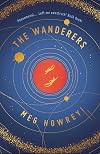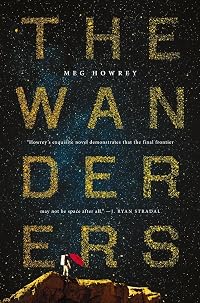
The Wanderers
by Meg Howrey
On This Page
Description
A brilliantly inventive novel about three astronauts training for the first-ever mission to Mars, an experience that will push the boundary between real and unreal, test their relationships, and leave each of them—and their families—changed forever.“A transcendent, cross-cultural, and cross planetary journey into the mysteries of space and self....Howrey’s expansive vision left me awestruck.”—Ruth Ozeki
“Howrey's exquisite novel demonstrates that the final frontier may not show more be space after all.”—J. Ryan Stradal
In an age of space exploration, we search to find ourselves.
In four years, aerospace giant Prime Space will put the first humans on Mars. Helen Kane, Yoshihiro Tanaka, and Sergei Kuznetsov must prove they’re the crew for the historic voyage by spending seventeen months in the most realistic simulation ever created. Constantly observed by Prime Space’s team of "Obbers," Helen, Yoshi, and Sergei must appear ever in control. But as their surreal pantomime progresses, each soon realizes that the complications of inner space are no less fraught than those of outer space. The borders between what is real and unreal begin to blur, and each astronaut is forced to confront demons past and present, even as they struggle to navigate their increasingly claustrophobic quarters—and each other.
Astonishingly imaginative, tenderly comedic, and unerringly wise, The Wanderers explores the differences between those who go and those who stay, telling a story about the desire behind all exploration: the longing for discovery and the great search to understand the human heart. show less
Tags
Recommendations

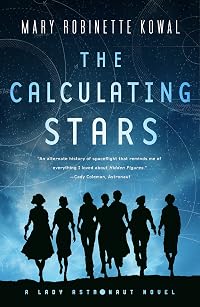

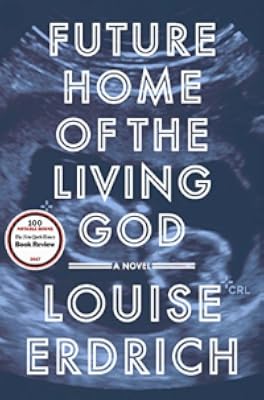
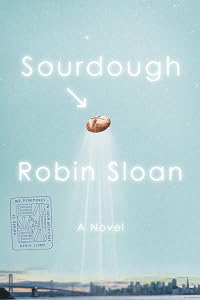

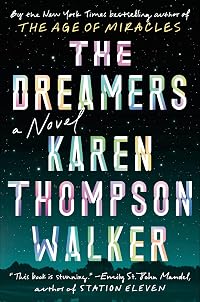










Member Recommendations

vwinsloe IYKYK
Member Reviews
PRE-SPOILERS PART: Meg Howrey has done perhaps the best job of relating the current thinking/engineering of getting humans to Mars. And she does so without going into in-the-weeds tech jargon. But if you are at all familiar with the various humans-to-mars mission ideas swirling around these days, you will recognize almost everything she describes and appreciate the accuracy. But more importantly, The Wanderers is about the interior lives of the astronauts and their families. It is obvious to me that Howrey has read multiple astronaut autobiographies as well as works by aerospace psychologists. She really understands how astronauts think. If you grew up wanting to be an astronaut, or have ever seriously pursued the dream of space travel, show more or have done work that supports those who travel in space, then you will find beautiful prose here that may seem like someone pulled secrets from your soul.
Oh, and lot of the dialog is damned funny.
[Audiobook note: The reader, Mozhan Marno, is quite good and handles the various accents (Russian, Japanese) superbly.]
SPOILERS PART: Like [book:The Martian|18007564], The Wanderers has no villain. The conflict and suspense come merely from the situations in which the astronaut trainees and their family members find themselves. I find this immensely refreshing. I also appreciate that Howrey avoids most of the all-too-familiar tropes of Mars-mission fiction: the last-minute crewmember swap-out, the crewmember who goes nuts, the catastrophic dust storm, some bio-contamination from Mars that threatens the crew, etc. Of course, she avoids this in part by writing not about an actual mission to Mars, but a simulation of one. Or does she?
SUPER-SPOILERY PART: Seriously, don't read this until after you finish the book.
No, really. I meant it. Have you finished the book?
Okay. It was just a simulation, and Sergei, Helen, and Yoshi would have been able to quickly realize why based on physics.
You really finished the book? Because I'm gonna drop the spoiler here. Alright then.
In the story, the astronauts are told that Prime engineers have created tools that weigh 38% of what they do on Earth to help with the simulated feeling of being on Mars, and have weighted the boots of the astronauts' Mars exosuits to prevent injury-inducing running and jumping while working outside. But whether inside the "lander" or outside on "Mars", there is no way to change the rate at which things fall. If the astronauts had really been sent to Mars, they would have known it by the simple fact that anything dropped would fall to the ground much more slowly than on Earth.
BUT it is to Howrey's credit that I didn't even start worrying about this question until almost the last few pages of the book. I was so swept up in the story that my skepticism was dampened. There is some seriously good writing here. show less
This book is kind of the opposite of The Martian: this is all the psychology, sociology, and interpersonal connection of a Mars mission. The Martian was all the engineering and actual space adventure. I enjoyed both books, but I liked this one less, just because — look, I’d rather read about people fixing broken filters in space than read about people having feelings on Earth. That’s just who I am.
But this book is really, really well done. It’s well written, it’s believable, it gives you a real sense of who astronauts are, and who they have to be, and how those two things cannot be the same. You get to share in the claustrophobia and borderline paranoia that astronauts have to have, their constant, obsessive self-monitoring show more and evaluation. You get to know and like the astronauts and their families. You get a sense of what a production a mission to Mars truly is. (Even when it’s not a real one.)
I truly loved the astronauts. I loved that they were the ages appropriate to their jobs, that they all came from such different backgrounds and yet had such similar outlooks. I loved that I got to watch them do something hard and succeed at it. And I also loved that I got such a clear sense of what they were missing, of how life on Earth chugged along without them. (Or didn’t.)
But, wow, I missed the engineering and the calculations, and I was not super comfortable with all the feelings; in fact, I was so uncomfortable it took me a long while to get through this, and I sometimes dreaded going back to the Festival of Feelings and Introspection, even if the actual reading of the book was a good experience.
Honestly, it says something great about this book that I liked it as much as I did. And I truly did. But I am now going to re-read The Martian to clear my palate. show less
But this book is really, really well done. It’s well written, it’s believable, it gives you a real sense of who astronauts are, and who they have to be, and how those two things cannot be the same. You get to share in the claustrophobia and borderline paranoia that astronauts have to have, their constant, obsessive self-monitoring show more and evaluation. You get to know and like the astronauts and their families. You get a sense of what a production a mission to Mars truly is. (Even when it’s not a real one.)
I truly loved the astronauts. I loved that they were the ages appropriate to their jobs, that they all came from such different backgrounds and yet had such similar outlooks. I loved that I got to watch them do something hard and succeed at it. And I also loved that I got such a clear sense of what they were missing, of how life on Earth chugged along without them. (Or didn’t.)
But, wow, I missed the engineering and the calculations, and I was not super comfortable with all the feelings; in fact, I was so uncomfortable it took me a long while to get through this, and I sometimes dreaded going back to the Festival of Feelings and Introspection, even if the actual reading of the book was a good experience.
Honestly, it says something great about this book that I liked it as much as I did. And I truly did. But I am now going to re-read The Martian to clear my palate. show less
The Wanderers was pitched to me for fans of The Martian and Station Eleven. The former is one of my all-time favorite books. Even though I was in the minority about my disregard for the latter novel, my love for Andy Weir‘s novel was more than enough to want me to read Meg Howrey‘s novel. I put this out there as a warning. This is not The Martian. It is more like Emily St. John Mandel‘s novel than anything close to Weir’s. Yet, I enjoyed it much more than I did Station Eleven.
There is a danger when comparing a new novel to one that was such a runaway success and one that was a critical darling, but The Wanderers manages to sidestep that danger by throwing in a few unanswered questions that shakes up the entire experiment. In show more fact, some readers will be downright angry that these questions remain unanswered. That Ms. Howrey chooses not to provide answers is telling and forces readers to change their approach to the novel. It is a brave statement for a storyteller, especially when your novel is being compared to one that is anything but nuanced or introspective. However, it works well within the pages of The Wanderers as it forces you to focus on the esoteric rather than on the adventure itself.
Mars will always appeal as the next great frontier for exploration, and even a fake mission to Mars is fascinating. There is plenty of science to legitimize the experiment. I have no idea whether the science holds up to scrutiny, but within the novel, everything seems acceptable. The experiment is so successful at times that it even blurs the lines of reality and fiction for readers. The astronauts feel real sensations – the tug of gravity and its release upon leaving Earth’s atmosphere, the frigid temperatures on Mars, the fear of watching the radiation recorders creep into danger levels – and so do the readers. It is an extraordinary thing, especially since it is all fake.
I wanted an action-adventure, and I got literary fiction. I wanted excitement, and I got philosophy. Strangely, I am okay with that. I am not the type of reader who will underline profound passages or even take notes. I read to escape, and there was just enough action to make me okay with the copious amounts of introspection within The Wanderers. I can appreciate the development and growth each of the astronauts achieve on their “journey” and will take away some ideas upon which I need to reflect. I finish the novel satisfied with the story, with my response, and with its lasting impact. show less
There is a danger when comparing a new novel to one that was such a runaway success and one that was a critical darling, but The Wanderers manages to sidestep that danger by throwing in a few unanswered questions that shakes up the entire experiment. In show more fact, some readers will be downright angry that these questions remain unanswered. That Ms. Howrey chooses not to provide answers is telling and forces readers to change their approach to the novel. It is a brave statement for a storyteller, especially when your novel is being compared to one that is anything but nuanced or introspective. However, it works well within the pages of The Wanderers as it forces you to focus on the esoteric rather than on the adventure itself.
Mars will always appeal as the next great frontier for exploration, and even a fake mission to Mars is fascinating. There is plenty of science to legitimize the experiment. I have no idea whether the science holds up to scrutiny, but within the novel, everything seems acceptable. The experiment is so successful at times that it even blurs the lines of reality and fiction for readers. The astronauts feel real sensations – the tug of gravity and its release upon leaving Earth’s atmosphere, the frigid temperatures on Mars, the fear of watching the radiation recorders creep into danger levels – and so do the readers. It is an extraordinary thing, especially since it is all fake.
I wanted an action-adventure, and I got literary fiction. I wanted excitement, and I got philosophy. Strangely, I am okay with that. I am not the type of reader who will underline profound passages or even take notes. I read to escape, and there was just enough action to make me okay with the copious amounts of introspection within The Wanderers. I can appreciate the development and growth each of the astronauts achieve on their “journey” and will take away some ideas upon which I need to reflect. I finish the novel satisfied with the story, with my response, and with its lasting impact. show less
Three astronauts have been selected for the first crewed mission to Mars. Well, they might be going to Mars. The idea is that first they will do a simulated version of the trip, complete with full-length stints in rather cramped spaceships, while they and their families are observed to see how well they handle it.
I must admit, this wasn't quite what I was expecting. Despite having seen it described as a "psychological novel," I was somehow expecting a more compelling sort of narrative, a little bit more plot. Indeed, such plot as there was didn't exactly work for me, as there's an ambiguous but important aspect to things that I just couldn't really accept at all.
But even the stuff that doesn't work on a plot level does work beautifully show more on a thematic one. Ultimately, this isn't a novel about training to go to Mars, but rather one about all the ways in which people try to shape their own selves into who they think they should be, and about the faces we present to each other. The Mars simulation idea is a wonderful metaphor for that, and Howrey approaches it in some complicated, insightful ways I don't think I've ever seen done before. show less
I must admit, this wasn't quite what I was expecting. Despite having seen it described as a "psychological novel," I was somehow expecting a more compelling sort of narrative, a little bit more plot. Indeed, such plot as there was didn't exactly work for me, as there's an ambiguous but important aspect to things that I just couldn't really accept at all.
But even the stuff that doesn't work on a plot level does work beautifully show more on a thematic one. Ultimately, this isn't a novel about training to go to Mars, but rather one about all the ways in which people try to shape their own selves into who they think they should be, and about the faces we present to each other. The Mars simulation idea is a wonderful metaphor for that, and Howrey approaches it in some complicated, insightful ways I don't think I've ever seen done before. show less
If you are looking for a replica of The Martian or Station Eleven, that is not this book. Instead, this book is an exploration of the humans involved in a Martian space simulation, whether by being the selected astronaut or one of the family members waiting while the 17 month Mars simulation progresses. Whether from the past or present, these people and their stories, their frailties and strengths, their hopes and worries for themselves, earth and humankind; they will touch your soul. I think if you know that going in you'll enjoy your travels through this beautiful, beautiful book.
Meg Howrey’s The Wanderers demonstrates the beauty of precision and control, not just in our professional relationships, but also in prose. Helen, Sergei, and Yoshi are three astronauts selected to be the first to travel to Mars and back by a commercial private venture called Prime. But first, they have to do the trip on the ground first, in a simulation of every single thing. Months in isolation, the three of them, in the Utah desert, under constant observation.
Helen’s daughter Meeps (Mireille) is trying to launch her career as an actor and calling one of the obbers (observers) who monitors her mother. Dmitri is Sergei’s son, sixteen and just beginning to come to terms with being gay. Yoshi’s wife Madoka is a robotics expert show more and wondering if their marriage works because he is gone so much.
The story takes Helen, Sergei, and Yoshi to Mars and back, at least in simulation–or is it a simulation? Really, did they need to simulate the trip to Texas, the elevator up to the rocket? The simulation is so complete it seems possible it is not a simulation. But would anyone be so cruel as to send people to Mars and not tell them they are really there? An interesting question, but not even close to the most interesting thing about the book.
The Wanderers starts a little slow but is worth your patience. Howrey’s prose is restrained and disciplined, a reflection of the discipline and restraint of the astronauts. There is a distance in the prose, a precision that creates a separation between reader and the people in the story–at first. But then, we see how that discipline is achieved, the process of self-control and deliberation and careful, considered communication. There is real honesty side-by-side with duplicity, knowing what they should say, how they should feel, and striving to align their reality with their optimal reality.
This is not an “adventure” story even though it involved space travel or simulated space travel. This is very much an interior story, a story of human friendships and families. It’s about feelings, not adventure. It is in many ways a quiet novel. Its wealth is emotional and that is where it is most powerful.
The Wanderers will be released on March 14th. I received a advanced reader copy through a promotion at Shelf Awareness.
★★★★
http://tonstantweaderreviews.wordpress.com/2017/02/25/the-wanderers-by-meg-howre... show less
Helen’s daughter Meeps (Mireille) is trying to launch her career as an actor and calling one of the obbers (observers) who monitors her mother. Dmitri is Sergei’s son, sixteen and just beginning to come to terms with being gay. Yoshi’s wife Madoka is a robotics expert show more and wondering if their marriage works because he is gone so much.
The story takes Helen, Sergei, and Yoshi to Mars and back, at least in simulation–or is it a simulation? Really, did they need to simulate the trip to Texas, the elevator up to the rocket? The simulation is so complete it seems possible it is not a simulation. But would anyone be so cruel as to send people to Mars and not tell them they are really there? An interesting question, but not even close to the most interesting thing about the book.
The Wanderers starts a little slow but is worth your patience. Howrey’s prose is restrained and disciplined, a reflection of the discipline and restraint of the astronauts. There is a distance in the prose, a precision that creates a separation between reader and the people in the story–at first. But then, we see how that discipline is achieved, the process of self-control and deliberation and careful, considered communication. There is real honesty side-by-side with duplicity, knowing what they should say, how they should feel, and striving to align their reality with their optimal reality.
This is not an “adventure” story even though it involved space travel or simulated space travel. This is very much an interior story, a story of human friendships and families. It’s about feelings, not adventure. It is in many ways a quiet novel. Its wealth is emotional and that is where it is most powerful.
The Wanderers will be released on March 14th. I received a advanced reader copy through a promotion at Shelf Awareness.
★★★★
http://tonstantweaderreviews.wordpress.com/2017/02/25/the-wanderers-by-meg-howre... show less
Confused about Meeps feelings & reactions, but so far I've only met her once, as we pass through several different points of view. Not sure why I'm reading this as it's not being read by any of my groups, it seems. Will continue for now but may dnf.
------
DNFing at p. 114. Read the last chapter, don't care to fill in the blanks. Nice try, but really written for the masses, for the best-seller lists. It is, apparently, literary SF without villains or bad guys, so I should love it, but no.
Lines like "Now I am become Amygdala, the destroyer of worlds" and "Microgravity is the heroin, the God, the unrequited love, of astronauts. Nothing feels as good or does more damage" sound good at first, but upon contemplation reveal themselves as lame. show more The second could have worked if the author had let the first line stand alone, but no. The story of the meeting with the polar bear intrigues, but is ultimately pretention written with a dose of humor.
The whole book seems to be something like that. It shoots for something to be proud of, but keeps getting distracted by adding in things to push the buttons/ pull the strings of critics and book club leaders. It just doesn't work, imo. show less
------
DNFing at p. 114. Read the last chapter, don't care to fill in the blanks. Nice try, but really written for the masses, for the best-seller lists. It is, apparently, literary SF without villains or bad guys, so I should love it, but no.
Lines like "Now I am become Amygdala, the destroyer of worlds" and "Microgravity is the heroin, the God, the unrequited love, of astronauts. Nothing feels as good or does more damage" sound good at first, but upon contemplation reveal themselves as lame. show more The second could have worked if the author had let the first line stand alone, but no. The story of the meeting with the polar bear intrigues, but is ultimately pretention written with a dose of humor.
The whole book seems to be something like that. It shoots for something to be proud of, but keeps getting distracted by adding in things to push the buttons/ pull the strings of critics and book club leaders. It just doesn't work, imo. show less
Members
- Recently Added By
Lists

Top Five Books of 2018
802 works; 265 members
Top Five Books of 2017
757 works; 231 members

2018 Hugo Eligible Novels
170 works; 16 members

Kirkus Starred Fiction Reviews of Books Published in 2017
412 works; 7 members

2017 Science Fiction and Fantasy I'm Looking Forward To
46 works; 6 members

Books Read in 2018
4,360 works; 110 members
Author Information

5 Works 1,190 Members
Some Editions
Awards and Honors
Awards
Distinctions
Common Knowledge
- Original publication date
- 2017-03-14
- Quotations
- Exploration without science is just adventure.
- Last words
- (Click to show. Warning: May contain spoilers.)Nothing in the universe is this blue sky, this home, this place where the people you love are waiting for you, and you are not alone, and you will save this Earth, and be rescued on this Earth and from this Earth, and you will take to the skies once more, and nothing feels as free as this, and this feels real, it really does.
- Canonical DDC/MDS
- 813.6
- Canonical LCC
- PS3608.O9573
Classifications
Statistics
- Members
- 576
- Popularity
- 50,986
- Reviews
- 35
- Rating
- (3.72)
- Languages
- English
- Media
- Paper, Audiobook, Ebook
- ISBNs
- 14
- ASINs
- 3