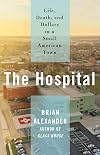
The Hospital: Life, Death, and Dollars in a Small American Town
by Brian Alexander
On This Page
Description
"An intimate, heart wrenching portrait of one small hospital that reveals the magnitude of America's health care crises. By following the struggle for survival of one small-town hospital, and the patients who walk, or are carried, through its doors, The Hospital takes readers into the world of the American medical industry in a way no book has done before. Americans are dying sooner, and living in poorer health. Alexander argues that no plan will solve America's health crisis until the show more deeper causes of that crisis are addressed. Bryan, Ohio's hospital, is losing money, making it vulnerable to big health systems seeking domination and Phil Ennen, CEO, has been fighting to preserve its independence. Meanwhile, Bryan, a town of 8,500 people in Ohio's northwest corner, is still trying to recover from the Great Recession. As local leaders struggle to address the town's problems, and the hospital fights for its life amid a rapidly consolidating medical and hospital industry, a 39-year-old diabetic literally fights for his limbs, and a 55-year-old contractor lies dying in the emergency room. With these and other stories, Alexander strips away the wonkiness of policy to reveal Americans' struggle for health against a powerful system that's stacked against them, but yet so fragile it blows apart when the pandemic hits. Culminating with COVID-19, this book offers a blueprint for how we created the crisis we're in"-- show lessTags
Recommendations







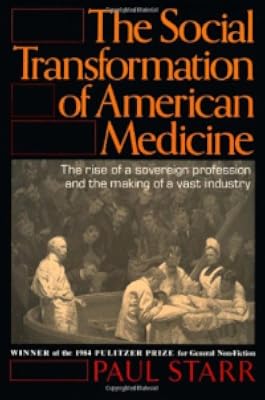
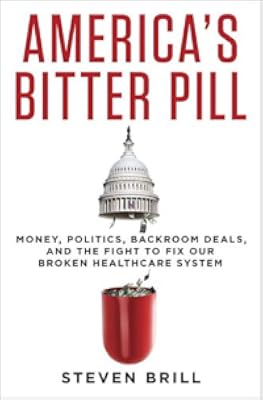

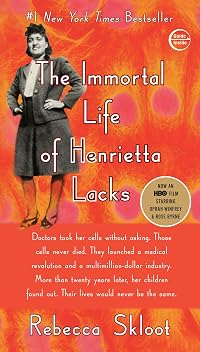
















Member Reviews
Everything Wrong with American Healthcare
As the Covid pandemic has clearly demonstrated, a large segment of the American population lives in a delusional world completely divorced from reality. Here, in The Hospital, Brian Alexander lays bare one of the great delusions. It’s not that America has a good healthcare system that with a few tweaks and enhancements could serve the majority of the population. No, the delusion is that America has anything that can be called a real healthcare system.
At the root, as his time spent in a small American town shows, are two deadly ideas: that all Americans not only are personally responsible for their own healthcare, but that the sickest among us bear full responsibility for their bad health and show more early death due to some defect in their character. And that America’s obsession with raw, unfettered capitalism must encompass all aspects of American life, including healthcare. These ideas, shared by the well-off, the poorest, and everybody in-between, deliver to Americans a hodgepodge collection of medical services that only those with the deepest pockets can afford, a system that not even the commercial medical insurance available to those employed can afford, as evidenced by some of the sorry stories in this book.
This is not to say that those involved in the healthcare industry, and make no mistake it is an industry that happens to have as its end product the delivery of healing services; it’s not to say these people don’t care and want to do their best. It’s that they operate in a system that prevents them from delivering the best care and treatment to all but the well-off. Alexander gained access to the boardroom discussions in Bryan, Ohio’s small, independent hospital. As readers will see firsthand, CEO Phil Ennen and his team spent a good deal of their time devising strategies for fending off the large hospital systems from Fort Wayne, Toledo, and as distant as Pittsburgh, who wished to take them over as part of their consolidation efforts. The struggle never seems to cease: how to attract medical talent and hold onto it; how to add the most profitable speciality services; how to generate the surplus income that constitutes profits and fuels independence, salaries, and the like. Make no mistake as the annual reports of nonprofit hospitals show, nonprofits can be very profitable, as a perusal of your large regional nonprofit hospitals will clearly show.
Probably the most enlightening chapter is Chapter 6: What Free Market? The Myth of Free-Market Medicine. Here you’ll learn about profit and loss, about regional consolidation and the building of medical oligarchies, about pricing; generally about the economics of hospitals and medical practice in a system fiercely devoted to capitalism in every aspect of American life. If you read nothing else in this book, spend some time with this chapter.
Some reviewers have accused Alexander of sounding angry on the page. Some say this is an exercise in support of socialized medicine. Well, if he’s angry about a so-called system that eats up nearly twenty percent of American GDP, more than twice as much as any developed country, and delivers abysmal results for the majority of Americans, and especially for those most in need, well, he, and more importantly you, should be angry. And as for socialism, nonsense. How about an orderly system that delivers the best possible care to the most people at reasonable cost? Can’t do it? We already do it, but only for a segment of the population. We call it Medicare and Medicaid.
Please read The Hospital with an open mind and then demand something better for your sake and that of your family, and for your fellow Americans who may not be as well off as you. show less
As the Covid pandemic has clearly demonstrated, a large segment of the American population lives in a delusional world completely divorced from reality. Here, in The Hospital, Brian Alexander lays bare one of the great delusions. It’s not that America has a good healthcare system that with a few tweaks and enhancements could serve the majority of the population. No, the delusion is that America has anything that can be called a real healthcare system.
At the root, as his time spent in a small American town shows, are two deadly ideas: that all Americans not only are personally responsible for their own healthcare, but that the sickest among us bear full responsibility for their bad health and show more early death due to some defect in their character. And that America’s obsession with raw, unfettered capitalism must encompass all aspects of American life, including healthcare. These ideas, shared by the well-off, the poorest, and everybody in-between, deliver to Americans a hodgepodge collection of medical services that only those with the deepest pockets can afford, a system that not even the commercial medical insurance available to those employed can afford, as evidenced by some of the sorry stories in this book.
This is not to say that those involved in the healthcare industry, and make no mistake it is an industry that happens to have as its end product the delivery of healing services; it’s not to say these people don’t care and want to do their best. It’s that they operate in a system that prevents them from delivering the best care and treatment to all but the well-off. Alexander gained access to the boardroom discussions in Bryan, Ohio’s small, independent hospital. As readers will see firsthand, CEO Phil Ennen and his team spent a good deal of their time devising strategies for fending off the large hospital systems from Fort Wayne, Toledo, and as distant as Pittsburgh, who wished to take them over as part of their consolidation efforts. The struggle never seems to cease: how to attract medical talent and hold onto it; how to add the most profitable speciality services; how to generate the surplus income that constitutes profits and fuels independence, salaries, and the like. Make no mistake as the annual reports of nonprofit hospitals show, nonprofits can be very profitable, as a perusal of your large regional nonprofit hospitals will clearly show.
Probably the most enlightening chapter is Chapter 6: What Free Market? The Myth of Free-Market Medicine. Here you’ll learn about profit and loss, about regional consolidation and the building of medical oligarchies, about pricing; generally about the economics of hospitals and medical practice in a system fiercely devoted to capitalism in every aspect of American life. If you read nothing else in this book, spend some time with this chapter.
Some reviewers have accused Alexander of sounding angry on the page. Some say this is an exercise in support of socialized medicine. Well, if he’s angry about a so-called system that eats up nearly twenty percent of American GDP, more than twice as much as any developed country, and delivers abysmal results for the majority of Americans, and especially for those most in need, well, he, and more importantly you, should be angry. And as for socialism, nonsense. How about an orderly system that delivers the best possible care to the most people at reasonable cost? Can’t do it? We already do it, but only for a segment of the population. We call it Medicare and Medicaid.
Please read The Hospital with an open mind and then demand something better for your sake and that of your family, and for your fellow Americans who may not be as well off as you. show less
This has to be one of the most important books of our time. Alexander explains the history of health care in the U.S. and then focuses on one small Ohio hospital and the people who staff it. Every person in this country should read “The Hospital” in order to understand fully the sorry shape of a system that affects each and every one of us. The ending of the book talks about the covid crisis and how this broken health care system collapsed even more, largely due to the incompetence of a president who was encouraging people to ingest disinfectant and put bright lights inside your body. I’ll leave it to you to imagine how that may be possible. In the early months of 2020 this country was a perfect storm for infectious disease show more disaster. Add to that a megalomaniac whose only goal was to be reelected to a second term even if it meant he’d have to stage a coup, and the results were disastrous. Brian Alexander provides a public service of the highest order by researching and writing “The Hospital: Life, Death, and Dollars in a Small American Town.” We are in his debt. show less
Journalist Brian Alexander was given unprecedented access to the inner workings of a small town Ohio hospital. He had multiple interviews with staff, including the CEO over an extended period of time, ending after the first summer of covid. Stories of multiple patients are also covered. The book focuses on the crisis in healthcare--Obama Care has helped a lot, but has by no means ended the crisis. But Alexander also uses the hospital as a lens to focus on some of the larger problems in our society, primarily poverty, the loss of good jobs, and income inequality, which, not surprisingly have a huge impact on many ongoing health issues. One phrase in particular stood out to me: "new capitalism is killing people." Studies have shown that show more the decline in the health and longevity of Americans has been abetted by deliberate government policies: "People in states that passed labor, wage, environmental and health laws that were often opposed by ALEC (funded by the Koch Brothers et al) and business interests lived longer than people in states who adopted ALEC-like policies."
But this is not a dry polemical. It is a fascinating look into the ongoing crises in health care, with lots of stories about interesting and dedicated people.
Highly recommended.
4 stars show less
But this is not a dry polemical. It is a fascinating look into the ongoing crises in health care, with lots of stories about interesting and dedicated people.
Highly recommended.
4 stars show less
Everything Wrong with American Healthcare
As the Covid pandemic has clearly demonstrated, a large segment of the American population lives in a delusional world completely divorced from reality. Here, in The Hospital, Brian Alexander lays bare one of the great delusions. It’s not that America has a good healthcare system that with a few tweaks and enhancements could serve the majority of the population. No, the delusion is that America has anything that can be called a real healthcare system.
At the root, as his time spent in a small American town shows, are two deadly ideas: that all Americans not only are personally responsible for their own healthcare, but that the sickest among us bear full responsibility for their bad health and show more early death due to some defect in their character. And that America’s obsession with raw, unfettered capitalism must encompass all aspects of American life, including healthcare. These ideas, shared by the well-off, the poorest, and everybody in-between, deliver to Americans a hodgepodge collection of medical services that only those with the deepest pockets can afford, a system that not even the commercial medical insurance available to those employed can afford, as evidenced by some of the sorry stories in this book.
This is not to say that those involved in the healthcare industry, and make no mistake it is an industry that happens to have as its end product the delivery of healing services; it’s not to say these people don’t care and want to do their best. It’s that they operate in a system that prevents them from delivering the best care and treatment to all but the well-off. Alexander gained access to the boardroom discussions in Bryan, Ohio’s small, independent hospital. As readers will see firsthand, CEO Phil Ennen and his team spent a good deal of their time devising strategies for fending off the large hospital systems from Fort Wayne, Toledo, and as distant as Pittsburgh, who wished to take them over as part of their consolidation efforts. The struggle never seems to cease: how to attract medical talent and hold onto it; how to add the most profitable speciality services; how to generate the surplus income that constitutes profits and fuels independence, salaries, and the like. Make no mistake as the annual reports of nonprofit hospitals show, nonprofits can be very profitable, as a perusal of your large regional nonprofit hospitals will clearly show.
Probably the most enlightening chapter is Chapter 6: What Free Market? The Myth of Free-Market Medicine. Here you’ll learn about profit and loss, about regional consolidation and the building of medical oligarchies, about pricing; generally about the economics of hospitals and medical practice in a system fiercely devoted to capitalism in every aspect of American life. If you read nothing else in this book, spend some time with this chapter.
Some reviewers have accused Alexander of sounding angry on the page. Some say this is an exercise in support of socialized medicine. Well, if he’s angry about a so-called system that eats up nearly twenty percent of American GDP, more than twice as much as any developed country, and delivers abysmal results for the majority of Americans, and especially for those most in need, well, he, and more importantly you, should be angry. And as for socialism, nonsense. How about an orderly system that delivers the best possible care to the most people at reasonable cost? Can’t do it? We already do it, but only for a segment of the population. We call it Medicare and Medicaid.
Please read The Hospital with an open mind and then demand something better for your sake and that of your family, and for your fellow Americans who may not be as well off as you. show less
As the Covid pandemic has clearly demonstrated, a large segment of the American population lives in a delusional world completely divorced from reality. Here, in The Hospital, Brian Alexander lays bare one of the great delusions. It’s not that America has a good healthcare system that with a few tweaks and enhancements could serve the majority of the population. No, the delusion is that America has anything that can be called a real healthcare system.
At the root, as his time spent in a small American town shows, are two deadly ideas: that all Americans not only are personally responsible for their own healthcare, but that the sickest among us bear full responsibility for their bad health and show more early death due to some defect in their character. And that America’s obsession with raw, unfettered capitalism must encompass all aspects of American life, including healthcare. These ideas, shared by the well-off, the poorest, and everybody in-between, deliver to Americans a hodgepodge collection of medical services that only those with the deepest pockets can afford, a system that not even the commercial medical insurance available to those employed can afford, as evidenced by some of the sorry stories in this book.
This is not to say that those involved in the healthcare industry, and make no mistake it is an industry that happens to have as its end product the delivery of healing services; it’s not to say these people don’t care and want to do their best. It’s that they operate in a system that prevents them from delivering the best care and treatment to all but the well-off. Alexander gained access to the boardroom discussions in Bryan, Ohio’s small, independent hospital. As readers will see firsthand, CEO Phil Ennen and his team spent a good deal of their time devising strategies for fending off the large hospital systems from Fort Wayne, Toledo, and as distant as Pittsburgh, who wished to take them over as part of their consolidation efforts. The struggle never seems to cease: how to attract medical talent and hold onto it; how to add the most profitable speciality services; how to generate the surplus income that constitutes profits and fuels independence, salaries, and the like. Make no mistake as the annual reports of nonprofit hospitals show, nonprofits can be very profitable, as a perusal of your large regional nonprofit hospitals will clearly show.
Probably the most enlightening chapter is Chapter 6: What Free Market? The Myth of Free-Market Medicine. Here you’ll learn about profit and loss, about regional consolidation and the building of medical oligarchies, about pricing; generally about the economics of hospitals and medical practice in a system fiercely devoted to capitalism in every aspect of American life. If you read nothing else in this book, spend some time with this chapter.
Some reviewers have accused Alexander of sounding angry on the page. Some say this is an exercise in support of socialized medicine. Well, if he’s angry about a so-called system that eats up nearly twenty percent of American GDP, more than twice as much as any developed country, and delivers abysmal results for the majority of Americans, and especially for those most in need, well, he, and more importantly you, should be angry. And as for socialism, nonsense. How about an orderly system that delivers the best possible care to the most people at reasonable cost? Can’t do it? We already do it, but only for a segment of the population. We call it Medicare and Medicaid.
Please read The Hospital with an open mind and then demand something better for your sake and that of your family, and for your fellow Americans who may not be as well off as you. show less
American healthcare was an absurdist game of Jenga.
~From The Hospital by Brian Alexander
The Hospital: Life, Death and Dollars in a Small American Town by Brian Alexander is the portrait of a Byran, Ohio hospital between 2018 and 2020. Alexander followed management, staff, and patients, investigating the complexities of healthcare in America in one small town. The news headlines we have all seen is presented in a personalized narrative that is deeply affecting; you want to rant, or cry. Likely both.
What America did have was a jumble of ill-fitting building blocks: the doctoring industry, the hospital industry, the insurance industry, the drug industry, the device industry. ~from The Hospital by Brian Alexander
Alexander follows the Bryan show more hospital's struggles to keep in the black when other small hospitals were being consolidated or put out of business by larger hospitals. And he shows how medical care has become a profit-making business.
I was surprised to learn that deductibles were not always a part of health insurance. The rationale was that people would not abuse insurance if they had to pay a portion out of pocket. Affordable insurance comes with a high deductible, and people think twice before using it. Consequently, people go without preventative care and medications and treatment for illnesses.
It could have been my family when we had to forward paid bills to the health care provider for reimbursement--after we met the deductible. Our baby suffered from continual ear and sinus infections and we often met the deductible by the end of January, which meant a huge decrease in available income for other bills and necessities at the start of every year.
The patients in the book exemplify the danger of skipping care. Those who can't afford medications pay a higher personal and economic cost when disease or illness progresses. Some pay with their lives, some become disabled and permanently lose jobs and income, and many are hopelessly mired in debt.
Alexander writes that America has struggled with the crisis in medical care costs for a hundred years. Citizens resisted health insurance a hundred years ago the way they resisted the Affordable Care Act later. Health insurance was, an is, considered unAmerican and socialist by some--even those who benefit from Medicare and other governmental programs.
"Health...is a commodity which can be purchased," Alexander quotes the president of a utility company, and major employer, in 1929. "The difficulty now is its cost is beyond the reach of a great majority of people."
Almost a hundred years later, it remains true.
In 1963, my dad sold the business his father had built in Tonawanda, NY, and came to Detroit to look for work in the auto industry. Mom had an autoimmune disease. They needed health insurance. My folks were very lucky. They went from struggling to a nice home, two cars, health insurance to treat mom's crippling rheumatoid arthritis and, later, dad's non-Hodgkins lymphoma, plus my folks paid for my first two years of college.
Today, my son has to purchase his own health insurance. He has to invest his own money in a retirement account. Of course, he has school loans, too.
We have gone backwards.
Alexander touched on Michigan hospitals, like William Beaumont Hospital, the Royal Oak, Michigan based hospital where my parents and grandparents were treated. A few years back they tore down an the aging shopping center of my youth and built a new one. It did seem strange to me that a hospital was in real estate. When Covid-19 hit and Michigan went into lockdown, hospitals lost elective surgery patients. Like my husband, who was considering shoulder replacement surgery a year ago. Beaumont laid off thousands and eliminated 450 jobs. During a pandemic.
The book brought back a lot of memories of our seven years living along the Michigan-Ohio border. I had been to the towns Brian Alexander writes about.
After fifteen years living in Philadelphia, we moved back to Michigan our son could grow up knowing his extended family. Neither of us had lived in a small town before. There were under 9,000 people in Hillsdale, and about 40,000 in the entire county. There was a turnover of doctors; our first family doctor, one of the few who delivered babies, left family practice, demoralized after lawsuits. We did have a small hospital at the end of our street. When our son was three, he came down with pneumonia and we were glad the hospital was so close.
Small town life was an adjustment. We left a racially eclectic city neighborhood for a county with five African Americans; one was my ob/gyn, one his nurse wife, and one his daughter who was in my son's class in grade school. I was surprised by rural poverty. Our son told us that half his kindergarten class did not have a phone and most had no books in their homes. We took took day trips antiquing in small Ohio towns like Pioneer and I took my Bernina sewing machine for cleaning in Bryan, OH.
I am pleased that the publisher offered me a free egalley in exchange for a fair review. I found this to be an immersive, thought-provoking book. show less
~From The Hospital by Brian Alexander
The Hospital: Life, Death and Dollars in a Small American Town by Brian Alexander is the portrait of a Byran, Ohio hospital between 2018 and 2020. Alexander followed management, staff, and patients, investigating the complexities of healthcare in America in one small town. The news headlines we have all seen is presented in a personalized narrative that is deeply affecting; you want to rant, or cry. Likely both.
What America did have was a jumble of ill-fitting building blocks: the doctoring industry, the hospital industry, the insurance industry, the drug industry, the device industry. ~from The Hospital by Brian Alexander
Alexander follows the Bryan show more hospital's struggles to keep in the black when other small hospitals were being consolidated or put out of business by larger hospitals. And he shows how medical care has become a profit-making business.
I was surprised to learn that deductibles were not always a part of health insurance. The rationale was that people would not abuse insurance if they had to pay a portion out of pocket. Affordable insurance comes with a high deductible, and people think twice before using it. Consequently, people go without preventative care and medications and treatment for illnesses.
It could have been my family when we had to forward paid bills to the health care provider for reimbursement--after we met the deductible. Our baby suffered from continual ear and sinus infections and we often met the deductible by the end of January, which meant a huge decrease in available income for other bills and necessities at the start of every year.
The patients in the book exemplify the danger of skipping care. Those who can't afford medications pay a higher personal and economic cost when disease or illness progresses. Some pay with their lives, some become disabled and permanently lose jobs and income, and many are hopelessly mired in debt.
Alexander writes that America has struggled with the crisis in medical care costs for a hundred years. Citizens resisted health insurance a hundred years ago the way they resisted the Affordable Care Act later. Health insurance was, an is, considered unAmerican and socialist by some--even those who benefit from Medicare and other governmental programs.
"Health...is a commodity which can be purchased," Alexander quotes the president of a utility company, and major employer, in 1929. "The difficulty now is its cost is beyond the reach of a great majority of people."
Almost a hundred years later, it remains true.
In 1963, my dad sold the business his father had built in Tonawanda, NY, and came to Detroit to look for work in the auto industry. Mom had an autoimmune disease. They needed health insurance. My folks were very lucky. They went from struggling to a nice home, two cars, health insurance to treat mom's crippling rheumatoid arthritis and, later, dad's non-Hodgkins lymphoma, plus my folks paid for my first two years of college.
Today, my son has to purchase his own health insurance. He has to invest his own money in a retirement account. Of course, he has school loans, too.
We have gone backwards.
Alexander touched on Michigan hospitals, like William Beaumont Hospital, the Royal Oak, Michigan based hospital where my parents and grandparents were treated. A few years back they tore down an the aging shopping center of my youth and built a new one. It did seem strange to me that a hospital was in real estate. When Covid-19 hit and Michigan went into lockdown, hospitals lost elective surgery patients. Like my husband, who was considering shoulder replacement surgery a year ago. Beaumont laid off thousands and eliminated 450 jobs. During a pandemic.
The book brought back a lot of memories of our seven years living along the Michigan-Ohio border. I had been to the towns Brian Alexander writes about.
After fifteen years living in Philadelphia, we moved back to Michigan our son could grow up knowing his extended family. Neither of us had lived in a small town before. There were under 9,000 people in Hillsdale, and about 40,000 in the entire county. There was a turnover of doctors; our first family doctor, one of the few who delivered babies, left family practice, demoralized after lawsuits. We did have a small hospital at the end of our street. When our son was three, he came down with pneumonia and we were glad the hospital was so close.
Small town life was an adjustment. We left a racially eclectic city neighborhood for a county with five African Americans; one was my ob/gyn, one his nurse wife, and one his daughter who was in my son's class in grade school. I was surprised by rural poverty. Our son told us that half his kindergarten class did not have a phone and most had no books in their homes. We took took day trips antiquing in small Ohio towns like Pioneer and I took my Bernina sewing machine for cleaning in Bryan, OH.
I am pleased that the publisher offered me a free egalley in exchange for a fair review. I found this to be an immersive, thought-provoking book. show less
Well-written, extremely disturbing look at the modern healthcare industry primarily seen through the lens of a rural Ohio hospital that is struggling to keep from being gobbled up by one of the huge healthcare systems, and the mostly low-income patients who show up at its ER in crisis because they can't afford regular ongoing care. The thread through all of it is 21st century capitalism that thinks everything should run like a business, deplores anything that smacks of "socialized medicine," and doesn't care that "full employment" means people working 3 part-time jobs with no health insurance, or at best insurance with very high deductibles. And the bottom line is that until we address persistent poverty and income inequality, we will show more never be able to address healthcare issues. Not a very rosy outlook, and then COVID came along and made everything worse.
As a social worker involved with mental health systems change, none of this is new information to me, but Alexander's ability to present historical background, healthcare policy, and stories of people doing their best but losing their health and their lives makes this book a compelling read for anyone who cares about our country's future. I had to look up Bryan's community hospital online to see if it remains independent in March 2021(it is) , but even if it is, the deck is stacked against it. show less
As a social worker involved with mental health systems change, none of this is new information to me, but Alexander's ability to present historical background, healthcare policy, and stories of people doing their best but losing their health and their lives makes this book a compelling read for anyone who cares about our country's future. I had to look up Bryan's community hospital online to see if it remains independent in March 2021
A deep dive into America's deeply dysfunctional health care system, a monstrous tangle of interconnected and interdependent interests that all too often fails in it's main mission of protecting people's health. No sane person would design this crazy-quilt of a system, where each element is so invested in its own survival that it loses sight of its purpose, but we seem to be stuck with it. The focus here is on a small independent hospital in a small rural community, but the insights are very much applicable across the entire nation, and reflect problems far beyond healthcare. I live in a small town very much like the community profiled here, but I could have sworn many times that they were examining and explaining my town; the show more situations, though different in details, are exactly the same in the larger sense. I have never felt so seen.
This is not a "fun" read. It is profoundly depressing, disturbing, and maddening. But this is an important book, if you want to understand where we are and how we got here. show less
This is not a "fun" read. It is profoundly depressing, disturbing, and maddening. But this is an important book, if you want to understand where we are and how we got here. show less
Members
- Recently Added By
Lists

2022 Notable Books for Adults
25 works; 3 members
Author Information

8 Works 656 Members
Brian Alexander is the author of Rapture: How Biotech Became the New Religion
Awards and Honors
Common Knowledge
Classifications
- Genres
- Nonfiction, Economics, General Nonfiction, Politics and Government, History
- DDC/MDS
- 362.10973 — Society, government, & culture Social problems and social services Social Welfare People with physical illnesses History, geographic treatment, biography North America United States
- LCC
- RA445 — Medicine Public aspects of medicine Public aspects of medicine Public health. Hygiene. Preventive medicine
- BISAC
Statistics
- Members
- 168
- Popularity
- 195,330
- Reviews
- 14
- Rating
- (4.13)
- Languages
- English
- Media
- Paper, Audiobook, Ebook
- ISBNs
- 4
- ASINs
- 2