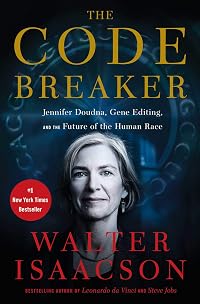
The Code Breaker: Jennifer Doudna, Gene Editing, and the Future of the Human Race
by Walter Isaacson
On This Page
Description
A 2022 Audie Award FinalistA Best Book of 2021 by Bloomberg BusinessWeek, Time, and The Washington Post
The bestselling author of Leonardo da Vinci and Steve Jobs returns with a "compelling" (The Washington Post) account of how Nobel Prize winner Jennifer Doudna and her colleagues launched a revolution that will allow us to cure diseases, fend off viruses, and have healthier babies.
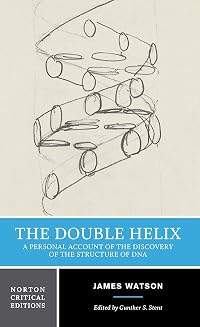
When Jennifer Doudna was in sixth grade, she came home one day to find that her dad had left a paperback show more titled The Double Helix on her bed. She put it aside, thinking it was one of those detective tales she loved. When she read it on a rainy Saturday, she discovered she was right, in a way. As she sped through the pages, she became enthralled by the intense drama behind the competition to discover the code of life. Even though her high school counselor told her girls didn't become scientists, she decided she would.
Driven by a passion to understand how nature works and to turn discoveries into inventions, she would help to make what the book's author, James Watson, told her was the most important biological advance since his codiscovery of the structure of DNA. She and her collaborators turned a curiosity of nature into an invention that will transform the human race: an easy-to-use tool that can edit DNA. Known as CRISPR, it opened a brave new world of medical miracles and moral questions.
The development of CRISPR and the race to create vaccines for coronavirus will hasten our transition to the next great innovation revolution. The past half-century has been a digital age, based on the microchip, computer, and internet. Now we are entering a life-science revolution. Children who study digital coding will be joined by those who study genetic code.
Should we use our new evolution-hacking powers to make us less susceptible to viruses? What a wonderful boon that would be! And what about preventing depression? Hmmm...Should we allow parents, if they can afford it, to enhance the height or muscles or IQ of their kids?
After helping to discover CRISPR, Doudna became a leader in wrestling with these moral issues and, with her collaborator Emmanuelle Charpentier, won the Nobel Prize in 2020. Her story is an "enthralling detective story" (Oprah Daily) that involves the most profound wonders of nature, from the origins of life to the future of our species. show less
Tags
Recommendations






Member Reviews
In our generation, codes comprise some of the most interesting subjects of study. We code computers to do work for us; we also are beginning to decode the genetic code to propel life forward. The discovery of CRISPR promises to allow us to edit the human genome, and Professor Doudna sits among this innovation’s prime discoverers. Along with another female scientist Professor Charpentier, she won the Nobel Prize for Chemistry in 2020. This biography, written by eminent historian Walter Isaacson, tells her story in a way that clarifies the historical record, explains the core science, and demonstrates that women do really excellent science.
Doudna was inspired as a teenager to become a scientist by reading Watson’s The Double Helix. show more Like any scientist, she had to persevere along her path, but she eventually earned a PhD from Harvard University en route to a professorship at UC-Berkeley. She found a professional niche in learning everything about RNA. As explained here, through conversations with Charpentier and work by post-doctoral fellows, she eventually developed a way to edit genes.
However, this discovery only invited controversy. The two labs had co-discovered how to do this in bacteria, but could they do this in humans? Other labs began to pursue this question, too, and two groups claim legal priority in this discovery. The courts may decide who will get the money, but the Nobel committee clearly decided that this all-female duo deserved preeminence. Isaacson, a careful writer with a long history of describing innovation, maintains an unbiased tone when dissecting this dilemma.
Ultimately, this book might prove to be the equivalent of The Double Helix for a new generation of scientists, both male and female. It presents Doudna as a noble figure who studies interesting and impactful things. It also presents a host of postdoctoral workers and collaborators who deservedly find their own place in the scientific folklore. Isaacson, though a historian and biographer – not a scientist – never scrimps on the science. He lucidly and accurately describes the biochemical happenings without over-complexifying or over-simplifying.
This book should receive a broad audience among the reading public. As this book repeatedly trumpets, the life sciences are carrying the banner of innovation in the early twenty-first century. Thus, it behooves everyone to learn how to import its insights into our personal lives. Isaacson writes with clarity and vibrancy enough for the general reader, who may not have an advanced scientific education. He also gives readers a taste of how the structure of American science works by providing glimpses into the labs and administrations. Thus, future scientists can learn how science actually works. Many can, have, and will benefit from Isaacson’s explanation of Doudna and company’s labors, and as with CRISPR, benefits will roll in during coming years. show less
Doudna was inspired as a teenager to become a scientist by reading Watson’s The Double Helix. show more Like any scientist, she had to persevere along her path, but she eventually earned a PhD from Harvard University en route to a professorship at UC-Berkeley. She found a professional niche in learning everything about RNA. As explained here, through conversations with Charpentier and work by post-doctoral fellows, she eventually developed a way to edit genes.
However, this discovery only invited controversy. The two labs had co-discovered how to do this in bacteria, but could they do this in humans? Other labs began to pursue this question, too, and two groups claim legal priority in this discovery. The courts may decide who will get the money, but the Nobel committee clearly decided that this all-female duo deserved preeminence. Isaacson, a careful writer with a long history of describing innovation, maintains an unbiased tone when dissecting this dilemma.
Ultimately, this book might prove to be the equivalent of The Double Helix for a new generation of scientists, both male and female. It presents Doudna as a noble figure who studies interesting and impactful things. It also presents a host of postdoctoral workers and collaborators who deservedly find their own place in the scientific folklore. Isaacson, though a historian and biographer – not a scientist – never scrimps on the science. He lucidly and accurately describes the biochemical happenings without over-complexifying or over-simplifying.
This book should receive a broad audience among the reading public. As this book repeatedly trumpets, the life sciences are carrying the banner of innovation in the early twenty-first century. Thus, it behooves everyone to learn how to import its insights into our personal lives. Isaacson writes with clarity and vibrancy enough for the general reader, who may not have an advanced scientific education. He also gives readers a taste of how the structure of American science works by providing glimpses into the labs and administrations. Thus, future scientists can learn how science actually works. Many can, have, and will benefit from Isaacson’s explanation of Doudna and company’s labors, and as with CRISPR, benefits will roll in during coming years. show less
[Code Breaker: Jennifer Doudna, Gene Editing, and the Future of the Human Race] by [[Walter Isaacson]]
This book seemed obviously rushed to press. Isaacson took a fascinating subject, the science behind gene editing using discoveries made while studying RNA, and makes the science secondary to a juvenile telling of the in-fighting between the scientists as they raced to publish their findings first. The human story becomes a string of short bios and the language was so simplistic that I checked several times to see if I'd mistakenly downloaded the youth version on my kindle.
This is too bad, because it's a fascinating topic, and Isaacson certainly could have included a focus on the scientists in addition to describing the science, but it show more just wasn't executed well. I would have been thrilled to read a good biography of a woman scientist, but even Jennifer Doudna, who gets a nod in the title, doesn't get a deep enough attention in the book to satisfy my curiosity.
I was hoping for a science book in the vein of [The Gene] by [[Siddhartha Mukherjee]] and this comes no where close. I felt this was rushed to publish because the science was used in creating the mRNA covid vaccines.
The book gets a lot of high ratings on LT and elsewhere, but I didn't see it.
Original publication date: 2021
Author’s nationality: American
Original language: English
Length: 552 pages
Rating: 2 stars
Format/where I acquired the book: library kindle book
Why I read this: interested in the topic show less
This book seemed obviously rushed to press. Isaacson took a fascinating subject, the science behind gene editing using discoveries made while studying RNA, and makes the science secondary to a juvenile telling of the in-fighting between the scientists as they raced to publish their findings first. The human story becomes a string of short bios and the language was so simplistic that I checked several times to see if I'd mistakenly downloaded the youth version on my kindle.
This is too bad, because it's a fascinating topic, and Isaacson certainly could have included a focus on the scientists in addition to describing the science, but it show more just wasn't executed well. I would have been thrilled to read a good biography of a woman scientist, but even Jennifer Doudna, who gets a nod in the title, doesn't get a deep enough attention in the book to satisfy my curiosity.
I was hoping for a science book in the vein of [The Gene] by [[Siddhartha Mukherjee]] and this comes no where close. I felt this was rushed to publish because the science was used in creating the mRNA covid vaccines.
The book gets a lot of high ratings on LT and elsewhere, but I didn't see it.
Original publication date: 2021
Author’s nationality: American
Original language: English
Length: 552 pages
Rating: 2 stars
Format/where I acquired the book: library kindle book
Why I read this: interested in the topic show less
I was a bit daunted by the size of the book when I picked up "The Code Breaker" at my local library. I knew I had to start reading it right away when I checked my library site to find out there were many more holds waiting. That said, the short chapters and style of writing helped to speed the pages along.
The author told the story of the scientific discoveries relating to gene editing through the personalities involved. That led an interesting tale of rivalries and the monetization of scientific discoveries. In some cases, it read almost like a thriller. It was also a wonderful build up to show the contrast with the sharing philosophy scientists and governments adopted when there was a common emergency due to the Covid pandemic.
The author told the story of the scientific discoveries relating to gene editing through the personalities involved. That led an interesting tale of rivalries and the monetization of scientific discoveries. In some cases, it read almost like a thriller. It was also a wonderful build up to show the contrast with the sharing philosophy scientists and governments adopted when there was a common emergency due to the Covid pandemic.
I am a Walter Isaacson fan; this is the fourth book by him that I've read. As always, I found that he writes in an engaging and accessible style.
While the other three titles I've read have been biographies of long-deceased people, this one was only partly a biography. It was also about how science happens, a history of genetics, the war against COVID, and a discussion of bio-ethics. The author wrote, in the Acknowledgements section, that he wanted this book to be a voyage of discovery. By inserting himself and his thoughts into the book, he made it such a journey for him, and for me.
To me, the most interesting parts of the book dealt with the moral issues. I was also interested in the unexpected consequences of the COVID pandemic in show more that it created an environment for great collaboration among universities and other researchers.
As I finished the book, I couldn't help but speculate that, not that long ago, the entire text would have been the basis for a sci-fi novel. show less
While the other three titles I've read have been biographies of long-deceased people, this one was only partly a biography. It was also about how science happens, a history of genetics, the war against COVID, and a discussion of bio-ethics. The author wrote, in the Acknowledgements section, that he wanted this book to be a voyage of discovery. By inserting himself and his thoughts into the book, he made it such a journey for him, and for me.
To me, the most interesting parts of the book dealt with the moral issues. I was also interested in the unexpected consequences of the COVID pandemic in show more that it created an environment for great collaboration among universities and other researchers.
As I finished the book, I couldn't help but speculate that, not that long ago, the entire text would have been the basis for a sci-fi novel. show less
I started reading this from the library, then realized I was going to need my own copy to make notes in. Fabulous book, there's no one like Isaacson for entwining stories. This one weaves the personal story of Doudna into the discovery of CRISPR and leads gently into COVID. Best book of the year.
Summary: The story of the 2020 Nobel Prize winner in Chemistry, Jennifer Doudna, and the discovery of ways to use CRISPR enzymes to edit genomes, and her subsequent efforts to establish ethical standards for the use of this breakthrough discovery.
Benjamin Franklin. Henry Kissinger, Steve Jobs, Leonardo da Vinci. And Jennifer Doudna? Why has Walter Isaacson chosen to include her among the seminal figures who have been the objects of his books. It just may be that her work as a biochemist is as game-changing for humanity as any of the efforts of these others. James Watson, co-discoverer of the structure of DNA rated her discovery the most significant after his own. Apparently the Nobel Prize committee agreed. In October 2020, she was show more awarded, along with Emmanuelle Charpentier, the Nobel Prize in Chemistry for a landmark paper in 2012 that described how to use an enzyme found in bacteria, nicknamed CRISPR, in this case CAS9, to edit genomes, removing and inserting genetic material. In 2018, twins, and another child were born in China with the gene for the receptor that makes one susceptible to HIV edited out, an important protection for a child that has an HIV positive parent. CRISPR has been used for a therapy to cure sickle cell anemia, and in the fight against COVID-19. It’s possible that someday a gene could be edited into our genome at conception to make us immune to COVID-19 and other diseases.
Walter Isaacson does several things simultaneously in this book. One is that he profiles Doudna, the lanky blonde growing up in Hilo, Hawaii, and thus a bit of an outcast, who compensated with books. Her father, a professor, left a copy of The Double Helix by James Watson on her bed. She thought it a mystery, and in a way it was as she raced through the book to understand how Watson and Crick unraveled the mystery of the genetic code. That set her on the path to become a scientist, despite the high school counselor who told her girls didn’t become scientists. Isaacson traces her academic journey, including the crucial mentoring of her doctoral advisor at Harvard, Jack W. Szostak, who turned her research interests toward the study of RNA. She researched the structural biology of RNA, first at Yale, and then at UC Berkeley, where much of the book is focused. A 2011 meeting with Emmanuelle Charpentier who had been studying the CRISPR enzyme, and needed the help of a structural biologist to understand how it worked. Their collaboration led to the discoveries described in their 2012 paper.
This set off a frenzied competition of patent applications, the creation of companies, much with a researcher at MIT’s Broad Institute Feng Zhang. This reveals another side of science, the heated competition to capitalize entrepreneurially on such breakthrough research. Isaacson, though focused on Doudna, offers an even-handed profile of Zhang and those who worked with him and the sometime collaboration and sometime cut-throat competition to create applications of the CRISPR technology.
Yet what seems to drive all these scientists is the love of the science. Isaacson takes us to the lab bench in his own attempts to use CRISPR to do gene edits, and to profile Doudna at the bench as well as her leadership of her research group. This aspect of Isaacson’s work is a great account of what the daily life of research scientists looks like, and many of the photos in this book are taken in labs.
The love of science also emerged in the rallying of rival lab groups to collaborate in the fight against COVID-!9. Isaacson shares how they overcame barriers of traditional science research publishing in the new world of online pre-print publishing to share research findings in an open-source, real-time fashion in an effort for the public good in developing new testing and treatment approaches. Although not directly tied to Doudna’s efforts, Isaacson talks about the use of messenger RNA molecules in the vaccines that have been most effective against COVID.
The most interesting and perhaps most important part of the book is the emerging discussion around the use of CRISPR technology in germline gene editing. This involves pre-implantation genetic testing and editing of embryos, which may remove lethal or problematic genes (think Huntington’s disease and especially other single-gene defects) or to enhance the embryo (think height, eye color, etc.). It appears that Doudna only gradually comprehended the ethical questions her research would raise, but then took the lead to draw up ethical frameworks to govern the use of the technology–frameworks which didn’t prevent the Chinese scientist from using the technology in human embryos that were implanted resulting in live births. At publication, this is very much a live question. Most consider this may be acceptable in some circumstances but where is the line to be drawn? Then there are more chilling possibilities. Could CRISPR be used to breed super-soldiers for example? And what of equity, when one considers the cost of these therapies?
The choice of Doudna as Isaacson’s focus is interesting. He shows us the rise of women in science. He also shows us the arc of a career from a junior researcher to one who is shaping the conversation in her discipline and considering how science serves the common good. One can imagine young women reading this story and becoming convinced that this could be their story. And why not? lt happened that way for a lanky sixth grader finding a copy of The Double Helix on her bed. show less
Benjamin Franklin. Henry Kissinger, Steve Jobs, Leonardo da Vinci. And Jennifer Doudna? Why has Walter Isaacson chosen to include her among the seminal figures who have been the objects of his books. It just may be that her work as a biochemist is as game-changing for humanity as any of the efforts of these others. James Watson, co-discoverer of the structure of DNA rated her discovery the most significant after his own. Apparently the Nobel Prize committee agreed. In October 2020, she was show more awarded, along with Emmanuelle Charpentier, the Nobel Prize in Chemistry for a landmark paper in 2012 that described how to use an enzyme found in bacteria, nicknamed CRISPR, in this case CAS9, to edit genomes, removing and inserting genetic material. In 2018, twins, and another child were born in China with the gene for the receptor that makes one susceptible to HIV edited out, an important protection for a child that has an HIV positive parent. CRISPR has been used for a therapy to cure sickle cell anemia, and in the fight against COVID-19. It’s possible that someday a gene could be edited into our genome at conception to make us immune to COVID-19 and other diseases.
Walter Isaacson does several things simultaneously in this book. One is that he profiles Doudna, the lanky blonde growing up in Hilo, Hawaii, and thus a bit of an outcast, who compensated with books. Her father, a professor, left a copy of The Double Helix by James Watson on her bed. She thought it a mystery, and in a way it was as she raced through the book to understand how Watson and Crick unraveled the mystery of the genetic code. That set her on the path to become a scientist, despite the high school counselor who told her girls didn’t become scientists. Isaacson traces her academic journey, including the crucial mentoring of her doctoral advisor at Harvard, Jack W. Szostak, who turned her research interests toward the study of RNA. She researched the structural biology of RNA, first at Yale, and then at UC Berkeley, where much of the book is focused. A 2011 meeting with Emmanuelle Charpentier who had been studying the CRISPR enzyme, and needed the help of a structural biologist to understand how it worked. Their collaboration led to the discoveries described in their 2012 paper.
This set off a frenzied competition of patent applications, the creation of companies, much with a researcher at MIT’s Broad Institute Feng Zhang. This reveals another side of science, the heated competition to capitalize entrepreneurially on such breakthrough research. Isaacson, though focused on Doudna, offers an even-handed profile of Zhang and those who worked with him and the sometime collaboration and sometime cut-throat competition to create applications of the CRISPR technology.
Yet what seems to drive all these scientists is the love of the science. Isaacson takes us to the lab bench in his own attempts to use CRISPR to do gene edits, and to profile Doudna at the bench as well as her leadership of her research group. This aspect of Isaacson’s work is a great account of what the daily life of research scientists looks like, and many of the photos in this book are taken in labs.
The love of science also emerged in the rallying of rival lab groups to collaborate in the fight against COVID-!9. Isaacson shares how they overcame barriers of traditional science research publishing in the new world of online pre-print publishing to share research findings in an open-source, real-time fashion in an effort for the public good in developing new testing and treatment approaches. Although not directly tied to Doudna’s efforts, Isaacson talks about the use of messenger RNA molecules in the vaccines that have been most effective against COVID.
The most interesting and perhaps most important part of the book is the emerging discussion around the use of CRISPR technology in germline gene editing. This involves pre-implantation genetic testing and editing of embryos, which may remove lethal or problematic genes (think Huntington’s disease and especially other single-gene defects) or to enhance the embryo (think height, eye color, etc.). It appears that Doudna only gradually comprehended the ethical questions her research would raise, but then took the lead to draw up ethical frameworks to govern the use of the technology–frameworks which didn’t prevent the Chinese scientist from using the technology in human embryos that were implanted resulting in live births. At publication, this is very much a live question. Most consider this may be acceptable in some circumstances but where is the line to be drawn? Then there are more chilling possibilities. Could CRISPR be used to breed super-soldiers for example? And what of equity, when one considers the cost of these therapies?
The choice of Doudna as Isaacson’s focus is interesting. He shows us the rise of women in science. He also shows us the arc of a career from a junior researcher to one who is shaping the conversation in her discipline and considering how science serves the common good. One can imagine young women reading this story and becoming convinced that this could be their story. And why not? lt happened that way for a lanky sixth grader finding a copy of The Double Helix on her bed. show less
Isaacson's latest biography is a long an fascinating account of the development of the science of gene editing, as filtered through the life, experience and accomplishments of Jennifer Doudna, co-winner of the Nobel Prize in Chemistry in 2020. Isaacson, a clear and straightforward writer, does an excellent job of weaving his narrative between Doudna's life story, the concepts of genetics, the progress of the science as discoveries are made, the many scientists that mentored Doudna and with whom she has collaborated and/or competed.
The story of how, over a period of several decades, Doudna and her colleagues discovered the features of DNA and, especially, RNA that allowed them to understand how these enzymes work, and especially the way show more that RNA is effective in actually cutting to pieces the DNA of invaders like viruses, is fascinating indeed, and Isaacson tells the story very well. He's adept at providing just enough of the technical description of the processes involved to give a lay reader enough of a general idea of what's going on without getting bogged down in too much detail. I actually experienced an element of "willing suspension of disbelief" during the proceedings that I found wholly appropriate. It was fascinating for me to learn, for example, that the genetic techniques being studied and applied by humans now are essentially the same ones that bacteria have been using to fight off viruses for billions of years.
Isaacson stops about 65% of the way through the book to provide an overview of the ethical questions being wrestled with by the scientific world over the issues that our increasingly effective ability to edit our genetic makeup has brought forward. Do we want "designer humans?" What might the unintended consequences be of altering our genetic makeup? How drastically will the ability to genetically enhance or protect our children exacerbate financial and class inequality, as parents with money begin accessing techniques that poorer parents cannot? On the other hand, shall we stop short of curing genetic diseases such as sickle cell anemia, or protecting our children from AIDS by altering their DNA? The line in the sand, if you will, is between the ability to provide genetic treatments to individuals to treat or cure genetic conditions from which they're suffering, versus editing a person's overall genetic makeup in a way that will be passed down to their offspring, and thereby affect the species as a whole.
Isaacson describes the question thusly:
"The primary concern is germline editing, those changes that are done in the DNA of human eggs or sperm or early-stage embryos so that every cell in the resulting children--and also of their descendants--will carry the edited trait. There has already been, and rightly so, general acceptance of what is known as somatic editing, the changes that are made in targeted cells of a living patient and do not affect reproductiive cells. If something goes wrong in one of these therapies, it can be disastrous for the patient but not for the species."
And then, as Isaacson was doing his obviously years-long research for this biography, the Covid pandemic hit. The final section of the book describes the ways in which the academic scientific community quickly swung into action, cooperating in areas that would have been sources of competition previously, to create the new sort of vaccines--utilizing RNA manipulation for the first time in vaccine technology--that we are now using to combat Covid.
Isaacson does not skip over the fact that, when Doudna was a young woman deciding upon a career, the idea that "women can be scientists" was one that met stiff resistance within the world of science and in the culture in general. Her role as a pioneer, not among the very first women scientists, of course, but in the vanguard of the generation that battered down many (certainly not all) of the roadblocks taken for granted by previous generations, is stressed, as is her role as a mentor.
There is a lot more in this rich and fertile book, which is at once a biography of a fascinating woman, a primer for how science and private industry inter-relate in our society, a history of the science of genetics, a look inside the war against Covid, and an outline of the ethical/philosophical questions that we are going to be grappling with over these new capabilities. show less
The story of how, over a period of several decades, Doudna and her colleagues discovered the features of DNA and, especially, RNA that allowed them to understand how these enzymes work, and especially the way show more that RNA is effective in actually cutting to pieces the DNA of invaders like viruses, is fascinating indeed, and Isaacson tells the story very well. He's adept at providing just enough of the technical description of the processes involved to give a lay reader enough of a general idea of what's going on without getting bogged down in too much detail. I actually experienced an element of "willing suspension of disbelief" during the proceedings that I found wholly appropriate. It was fascinating for me to learn, for example, that the genetic techniques being studied and applied by humans now are essentially the same ones that bacteria have been using to fight off viruses for billions of years.
Isaacson stops about 65% of the way through the book to provide an overview of the ethical questions being wrestled with by the scientific world over the issues that our increasingly effective ability to edit our genetic makeup has brought forward. Do we want "designer humans?" What might the unintended consequences be of altering our genetic makeup? How drastically will the ability to genetically enhance or protect our children exacerbate financial and class inequality, as parents with money begin accessing techniques that poorer parents cannot? On the other hand, shall we stop short of curing genetic diseases such as sickle cell anemia, or protecting our children from AIDS by altering their DNA? The line in the sand, if you will, is between the ability to provide genetic treatments to individuals to treat or cure genetic conditions from which they're suffering, versus editing a person's overall genetic makeup in a way that will be passed down to their offspring, and thereby affect the species as a whole.
Isaacson describes the question thusly:
"The primary concern is germline editing, those changes that are done in the DNA of human eggs or sperm or early-stage embryos so that every cell in the resulting children--and also of their descendants--will carry the edited trait. There has already been, and rightly so, general acceptance of what is known as somatic editing, the changes that are made in targeted cells of a living patient and do not affect reproductiive cells. If something goes wrong in one of these therapies, it can be disastrous for the patient but not for the species."
And then, as Isaacson was doing his obviously years-long research for this biography, the Covid pandemic hit. The final section of the book describes the ways in which the academic scientific community quickly swung into action, cooperating in areas that would have been sources of competition previously, to create the new sort of vaccines--utilizing RNA manipulation for the first time in vaccine technology--that we are now using to combat Covid.
Isaacson does not skip over the fact that, when Doudna was a young woman deciding upon a career, the idea that "women can be scientists" was one that met stiff resistance within the world of science and in the culture in general. Her role as a pioneer, not among the very first women scientists, of course, but in the vanguard of the generation that battered down many (certainly not all) of the roadblocks taken for granted by previous generations, is stressed, as is her role as a mentor.
There is a lot more in this rich and fertile book, which is at once a biography of a fascinating woman, a primer for how science and private industry inter-relate in our society, a history of the science of genetics, a look inside the war against Covid, and an outline of the ethical/philosophical questions that we are going to be grappling with over these new capabilities. show less
Members
- Recently Added By
Lists

Investment News 2021 What Advisors Are Reading This Summer
16 works; 1 member

Books Read in 2021
5,361 works; 114 members

Books Read in 2022
5,168 works; 114 members

Club Read's Recommended Nonfiction Written by Women
618 works; 30 members

Best Biographies of Notable Women
279 works; 101 members

Books That Changed Our Perspective
423 works; 168 members
Author Information

41+ Works 35,896 Members
Walter Isaacson was born on May 20, 1952 in New Orleans, Louisiana. He received a B. A. in history and literature from Harvard College. He then attended the University of Oxford, where he was a Rhodes Scholar at Pembroke College and read philosophy, politics, and economics. He began his career in journalism at The Sunday Times of London and then show more the New Orleans Times-Picayune/States-Item. He joined TIME in 1978 and served as a political correspondent, national editor and editor of new media before becoming the magazine's editor in 1996. He became Chairman and CEO of CNN in 2001, and then president and CEO of the Aspen Institute in 2003. He has written numerous books including American Sketches, Einstein: His Life and Universe, Benjamin Franklin: An American Life, Kissinger: A Biography, Steve Jobs, and The Innovators: How a Group of Hackers, Geniuses, and Geeks Created the Digital Revolution. He is the co-author, with Evan Thomas, of The Wise Men: Six Friends and the World They Made. (Bowker Author Biography) show less
Some Editions
Awards and Honors
Awards
Distinctions
Work Relationships
Common Knowledge
- Canonical title
- The Code Breaker: Jennifer Doudna, Gene Editing, and the Future of the Human Race
- Original publication date
- 2021-03-09
- People/Characters
- Jennifer Doudna; Emmanuelle Charpentier; Feng Zhang; George Church; Eric Lander; James Watson (show all 10); He Jiankui; Francisco Mojica; Eugene Koonin; Jillian Banfield
- Important places
- University of California, Berkeley, California, USA
- Dedication
- To the memory of Alice Mayhew and Carolyn Reidy. What a joy it was to see them smile.
- Blurbers
- Meacham, Jon; Goodwin, Doris Kearns; Gawande, Atul; Mukherjee, Siddhartha; Desmond-Hellman, Sue
- Original language
- English
Classifications
Statistics
- Members
- 1,811
- Popularity
- 12,037
- Reviews
- 67
- Rating
- (4.17)
- Languages
- 8 — Dutch, English, German, Italian, Spanish, Swedish, Turkish, Portuguese (Portugal)
- Media
- Paper, Audiobook, Ebook
- ISBNs
- 31
- ASINs
- 13