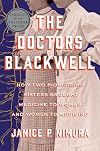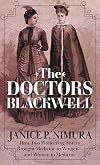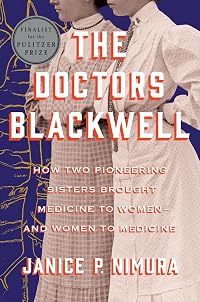
The Doctors Blackwell: How Two Pioneering Sisters Brought Medicine to Women and Women to Medicine
by Janice P. Nimura
On This Page
Description
Biography & Autobiography. History. Medical. Nonfiction. Elizabeth Blackwell believed from an early age that she was destined for a mission beyond the scope of "ordinary" womanhood. Though the world at first recoiled at the notion of a woman studying medicine, her intelligence and intensity ultimately won her the acceptance of the male medical establishment. In 1849, she became the first woman in America to receive an MD. She was soon joined in her iconic achievement by her younger sister, show more Emily, who was actually the more brilliant physician. Exploring the sisters' allies, enemies, and enduring partnership, Janice P. Nimura presents a story of trial and triumph. Together, the Blackwells founded the New York Infirmary for Indigent Women and Children, the first hospital staffed entirely by women. Both sisters were tenacious and visionary, but their convictions did not always align with the emergence of women's rights-or with each other. From Bristol, Paris, and Edinburgh to the rising cities of antebellum America, this richly researched new biography celebrates two complicated pioneers who exploded the limits of possibility for women in medicine. As Elizabeth herself predicted, "a hundred years hence, women will not be what they are now.". show lessTags
Recommendations






Member Reviews
While the author did a good job researching her subjects, I found Elizabeth Blackwell to be unlikable. She looked down her nose at everybody--even her own family members. She was the first female to gain admittance to a reputable medical school--but only because the students thought it was a joke. She didn't seem to enjoy practicing medicine once she became a doctor although she did fight for other women to have that right. She along with her sister Emily (who always ended up doing most of the work without the notice Elizabeth gained) founded a medical school for women in New York. The incorporation of social history was also impressive. I came away with more respect for the sister Emily who probably would not have chosen medicine as show more her career without her sister's influence than for Elizabeth. I suspect Emily would have chosen a career as a naturalist or something similar if she'd been left to her own devices. We can't rewrite history, but we can wonder what might have happened if she'd been willing to stand up to her sister. show less
“I love mankind...it’s people I can’t stand!!” (Linus Van Pelt, 1959). Elizabeth Blackwell, America’s first woman M.D., wrote something similar to her brother one hundred years before Linus made his famous statement. Samuel Blackwell moved his large family – his wife, their eight children, and other relatives – from England to the United States in the 1830s. The Blackwells were a clannish, intellectual family, who preferred their own company above the company of others.
Elizabeth was the first in the family, and the first woman in the United States, to receive a medical degree. Elizabeth had a low opinion of women in general, and she set out to improve women by setting the example for other women to follow. Elizabeth show more decided that her sister, Emily, was worthy to follow in her footsteps and assist her in her lofty aspirations, so she pushed Emily into the medical field as well.
This is a well-written biography, with an impressive use of correspondence, diaries, and other archival sources. Its biggest problem is its subject, Elizabeth Blackwell. She wasn’t a likable person. Her contemporaries must have felt the same way about her, because she never achieved the accolades she thought were her due. She earned respect through her determined pursuit of her medical profession, but she was not the inspiration she set out to be at the beginning of her career. show less
Elizabeth was the first in the family, and the first woman in the United States, to receive a medical degree. Elizabeth had a low opinion of women in general, and she set out to improve women by setting the example for other women to follow. Elizabeth show more decided that her sister, Emily, was worthy to follow in her footsteps and assist her in her lofty aspirations, so she pushed Emily into the medical field as well.
This is a well-written biography, with an impressive use of correspondence, diaries, and other archival sources. Its biggest problem is its subject, Elizabeth Blackwell. She wasn’t a likable person. Her contemporaries must have felt the same way about her, because she never achieved the accolades she thought were her due. She earned respect through her determined pursuit of her medical profession, but she was not the inspiration she set out to be at the beginning of her career. show less
While the focus of this biography sounded interesting, in the end, I didn't particularly enjoy it and skimmed through the last half. The main irritant for me was Elizabeth Blackwell herself. While her determination to become a medical doctor--the first woman to earn the degree in the US--is admirable, I found her to be an extremely unpleasant and unlikable woman. Instead of the empathetic personality I had expected to find, she comes across as selfish and misanthropic. You would expect the founder of a hospital for indigent women to care about those she served and strive to change their living conditions, but Elizabeth's only concern was achieving her own "greatness." She could turn on the charm for those who had something she wanted or show more needed, but she seemed incapable of true friendship, especially with other women. As soon as someone disagreed with her or had any ideas of her own, the two parted ways. With Elizabeth, it was clearly "My way or the highway," even in the case of her fellow physician sister, Emily. Of the two, Emily was more devoted to practicing medicine, while Elizabeth preferred teaching and giving lectures on hygiene and morality. When the sisters clashed regarding how to run their medical college for women, Elizabeth packed up and moved to Scotland. (Her disdain for the US is another point that rankled.) Elizabeth was also strongly against women's suffrage, and I found it annoying that someone who spent her life trying to prove that an intelligent, determined woman could be as capable as a man should argue against her sex's participation in governance. She also came across as jealous of other women who achieved "greatness," such as Florence Nightingale or Dorothea Dix. More than two thirds of the book focused on Elizabeth, which explains why I started to skim and speed read the last half. Emily was the more human and admirable sister, but she got short shrift here, perhaps because Elizabeth had expected her to become little more than an assistant to her own greatness. Emily had ideas of her own and actually cared about her female patients, coworkers, and friends. But I guess that made her less interesting to the author. show less
I remember reading about Dr. Elizabeth Blackwell in a biography written for children so I knew she was the first U.S. woman to receive an M.D. degree. I don't remember that book mentioning her sister who also became a doctor. In one sense, I wish I hadn't read this book because it diminished my admiration of "the first woman doctor". I do still admire her determination to achieve what she did and her persistence in doing so. I hadn't realized that she really didn't practice medicine all that much. I also hadn't realized she'd lost an eye to infection.
I kind of get the idea that Elizabeth was a lonely person, always striving for the next thing, wanting recognition that she rarely got. In some ways, she was ahead of the game in show more hygiene--or at least in realizing it was important both within and outside medicine.
Her sister, Emily, almost seemed roped in to the medical field by Elizabeth (whether Emily wanted that career or not) though she did seem to be more personable (especially when she was left to head the New York portion while Elizabeth went to England.) and she did seem to practice more actual medicine than Elizabeth did.
Somehow though, I almost wish I hadn't read this and didn't know what it revealed so I could still have my childish admiration of the first woman doctor. show less
I kind of get the idea that Elizabeth was a lonely person, always striving for the next thing, wanting recognition that she rarely got. In some ways, she was ahead of the game in show more hygiene--or at least in realizing it was important both within and outside medicine.
Her sister, Emily, almost seemed roped in to the medical field by Elizabeth (whether Emily wanted that career or not) though she did seem to be more personable (especially when she was left to head the New York portion while Elizabeth went to England.) and she did seem to practice more actual medicine than Elizabeth did.
Somehow though, I almost wish I hadn't read this and didn't know what it revealed so I could still have my childish admiration of the first woman doctor. show less
I enjoyed this dual biography of sisters Elizabeth and Emily Blackwell. Elizabeth Blackwell was the first woman to earn a medical degree in America in 1849. This was, of course, no easy road. Medical schools were not open to women so she had to fight her way in. But gaining the education may have been the easiest part, once you begin reading about her life trying to be recognized as a doctor. She encouraged her younger sister Emily to also pursue a career in medicine, partially to have an ally.
Elizabeth spent time in Paris, London, and America, finally opening a clinic for the poor in New York. Her beliefs in the benefits of hygiene, fresh air, and exercise above dubious medicines and harmful surgeries were definitely ahead of her show more time. She and Emily ran this clinic for decades. They later started a school for women to study medicine. Both had been against schools exclusively for women, believing they would be of lesser quality and preferring that women be allowed into the already existing schools available to men. Unfortunately, this wasn't happening, so they finally opened their own. Soon after the opening, Elizabeth departed permanently to London, first trying to continue her career (largely unsuccessfully) and then retiring to Scotland. Emily stayed to run the college.
Both sisters certainly paved the way for women to become doctors, not nurses or midwives only. This book was very readable and engaging and gives a good portrait of both women, Elizabeth predominantly. I've only skimmed the surface of what I learned from this book in this review. show less
Elizabeth spent time in Paris, London, and America, finally opening a clinic for the poor in New York. Her beliefs in the benefits of hygiene, fresh air, and exercise above dubious medicines and harmful surgeries were definitely ahead of her show more time. She and Emily ran this clinic for decades. They later started a school for women to study medicine. Both had been against schools exclusively for women, believing they would be of lesser quality and preferring that women be allowed into the already existing schools available to men. Unfortunately, this wasn't happening, so they finally opened their own. Soon after the opening, Elizabeth departed permanently to London, first trying to continue her career (largely unsuccessfully) and then retiring to Scotland. Emily stayed to run the college.
Both sisters certainly paved the way for women to become doctors, not nurses or midwives only. This book was very readable and engaging and gives a good portrait of both women, Elizabeth predominantly. I've only skimmed the surface of what I learned from this book in this review. show less
nonfiction/biography - history
a very readable narrative that must have taken a lot of time to research, referencing decades of Elizabeth's cross-written correspondence.
Elizabeth Blackwell was highly judgemental, anti-women's rights (thinking most other women flighty and stupid), and acted with entitlement that a poorer woman or a woman of color probably wouldn't have. Still, she and her younger sister Emily did have to overcome a lot of major challenges (mainly, being allowed to enroll in the men-only medical schools and trying to find medical internships/work-study), and because of them the medical field did eventually start to regularly admit women within their lifetime.
The details about medical practices during the time period were show more also interesting. show less
a very readable narrative that must have taken a lot of time to research, referencing decades of Elizabeth's cross-written correspondence.
Elizabeth Blackwell was highly judgemental, anti-women's rights (thinking most other women flighty and stupid), and acted with entitlement that a poorer woman or a woman of color probably wouldn't have. Still, she and her younger sister Emily did have to overcome a lot of major challenges (mainly, being allowed to enroll in the men-only medical schools and trying to find medical internships/work-study), and because of them the medical field did eventually start to regularly admit women within their lifetime.
The details about medical practices during the time period were show more also interesting. show less
Very readable biography of the two Drs. Blackwell. The author sets the time in history well with descriptions of everyday dress, food, locations and conversation. I appreciated the "truth-telling" rather than the glorifying of the doctor's experiences. In telling their story she sheds light on those behind and those who came after in the struggle for female representation in the medical field.
Members
- Recently Added By
Lists

Best Biographies of Notable Women
279 works; 101 members
Author Information

2 Works 700 Members
Janice P. Nimura is the winner of a 2017 Public Scholar award from the National Endowment for the Humanities and the author of Daughters of the Samurai: A Journey from East to West and Back, a New York Times Notable Book. She lives in New York City.
Some Editions
Awards and Honors
Awards
Common Knowledge
- Original publication date
- 2021
- People/Characters
- Elizabeth Blackwell; Emily Blackwell; Samuel Blackwell; Hannah Blackwell (nee Lane); Anna Blackwell; Marian Blackwell (show all 46); Samuel Blackwell, Jr.; Henry Blackwell; Ellen Blackwell; Howard Blackwell; George Washington Blackwell; Lucy Stone; Alice Stone Blackwell; Antoinette Brown Blackwell, "Nettie"; Katharine Barry Blackwell, "Kitty"; Kenyon Blackwell (English cousin); Marie de Simoncourt Blackwell (French wife of Kenyon); Henry Ward Beecher; Henry Whitney Bellows; Claude Philibert Hippolyte Blot; Barbara Leigh Smith Bodichon; Daniel Brainard; Anna Isabella Noel, Lady Byron; William Henry Channing; Madeleine-Edmee Clementine Charriet; Nancy Talbot Clark; Anna Maria Helena Coswell de Noailles; Dorothea Dix; Jules Denis, Baron du Potet; William Elder; Margaret Fuller; Elizabeth Garrett Anderson; Horace Greeley; Mary Putnam Jacoby; Charles A. Lee; Abraham Lincoln; Florence Nightingale; James Paget; Bessie Rayner Parkes; Charles Plevins; Vincent Preissnitz; Madame Restell = Ann Trow Summers; James Young Simpson; J. Marion Sims; James Webster; Marie Zakrzewska
- Important places
- United States of America; UK; France
- Important events
- Elizabeth Blackwell became the first woman in the US to receive an M.D. (1849)
- Dedication
- For Clare and David, scientists and feminists
- First words
- (Prologue) On May 14, 2018, a cheerful crowd of activist New Yorkers blocked the sidewalk at the corner of Bleecker and Crosby streets.
The yellowed notebook is inscribed with perfectly straight lines of Elizabeth Blackwell's careful eleven-year-old penmanship. - Last words
- (Click to show. Warning: May contain spoilers.)What had once been dubbed "the woman doctors' college" -- "at first in derision, and, later, with respect," noted The Sun -- had achieved a reputation sturdy enough to survive the blaze.
(Click to show. Warning: May contain spoilers.)(Coda) Today thirty-five percent of physicians -- and slightly more than half of all medical students -- are female. - Publisher's editor
- Mason, Alane Salierno
- Blurbers
- Cook, Blanche Wiesen; Marshall, Megan; Klass, Perri; Foreman, Amanda
- Original language
- English US
Classifications
- Genres
- Biography & Memoir, General Nonfiction, History, Nonfiction, Sexuality and Gender Studies
- DDC/MDS
- 610.92 — Applied science & technology Medicine & health Medicine and health History, geographic treatment, biography Biography
- LCC
- R692 .N56 — Medicine Medicine (General) Medicine as a profession. Physicians
- BISAC
Statistics
- Members
- 423
- Popularity
- 73,031
- Reviews
- 20
- Rating
- (3.68)
- Languages
- English, German
- Media
- Paper, Audiobook, Ebook
- ISBNs
- 8
- ASINs
- 2