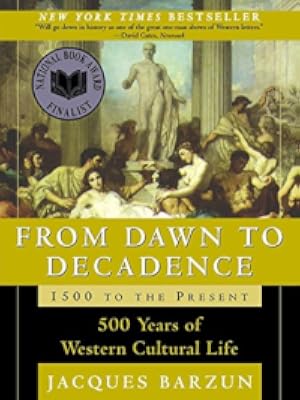
From Dawn to Decadence: 1500 to the Present: 500 Years of Western Cultural Life
by Jacques Barzun
On This Page
Description
Showcases the triumphs and defeats of five hundred years of Western cultural history, highlighting the contributions of women and arguing that decadence is required in order to spark creativity in the next era.Tags
Recommendations















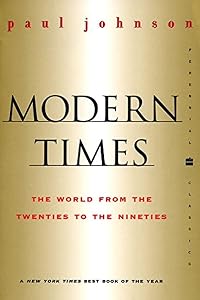

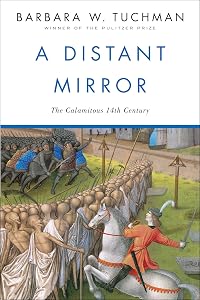




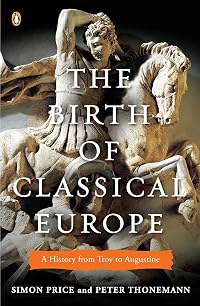
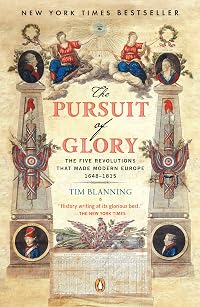



Member Recommendations

MusicMom41 Guns, Germs and Steel makes a great “prelude’ to Barzun’s book From Dawn to Decadence.
12
Member Reviews
This book is a long read on the cultural history of the west, requiring nearly as much time to think about what the author says as to read it. It is one of the most insightful and thought-provoking books I've ever read. I had post-it flags throughout marking passages whose ideas I wanted to discuss with my husband. It is not a book I could read with distractions or when tired, and so it took me a while to finish, what with all the kids and all the work making me almost always distracted, tired, or both. After finishing, I'm actually a little sad to part from Jacques Barzun and his sharp mind and sharp tongue. Despite my long to-read list and the length and density of this book and the challenge of finding the time and mental energy for show more it, I fully expect to return to it, to reread parts or the whole, when I want to spend some time sitting around with a great mind with no patience for muddled thinking and intellectual laziness. show less
Barzun’s swan-song, which consists of 800+ pages of historical information, interesting quotes, anecdotes, insights, and reflections, is the literary equivalent of sitting at the feet of a great master and venerable elder. The wide swath of knowledge encompassed in this book, including such varied aspects of Western culture as ballet, opera, Dadaism, mystery crime novels, and hippies, and the balanced bird’s eye view and authoritative approach taken to each is indicative of the long life (now over 100 years) of a penetrating and curious mind.
Barzun’s style throughout the book is nearly conversational as he discusses the various topics, people, and ideas we encounter along the way. He takes us down side trails that connect show more seemingly disparate elements of culture, such as Bach and the rise of National Socialism or street gangs and Andy Warhol, bringing together facts that are normally compartmentalized, separated, and sorted, and giving us, throughout, his own knowledgeable assessment. And, in the end, he offers us his thoughts on the current state of Western Civilization, what we have become and what he believes will become of us.
For all of this, I think any attentive disciple (that is, reader) cannot help but whisper “thank you” as he closes the book, even after a second or third read of it, and to wish, hope, and pray, no matter the odds against, that Barzun could have another 100 years. show less
Barzun’s style throughout the book is nearly conversational as he discusses the various topics, people, and ideas we encounter along the way. He takes us down side trails that connect show more seemingly disparate elements of culture, such as Bach and the rise of National Socialism or street gangs and Andy Warhol, bringing together facts that are normally compartmentalized, separated, and sorted, and giving us, throughout, his own knowledgeable assessment. And, in the end, he offers us his thoughts on the current state of Western Civilization, what we have become and what he believes will become of us.
For all of this, I think any attentive disciple (that is, reader) cannot help but whisper “thank you” as he closes the book, even after a second or third read of it, and to wish, hope, and pray, no matter the odds against, that Barzun could have another 100 years. show less
During the May 68 uprising in France, a phrase that was written on a wall somewhere read: "Professors, you make us grow old." That moment in history is one of my favorites to read about, but the above quote never totally clicked with me. Now that I've read this book by Jacques Barzun, a stuffy liberal studies professor, I totally get it.
Seriously, this guy has such a wettie for western civ. Also, he thinks "decadence" is an insult, wtf? My favorite part was his comparing the (at the time) recent influx of privilege politics into the academy to the Inquisition. Or, even better, maybe it was the European witchhunts, I don't remember. Either way...totally bro, you're such a victim.
Seriously, this guy has such a wettie for western civ. Also, he thinks "decadence" is an insult, wtf? My favorite part was his comparing the (at the time) recent influx of privilege politics into the academy to the Inquisition. Or, even better, maybe it was the European witchhunts, I don't remember. Either way...totally bro, you're such a victim.
I read this several years ago, while Barzun trod the earth. Most of it is worth five stars. But there is a serious flaw. Barzun had no clue how science works. His anti-science attitude was sadly misdirected. His declared beef was in fact against a caricature of science and scientists, a cartoon fancy held by some people who haven't any idea how, for example, a radio works beyond the knobs on the front. Barzun appeared to be one of them. Thus his proper argument lay with his own bias; a paradox that he failed to divine.
Or perhaps he painted himself into a corner by his pretentious choice of book title and preferred a willful ignorance about the enormous value created throughout the 20th century in many domains. That effect may explain show more the poor reaction of many goodreads reviewers to the last part of the book.
I don't recall Barzun giving any recognition to scientists or science, or noticing the influence of science upon events and ideas, or of events and ideas upon science. An excellent remedy is "The Western Intellectual Tradition, from Leonardo to Hegel" by Jacob Bronowski and Bruce Mazlish, a balanced and very readable survey of the same subject by eminent scholars, solid five stars.
https://www.goodreads.com/book/show/455391.The_Western_Intellectual_Tradition_fr... show less
Or perhaps he painted himself into a corner by his pretentious choice of book title and preferred a willful ignorance about the enormous value created throughout the 20th century in many domains. That effect may explain show more the poor reaction of many goodreads reviewers to the last part of the book.
I don't recall Barzun giving any recognition to scientists or science, or noticing the influence of science upon events and ideas, or of events and ideas upon science. An excellent remedy is "The Western Intellectual Tradition, from Leonardo to Hegel" by Jacob Bronowski and Bruce Mazlish, a balanced and very readable survey of the same subject by eminent scholars, solid five stars.
https://www.goodreads.com/book/show/455391.The_Western_Intellectual_Tradition_fr... show less
Finished May 14, 2005
I would give this 100 stars if I were able to! I choose this as one of "the 5 books I would take to a desert island."
I intended, when began this, to keep it in pristine condition, so I did not underline or write marginalia for the first 30 pages or so.
But it quickly became apparent that this was an extraordinary book, and now its condition shows how deeply I have engaged with and enjoyed it.
It is obviously the culmination of a life devoted to the study of, and thinking about, western cultural life. As that is my chief intellectual interest, and Mr. Barzun has a lively mind, a clear style and a refreshingly astringent mode of commentary, this was an undliluted joy.
He has obviously read EVERYTHING, and most show more likely in the original languages, so his suggestions for reading and his commenary on "the classics" are also a delight.
He builds slowly and relentlessly to his conclusion, and, as it resonated with me, I found this to be a masterpiece. I read it piecemeal, over a period of 2-3 years. Now that I see it as a whole, I intend to go back and read it straight through.
This is a masterwork by a 90-year-old who has an incredibly long view.
I loved it! show less
I would give this 100 stars if I were able to! I choose this as one of "the 5 books I would take to a desert island."
I intended, when began this, to keep it in pristine condition, so I did not underline or write marginalia for the first 30 pages or so.
But it quickly became apparent that this was an extraordinary book, and now its condition shows how deeply I have engaged with and enjoyed it.
It is obviously the culmination of a life devoted to the study of, and thinking about, western cultural life. As that is my chief intellectual interest, and Mr. Barzun has a lively mind, a clear style and a refreshingly astringent mode of commentary, this was an undliluted joy.
He has obviously read EVERYTHING, and most show more likely in the original languages, so his suggestions for reading and his commenary on "the classics" are also a delight.
He builds slowly and relentlessly to his conclusion, and, as it resonated with me, I found this to be a masterpiece. I read it piecemeal, over a period of 2-3 years. Now that I see it as a whole, I intend to go back and read it straight through.
This is a masterwork by a 90-year-old who has an incredibly long view.
I loved it! show less
This was a book I picked up almost at random while I was looking for something else. Up until then, pursuing my own European cultural history hadn't interested me particularly much at all. Barzun's book---which is the culmination of a lifetime of scholarship---is an inspiring invitation to the great ascent and current decline of the West's history and culture. Its innovative use of notes and capitalized key words make the threads of a very complicated story easy to follow. His writing style is clear, and his candid, well informed judgements make the story fascinating. It is like having a private audience with a brilliant, impossibly well-read man who effortlessly rattles off perspective and insight. I read this about 4 years ago and the show more "catching up" it inspired me to do on the great books continues today; it is one of the books I come back to often as I try to put something else I've read into perspective. I have come to disagree with him on some issues (for some reason, he's not totally on-side with Darwin), but reading his opinions is always worthwhile. My only quibble is the unsatisfyingly strange ending, but this is a minor complaint after the rest of the book. show less
This is a truly amazing compilation of everything you want to know about the past 500 years of western culture. The unique format makes it far less than dry. Barzun has opinions and doesn't shy away from expressing them, but he does it in a way that is informative rather than otherwise. His references have led me to many other sources that I would not ordinarily have known about.
Members
- Recently Added By
Lists

BEST BOOKS TO UNDERSTAND XX CENTURY'S HISTORY
63 works; 3 members

Non-Fiction Worth Reading
1,016 works; 263 members

r/AskHistorians' Recommended Books
1,068 works; 19 members

2021 Long Reads
3 works; 1 member

Ten books that most shaped your view of history
91 works; 12 members

Europe
205 works; 6 members

Literary Theory and Criticism: What Happens and Why
37 works; 5 members

Mind Expanding Books by hackerkid
581 works; 8 members

My List
302 works; 1 member
Author Information

Jacques Barzun was born in Créteil, France on November 30, 1907. He came to the United States in 1920 and graduated magna cum laude from Columbia University in 1927. Following graduation, he joined Columbia's faculty as an instructor while continuing his studies in graduate school there, receiving a master's degree in 1928 and a doctorate in show more French history in 1932. He became a full professor in 1945, was dean of graduate faculties from 1955 to 1958, and dean of faculties from 1958 to 1967. He retired from Columbia University in 1975. He was a historian and cultural critic. The core of his work was the importance of studying history to understand the present and a fundamental respect for intellect. Although he wrote on subjects as diverse as detective fiction and baseball, he was especially known for his many books on music, nineteenth-century romanticism and education. His works include Darwin, Marx and Wagner: Critique of a Heritage; Romanticism and the Modern Ego; The House of Intellect; Race: A Study in Superstition; Simple and Direct: A Rhetoric for Writers; A Stroll with William James; The Culture We Deserve; and From Dawn to Decadence. He died on October 25, 2012 at the age of 104. (Bowker Author Biography) show less
Some Editions
Awards and Honors
Work Relationships
Common Knowledge
- Canonical title*
- From Dawn to Decadence
- Original title
- From Dawn to Decadence: 500 Years of Western Cultural Life: 1500 to the Present
- Alternate titles
- From Dawn to Decadence: 1500 to the Present: 500 Years of Western Cultural Life (Cover/Spine title) (Cover/Spine title); From Dawn to Decadence: Five Hundred Years of Western Cultural Life: Fifteen Hundred to the Present; From Dawn to Decadence: 500 Years of Western Cultural Life--1500 to the Present; From Dawn to Decadence: 500 Years of Western Cultural Life, 1500 to the Present
- Original publication date
- 2000
- People/Characters
- Desiderius Erasmus (c.1469-1536); Petrarch (Francesco Petrarca, 1304-1374); Charles V, Holy Roman Emperor; François I, King of France; Michel de Montaigne; William Shakespeare (show all 27); Torquato Tasso; Francis Bacon; Blaise Pascal; François Fénelon (François de Salignac de La Mothe-Fénelon); Sebastien Vauban; Denis Diderot; Johann Sebastian Bach; Beaumarchais; Johann Wolfgang von Goethe; Samuel Johnson; Wolfgang Amadeus Mozart; Napoleon Bonaparte; Lord Byron; Sydney Smith; Florence Nightingale; Walter Bagehot; Oscar Wilde; Samuel Butler II; Oliver Wendell Holmes, Sr.; William James; Marsilio Ficino
- Important places
- Florence, Tuscany, Italy; Rome, Italy; Paris, France
- Epigraph
- Mankind does nothing save through initiatives on the part of inventors, great or small, and imitation by the rest of us Individuals show the way, set the patterns. The rivalry of the patterns is the history of the world. - Wi... (show all)lliam James (1908)
- Dedication
- To All Whom It May Concern
- First words
- The Modern Era begins, characteristically, with a revolution.
- Quotations
- How a revolution erupts from a commonplace event - tidal wave from a ripple - is cause for endless astonishment. . . . ardent youths full of hope as they catch the drift of the idea, rowdies looking for fun, and characters wi... (show all)th a grudge. Cranks and tolerated lunatics come out of houses, criminals out of hideouts, and all assert themselves.
The "findings" [of scientism] have inspired policies affecting daily life that were enforced with the same absolute assurance as earlier ones based on religion.
This opposition to freedom of thought must, according to that very thought, be tolerated, thus creating a general lack of direction that a dictator will supply.
Providence, like predestination, lifts the burden of responsibility from the individual, as does their equivalent today: scientific and psychological determinism eliminates responsibility for bahavior, crime included.
What the journalists of every type see as their proper task is to form, with the help of rumor and current prejudice, what is called public opinion.
. . . great institutions are undone as much by their presumable guardians as by their enemies.
No machinery existed for the purpose [of changing the structure of government]; and given this difficulty, the more despotic the ruler the greater the likelihood of change - provided he made the [sanctioned propaganda source]... (show all) his bedside book.
What is preferable [to the savage state] when society and property have become established and the inequality of talents is revealed, is that ability should be rewarded for the advantage of the community. . . . when in time w... (show all)ealth and rank no longer correspond to merit, the disparity becomes an injustice and leads to instability.
It is logical that this century's taste for aberrations, which it sees as a norm previously obscured by prejudice, have made of De Sade's doings and writings "an important moment in the history of ideas and of literature."
The 19th- and 20th-century religion of art originates in this period and Mme de Staël is, with her contemporary Chateaubriand, one of the prime apostles.
. . . to replace by fiat one set of [legal and social] forms with another, thought up by some improver, no matter how intelligent, ends in disaster.
So close is sexuality to politics that nearly all revolutions and social utopias begin by decreeing free love and then turn puritanical when the leaders see that license undermines authority.
A movement in thought or art produces its best work during the uphill fight to oust the enemy; that is, the previous thought or art. Victory brings on imitation and ultimately Boredom.
. . . compassion easily becomes a selfish pleasure fostering self-righteousness. It requires a constant supply of the poor and the weak, instead of encouraging the healthful and self-reliant.
The blow that hurled the modern world on its course of self-destruction was the Great War of 1914-18.
When the nation's history is poorly taught in schools, ignored by the young, and proudly rejected by qualified elders, awareness of tradition consists only in wanting to destroy it.
The point at which good intentions exceeded the power to fulfill them marked for the culture the onset of decadence.
Individuals of ordinary talent or glibness were encouraged to become professionals and thereby doomed to disappointment; and too many others, with just enough ability to get by, contributed to the lowering of standards and th... (show all)e surfeit of art.
Fraud was the sport of capable minds and lofty souls who wanted to rise above commerce and make-believe. . . . codes of prefessional ethics had to be written and rewritten to cover new offences. Simpler kinds of cheating wer... (show all)e popular among university students . . .
The turn of the [20th] century was a turning indeed; not an ordinary turning "point," but rather a turntable on which a whole crowd of things facing one way revolved till they faced the opposite way. - Last words
- (Click to show. Warning: May contain spoilers.)But the preceding survey of demotic life and times can be chronologically situated and described as
A View from New York around 1995 - Blurbers
- Safire, William; McNeill, William H.; Mallaby, Sebastian; Cooke, Alistair; Green, Peter; Lukacs, John (show all 22); Gross, John; Fadiman, Anne; Himmelfarb, Gertrude; Silber, John; Russell, John; Schorske, Carl; Bentley, Eric; Annan, Noel; Ravitch, Diane; Meyerson, Martin; Tolson, Jay; Scialabba, George; Greenberg, Mike; Skube, Michael; Trachtenberg, Stanley; Losos, Joseph
- Original language
- English
*Some information comes from Common Knowledge in other languages. Click "Edit" for more information.
Classifications
Statistics
- Members
- 4,106
- Popularity
- 3,779
- Reviews
- 42
- Rating
- (4.10)
- Languages
- 6 — Dutch, English, French, Italian, Portuguese, Spanish
- Media
- Paper, Audiobook, Ebook
- ISBNs
- 20
- ASINs
- 17