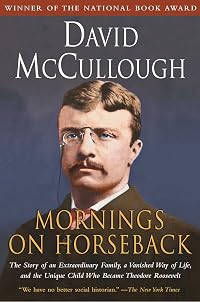
Mornings on Horseback: The Story of an Extraordinary Family, a Vanished Way of Life and the Unique Child Who Became Theodore Roosevelt
by David McCullough
On This Page
Description
The National Book Award–winning biography that tells the story of how young Teddy Roosevelt transformed himself from a sickly boy into the vigorous man who would become a war hero and ultimately president of the United States, told by master historian David McCullough.Mornings on Horseback is the brilliant biography of the young Theodore Roosevelt. Hailed as "a masterpiece" (John A. Gable, Newsday), it is the winner of the Los Angeles Times 1981 Book Prize for Biography and the National show more Book Award for Biography. Written by David McCullough, the author of Truman, this is the story of a remarkable little boy, seriously handicapped by recurrent and almost fatal asthma attacks, and his struggle to manhood: an amazing metamorphosis seen in the context of the very uncommon household in which he was raised.
The father is the first Theodore Roosevelt, a figure of unbounded energy, enormously attractive and selfless, a god in the eyes of his small, frail namesake. The mother, Mittie Bulloch Roosevelt, is a Southerner and a celebrated beauty, but also considerably more, which the book makes clear as never before. There are sisters Anna and Corinne, brother Elliott (who becomes the father of Eleanor Roosevelt), and the lovely, tragic Alice Lee, TR's first love. All are brought to life to make "a beautifully told story, filled with fresh detail" (The New York Times Book Review).
A book to be read on many levels, it is at once an enthralling story, a brilliant social history and a work of important scholarship which does away with several old myths and breaks entirely new ground. It is a book about life intensely lived, about family love and loyalty, about grief and courage, about "blessed" mornings on horseback beneath the wide blue skies of the Badlands. show less
Tags
Recommendations
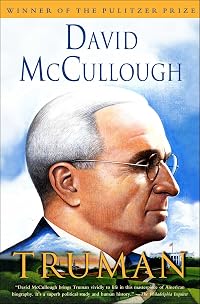
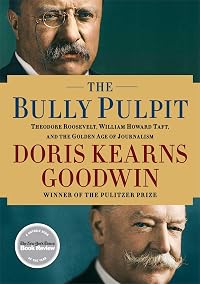
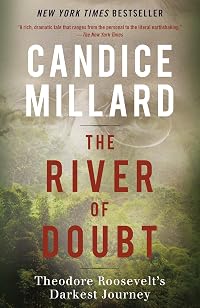
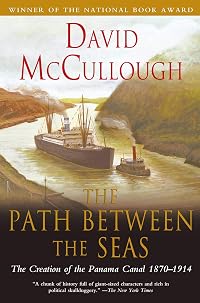

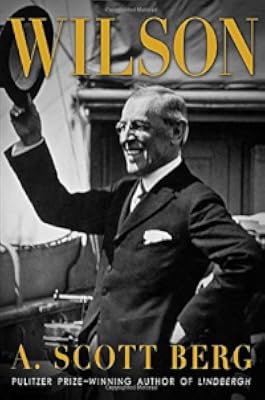
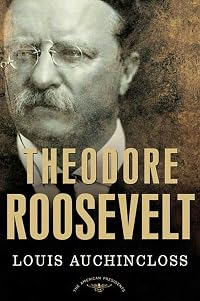
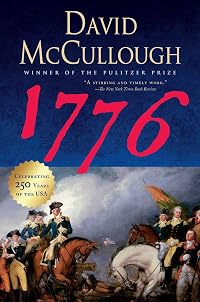
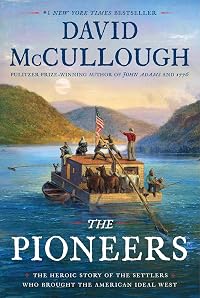
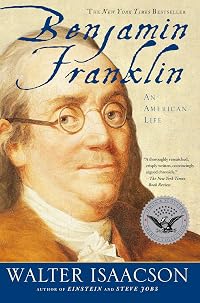
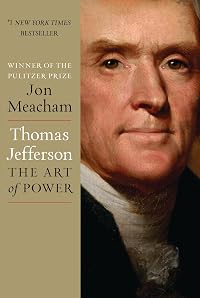
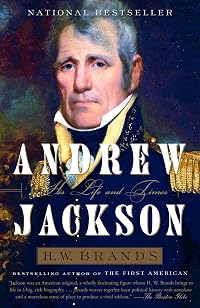
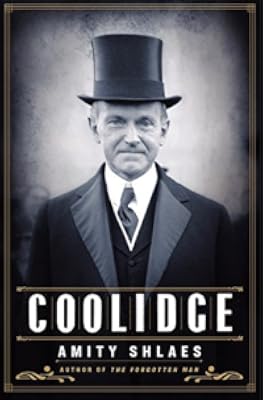
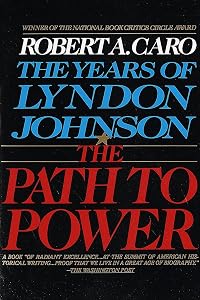
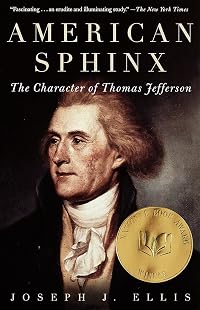
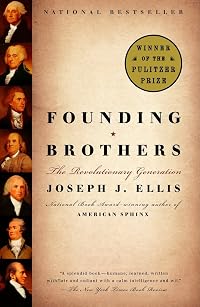
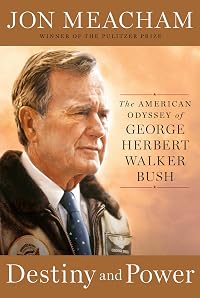
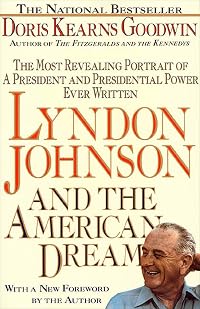

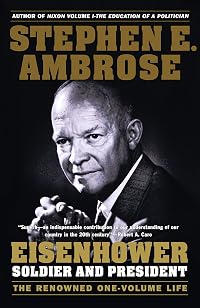

Member Recommendations
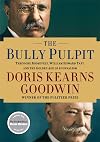
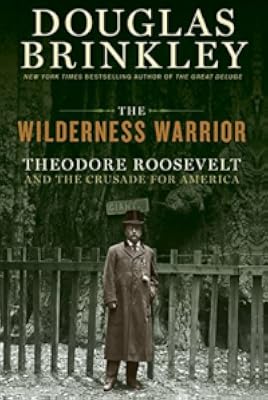
The Bully Pulpit: Theodore Roosevelt, William Howard Taft, and the Golden Age of Journalism by Doris Kearns Goodwin
rakerman The Bully Pulpit covers some biographical details of Theodore Roosevelt Jr.'s life but at a much quicker summary level than Mornings on Horseback. Mornings on Horseback starts off mostly about Theodore Roosevelt Sr., and its level of detail is sometimes excruciating.
Each book provides a different perspective on the life and character of Theodore Roosevelt Jr.; they complement each other well.
Member Reviews
McCullough turned his considerable talent for telling the stories of history to the first 27 years of Theodore Roosevelt's life...his sickly childhood, his loving family, his brief first marriage, his "ranching" days, his growth into a man of substance. It's fascinating. Politics generally bores me silly, but I even found myself engrossed in the chapter about the 1884 Chicago Republican convention, which McCullough describes as "crucial" in T.R.'s political life. Just goes to prove what a compelling writer McCullough is.
Although a frequent reader of memoirs, I’ve never been drawn to presidential ones. Recently, however, I was recently given a copy of River of Doubt: Theodore Roosevelt's Darkest Journey by Candice Millard and, aside from the personal merits of the book, I was intrigued by the enormous personality of Teddy Roosevelt. In particular, some comments in the book about TR’s childhood struggles with asthma and his drive to overcome his physical weaknesses interested me. So a natural follow-up read was Mornings on Horseback which covers the childhood and youth of TR up to the age of twenty-eight.
Winner of the National Book Award and penned by the acclaimed social historian, David McCullough, I was not surprised that the book was show more well-researched and well-written. Mornings on Horseback begins with TR’s parents, interesting people in their own right, and widens to include not only the extended Roosevelt clan, but also the ideology of an entire class of people into which TR was born. McCullough blends this social history with the personal story of a boy who could have been a brilliant natural historian and subsequent young man who strives to meet his father’s expectations, a man he idolized for his compassion and strength. Where I think McCullough goes beyond a run of the mill biography is in his analysis of how TR was both a victim and a manipulator of his asthma; his relationship with the women in his life, especially his sister, Bamie; and the effect the idea of the West had on TR’s imagination.
Although not the page turner of River of Doubt, Mornings on Horseback was an enjoyable read, especially for a novice reader of presidential memoirs. show less
Winner of the National Book Award and penned by the acclaimed social historian, David McCullough, I was not surprised that the book was show more well-researched and well-written. Mornings on Horseback begins with TR’s parents, interesting people in their own right, and widens to include not only the extended Roosevelt clan, but also the ideology of an entire class of people into which TR was born. McCullough blends this social history with the personal story of a boy who could have been a brilliant natural historian and subsequent young man who strives to meet his father’s expectations, a man he idolized for his compassion and strength. Where I think McCullough goes beyond a run of the mill biography is in his analysis of how TR was both a victim and a manipulator of his asthma; his relationship with the women in his life, especially his sister, Bamie; and the effect the idea of the West had on TR’s imagination.
Although not the page turner of River of Doubt, Mornings on Horseback was an enjoyable read, especially for a novice reader of presidential memoirs. show less
It took me two weeks to read through this book, but not because it was dull. Quite the contrary--I found it much more compelling than I expected. There's a reason this book is still so highly acclaimed and reviewed after thirty years. McCullough creates an interesting narrative, but the source material helps. The Roosevelts are just plain quirky and interesting. Anyone who delves into research knows original source material is best, and the Roosevelt family kept an incredible number of diaries and letters. Teddy, from the age of ten, kept diaries. As an adult, he wrote many books and was estimated to have written over 150,000 letters. Many of those are cited.
Teddy Roosevelt is known for being an asthmatic child, an athletic huntsman as show more an adult, as a Rough Rider. As a boy he longed for anthropological adventures. He was hunting and doing his own taxidermy before he was a teenager. He was extremely knowledgeable about birds and other wildlife and it's easy to see why as President he did so much to expand the National Park system and establish conservatories. His family was incredibly wealthy but also very close. His older sister, Bamie, was always crippled; other families might have sent her away, but instead the entire family worked around her needs and she became an elderly family matriarch known for her keen mind. Teddy was also tended to by both parents as he suffered from terrible asthma. He wasn't simply handed off to servants. The family lived and suffered together, and survived. His mother was a Georgia girl who became a New York City socialite; during the Civil War, she waited until her pro-Union husband was out of town, and she made care packages to send to her brothers serving in the Confederacy.
I could go on and on. There were so many intriguing stories within stories. I really enjoyed the childhood years the most. When Teddy starts into politics, he's harder to relate to. He suffers the terrible blow of losing his beloved mother and his wife on the same day from different illnesses, and just four days after his daughter is born. After that, he retreats to the Bad Lands where he earns respect as a genuine cowboy. I really wish the book had gone on another decade, for my own selfish research purposes, but it ends at a good point: his return to New York City, to a new marriage, and a return to politics.
To my own surprise, I'm left wanting to know more about Teddy Roosevelt. I'll be seeking out more books. show less
Teddy Roosevelt is known for being an asthmatic child, an athletic huntsman as show more an adult, as a Rough Rider. As a boy he longed for anthropological adventures. He was hunting and doing his own taxidermy before he was a teenager. He was extremely knowledgeable about birds and other wildlife and it's easy to see why as President he did so much to expand the National Park system and establish conservatories. His family was incredibly wealthy but also very close. His older sister, Bamie, was always crippled; other families might have sent her away, but instead the entire family worked around her needs and she became an elderly family matriarch known for her keen mind. Teddy was also tended to by both parents as he suffered from terrible asthma. He wasn't simply handed off to servants. The family lived and suffered together, and survived. His mother was a Georgia girl who became a New York City socialite; during the Civil War, she waited until her pro-Union husband was out of town, and she made care packages to send to her brothers serving in the Confederacy.
I could go on and on. There were so many intriguing stories within stories. I really enjoyed the childhood years the most. When Teddy starts into politics, he's harder to relate to. He suffers the terrible blow of losing his beloved mother and his wife on the same day from different illnesses, and just four days after his daughter is born. After that, he retreats to the Bad Lands where he earns respect as a genuine cowboy. I really wish the book had gone on another decade, for my own selfish research purposes, but it ends at a good point: his return to New York City, to a new marriage, and a return to politics.
To my own surprise, I'm left wanting to know more about Teddy Roosevelt. I'll be seeking out more books. show less
Fantastic book about the early life of Theodore Roosevelt. It dives into the many interesting aspects of TR's upbringing that make a fascinating story regardless of the fact that he eventually became a well loved POTUS. This book does not even touch on the most interesting parts of TR's life, but leaves you in a situation that you can see where he came from (which is what the author intended).
McCullough always researches extremely well and it is no exception with this book. Stories from his life are not just told, but dissected from the many different viewpoints available and checked for veracity. Reading a McCullough book is to be taken back in time to when the history happened. For example, McCullough expounds on the history of asthma show more and what was currently known during TR's youth and how as a rich child TR's parents would spend thousands of dollars to try to combat the disease. show less
McCullough always researches extremely well and it is no exception with this book. Stories from his life are not just told, but dissected from the many different viewpoints available and checked for veracity. Reading a McCullough book is to be taken back in time to when the history happened. For example, McCullough expounds on the history of asthma show more and what was currently known during TR's youth and how as a rich child TR's parents would spend thousands of dollars to try to combat the disease. show less
This is my 2nd time taking in this early "morning" biography about the formation of the man that would become president. This focuses on a struggle with asthma (and its apparently psychosomatic dimension among children of that era) as well as his affinity for the outdoors, hunting, being a "ranchman" (and definitely not a "cowboy"). Lot's of family correspondence went into this pre-presidential biography. Theodore Roosevelt's life is considered into the 1890s, before he became the 33rd Governor of New York. His political career and more is quickly summarized in an epilogue.
Mornings on Horseback seems to have cemented McCullough's style and reputation as the dean of American historians. This book follows the young Theodore Roosevelt, from his ancestors to the start of his second marriage in 1886. It is, as the phrase goes, "a life intensely lived." The Roosevelt were New York aristocracy, and young Teddy was coddled by privilege; servants, European tours, the best of everything. At the same time, he exerted maximum effort, long marches and rides through any wilderness he could find, hunting and naturalism all bundled up into one, actually working at Harvard and in the New York legislature. Simultaneously, this was also a family stricken by illness and sudden death. Loved ones fall alarmingly fast, and show more Teddy was suffered from asthma for much of his childhood before finding a psychological cure (in McCollough's estimation).
McCullough hasn't yet figured out how to transmits the complexities of 19th century politics, and the book flags towards the end with the famous ranch in the Dakota Badlands. This is a great portrait of the boy, and excels particularly in showing Teddy in college, but it dearly feels like volume one of a larger project never finished. show less
McCullough hasn't yet figured out how to transmits the complexities of 19th century politics, and the book flags towards the end with the famous ranch in the Dakota Badlands. This is a great portrait of the boy, and excels particularly in showing Teddy in college, but it dearly feels like volume one of a larger project never finished. show less
Brilliantly written. McCullough really gets to the heart of what made Teddy Teddy. Some wonderful insights into his personality and the shaping of the man. I still can't get over the image of the patrician Roosevelt investigating the slums and cigar industry with Samuel Gompers. Because Teddy was so easy to caricature, many of us
do not get beyond the carton image of him tugging the boat through the Panama Canal or walking giant like with his "big Stick." As one of our most dynamic and complex presidents he deserves better and Mr McCullough
delivers!
Now please, please, please write a biography of James Madison, Mr. McCullough.
do not get beyond the carton image of him tugging the boat through the Panama Canal or walking giant like with his "big Stick." As one of our most dynamic and complex presidents he deserves better and Mr McCullough
delivers!
Now please, please, please write a biography of James Madison, Mr. McCullough.
Members
- Recently Added By
Lists

Literature of Honor for Boys
91 works; 3 members

al.vick-parents books
301 works; 1 member
Author Information

58+ Works 64,216 Members
David McCullough was born in Pittsburgh, Pennsylvania on July 7, 1933. He received a bachelor's degree in English literature from Yale University in 1955. After graduation, he moved to New York City and worked as a trainee at Sports Illustrated. He later worked as a writer and editor for the United States Information Agency, in Washington, D.C., show more including a position at American Heritage. His first book, The Johnstown Flood, was published in 1968. His other books include 1776, Brave Companions, The Great Bridge, and The Greater Journey: Americans in Paris. He received the Pulitzer Prize twice for Truman and John Adams and the National Book Award twice for The Path Between the Seas: The Creation of the Panama Canal and Mornings on Horseback. He also won two Francis Parkman Prizes, the Los Angeles Times Book Award, and New York Public Library's Literary Lion Award. Two of his books, Truman and John Adams, have been adapted into a television movie and mini-series, respectively, by HBO. In December 2006, he received the Presidential Medal of Freedom. He also made the New York Times Best Seller List in 2015 with his book The Wright Brothers, and in 2017 with The American Spirit: Who We Are and What We Stand For. (Bowker Author Biography) David McCullough is a writer, historian, lecturer, & teacher. He has received the Pulitzer Prize for "Truman", as well as the Francis Parkman Prize, & the "Los Angeles Times" Book Award. He is also a two-time winner of the National Book Award, for history & for biography. He lives in Massachusetts. (Publisher Provided) show less
Some Editions
Awards and Honors
Awards
Distinctions
Work Relationships
Is contained in
Common Knowledge
- Canonical title
- Mornings on Horseback: The Story of an Extraordinary Family, a Vanished Way of Life and the Unique Child Who Became Theodore Roosevelt
- Original publication date
- 1981
- People/Characters
- Theodore Roosevelt; Charles Francis Adams; Chester A. Arthur; Caroline Schermerhorn Astor; Martha Cowdin Bacon; Robert Bacon (show all 77); Evelyn King Baker; Albert S. Bickmore; Poultney Bigelow; James G. Blaine; Charles Loring Brace; Theodore Bronson; Irvine Bulloch; James Dunwoody Bulloch; Martha Roosevelt; Edith Kermit Carow Roosevelt; Joseph H. Choate; Grover Cleveland; Roscoe Conkling; George William Curtis; Richard Henry Dana; William E. Dodge, Jr.; Wilmot Dow; Charles Dunbar; Howard Eaton; George Franklin Edmunds; Charles W. Eliot; Daniel Stuart Elliott; Maud Elliott; James A. Garfield; E. L. Godkin; Jay Gould; Gracie Anna Bulloch; James K. Gracie; Ulysses S. Grant; John Hay; Abram Hewitt; Isaac Hunt; Henry James; William James; Tom King; Gregor Lang; Lincoln Lang; George Cabot Lee; Rose Lee; Henry Cabot Lodge; John A Logan; Seth Low; James Russell Lowell; William McKinley; Francis Merriam; Bill Merrifield; Henry Minot; Marquise de Mores; Antoine-Amedee-Marie-Vincent Manxa de Vallombrosa, Marquis de Mores; J. Pierpont Morgan; Michael C. Murphy; Frederick Law Olmsted; William O'Neil; Thomas C. Platt; Mayne Reid; Frederic Remington; Corinne Roosevelt Robinson; Douglas Robinson; Alice Roosevelt; Anna Hall Roosevelt; Cornelius Roosevelt; Cornelius Van Roosevelt; Eleanor Roosevelt; Elizabeth Ellis Roosevelt; Elliott Roosevelt; Emlen Roosevelt; Franklin Delano Roosevelt; James Alfred Roosevelt; Margaret Barnhill Roosevelt; Robert Barnwell Roosevelt; Sara Delano Roosevelt
- Important places
- American Museum of Natural History, New York, New York, USA; Chicago, Illinois, USA; Cincinnati, Ohio, USA; Harvard University; Hyde Park, New York, USA; Long Branch, New Jersey, USA (show all 13); Massachusetts, USA; Medora, Dakota Territory, USA; New Jersey, USA; New York, New York, USA; Ohio, USA; Oyster Bay, New York, USA; Panama Canal, Panama
- Dedication
- For Melissa
- First words
- In the year 1869, when the population of New York City had reached nearly a million, the occupants of 28 East 20th Street, a five-story brownstone, numbered six, exclusive of the servants.
- Last words
- (Click to show. Warning: May contain spoilers.)Friday night, after the horse show, their last night before sailing, Bamie and he worked together until nearly daybreak addressing the last of the engagement announcements.
Classifications
- Genres
- Biography & Memoir, History, General Nonfiction, Nonfiction
- DDC/MDS
- 973.9110924 — History & geography History of North America United States 1901- World Wars and Depression Era (1901-1953) Theodore Roosevelt (1901-1909) Panama Canal Construction, Pure Food and Drug Act
- LCC
- E757 .M45 — History of the United States United States Twentieth century Theodore Roosevelt's administrations,
- BISAC
Statistics
- Members
- 3,313
- Popularity
- 5,128
- Reviews
- 75
- Rating
- (4.13)
- Languages
- English
- Media
- Paper, Audiobook, Ebook
- ISBNs
- 22
- ASINs
- 27