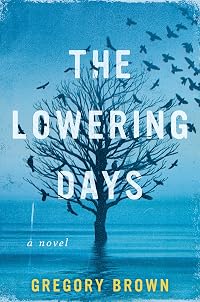
The Lowering Days: A Novel
by Gregory Brown
On This Page
Description
"In The Lowering Days Gregory Brown gives us a lush, almost mythic portrait of a very specific place and time that feels all the more universal for its singularity. There's magic here." —Richard Russo, Pulitzer Prize–winning author of Empire Falls and Chances AreA promising literary star makes his debut with this emotionally powerful saga, set in 1980s Maine, that explores family love, the power of myths and storytelling, survival and environmental exploitation, and the ties between show more cultural identity and the land we live on
If you paid attention, you could see the entire unfolding of human history in a story . . .
Growing up, David Almerin Ames and his brothers, Link and Simon, believed the wild patch of Maine where they lived along the Penobscot River belonged to them. Running down the state like a spine, the river shared its name with the people of the Penobscot Nation, whose ancestral territory included the entire Penobscot watershed—the land upon which the Ames family eventually made their home.
The brothers' affinity for the natural world derives from their iconoclastic parents, Arnoux, a romantic artist and Vietnam War deserter who builds boats by hand, and Falon, an activist journalist who runs The Lowering Days, a community newspaper which gives equal voice to indigenous and white issues.
But the boys' childhood reverie is shattered when a bankrupt paper mill, once the Penobscot Valley's largest employer, is burned to the ground on the eve of potentially reopening. As the community grapples with the scope of the devastation, Falon receives a letter from a Penobscot teenager confessing to the crime—an act of justice for a sacred river under centuries of assault.
For the residents of the Penobscot Valley, the fire reveals a stark truth. For many, the mill is a lifeline, providing working class jobs they need to survive. Within the Penobscot Nation, the mill is a bringer of death, spewing toxic chemicals and wastewater products that poison the river's fish and plants.
As the divide within the community widens, the building anger and resentment explodes in tragedy, wrecking the lives of David and those around him.
Evocative and atmospheric, pulsating with the rhythms of the natural world, The Lowering Days is a meditation on the flow and weight of history, the power and fragility of love, the dangerous fault lines underlying families, and the enduring land where stories are created and told.
. show less
Tags
Recommendations
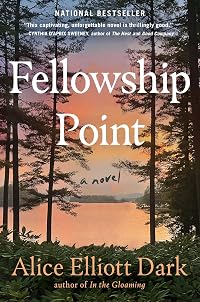
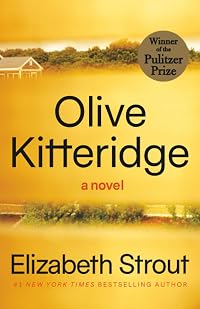
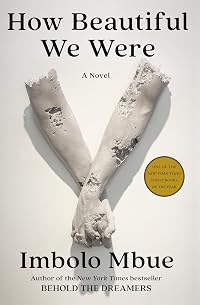
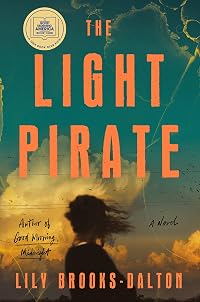







Member Reviews
Debut novel set in Maine in the 80s-90s when the environmental impact of the textile mills was coming to light. Layers of story about connection to the land, generational intrigue, indigenous rights, and most of all, love. In telling the story years later the narrator David reflects: "As a child in a small community, you can feel the fault lines running beneath your family and other families. These invisible tension wires tie one adult to another. You tiptoe around them. You step over them. You don’t know why they are there, only that they are there, and that they are terribly dangerous things. You realize it only takes a few wrong steps to crack open the earth. Then what’s to keep it from swallowing everyone you love?" (20) Two show more families live adjacent to each other in a wooded seclusion bordered by the Penobscot River and the sea. The Ames family: Arnoux and Falon, and three boys: Simon, Link and David have a history of activism and social justice. Arnoux is a Vietnam deserter and now a boat builder and Falon runs the town newspaper, "The Lowering Days". Despite his desertion, Arnoux is respected and appreciated for his craft and his contributions to the town. Nearby is the home of Lyman Creel, a lobsterman who turned his back on his wealthy mill family, his wife Grace, a social worker and Falon's best friend and their two kids Galen and Wren. Despite his bravery in defying his family, and being a decorated Vietnam Vet, Lyman is feared and disliked. To complicate things further, in high school, Lyman was in love with Falon and so was another boy named Billy Jupiter, who tragically fell from a cliff when the three of them were together. Falon could never forgive Lyman even though he was not to blame. Also, David and Wren are involved in high school. These tensions simmered and stayed contained until someone started the deserted mill on fire in an act of environmental protest. Enter Molly Greenwind, a 14-year old and a member of the Penobscot Nation., and the firestarter. She sends a manifesto to Falon's 'Lowering Days' to be printed and then she and her father Adam go on the run. This starts to weave a tangled web of alliances in the town and also starts to unravel the Creel and Ames families. When some of Lyman's traps are sabotaged by Link and David, the rift turns violent and openly pits the two fathers against each other, though the wives and children stay friends. A tragic accident is the final break and shows the futility of revenge and grudges. There are beautiful myths and mysticism included and the land and sea are almost characters in their own way. On a larger scale, this book is about healing - the rifts of relationships, the abuses on nature, the inner doubts that plague people based on their choices, and the community as a whole. show less
Beautifully written, this tells intertwined stories of families along Penobscot Bay, many of indigenous heritage. Woven throughout are the storytelling and legends of the Native Americans, many reflecting a spiritual one with nature. This is not a fast read; it needs to be savored and reflected upon.
This book wasn't what I was expecting, but it was still an enjoyable read. I quickly became invested, though it took a few days to read. There were two main storylines, which was a bit off-putting at first. I'd get sucked into one, and the other would come in. Both were extremely interesting, but it was difficult for me to focus on both at once.
There were a lot of characters, which got confusing at times, but I became very invested in some of them. I loved Falon, and I'd have loved to see more of her. The characters were well-written, though the main narrator felt more mature than he should've been. I really liked that every character had a flaw, as it made things feel more realistic.
The pacing was a little slow, but overall, it was a show more beautiful book. I liked Gregory's writing style, and I'm looking forward to more books by him.
Disclaimer: I won a gifted copy of this book via Goodreads. This did not influence my opinion in any way. show less
There were a lot of characters, which got confusing at times, but I became very invested in some of them. I loved Falon, and I'd have loved to see more of her. The characters were well-written, though the main narrator felt more mature than he should've been. I really liked that every character had a flaw, as it made things feel more realistic.
The pacing was a little slow, but overall, it was a show more beautiful book. I liked Gregory's writing style, and I'm looking forward to more books by him.
Disclaimer: I won a gifted copy of this book via Goodreads. This did not influence my opinion in any way. show less
A lyrical novel about families, generational love and hate, returning the land to its purpose and more in a story of three families along the Penobscot River.
Ratings
Members
- Recently Added By
Author Information
1 Work 75 Members
Classifications
Statistics
- Members
- 76
- Popularity
- 417,359
- Reviews
- 4
- Rating
- (3.83)
- Languages
- English
- Media
- Paper, Audiobook, Ebook
- ISBNs
- 7
- ASINs
- 1