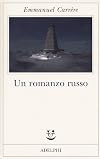
A Russian Novel
by Emmanuel Carrère
On This Page
Description
In work after work, the critically acclaimed author Emmanuel Carrère has trained his unblinking gaze on the lives of others as they fight a losing battle with that most fearsome of adversaries-the self. Now, determined to escape the bleak visions of his narratives, he takes on a film project in the heart of Russia while also embarking on a new love affair back home in Paris. But soon enough, the diversion he seeks eludes him, intimacy proves too arduous, and Carrère is left peering into show more the dark mirror of his own life.Set in Paris and Kotelnich, a small post-Soviet town, My Life as a Russian Novel traces Carrère's pursuit of two obsessions-the disappearance of his Russian grandfather and his erotic fascination with a woman he loves but cannot keep from destroying. In prose that is elegant and passionate, Carrère weaves the strands of his story into a travelogue of a journey inward. Road trip, confession, erotic tour de force-this fearless reckoning illuminates the schemes we devise to evade ourselves and the inevitable payment they exact. show lessTags
Recommendations














Member Reviews
"Ti ho fatta soffrire ma non ti ho mai mentito, non comincerò adesso."
È con questa frase dal vago sapore Fabiovoliano che ho deciso di interrompere la lettura di "La vita come un romanzo russo". Non ne potevo più, avevo rimandato questa decisione più di una volta ma alla fine mi sono deciso.
Per me è stato allo stesso tempo traumatico e liberatorio, come quando sul finire dell'infanzia scopri che tuo padre non è onniscente e invincibile e da quel punto in poi puoi iniziare serenamente l'adolescenza. Emmanuel Carrere infatti è il mio scrittore preferito del momento, tutte le sue opere che ho letto finora non mi sono solo piaciute, mi hanno addirittura entusiasmato. Questo romanzo invece non solo lo considero la sua opera peggiore, show more ma addirittura uno dei peggiori libri che io abbia mai letto: capirete che la situazione per me è letterariamente parecchio imbarazzante.
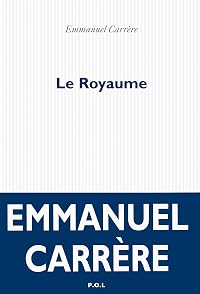
Una cosa che avevo capito sin dal suo primo libro letto (IL Regno) è che una delle caratteristiche dell'uomo Carrere era un ego spropositato. Questa cosa è talmente evidente che persino lui ci scherza, ma finchè questo ego è al servizio della storia di qualcun altro, i risultati sono incredibili. In "La Vita come un romanzo russo", invece, l'ego dell'autore è unicamente al servizio di se stesso e questo rende le cose molto meno picevoli.
Si tratta di un memoir completamente ripiegato in se stesso, lamentoso, infantile e insopportabile. Carrere si dipinge (onestamente, bisogna ammetterlo) come un piccolo uomo, un privilegiato classista e capriccioso con una maturità emotiva da scuole medie.
Questo è una delle cose brutte di essere un grande scrittore, nessuno ti dirà mai che un tuo lavoro è impubblicabile e quindi, accanto a opere bellissime, possono capitare cose come questa. Credo che persino l'Einaudi abbia provato un po di imbarazzo per il contenuto di questo libro. Infatti h cercato di spacciarlo come il racconto di un mistero che per anni ha avvelenato la famiglia dell'autore: la scoparsa e il probabile assassinio del nonno materno durante la seconda guerra mondiale. (spoiler: questa vicenda viene appena accennata solo nei primi capitoli e quasi mai più presa in considerazione) ( a meno che non lo faccia negli ultimi capitoli, ma ormai ho mollato). Non credete al retro di copertina quindi: questo libro è una lunga, penosa masturbazione egotica dell'autore. show less
È con questa frase dal vago sapore Fabiovoliano che ho deciso di interrompere la lettura di "La vita come un romanzo russo". Non ne potevo più, avevo rimandato questa decisione più di una volta ma alla fine mi sono deciso.
Per me è stato allo stesso tempo traumatico e liberatorio, come quando sul finire dell'infanzia scopri che tuo padre non è onniscente e invincibile e da quel punto in poi puoi iniziare serenamente l'adolescenza. Emmanuel Carrere infatti è il mio scrittore preferito del momento, tutte le sue opere che ho letto finora non mi sono solo piaciute, mi hanno addirittura entusiasmato. Questo romanzo invece non solo lo considero la sua opera peggiore, show more ma addirittura uno dei peggiori libri che io abbia mai letto: capirete che la situazione per me è letterariamente parecchio imbarazzante.
Una cosa che avevo capito sin dal suo primo libro letto (IL Regno) è che una delle caratteristiche dell'uomo Carrere era un ego spropositato. Questa cosa è talmente evidente che persino lui ci scherza, ma finchè questo ego è al servizio della storia di qualcun altro, i risultati sono incredibili. In "La Vita come un romanzo russo", invece, l'ego dell'autore è unicamente al servizio di se stesso e questo rende le cose molto meno picevoli.
Si tratta di un memoir completamente ripiegato in se stesso, lamentoso, infantile e insopportabile. Carrere si dipinge (onestamente, bisogna ammetterlo) come un piccolo uomo, un privilegiato classista e capriccioso con una maturità emotiva da scuole medie.
Questo è una delle cose brutte di essere un grande scrittore, nessuno ti dirà mai che un tuo lavoro è impubblicabile e quindi, accanto a opere bellissime, possono capitare cose come questa. Credo che persino l'Einaudi abbia provato un po di imbarazzo per il contenuto di questo libro. Infatti h cercato di spacciarlo come il racconto di un mistero che per anni ha avvelenato la famiglia dell'autore: la scoparsa e il probabile assassinio del nonno materno durante la seconda guerra mondiale. (spoiler: questa vicenda viene appena accennata solo nei primi capitoli e quasi mai più presa in considerazione) ( a meno che non lo faccia negli ultimi capitoli, ma ormai ho mollato). Non credete al retro di copertina quindi: questo libro è una lunga, penosa masturbazione egotica dell'autore. show less
I have never read a book quite like Carrière's [Un roman russe], the book's title leads the reader into thinking it is a novel when in fact it is an autobiography of a three year period in the life of the author. Sometimes written in the first person sometimes in the second person, with extracts from other works that Carriere had published; a letter to his mother rounds off the enterprise which also includes attempts to learn the Russian language and a lullaby to someone else's baby. The book can certainly play with the readers head and all the time this reader was wondering about how reliable a witness, is Carrière: especially when talking about the size of his cock. A well renowned author writing about himself may try and disguise show more the egoist in the process: Carrière cannot be accused of hiding his light under a bushel, as the most important person in Carrière's world is Carriere himself. This may be difficult to avoid if much of what you are writing about is an analysis of your feelings, however some readers may find this so annoying, that they cannot engage with the book, I found my patience stretched at some points, but in the end I enjoyed the journey.
There are a number of things going on in Carriere's life (if there were not the book would be a little boring). He is in a new and erotic relationship with the girl of his dreams, he is trying to come to terms with the unspoken shame in the family of his maternal grandfather, who was probably shot for collaboration with the Germans in 1944: his mother a successful politician seems to avoid any discussion on the subject. He has become interested in an Hungarian patriot who was captured by the Russians (again in 1944) and spent over 50 years in captivity before being repatriated. He travels to the village of Koltelnitch to find out more with a small team and involves himself in the life of the village, with a view of writing a book or making a film; he makes three or four trips. He has also been commissioned by the newspaper Le Monde to write a novella and he chooses to write an erotic piece based on his own experiences with his girlfriend. This unsurprisingly does not bode well with Sophie his new partner who says to him.
"It is the fault in you because you have never been capable of seeing anything, but your own point of view"
Carrière does not flinch from putting across his own point of view, which more often than not is based on his own selfish needs. He does not ask for the reader's sympathy, as he explains the way he feels during his tempestuous relationship with his partner and his difficult relationship with his family.
The sections of the book are interweaved skilfully to form a coherent narrative. I particularly liked the descriptions of life in the poor Russian village, the fear of the people living under a regime where people can disappear, and the struggles of the author's team in making headway with their investigation. The characters that emerge are drawn from real life and there is another story to be told that makes the journey worthwhile. The difficulties and emotional drain suffered by Carriére in his relationship with Sophie, which seems to be based on sexual attraction and not much else is also well drawn. The extract from his erotic novel, which caused some criticism from the newspaper's own critics, would have been better left out of this book in my opinion and did not encourage me to seek it out.
It may be difficult to look beyond the ego-trip that is undoubtedly part of this book. Carriére is not self effacing and Sophie's criticism of him is strikingly apt. The raw information and evidence of his thoughts and actions are there for all to see and the fragility of his wants and needs can be gleaned from his prose, which never lets him down. He tells it all like he thinks it is and as readers we can piece together a fascinating exercise in autobiographical writing. He does not ask us to like him, but I get the impression this book may have served some sort of purpose for the author and it dragged me along with it - 4 stars. show less
There are a number of things going on in Carriere's life (if there were not the book would be a little boring). He is in a new and erotic relationship with the girl of his dreams, he is trying to come to terms with the unspoken shame in the family of his maternal grandfather, who was probably shot for collaboration with the Germans in 1944: his mother a successful politician seems to avoid any discussion on the subject. He has become interested in an Hungarian patriot who was captured by the Russians (again in 1944) and spent over 50 years in captivity before being repatriated. He travels to the village of Koltelnitch to find out more with a small team and involves himself in the life of the village, with a view of writing a book or making a film; he makes three or four trips. He has also been commissioned by the newspaper Le Monde to write a novella and he chooses to write an erotic piece based on his own experiences with his girlfriend. This unsurprisingly does not bode well with Sophie his new partner who says to him.
"It is the fault in you because you have never been capable of seeing anything, but your own point of view"
Carrière does not flinch from putting across his own point of view, which more often than not is based on his own selfish needs. He does not ask for the reader's sympathy, as he explains the way he feels during his tempestuous relationship with his partner and his difficult relationship with his family.
The sections of the book are interweaved skilfully to form a coherent narrative. I particularly liked the descriptions of life in the poor Russian village, the fear of the people living under a regime where people can disappear, and the struggles of the author's team in making headway with their investigation. The characters that emerge are drawn from real life and there is another story to be told that makes the journey worthwhile. The difficulties and emotional drain suffered by Carriére in his relationship with Sophie, which seems to be based on sexual attraction and not much else is also well drawn. The extract from his erotic novel, which caused some criticism from the newspaper's own critics, would have been better left out of this book in my opinion and did not encourage me to seek it out.
It may be difficult to look beyond the ego-trip that is undoubtedly part of this book. Carriére is not self effacing and Sophie's criticism of him is strikingly apt. The raw information and evidence of his thoughts and actions are there for all to see and the fragility of his wants and needs can be gleaned from his prose, which never lets him down. He tells it all like he thinks it is and as readers we can piece together a fascinating exercise in autobiographical writing. He does not ask us to like him, but I get the impression this book may have served some sort of purpose for the author and it dragged me along with it - 4 stars. show less
i don't know why did i choose to reread this: this book is a mess in every aspect. it's a mess, disorganized, almost jumbled in its desperate attempt at tackling way too many themes, and, despite the remarkable style, carrère writes in a stream of consciousness-esque way, following the train of his frantic thoughts. i also realised that carrère annoys me in a way no one else has, with his unbeliavable arrogance and his haughtiness and his thinking that he's better than anyone else and his constant denigration of people, including his own fucking girlfriend.
what i know is that this book broke my heart more than once. what i know is that i found myself in carrère's anguish and his fears and his lack of trust towards the people he show more loves. whay i know is that a terrible feeling of loneliness, of helpnessness permeate this book, a reflection on how fleeting life actually is.
there are some books that just find you. show less
what i know is that this book broke my heart more than once. what i know is that i found myself in carrère's anguish and his fears and his lack of trust towards the people he show more loves. whay i know is that a terrible feeling of loneliness, of helpnessness permeate this book, a reflection on how fleeting life actually is.
there are some books that just find you. show less
Carrére, Emmanuel (2009). La vita come un romanzo russo (Un roman russe. trad. di Margherita Botto). Torino: Einaudi. ISBN: 9788858403488. Pagine 276. 7,99 €.
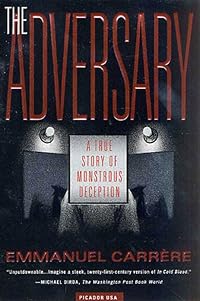
A me Carrère piace, in genere. L’ho incontrato la prima volta con L’avversario: avevo visto il bel film omonimo di Nicole Garcia, con uno straordinario Daniel Auteuil. Il libro è – ma se ne può discutere – ancora più bello del film.
Poi ho letto Limonov, di cui ho scritto la recensione su questo blog alcuni anni fa (se volete leggerla, è qui). Ne ho letto anche altri, per la verità, ma vi sarete accorti che sono rimasto un po’ indietro con la promessa di recensire tutto quello che via via vado leggendo. Mi riprometto di rimediare.
Carrère ha il dono di una show more scrittura limpida, almeno per quello che posso giudicare io che leggo il francese in traduzione. Ma è un autore che può essere irritante: ha – come si dice – un ego smisurato. O forse è narcisista. Parla, in sostanza, sempre di sé. Scrive romanzi, o saggi, o una contaminazione dei due: comunque trova il modo di dare al tutto sempre un’impronta molto personale, autobiografica. Non c’è inquadratura in cui non sia in qualche modo presente: a volte da protagonista, a volte con un cameo di sfuggita (un po’ alla Hitchcock), a volte lasciandoci vedere un microfono o una giraffa come per distrazione (per continuare la metafora cinematografica). Il rischio, va da sé, è quello dell’autocompiacimento.
Da questo punto di vista, questo libro è il più estremo tra quelli di Carrère che ho letto. Mi aveva attratto il riferimento alla Russia (che a me affascina) e al romanzo russo (ma questo è senza dubbio un romanzo francese, anzi un romanzo di Carrère). Anzi, se non sbaglio, da nessuna parte l’autore scrive che questo è un romanzo. La chiama storia, e la conclude scrivendo:
Ho pensato: sono venuto ad allestire una tomba a un uomo la cui morte incerta ha pesato sulla mia vita, e mi ritrovo di fronte a un’altra tomba, di una donna e di un bambino che per me non erano niente, e adesso sono in lutto anche per loro.
Forse è questa, la storia. (pos. 3110)
Ma poi – c’è tutto Carrère in questo – scrive un settimo capitolo, in cui ripercorre gli avvenimenti occorsi dopo i due anni raccontati nel sei capitoli precedenti, e ci toglie ogni dubbio (o almeno intende toglierci ogni dubbio) sul fatto che stiamo parlando non di una storia qualunque, ma di un frammento di autobiografia.
Dico: è questa, la storia, ma non ne sono certo. Né che sia questa, né che tutto ciò costituisca una storia. Ho voluto raccontare due anni della mia vita, Kotel´nič, mio nonno, la lingua russa e Sophie, sperando di catturare qualcosa che mi sfugge e che mi consuma. Ma continua tuttora a sfuggirmi e a consumarmi. (pos. 3113)
Kotel´nič, suo nonno e la lingua russa ci sono, ma (secondo me) non sono il centro del libro. Quanto a Sophie, in un certo senso lo è: deuteragonista, e vittima. Protagonista e carnefice è lo stesso Carrère che prima la mette in mezzo (narrativamente, ma si sospetta anche nella vita reale, fin dalla prima scena, del sogno erotico ambientato in treno) e poi la espone ancora, come vedremo.
Si usano spesso, metaforicamente, quando si parla di autocompiacimento, termini che fanno riferimento alla masturbazione. Lo si fa nel linguaggio corrente (“Sono pippe mentali”), e lo si fa pure in ambiti meno colloquiali, come in una recensione. Ma qui (e in altre opere di Carrère) non si tratta di una metafora. La masturbazione è forse il vero centro del romanzo: il verbo masturbare/masturbarsi, in diverse coniugazioni, compare nel romanzo dieci volte (questo è facile da fare con un ebook). I temi e le situazioni collegati al concetto sono molto più frequenti. L’episodio centrale del libro è il racconto erotico che Carrère pubblica su Le monde per un gioco con Sophie, la sua compagna dell’epoca, con la speranza di una complicità che ravvivi il loro rapporto, e che invece (prevedibilmente, verrebbe da dire) conduce alla sua fine. Anche perché poi, per la verità, è Carrère stesso a non reggere, a cadere dal gioco perverso nell’agitazione, nella gelosia, nell’agitazione scomposta.
Un inciso: non è invenzione. Carrère ha effettivamente pubblicato quel racconto, «L’Usage du “Monde”», sull’edizione datata 22 luglio 2002 (ma uscita in edicola il 20). Se siete curiosi, lo trovate online qui.
Non sono un moralista (lo so, suona un po’ come “non sono un razzista ma…”) ma leggere quelle pagine mi ha fatto sentire molto a disagio, per usare un termine forse troppo debole. Forse sarebbe più appropriato dire che quelle pagine mi hanno fatto sentire proprio male. Certo, se volete l’empatia per i personaggi di un romanzo è una parte di quella suspension of disbelief che al romanzesco e al narrativo è connaturata. Ma a me è risultato molto difficile non mettermi nei panni della povera Sophie. Mentre Carrère – almeno così è sembrato a me – continua a puntare lo sguardo su sé stesso, un po’ per giustificarsi (se non assolversi), un po’ per raccontarci che in fin dei conti la vittima è lui!
Il peggio che succede a Sophia, ben prima del giochetto erotico finito malamente, è che Carrère si considera superiore a Sophie per censo e cultura e la fa sentire non alla sua altezza. E che Sophie non ha la forza o l’ardire di mandarlo a quel paese (lo farà più tardi, ma non lo fa ancora, e forse non lo fa nemmeno per questo, che è il capo d’accusa più pesante che gli avrebbe dovuto imputare).
Alla nascita, dice lei, ho avuto tutto: la cultura, la disinvoltura sociale, la padronanza dei codici […] (pos. 575)
Ho fatto fatica a finire il libro lo confesso. E ho smesso di annotare i brani che mi erano piaciuti. Per questo le citazioni a un certo punto si interrompono:
Nella maggior parte dei documentari si finge che la troupe non esista. Bisognerebbe fare esattamente il contrario […] (pos. 433)
Ricordo una frase in particolare, a mio parere un capolavoro di economia descrittiva: le montagne, dice il narratore, sono cosí alte che per quanto alzi gli occhi, non vedi mai gli uccelli stagliarsi sullo sfondo del cielo. (pos. 541)
Ma non c’è solo questo nella passione per i peli sotto le ascelle, c’è anche, come dire?, una sorta di effetto metonimico, come quando si dice vela per dire barca, l’impressione che tu vada a spasso con due piccole fiche supplementari, due piccole fiche che la buona creanza autorizza a mostrare in pubblico benché facciano irresistibilmente pensare, o perlomeno a me fanno irresistibilmente pensare, a quella che hai tra le gambe. (pos. 1370) show less
A me Carrère piace, in genere. L’ho incontrato la prima volta con L’avversario: avevo visto il bel film omonimo di Nicole Garcia, con uno straordinario Daniel Auteuil. Il libro è – ma se ne può discutere – ancora più bello del film.
Poi ho letto Limonov, di cui ho scritto la recensione su questo blog alcuni anni fa (se volete leggerla, è qui). Ne ho letto anche altri, per la verità, ma vi sarete accorti che sono rimasto un po’ indietro con la promessa di recensire tutto quello che via via vado leggendo. Mi riprometto di rimediare.
Carrère ha il dono di una show more scrittura limpida, almeno per quello che posso giudicare io che leggo il francese in traduzione. Ma è un autore che può essere irritante: ha – come si dice – un ego smisurato. O forse è narcisista. Parla, in sostanza, sempre di sé. Scrive romanzi, o saggi, o una contaminazione dei due: comunque trova il modo di dare al tutto sempre un’impronta molto personale, autobiografica. Non c’è inquadratura in cui non sia in qualche modo presente: a volte da protagonista, a volte con un cameo di sfuggita (un po’ alla Hitchcock), a volte lasciandoci vedere un microfono o una giraffa come per distrazione (per continuare la metafora cinematografica). Il rischio, va da sé, è quello dell’autocompiacimento.
Da questo punto di vista, questo libro è il più estremo tra quelli di Carrère che ho letto. Mi aveva attratto il riferimento alla Russia (che a me affascina) e al romanzo russo (ma questo è senza dubbio un romanzo francese, anzi un romanzo di Carrère). Anzi, se non sbaglio, da nessuna parte l’autore scrive che questo è un romanzo. La chiama storia, e la conclude scrivendo:
Ho pensato: sono venuto ad allestire una tomba a un uomo la cui morte incerta ha pesato sulla mia vita, e mi ritrovo di fronte a un’altra tomba, di una donna e di un bambino che per me non erano niente, e adesso sono in lutto anche per loro.
Forse è questa, la storia. (pos. 3110)
Ma poi – c’è tutto Carrère in questo – scrive un settimo capitolo, in cui ripercorre gli avvenimenti occorsi dopo i due anni raccontati nel sei capitoli precedenti, e ci toglie ogni dubbio (o almeno intende toglierci ogni dubbio) sul fatto che stiamo parlando non di una storia qualunque, ma di un frammento di autobiografia.
Dico: è questa, la storia, ma non ne sono certo. Né che sia questa, né che tutto ciò costituisca una storia. Ho voluto raccontare due anni della mia vita, Kotel´nič, mio nonno, la lingua russa e Sophie, sperando di catturare qualcosa che mi sfugge e che mi consuma. Ma continua tuttora a sfuggirmi e a consumarmi. (pos. 3113)
Kotel´nič, suo nonno e la lingua russa ci sono, ma (secondo me) non sono il centro del libro. Quanto a Sophie, in un certo senso lo è: deuteragonista, e vittima. Protagonista e carnefice è lo stesso Carrère che prima la mette in mezzo (narrativamente, ma si sospetta anche nella vita reale, fin dalla prima scena, del sogno erotico ambientato in treno) e poi la espone ancora, come vedremo.
Si usano spesso, metaforicamente, quando si parla di autocompiacimento, termini che fanno riferimento alla masturbazione. Lo si fa nel linguaggio corrente (“Sono pippe mentali”), e lo si fa pure in ambiti meno colloquiali, come in una recensione. Ma qui (e in altre opere di Carrère) non si tratta di una metafora. La masturbazione è forse il vero centro del romanzo: il verbo masturbare/masturbarsi, in diverse coniugazioni, compare nel romanzo dieci volte (questo è facile da fare con un ebook). I temi e le situazioni collegati al concetto sono molto più frequenti. L’episodio centrale del libro è il racconto erotico che Carrère pubblica su Le monde per un gioco con Sophie, la sua compagna dell’epoca, con la speranza di una complicità che ravvivi il loro rapporto, e che invece (prevedibilmente, verrebbe da dire) conduce alla sua fine. Anche perché poi, per la verità, è Carrère stesso a non reggere, a cadere dal gioco perverso nell’agitazione, nella gelosia, nell’agitazione scomposta.
Un inciso: non è invenzione. Carrère ha effettivamente pubblicato quel racconto, «L’Usage du “Monde”», sull’edizione datata 22 luglio 2002 (ma uscita in edicola il 20). Se siete curiosi, lo trovate online qui.
Non sono un moralista (lo so, suona un po’ come “non sono un razzista ma…”) ma leggere quelle pagine mi ha fatto sentire molto a disagio, per usare un termine forse troppo debole. Forse sarebbe più appropriato dire che quelle pagine mi hanno fatto sentire proprio male. Certo, se volete l’empatia per i personaggi di un romanzo è una parte di quella suspension of disbelief che al romanzesco e al narrativo è connaturata. Ma a me è risultato molto difficile non mettermi nei panni della povera Sophie. Mentre Carrère – almeno così è sembrato a me – continua a puntare lo sguardo su sé stesso, un po’ per giustificarsi (se non assolversi), un po’ per raccontarci che in fin dei conti la vittima è lui!
Il peggio che succede a Sophia, ben prima del giochetto erotico finito malamente, è che Carrère si considera superiore a Sophie per censo e cultura e la fa sentire non alla sua altezza. E che Sophie non ha la forza o l’ardire di mandarlo a quel paese (lo farà più tardi, ma non lo fa ancora, e forse non lo fa nemmeno per questo, che è il capo d’accusa più pesante che gli avrebbe dovuto imputare).
Alla nascita, dice lei, ho avuto tutto: la cultura, la disinvoltura sociale, la padronanza dei codici […] (pos. 575)
Ho fatto fatica a finire il libro lo confesso. E ho smesso di annotare i brani che mi erano piaciuti. Per questo le citazioni a un certo punto si interrompono:
Nella maggior parte dei documentari si finge che la troupe non esista. Bisognerebbe fare esattamente il contrario […] (pos. 433)
Ricordo una frase in particolare, a mio parere un capolavoro di economia descrittiva: le montagne, dice il narratore, sono cosí alte che per quanto alzi gli occhi, non vedi mai gli uccelli stagliarsi sullo sfondo del cielo. (pos. 541)
Ma non c’è solo questo nella passione per i peli sotto le ascelle, c’è anche, come dire?, una sorta di effetto metonimico, come quando si dice vela per dire barca, l’impressione che tu vada a spasso con due piccole fiche supplementari, due piccole fiche che la buona creanza autorizza a mostrare in pubblico benché facciano irresistibilmente pensare, o perlomeno a me fanno irresistibilmente pensare, a quella che hai tra le gambe. (pos. 1370) show less
Mi è piaciuto? Sì. Lo consiglierei a qualcuno? A pochi. L'ego smodato di Carrère c'è tutto, e può infastidire, una scrittura incalzante, pure, una storia? non solo, tante.
Mixed feelings. At the start, I see a sort of self-indulgent man writing a memoir of 3 years out of his life. I see some display of self-pity, am taken aback by a tawdry interlude at about the middle of the book... But then it becomes more poignant and serious. He is searching for an outlet for his grief and bewilderment over the loss of his grandfather who vanished in Paris in mysterious circumstances during German invasion in World War II. His grandfather being of Russian (Georgian) descent, the author is taking trips to Russia, first on a film assignment as a writer and then - as if drawn to his Russian roots through his mother and grandfather. In the meantime, he is having his own relationship problems... He is being looked at show more askance in a provincial Russian town, but finally, a Russian remarks with understanding: "You didn't just come here looking for our unhappiness, you brought your own along". The end is quite touching and sort of brings closure to the author's quest, and finally the title of the book and the front cover image start making sense. show less
Spoilers. I was a little confused -- is this all true or is it partly a novel? The library I checked it out from classified it under Fiction. So...I liked some of this book really well & I thought some of it dragged & was irritating. i kind of speed-read-ed the last part because it was due at the library. I read every word but I forged through when I might have put it down if I had more time. Anyway. there are some major streams of this book. One is the discovery of a Hungarian prisoner of WW2 who is still sitting in a Russian institution for the mentally ill; he is identified & repatriated & our hero takes a film crew to go film the town. This is paired with the story of the narrator's grandfather, who was possibly insane and who never show more really made a success of his life and who was taken from his home & presumably killed as a collaborator. So the grandfather is a missing victim of WW2 too. And then there are the love affairs; the narrator has a girlfriend who he mistreats (emotionally) and that kinda goes on & on. There is a story w/in the story of his writing a dirty story to be published in Le Monde for her to read in an elaborately planned time & place, which falls through & he freaks out. The relationship thing got pretty dull, and the narrator is honest about his failings but they are pretty irritating anyway. Meanwhile they go back with the film crew to Russia and continue to follow things in the small town, including the relationship between Sasha & Anya, & then Anya's murder. I'm sure the 2 relationships mirror each other but I'd have to spend more time thinking about the book than I will to show how. Anyway, the stuff about the grandfather is interesting, & his relationship with his mother & uncle & family in relation to their history; the relationship with Sophie less so. show less
Members
- Recently Added By
Published Reviews
ThingScore 100
Carrère’s priority of frankness has forged, from book to book, new ways of managing to be truthful, new ways of including the first person. [...] Even to call his recent books, as Carrère sometimes has, “nonfiction novels” doesn’t do much to clarify what makes them so unusual. Though it’s easy to notice the mechanics of a Carrère book — his characteristic inclusion of himself in show more the proceedings, his habitual inclusion of the process by which the book in question is being formed — what is genuinely original in Carrère’s work is the sensibility that animates those varied approaches, infused as it is with Carrère’s at-times-skeptical, at-times-maniacal way of thinking, his well-stocked intelligence, his spare, unfussily lyrical prose, his shameproof feed of uncensored interiority, his tireless storytelling energy and his unstinting attempts and, importantly, failures at maintaining sympathy for his subjects. show less
added by elenchus
Lists

To Read List
21 works; 1 member
Author Information

49+ Works 6,864 Members
Emmanuel Carrere is one of France's most critically acclaimed writers, author of screenplays, a biography of Philip K. Dick, and two novels, including CLASS TRIP, which won the prestigious Prix Femina. A major bestseller in France, THE ADVERSARY is being published in eighteen countries. Carrere lives in Paris (Bowker Author Biography)
Awards and Honors
Awards
Distinctions
Series
Belongs to Publisher Series
Work Relationships
Common Knowledge
- Canonical title
- A Russian Novel
- Original title
- Un roman russe
- Important places*
- Kotelnitch
- First words*
- Le train roule, c'est la nuit, je fais l'amour avec Sophie sur la couchette et c'est bien elle.
*Some information comes from Common Knowledge in other languages. Click "Edit" for more information.
Classifications
- Genres
- Fiction and Literature, Biography & Memoir, General Fiction
- DDC/MDS
- 843.914 — Literature & rhetoric French Literature French fiction 1900- 20th Century 1945-1999
- LCC
- PQ2663 .A7678 .R6613 — Language and Literature French, Italian, Spanish and Portuguese literatures French literature Modern literature 1961-2000
- BISAC
Statistics
- Members
- 383
- Popularity
- 81,731
- Reviews
- 16
- Rating
- (3.39)
- Languages
- 10 — Catalan, Dutch, English, French, German, Italian, Polish, Portuguese, Spanish, Swedish
- Media
- Paper, Audiobook, Ebook
- ISBNs
- 32
- ASINs
- 14