On This Page
Description
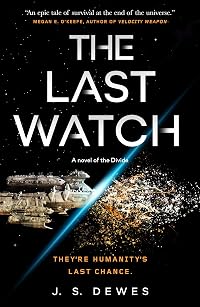
"Both readers are brilliant and nail the characterization in a way that instantly connects them to the listener..Everything here is top-notch." — Booklist, starred reviewThe Expanse meets Game of Thrones in J. S. Dewes's fast-paced, sci-fi adventure The Last Watch, where a handful of soldiers stand between humanity and annihilation.
The Divide.
It's the edge of the universe.
Now it's collapsing—and taking everyone and everything with it.
The only ones who can stop it are the show more Sentinels—the recruits, exiles, and court-martialed dregs of the military.
At the Divide, Adequin Rake commands the Argus. She has no resources, no comms—nothing, except for the soldiers that no one wanted. Her ace in the hole could be Cavalon Mercer—genius, asshole, and exiled prince who nuked his grandfather's genetic facility for "reasons."
She knows they're humanity's last chance.
A Macmillan Audio production from Tor Books
. show less
Tags
Recommendations

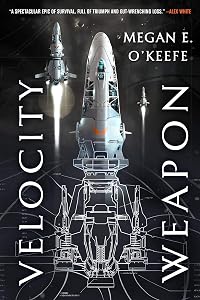
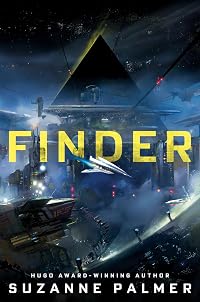

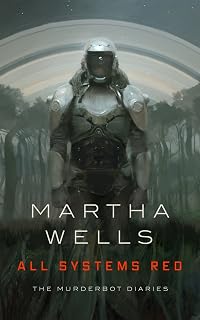

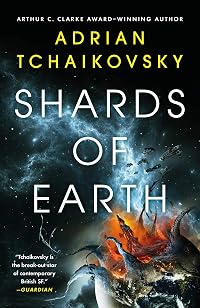
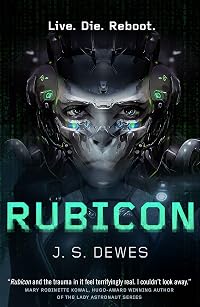
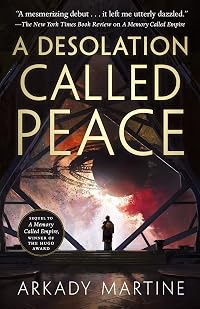
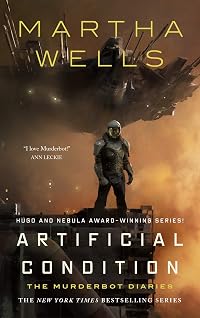
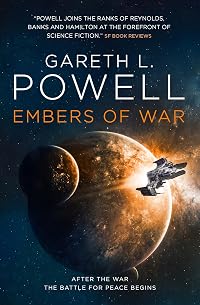
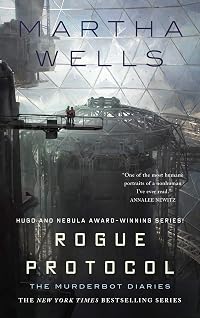

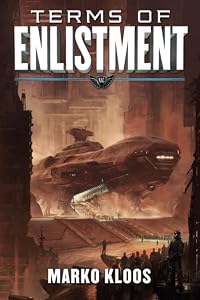
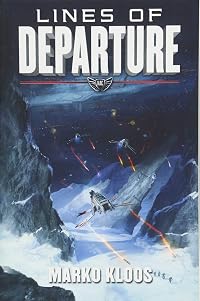
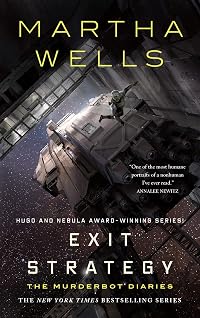

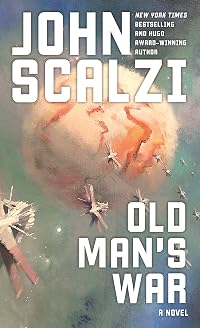
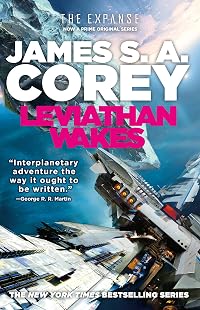
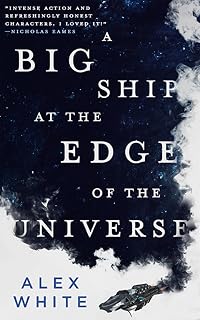
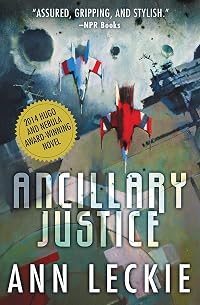

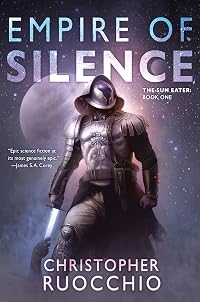
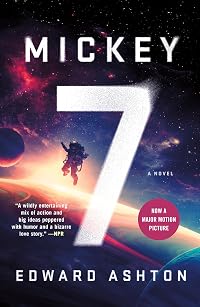


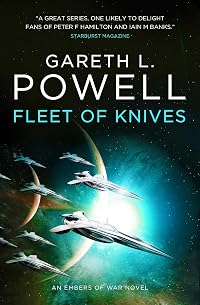
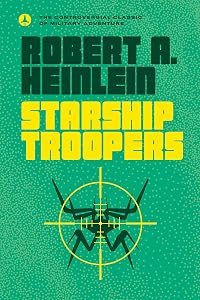
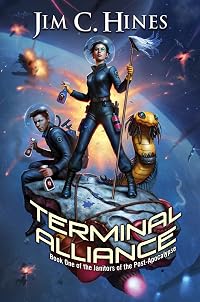
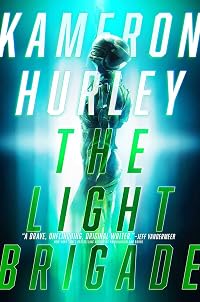
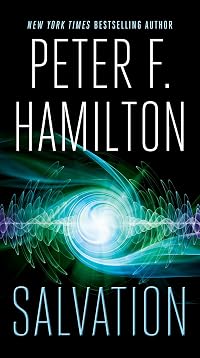
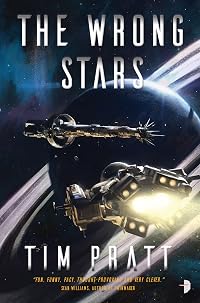



Member Recommendations

Member Reviews
The Last Watch, by J. S. Dewes, has a Battlestar Galactic vibe. If you crossed that, with something like, The Expanse it would make a fairly accurate description of this epic space adventure. It is an excellent blend of characters and action that makes it a thrilling read.
Told from two POVs, Cavalon Mercer the disowned royal heir and Adequin Rake the commanding officer of the decommissioned battlecruiser, now jail of sorts, Argus. The ship sits on the edge of the universal, literally. The edge, called the Divide, is the point where the universal has quit expanding. The job of the Argus and her crew, along with similar other vessels, is to guard the Divide against their enemy the Viator.
There is just one problem, the universe has show more started to collapse and it will swallow everything in its path. There is no one else at the Divide and no way to reach the Core to get help. Therefore, this ragtag bunch of criminals and misfits maybe the only way to stop disaster.
Though this is a debut novel, it reads with much more sophistication than I expected. The characters are well rounded and the author gets you inside their heads so that you not only understand them, but you have empathy for them. Even the minor characters you understand their motives and actions. For example, you know why Griffith is serving aboard the Argus. It was no surprise to me what he revealed to Rake at the end, though she refused to see it. However, I think deep down she knew and was just afraid to admit it to herself.
The plot was fast paced and I found myself caught up in the action. In a couple of places I was biting my nails over the suspense. I also liked the twists and most were unexpected. However, one negative thing, though minor, I suspected some of the things that happened in the end. I felt this did not detract from the story in the slightest.
I am so looking forward to book two. Not looking forward to the wait! I want the second book NOW! There are so many directions the next book could go in. I really want to find out more about the other characters, like Puck. I want to understand the underlying politics better and lastly I want to know more about the Viator.
This is an all-around great opening to a series and I highly recommend this book for all loves of Sci-Fi. It will especially appeal to those that like Space Opera.
I received an advanced copy from the publisher in exchange for my honest opinion. For more of my reviews, and author interviews, please see my book blog at www.thespineview.com. show less
Told from two POVs, Cavalon Mercer the disowned royal heir and Adequin Rake the commanding officer of the decommissioned battlecruiser, now jail of sorts, Argus. The ship sits on the edge of the universal, literally. The edge, called the Divide, is the point where the universal has quit expanding. The job of the Argus and her crew, along with similar other vessels, is to guard the Divide against their enemy the Viator.
There is just one problem, the universe has show more started to collapse and it will swallow everything in its path. There is no one else at the Divide and no way to reach the Core to get help. Therefore, this ragtag bunch of criminals and misfits maybe the only way to stop disaster.
Though this is a debut novel, it reads with much more sophistication than I expected. The characters are well rounded and the author gets you inside their heads so that you not only understand them, but you have empathy for them. Even the minor characters you understand their motives and actions. For example, you know why Griffith is serving aboard the Argus. It was no surprise to me what he revealed to Rake at the end, though she refused to see it. However, I think deep down she knew and was just afraid to admit it to herself.
The plot was fast paced and I found myself caught up in the action. In a couple of places I was biting my nails over the suspense. I also liked the twists and most were unexpected. However, one negative thing, though minor, I suspected some of the things that happened in the end. I felt this did not detract from the story in the slightest.
I am so looking forward to book two. Not looking forward to the wait! I want the second book NOW! There are so many directions the next book could go in. I really want to find out more about the other characters, like Puck. I want to understand the underlying politics better and lastly I want to know more about the Viator.
This is an all-around great opening to a series and I highly recommend this book for all loves of Sci-Fi. It will especially appeal to those that like Space Opera.
I received an advanced copy from the publisher in exchange for my honest opinion. For more of my reviews, and author interviews, please see my book blog at www.thespineview.com. show less
Cheesy and plodding, with a far-fetched premise and ludicrously uneven levels of technology (picture knights on horseback wielding laser-guided fusion-powered railguns, squinting in the sun because they haven't yet invented sunglasses or rubber wheels).
The whole plot and world-building exercise felt cobbled together from The Expanse (alien gates), Ender's Game (xenocide), and Game of Thrones (ostracized prince sent to Defend The Border from the Evil That Lies Beyond). But the elements don't really add up, and the poorly drawn characters don't feel real in their environment, often doing or knowing things that conveniently are the exact thing needed at the moment to propel the plot.
The whole plot and world-building exercise felt cobbled together from The Expanse (alien gates), Ender's Game (xenocide), and Game of Thrones (ostracized prince sent to Defend The Border from the Evil That Lies Beyond). But the elements don't really add up, and the poorly drawn characters don't feel real in their environment, often doing or knowing things that conveniently are the exact thing needed at the moment to propel the plot.
I'm conflicted on this book. I like the premise. I didn't care for the execution.
The underlying plot is enjoyable, and it has some unique twists that made it stand out from the glut of military-style scifi. It moves at a pace that doesn't quite let you get bored. The choice of characters is interesting, or would be if they weren't flat in their portrayal and trite in their dialogue.
I could overlook the uncertain grasp of Newtonian physics ... and I'm not talking about "valid to stretch things" scifi moments like faster-than-light travel, etc., just ordinary things that happen in our day and age. I could ignore the implausibility of some of the made-up physics because, hey, they're made up, right? I could even overlook the all-too-common show more problem with scifi where a technology is postulated as everyday, but the characters seem to have no idea how to use it to solve their problems (looking at you maneuverable artificial gravity).
It's a bit harder to ignore a military-style story where the military people--even the elite troops--act nothing like military. Not even a little bit. Constantly throwing around jargon-babble can't hide that.
What can't be ignored is the constant deus ex machina nature, both in the characters' favor and against it, of, well, everything.
Against them, every time the characters might accomplish a task, the thing they need breaks. Need to communicate? The communications is down due to "some intereference." Need to pour a gallon of warp-fuel into the gas tank (yes, that is literally what happens)? It's gone bad. Need to catch someone floating away on EVA? Their harness broke. Need to jet around? The jet packs aren't firing for some unknown reason. Need to trigger the Big Thing? The exhaust valve is stuck. Instead of expending the effort to write the actual threat as an antagonist they face, it's just malfunction after malfunction, usually unexplained. It trivializes the real conflict that is the heart of the story.
And on the helpful side, we have miracle cyborg assistance that can seemingly accomplish almost anything. If that fails, we have crew members who can hack any military-grade computer system, including alien ones they've never seen, in minutes. If that fails, we have super alien technology that falls into their laps in the nick of time. If that fails, we have yee-haw pilots who can grab a joystick and do things with a precision computers apparently can't match because it's "old school."
So, good plot versus superficial execution--all in all, I come down on the negative side. I don't see continuing with this series. show less
The underlying plot is enjoyable, and it has some unique twists that made it stand out from the glut of military-style scifi. It moves at a pace that doesn't quite let you get bored. The choice of characters is interesting, or would be if they weren't flat in their portrayal and trite in their dialogue.
I could overlook the uncertain grasp of Newtonian physics ... and I'm not talking about "valid to stretch things" scifi moments like faster-than-light travel, etc., just ordinary things that happen in our day and age. I could ignore the implausibility of some of the made-up physics because, hey, they're made up, right? I could even overlook the all-too-common show more problem with scifi where a technology is postulated as everyday, but the characters seem to have no idea how to use it to solve their problems (looking at you maneuverable artificial gravity).
It's a bit harder to ignore a military-style story where the military people--even the elite troops--act nothing like military. Not even a little bit. Constantly throwing around jargon-babble can't hide that.
What can't be ignored is the constant deus ex machina nature, both in the characters' favor and against it, of, well, everything.
Against them, every time the characters might accomplish a task, the thing they need breaks. Need to communicate? The communications is down due to "some intereference." Need to pour a gallon of warp-fuel into the gas tank (yes, that is literally what happens)? It's gone bad. Need to catch someone floating away on EVA? Their harness broke. Need to jet around? The jet packs aren't firing for some unknown reason. Need to trigger the Big Thing? The exhaust valve is stuck. Instead of expending the effort to write the actual threat as an antagonist they face, it's just malfunction after malfunction, usually unexplained. It trivializes the real conflict that is the heart of the story.
And on the helpful side, we have miracle cyborg assistance that can seemingly accomplish almost anything. If that fails, we have crew members who can hack any military-grade computer system, including alien ones they've never seen, in minutes. If that fails, we have super alien technology that falls into their laps in the nick of time. If that fails, we have yee-haw pilots who can grab a joystick and do things with a precision computers apparently can't match because it's "old school."
So, good plot versus superficial execution--all in all, I come down on the negative side. I don't see continuing with this series. show less
This is one of those novels that sucked me in with the blurb, and never let me go, to the extent that I can't wait for the sequel to come out next month. The premise itself is fantastic, and Dewes crafted both the plot and characters masterfully, offering just the right tweaks to space opera tropes and expectations. The book drew up every imagination I could have hoped it would, and even when I was heartbroken or terrified for what was coming, I still wanted more at every page.
Undeniably, the characters are what kept me turning pages long past my eyes tiring out each night, and the way the friendships (both new and established) bled off the page is something I haven't seen accomplished nearly so well in most fast-moving science fiction. show more It was that prioritization of the human element, alongside a fascinating and fast-moving plot, that so impressed me, and even now that I sit down to attempt a review, the truth is that I'm mostly preoccupied by the moments which most struck me, and by the fact that I've got to wait another month for the next installment in the series.
I would, without hesitation, recommend this to any lover of sci-fi or space operas. show less
Undeniably, the characters are what kept me turning pages long past my eyes tiring out each night, and the way the friendships (both new and established) bled off the page is something I haven't seen accomplished nearly so well in most fast-moving science fiction. show more It was that prioritization of the human element, alongside a fascinating and fast-moving plot, that so impressed me, and even now that I sit down to attempt a review, the truth is that I'm mostly preoccupied by the moments which most struck me, and by the fact that I've got to wait another month for the next installment in the series.
I would, without hesitation, recommend this to any lover of sci-fi or space operas. show less
DNF p. 68. Shame on Tor for conjuring The Expanse in the same sentence as this amateurish stuff. And shame on the random Twitter guy who highly recommended it to me as a Corey chaser. Five chapters in and I wanted to throw the book across the room out of disappointment and near-embarrassment. Glacial pacing, opaque context and world-building, cardboard characters, and overly precious 'banter' that takes the place of engaging and relevant dialogue all contributed to the failure to elicit care about any of it – and I've always been a very dogged reader, once committed to the book in front of me. I also found the repeated descriptions of the tattoo 'Imprints' as a plot device to be rather limp and stale, like something out of a Cyberpunk show more RPG back in my late high-school days. Dewes is just trying too hard – character names, space-age-sounding swear words, Latin militaria – and yet her prose neither offers any subtlety nor achieves any real substance.
I get that there's a significant place for this style of sci-fi and that tons of people love it. I also would really love to support passionate writers of all stripes and especially women in this often-misogynistic field. The Last Watch isn't for me, though, which leads me back to being on the lookout for something more substantial and compelling in the sci-fi genre. show less
I get that there's a significant place for this style of sci-fi and that tons of people love it. I also would really love to support passionate writers of all stripes and especially women in this often-misogynistic field. The Last Watch isn't for me, though, which leads me back to being on the lookout for something more substantial and compelling in the sci-fi genre. show less
I want to take this author aside and whisper, "Pacing." Because here's the thing: these are some entertaining characters! This is an interesting concept! There was a lot of potential here! But the first half of the book sucks because the author doesn't know to pace anything or develop characters and relationships.
This is the story of Cavalon, over-educated scion of royalty, and Adequin, hero of a lost war. Cav shows up and is mouthy and spoiled and difficult, which -- not a huge surprise, if also not that easy to read -- and then, over the course of approximately 48 hours, he just ... decides not to be and stops and starts doing his best and being a hero. That isn't character development. That's "I want to skip the hard part where I show more actually show him changing and growing up."
Adequin, who is described as a great fighter, pilot, and captain, spends the first half of the book a) walking around the ship and b) having a sudden, intense romance with her best friend of ten years, who she declares her eternal love for and then sends out for One Last Trip. (I assume I don't need to tell you what happens there.) And she makes bad decision after bad, impulsive decision, because her True Love (who she just got with) is in danger and that is her fault. And, like -- the author forgot to show Adequin actually being good at her job, and forgot to show us enough of the romance to care about it, and as a result, she comes off as a terrible captain and it's hard to care at all about the romance. (It would have been so much easier to care if they'd had an established relationship, or had stayed best friends. Either one would be a much better choice!)
But then the second half of the book shows up, and that part is much more interesting -- faster, for one thing, thanks to all the "oh no this is happening WHAT DO WE DO oh no oh no now THIS is happening shit shit shit." I enjoyed the second part! It was kind of my reward for slogging through the first half.
So I will read the next book in the series and hope that Dewes can make all of the next book interesting. I just really wish she'd spent enough time on the first half of this book to make it work. show less
This is the story of Cavalon, over-educated scion of royalty, and Adequin, hero of a lost war. Cav shows up and is mouthy and spoiled and difficult, which -- not a huge surprise, if also not that easy to read -- and then, over the course of approximately 48 hours, he just ... decides not to be and stops and starts doing his best and being a hero. That isn't character development. That's "I want to skip the hard part where I show more actually show him changing and growing up."
Adequin, who is described as a great fighter, pilot, and captain, spends the first half of the book a) walking around the ship and b) having a sudden, intense romance with her best friend of ten years, who she declares her eternal love for and then sends out for One Last Trip. (I assume I don't need to tell you what happens there.) And she makes bad decision after bad, impulsive decision, because her True Love (who she just got with) is in danger and that is her fault. And, like -- the author forgot to show Adequin actually being good at her job, and forgot to show us enough of the romance to care about it, and as a result, she comes off as a terrible captain and it's hard to care at all about the romance. (It would have been so much easier to care if they'd had an established relationship, or had stayed best friends. Either one would be a much better choice!)
But then the second half of the book shows up, and that part is much more interesting -- faster, for one thing, thanks to all the "oh no this is happening WHAT DO WE DO oh no oh no now THIS is happening shit shit shit." I enjoyed the second part! It was kind of my reward for slogging through the first half.
So I will read the next book in the series and hope that Dewes can make all of the next book interesting. I just really wish she'd spent enough time on the first half of this book to make it work. show less
First things first, my thanks to Tammy at Books, Bones and Buffy because she was the first of my fellow bloggers to review The Last Watch and literally propel me toward this book and its gripping story: I cannot turn away from a promising space opera novel, and this one met all my expectations, and makes me look forward with eagerness to its sequel which is happily slated to come out in a short time.
Long ago, humanity fought a bloody war with the alien Viators, bent on conquest and/or destruction of the races they encountered on their path: humanity managed to prevail and the Viators retreated back beyond the rim of the universe, a border called the Divide. Fearing that the alien invaders would return one day, humans set up a border show more patrol, the Sentinels, in a line of ships and buoys monitoring the Divide’s activity. The task, however, was not assigned to rotating crews but rather to the fleet’s misfits, criminals and the unwanted at large, as a way to permanently exile them while still making them useful: practically abandoned at the edge of the universe, far from the Core where life and civilization move forward, the Sentinels keep watch aboard old ships that are literally falling apart, as their requests for spare parts and essential supplies take far too long to be fulfilled, if ever. The overall feeling is that the central government stopped worrying long ago about the Viators’ return and that it also choose to apply the saying “out of sight, out of mind” to the men and women assigned to guard their backyard.
Adequin Rake is the captain of one of the Divide’s capital ships, the Argus, and as the story opens she feels all the boredom and futility of a duty in which even her superiors seem to have lost interest, but soon enough she finds herself faced with a series of problems: starting with the new recruit, Cavalon Mercer, who does not come from the military as the rest of her personnel, and sports a rakish attitude that’s out of place in the ranks; then she must deal with a series of strange phenomena that impact the already struggling systems of the Argus, while to top it all, the Divide seems to be closing in at an alarming rate on the deployed Sentinel ships, an ominous indication that the universe might be contracting… This is only the beginning of the adventure, and if these troubles look more than enough to keep your adrenaline flowing… well, think again, because they will pile up in a harrowing sequence that will task to the very limits Rake’s and her crew’s ability to react.
The Last Watch has been presented as a cross between The Expanse and the theme of the Night Watch in Game of Thrones: while I tend to be wary of these comparisons, I have to admit that there are some connections there, but this novel is its own story and it successfully melds some intriguing scientific notions with interesting and relatable characters and a space opera flavor that keeps things lively throughout the book. I was surprised to learn that this is a debut novel because, apart from a couple of “hiccups” I will mention later, it feels like the work of a seasoned writer, which makes me look forward to the next volume with great impatience.
Characters and plot share equal space in this story, in what I discovered is a very effective combination, and if some details about the political and military structure of the universe, or the events that led to the present, are left a little on the vague side, I can always hope that the next books will widen the horizon: the pace in The Last Watch, after the introduction of background and characters, is relentless and it would have been weighted down by too many details, so I’m quite happy with what I got. Even though this is a space opera novel, the cast of characters remains contained to a handful of people, which makes it very easy to connect with them: the first we meet is Cavalon Mercer, the odd man out since he does not come from the military - on the contrary, he’s the scion of the ruling family, but his continuing acts of rebellion against his grandfather’s ruling strategies finally led him to exile, and he finds himself forcibly enrolled with the Sentinels, and in dire need to hide his true identity, since the Mercer family does not instill much sympathy in the ranks.
From the very start, Cav’s rakish, impertinent attitude is no help in keeping the low profile he needs, and puts him in dangerous social situations, but as the story progresses and his skills come to the fore, often proving instrumental in solving some dire straits, both Captain Rake and the closest crewmates start to warm up to him and accept him as one of their own. Some of Cavalon’s talents require a little suspension of disbelief, because it often looks as if he possesses the right skill at the right moment, making him something of a proverbial Gary Stu: while it’s true that as the heir of the ruling family he might have had a lot of time on his hands, and therefore the opportunity to become acquainted with many aspects of science, it does sound somewhat preposterous that he would be proficient in fields ranging from medicine to engineering. Luckily for him (and for the readers…) Cav counterbalances this wide knowledge with a far-from-heroic attitude and a healthy fear for his wellbeing that manage to make him quite sympathetic.
Captain Rake is indeed able to see beyond Cavalon’s smoke screen and to understand that offering her trust and keeping him engaged she will be able to bring the real person to the surface, and turn him into the man he needs to be for the good of the team. I liked Adequin Rake from the very beginning: here is a woman who distinguished herself in the war against the Viators but for some reason (which we will learn along the way) she was sent to the Divide and is now battling with depression at what she perceives as a futile role. When things start going sideways, however, she shows great determination, courage and moral strength against both the impending doom and the discovery that the central government might have abandoned the Sentinels to their destiny. What’s more, I enjoyed the way she connected with Cavalon as a mentor and guide, leading to what promises to be a rewarding friendship between two very different personalities.
Besides these two main figures there is a number of secondary characters that are wonderfully drawn and given very distinctive qualities that make them much more than simple background extras: from scientist Mesa, a genetically engineered human/Viator hybrid, to gum-chewing Emery, to serious and dependable Jackin, they help fill out this story by giving the reader other people to care about apart from the main characters, and by showing other angles of this universe through their eyes rather than through lengthy exposition.
The Last Watch seems more like an introduction to this universe than the first installment in a promising series, and as such it left me with a lot of questions about the narrative nooks and crannies that were left unexplored, but what this book managed to do was to hold my attention from start to finish and to make me look forward to the next volume, where I hope to find the answers to those questions. That is, besides the continuation of this amazing adventure, of course… show less
Long ago, humanity fought a bloody war with the alien Viators, bent on conquest and/or destruction of the races they encountered on their path: humanity managed to prevail and the Viators retreated back beyond the rim of the universe, a border called the Divide. Fearing that the alien invaders would return one day, humans set up a border show more patrol, the Sentinels, in a line of ships and buoys monitoring the Divide’s activity. The task, however, was not assigned to rotating crews but rather to the fleet’s misfits, criminals and the unwanted at large, as a way to permanently exile them while still making them useful: practically abandoned at the edge of the universe, far from the Core where life and civilization move forward, the Sentinels keep watch aboard old ships that are literally falling apart, as their requests for spare parts and essential supplies take far too long to be fulfilled, if ever. The overall feeling is that the central government stopped worrying long ago about the Viators’ return and that it also choose to apply the saying “out of sight, out of mind” to the men and women assigned to guard their backyard.
Adequin Rake is the captain of one of the Divide’s capital ships, the Argus, and as the story opens she feels all the boredom and futility of a duty in which even her superiors seem to have lost interest, but soon enough she finds herself faced with a series of problems: starting with the new recruit, Cavalon Mercer, who does not come from the military as the rest of her personnel, and sports a rakish attitude that’s out of place in the ranks; then she must deal with a series of strange phenomena that impact the already struggling systems of the Argus, while to top it all, the Divide seems to be closing in at an alarming rate on the deployed Sentinel ships, an ominous indication that the universe might be contracting… This is only the beginning of the adventure, and if these troubles look more than enough to keep your adrenaline flowing… well, think again, because they will pile up in a harrowing sequence that will task to the very limits Rake’s and her crew’s ability to react.
The Last Watch has been presented as a cross between The Expanse and the theme of the Night Watch in Game of Thrones: while I tend to be wary of these comparisons, I have to admit that there are some connections there, but this novel is its own story and it successfully melds some intriguing scientific notions with interesting and relatable characters and a space opera flavor that keeps things lively throughout the book. I was surprised to learn that this is a debut novel because, apart from a couple of “hiccups” I will mention later, it feels like the work of a seasoned writer, which makes me look forward to the next volume with great impatience.
Characters and plot share equal space in this story, in what I discovered is a very effective combination, and if some details about the political and military structure of the universe, or the events that led to the present, are left a little on the vague side, I can always hope that the next books will widen the horizon: the pace in The Last Watch, after the introduction of background and characters, is relentless and it would have been weighted down by too many details, so I’m quite happy with what I got. Even though this is a space opera novel, the cast of characters remains contained to a handful of people, which makes it very easy to connect with them: the first we meet is Cavalon Mercer, the odd man out since he does not come from the military - on the contrary, he’s the scion of the ruling family, but his continuing acts of rebellion against his grandfather’s ruling strategies finally led him to exile, and he finds himself forcibly enrolled with the Sentinels, and in dire need to hide his true identity, since the Mercer family does not instill much sympathy in the ranks.
From the very start, Cav’s rakish, impertinent attitude is no help in keeping the low profile he needs, and puts him in dangerous social situations, but as the story progresses and his skills come to the fore, often proving instrumental in solving some dire straits, both Captain Rake and the closest crewmates start to warm up to him and accept him as one of their own. Some of Cavalon’s talents require a little suspension of disbelief, because it often looks as if he possesses the right skill at the right moment, making him something of a proverbial Gary Stu: while it’s true that as the heir of the ruling family he might have had a lot of time on his hands, and therefore the opportunity to become acquainted with many aspects of science, it does sound somewhat preposterous that he would be proficient in fields ranging from medicine to engineering. Luckily for him (and for the readers…) Cav counterbalances this wide knowledge with a far-from-heroic attitude and a healthy fear for his wellbeing that manage to make him quite sympathetic.
Captain Rake is indeed able to see beyond Cavalon’s smoke screen and to understand that offering her trust and keeping him engaged she will be able to bring the real person to the surface, and turn him into the man he needs to be for the good of the team. I liked Adequin Rake from the very beginning: here is a woman who distinguished herself in the war against the Viators but for some reason (which we will learn along the way) she was sent to the Divide and is now battling with depression at what she perceives as a futile role. When things start going sideways, however, she shows great determination, courage and moral strength against both the impending doom and the discovery that the central government might have abandoned the Sentinels to their destiny. What’s more, I enjoyed the way she connected with Cavalon as a mentor and guide, leading to what promises to be a rewarding friendship between two very different personalities.
Besides these two main figures there is a number of secondary characters that are wonderfully drawn and given very distinctive qualities that make them much more than simple background extras: from scientist Mesa, a genetically engineered human/Viator hybrid, to gum-chewing Emery, to serious and dependable Jackin, they help fill out this story by giving the reader other people to care about apart from the main characters, and by showing other angles of this universe through their eyes rather than through lengthy exposition.
The Last Watch seems more like an introduction to this universe than the first installment in a promising series, and as such it left me with a lot of questions about the narrative nooks and crannies that were left unexplored, but what this book managed to do was to hold my attention from start to finish and to make me look forward to the next volume, where I hope to find the answers to those questions. That is, besides the continuation of this amazing adventure, of course… show less
Members
- Recently Added By
Lists

Top Five Books of 2022
736 works; 272 members

Books Read in 2024
4,623 works; 126 members
Author Information

5 Works 1,074 Members
Awards and Honors
Distinctions
Series

Common Knowledge
- Canonical title
- The Last Watch
- Original publication date
- 2021-04-20
- Publisher's editor
- Gunnels, Jen
Classifications
Statistics
- Members
- 581
- Popularity
- 50,535
- Reviews
- 25
- Rating
- (3.59)
- Languages
- English, Korean
- Media
- Paper, Audiobook, Ebook
- ISBNs
- 4
- ASINs
- 3